iWell Guard

Gods, High Powers and Pantheons of the World Religions

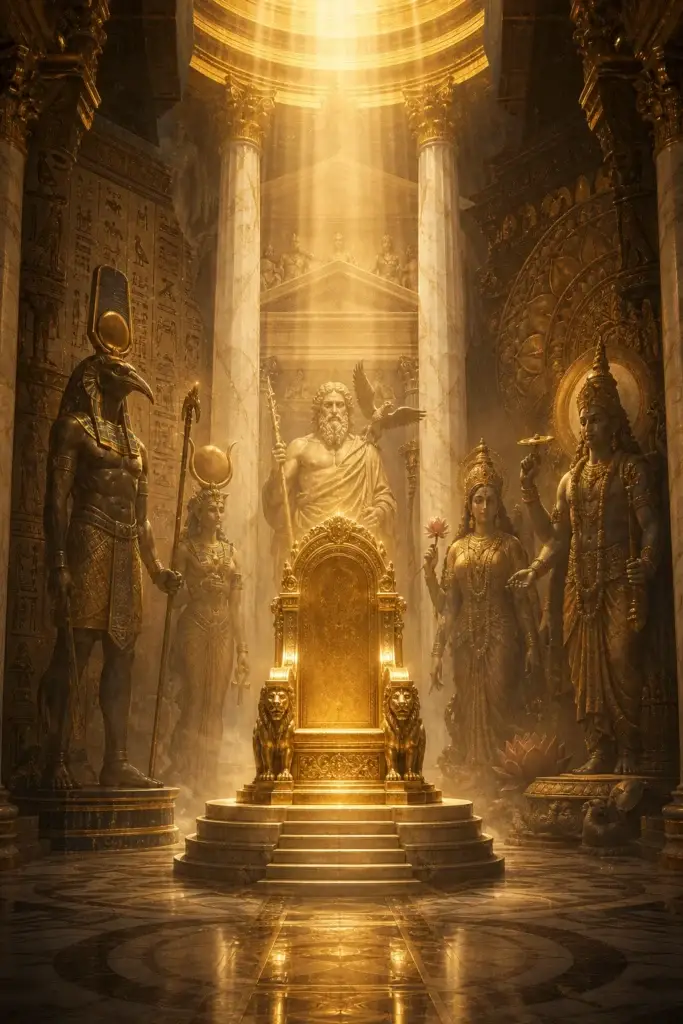
Gods are personified cosmic high powers or supernatural beings of the highest rank in the world religions, venerated in cult and defined by ritual invocation, offerings and a theistic or polytheistic classification. The evidence includes cuneiform texts such as the Enuma Elish, Vedic collections, Greco-Roman pantheons and indigenous pantheon traditions worldwide.

Their mythological and theological status ranges from absolute sovereignty to specialized functional powers with a limited sphere of action. They are central to the cosmogony, ethics and ritual practice of these religious systems.

CategoryCross-cultural

Table of contents

Gods: high powers of the world religions

Overview

Gods are the highest class of beings in pantheonic religions: creators, rulers, founders of order. This website documents them alongside demons, spirits and beings of light as a distinct category.

The focus is on gods relevant to demonology and to dealing with otherworldly powers: deities of the dead, protective gods against demons, and anti-gods (devil figures) that represent the dark side.

The distinction from demons is fluid in many cultures: in Christian reception, earlier gods (“pagan gods”) were reinterpreted as demons; in Mesopotamia and Egypt there are gods with a strong proximity to demons. This page leads to 34 detail pages of individual gods from 16 cultures.

Quick overview: gods worldwide

  • Number of detail pages: 34
  • Cultures documented: 16 (plus the New Age tradition)
  • Types: high deities, protective deities, deities of the dead, anti-gods (devil rank)
  • Distinction from demons: rank, cult status, pantheon affiliation
  • Distinction from beings of light: bound to a culture, not syncretic

Typology

High deities

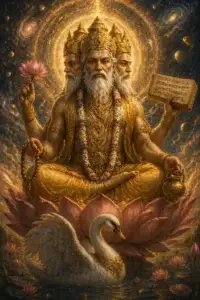
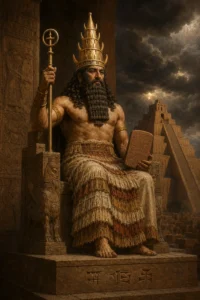
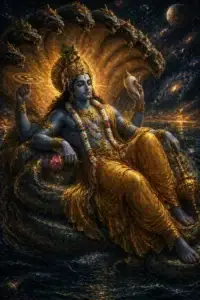
Supreme pantheon heads regarded as creators or rulers of the world: Anu (Mesopotamia), Zeus and Hera in Greece, Jupiter and Juno in Rome, Odin in the Germanic tradition, Perun among the Slavs, Shiva, Vishnu and Brahma in Hinduism, the Jade Emperor in China, Amaterasu in Japan. See the forthcoming special landing page High deities.

Protective deities

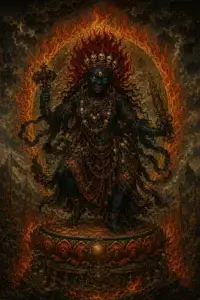
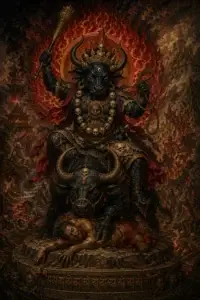
Gods with a concrete protective function against demons, illness or misfortune: Bes and Taweret in Egypt, Palden Lhamo and Mahakala in Tibet, Inari in Japan, Samsin in Korea. See the forthcoming special landing page Protective deities.

Deities of the dead and anti-gods

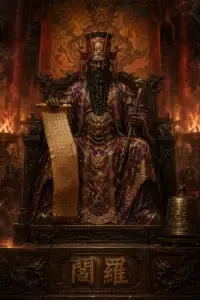
Deities of the dead. Rulers of the afterlife or personifications of death: Hades and Persephone in Greece, Pluto and Proserpina in Rome, Osiris and Anubis in Egypt, Yama in Hinduism and Buddhism, Yanluo in China, Hel among the Germanic peoples. See the forthcoming special landing page Deities of the dead.

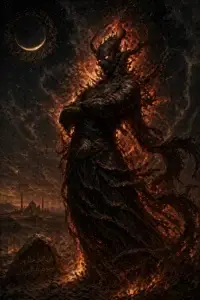
Anti-gods (devil rank). God-equivalent adversaries of the positive world order: Satan, Lucifer, Beelzebub, Leviathan, Iblis, Asura, Mara. They are not mere demons but personal powers with cosmological significance. See the forthcoming special landing page Anti-gods.

Cross-cultural overview

The documented gods arranged by region. This overview is a selection; the detail pages are created step by step.

Near East

  • Mesopotamia: Anu, Enki, Ereshkigal, Nergal, Marduk, Ishtar, Tiamat

Mediterranean and antiquity

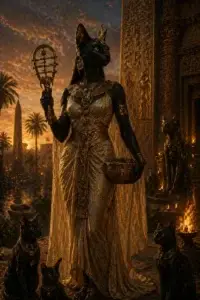
  • Egypt: Osiris, Anubis, Set, Horus, Isis, Thoth, Bastet, Sekhmet, Ra, Hathor, Ptah, Nephthys, Amun, Bes, Taweret
  • Greece: Hecate, Hades, Persephone, Thanatos, Nyx, Apollo, Artemis, Hermes, Charon
  • Rome: Pluto, Proserpina, Mars, Juno

Abrahamic

Europe

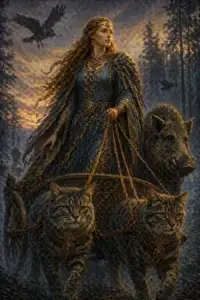
  • Germanic: Odin, Loki, Hel, Thor, Freyja, Frigg
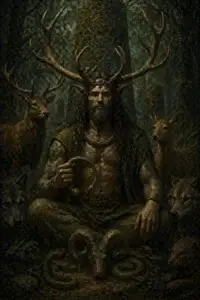
  • Celtic: Cailleach, Morrigan, Dagda, Lugh, Brigid, Cernunnos
  • Slavic: Perun, Veles, Mokosh, Marena, Svarog

Asia

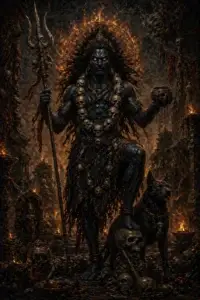
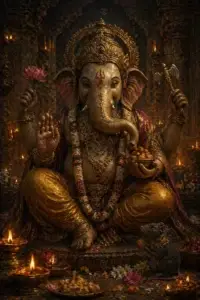
  • Hinduism: Shiva, Kali, Yama, Durga, Vishnu, Brahma, Ganesha, Hanuman, Asura
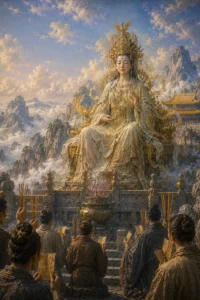
  • Buddhism: Mara, Vajrapani, Avalokiteshvara
  • China: Yanluo, Zhong Kui, Yuhuang (Jade Emperor)
  • Japan: Enma-o, Izanami, Inari, Amaterasu, Susanoo, Tsukuyomi, Raijin, Fujin
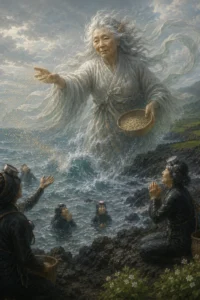
  • Korea: Yeomra, Samsin, Hwanung, Dangun, Mago Halmi
  • Tibet: Palden Lhamo, Mahakala, Yamantaka, Ekajati, Pehar

Deeper dimensions in the history of religion

Comparative religious studies has, since Friedrich Max Müller (Lectures on the Origin and Growth of Religion, 1878), James Frazer (The Golden Bough, 1890, 1915) and Mircea Eliade (The Sacred and the Profane, 1949), engaged intensively with the question of how the concept of a god arose in the history of religion and which structural constants exist between the pantheons of the various high cultures.

Scholarship today recognizes a number of recurring structural patterns: the high-god position (Wilhelm Schmidt, Pater SVD, Der Ursprung der Gottesidee, 12 volumes, 1912, 1955), the triadic structures (high god, mediator, sustainer), the functional division into celestial, atmospheric and chthonic gods (Georges Dumézil, Mitra-Varuna, 1940) and the constellation between creator gods and sustainers of the world.

These structural constants are not accidental in the history of religion: they reflect categories of human experience (height and depth, light and dark, life and death) that find their own answer in every developed pantheon.

The iWell Guard classification (high deities, protective deities, deities of the dead, anti-gods) follows this structural logic and assigns the individual documented gods to the four functional classes.

An overview of all deities recorded in the pantheon class can be found in the linked detail pages of the cultures, sorted by the tradition pills high deity, protective deity, deity of the dead and anti-god.

Gods and the monotheistic special path

The transition from a polytheistic to a monotheistic concept of god is, in the history of religion, the decisive step of the Jewish-Christian-Islamic tradition.

Scholarship (Jan Assmann, Moses the Egyptian, 1997; Die Mosaische Unterscheidung, 2003) has shown that this transition was not a mere reduction of several gods to one, but a fundamental reconstitution of the god-world relationship.

Whereas the polytheistic god is one among several and coordinates with other gods within a differentiated pantheon, the monotheistic god is absolutely singular and excludes every other god. This ontological closure has consequences in the history of religion that remain in effect to the present day.

Cult, invocation and engagement

The way one engages with gods differs fundamentally by type. High deities are honored in temple cults with offerings and ritual.

Protective gods are invoked in a concrete case of affliction: Bes at the child’s bedside, Palden Lhamo for protection against demons. Deities of the dead receive rites for transferring the deceased. Anti-gods are warded off, not venerated in cult.

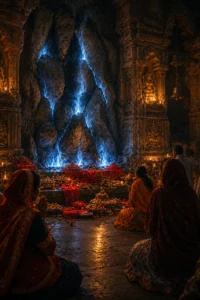
Sacrificial rites. Burnt, libation, food and incense offerings; in historical traditions also animal sacrifice. Modern reception is limited to symbolic gifts (flowers, incense sticks, candles).

Invocation. Naming invocation in fixed formulas. In Mediterranean antiquity, gods could even be called upon through a defixio (curse tablet) to harm third parties; this borderline area overlaps with curse practices.

Protection against anti-gods. In the iWell Guard protective field, anti-gods are not treated as neutral counterparts but rejected like demons: “Satan, Lucifer, Beelzebub, Leviathan, Iblis and all further hostile powers are denied power.”

Invocation practice in comparison

The invocation of gods follows clearly distinguishable logics in the various traditions. In the polytheistic religions of Mesopotamia, Egypt, Greece and Rome, invocation was tied to concrete functions: those seeking healing turned to Asclepius or Eshmun, those hoping for a safe journey to Hermes or Mercurius.

The language of invocation was highly formalized; the aretalogical address listed the respective functions and attributes of the god before the concrete request followed. The oldest evidence of this form is found in the Sumerian invocation hymns to Inanna and Enlil.

In the monotheistic traditions, the logic of invocation shifts toward mediation through saints, angels or other mediating figures, because the direct address of the one god is felt by many to be too great for many concrete concerns.

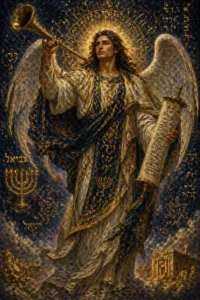
In the Catholic tradition the elaborate patronage of saints arises, with more than 10,000 saints and their specific competences; in the Orthodox tradition angels and archangels play an analogous role; in Jewish mysticism the Sephirot structure of the kabbalistic tree of life; in Islamic popular religion the Awliyya (saints) and in some currents the Imams.

In the iWell Guard protective field, the practice of invocation is not central to the mantra effect, because the protective field is continuously active even without conscious invocation. Those who wish to work consciously with the documented gods can integrate their cultural-historical tradition of invocation into their own practice.

The position in the history of religion is that the form of invocation makes sense within its respective cultural tradition; an isolated adoption of individual gods out of their religious-historical context is methodologically problematic and corresponds to the critique of cultural appropriation in modern research on esotericism.

Modern reception

Gods have a twofold presence in the German-speaking public sphere: on the one hand as part of education (Greco-Roman mythology in school lessons, the Wagnerian reception of the Germanic gods), and on the other in popular culture (American Gods by Neil Gaiman, the Marvel Thor films, the Percy Jackson series, Japanese anime with a Shinto context).

In religious studies, gods are the subject of comparative pantheon research; in the lightworker tradition, certain gods (Hecate, Shiva, Kali, Mahakala) are invoked as archetypal powers of protection and transformation, a syncretic adaptation that detaches itself from their original cultural embedding.

Gods in the contemporary discourse on religion

The academic religious studies of the 21st century has expanded the classical pantheon comparison with new perspectives. The cognitive turn in religious studies (Pascal Boyer, Religion Explained, 2001; Harvey Whitehouse, Modes of Religiosity, 2004) investigates which cognitive structures make the representation of gods in human minds possible.

In this line of research, gods are understood as minimally counterintuitive concepts: they are anthropomorphic enough to be humanly comprehensible and at the same time counterintuitive enough to be especially memorable.

This perspective does not contradict the iWell Guard position: the question of whether gods ontologically exist or are cognitive constructs cannot be conclusively decided within religious studies.

The iWell Guard position is methodologically agnostic: we document the tradition of the gods, its sources and its logic of effect, without making any statement of truth about their ontological reality.

The protective-field effect of the mantra does not presuppose that the wearer believes in the existence of the documented gods; it presupposes only that the mantra structure works.

Further landing pages

Special landing pages within the gods category (some still under construction):

Related categories:

Literature

  • Assmann, Jan: Ägypten, Eine Sinngeschichte. Hanser, Munich 1996.
  • Römer, Thomas: Dark God. Cruelty, Sex, and Violence in the Old Testament. Paulist Press, New York 2013.
  • West, Martin L.: Indo-European Poetry and Myth. Oxford University Press, Oxford 2007.

Methodological note: Classifying gods is not trivial in religious studies. A “high deity” has a different theological meaning in a monotheistic culture than in a polytheistic pantheon; a “protective deity” can at the same time be an anti-deity, depending on context.

On iWell Guard we keep the classification descriptive, as a figure is treated within its principal source tradition, without claims to theological unification.

Further standard works in the literature index.

Gods in this collection (376)

Abzu
Abzu
→ To the being
Achachila
Achachila
→ To the being
Achelous
Achelous
→ To the being
Adranus
Adranus
→ To the being
Aed
Aed
→ To the being
Aganjú
Aganjú
→ To the being
Ahti
Ahti
→ To the being
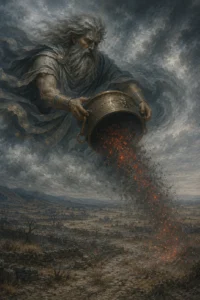
Aiolos
Aiolos
→ To the being
Aita: Etruscan God of the Underworld
→ To the being
Aja
Aja
→ To the being
Akkorokamui
Akkorokamui
→ To the being
Amaterasu
Amaterasu
→ To the being
Amihan
Amihan
→ To the being
Amphitrite
Amphitrite
→ To the being
Amun
Amun
→ To the being
Amun (Wind Aspect)
Amun (Wind Aspect)
→ To the being
Anahita
Anahita
→ To the being
Anat: Phoenician War Goddess
→ To the being
Anemoi
Anemoi
→ To the being
Anitun Tabu
Anitun Tabu
→ To the being
Anu
Anu
→ To the being
Anu: Hattic-Hurrian Sky God
→ To the being
Anubis
Anubis
→ To the being
Apam Napat
Apam Napat
→ To the being
Apeliotes
Apeliotes
→ To the being
Aphrodite
Aphrodite
→ To the being
Apo Angin
Apo Angin
→ To the being
Apollo
Apollo
→ To the being
Apu Ampato
Apu Ampato
→ To the being
Apu Coropuna
Apu Coropuna
→ To the being
Apu Mama Simona
Apu Mama Simona
→ To the being
Apu Misti
Apu Misti
→ To the being
Apu Pachatusan
Apu Pachatusan
→ To the being
Apu Pichu Pichu
Apu Pichu Pichu
→ To the being
Apu Pitusiray
Apu Pitusiray
→ To the being
Apu Salkantay
Apu Salkantay
→ To the being
Apu Sara Sara
Apu Sara Sara
→ To the being
Apu Verónica
Apu Verónica
→ To the being
Apu Wamanrasu
Apu Wamanrasu
→ To the being
Apu Wanakawri
Apu Wanakawri
→ To the being
Aranyani
Aranyani
→ To the being
Ares
Ares
→ To the being
Artemis
Artemis
→ To the being
Ash
Ash
→ To the being
Astarte: Phoenician Goddess
→ To the being
Asura
Asura
→ To the being
Atar
Atar
→ To the being
Ate
Ate
→ To the being
Athena
Athena
→ To the being
Auahitūroa
Auahitūroa
→ To the being
Avalokiteshvara
Avalokiteshvara
→ To the being
Azrael
Azrael
→ To the being
Baal-Hadad: Phoenician Weather God
→ To the being
Baal-Hammon: Chief God of Carthage
→ To the being
Baiame: Sky Father of the Southeastern Aboriginal Peoples
→ To the being
Baron Samedi
Baron Samedi
→ To the being
Bastet
Bastet
→ To the being
Beelzebub
Beelzebub
→ To the being
Bes
Bes
→ To the being
Bhairava
Bhairava
→ To the being
Bieggegaellies
Bieggegaellies
→ To the being
Bieggolmai
Bieggolmai
→ To the being
Bixia Yuanjun
Bixia Yuanjun
→ To the being
Bonbibi
Bonbibi
→ To the being
Boreas
Boreas
→ To the being
Brahma
Brahma
→ To the being
Brigid
Brigid
→ To the being
Buga: High God of the Evenki (Tungus)
→ To the being
Bunjil: Eagle Creator of the Kulin
→ To the being
Caca
Caca
→ To the being
Caicai-Vilu
Caicai-Vilu
→ To the being
Cailleach
Cailleach
→ To the being
Ceridwen
Ceridwen
→ To the being
Cernunnos
Cernunnos
→ To the being
Chalchiuhtlicue
Chalchiuhtlicue
→ To the being
Chang-e
Chang-e
→ To the being
Chantico
Chantico
→ To the being
Charon
Charon
→ To the being
Curicaueri
Curicaueri
→ To the being
Dagda
Dagda
→ To the being
Dakuwaqa
Dakuwaqa
→ To the being
Dali
Dali
→ To the being
Dangun
Dangun
→ To the being
Demeter
Demeter
→ To the being
Diana
Diana
→ To the being
Dionysus
Dionysus
→ To the being
Diwata
Diwata
→ To the being
Dogoda
Dogoda
→ To the being
Dongyue Dadi
Dongyue Dadi
→ To the being
Dragon King
Dragon King
→ To the being
Durga
Durga
→ To the being
Eate
Eate
→ To the being
Ehecatl
Ehecatl
→ To the being
Ekajati
Ekajati
→ To the being
Enbilulu
Enbilulu
→ To the being
Enji
Enji
→ To the being
Enki
Enki
→ To the being
Enlil: Storm God and Lord of the Pantheon
→ To the being
Enma-o
Enma-o
→ To the being
Eopsin
Eopsin
→ To the being
Ereshkigal
Ereshkigal
→ To the being
Eros
Eros
→ To the being
Erzulie Freda
Erzulie Freda
→ To the being
Euros
Euros
→ To the being
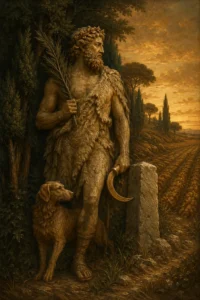
Faunus
Faunus
→ To the being
Fei Lian
Fei Lian
→ To the being
Feng Po Po
Feng Po Po
→ To the being
Freyja
Freyja
→ To the being
Frigg
Frigg
→ To the being
Fujin
Fujin
→ To the being
Gabija
Gabija
→ To the being
Gabriel
Gabriel
→ To the being
Ganesha
Ganesha
→ To the being
Ganga
Ganga
→ To the being
Gede
Gede
→ To the being
Girra
Girra
→ To the being
Glaukos
Glaukos
→ To the being
Goibniu
Goibniu
→ To the being
Grannus
Grannus
→ To the being
Gu
Gu
→ To the being
Guabancex
Guabancex
→ To the being
Guan Yu
Guan Yu
→ To the being
Gugurang
Gugurang
→ To the being
Gula
Gula
→ To the being
Ha
Ha
→ To the being
Habagat
Habagat
→ To the being
Hades
Hades
→ To the being
Hanuman
Hanuman
→ To the being
Hathor
Hathor
→ To the being
Hayagriva
Hayagriva
→ To the being
He Bo
He Bo
→ To the being
Hebat: Hurrian Supreme Goddess
→ To the being
Hecate
Hecate
→ To the being
Hel
Hel
→ To the being
Henkhisesui
Henkhisesui
→ To the being
Hera
Hera
→ To the being
Hermes
Hermes
→ To the being
Hina: Polynesian Moon Goddess and Primal Mother
→ To the being
Hine-Tu-Whenua
Hine-Tu-Whenua
→ To the being
Holla (Frau Holle)
Holla (Frau Holle)
→ To the being
Horagalles
Horagalles
→ To the being
Horus
Horus
→ To the being
Hotoru
Hotoru
→ To the being
Huayna Potosí
Huayna Potosí
→ To the being
Huayra-tata
Huayra-tata
→ To the being
Hui Lu
Hui Lu
→ To the being
Hurakan
Hurakan
→ To the being
Hutchai
Hutchai
→ To the being
Hwanung
Hwanung
→ To the being
Hypnos
Hypnos
→ To the being
Iblis
Iblis
→ To the being
Igaluk: Moon God of the Inuit Tradition
→ To the being
Illampu
Illampu
→ To the being
Illapa, God of Thunder and Weather of the Inca
→ To the being
Illimani
Illimani
→ To the being
Ilmarinen
Ilmarinen
→ To the being
Indra
Indra
→ To the being
Inti, Sun God of the Inca
→ To the being
Ishtar
Ishtar
→ To the being
Ishum
Ishum
→ To the being
Isis
Isis
→ To the being
Israfil
Israfil
→ To the being
Izanami
Izanami
→ To the being
Jibril
Jibril
→ To the being
Jowang
Jowang
→ To the being
Juno
Juno
→ To the being
Jupiter
Jupiter
→ To the being
Jwala Ji
Jwala Ji
→ To the being
Kagutsuchi
Kagutsuchi
→ To the being
Kahoupokane
Kahoupokane
→ To the being
Kaikias
Kaikias
→ To the being
Kali
Kali
→ To the being
Kāmohoaliʻi
Kāmohoaliʻi
→ To the being
Kamuy-Huci
Kamuy-Huci
→ To the being
Kan-Laon
Kan-Laon
→ To the being
Kanaloa: Hawaiian God of the Ocean
→ To the being
Kári
Kári
→ To the being
Khormusta: Supreme Sky God of the Mongols
→ To the being
Khumbila
Khumbila
→ To the being
Kojin
Kojin
→ To the being
Konohanasakuya-hime
Konohanasakuya-hime
→ To the being
Kresnik
Kresnik
→ To the being
Kumarbi: Hurrian Father of the Gods
→ To the being
La Sirène
La Sirène
→ To the being
Laamaomao
Laamaomao
→ To the being
Lạc Long Quân
Lạc Long Quân
→ To the being
Lalahon
Lalahon
→ To the being
Leshy
Leshy
→ To the being
Leviathan
Leviathan
→ To the being
Lihangin
Lihangin
→ To the being
Lilinoe
Lilinoe
→ To the being
Lips
Lips
→ To the being
Loki
Loki
→ To the being
Lono: Hawaiian God of Peace and Fertility
→ To the being
Lugh
Lugh
→ To the being
Lucifer
Lucifer
→ To the being
Machen Pomra
Machen Pomra
→ To the being
Mago Halmi
Mago Halmi
→ To the being
Mahakala
Mahakala
→ To the being
Mahuika
Mahuika
→ To the being
Malina: Sun Goddess of the Inuit
→ To the being
Mama Cocha: Sea Goddess of the Andes
→ To the being
Mami Wata
Mami Wata
→ To the being
Manannan mac Lir
Manannan mac Lir
→ To the being
Manjushri
Manjushri
→ To the being
Mara
Mara
→ To the being
Marduk
Marduk
→ To the being
Marena
Marena
→ To the being
Mari
Mari
→ To the being
Mars
Mars
→ To the being
Masaw
Masaw
→ To the being
Mazu
Mazu
→ To the being
Medeina
Medeina
→ To the being
Melqart: City God of Tyre
→ To the being
Menrva: Etruscan Goddess of Wisdom and War
→ To the being
Metsaema
Metsaema
→ To the being
Meža māte
Meža māte
→ To the being
Mielikki
Mielikki
→ To the being
Mikail
Mikail
→ To the being
Miyolangsangma
Miyolangsangma
→ To the being
Mokosh
Mokosh
→ To the being
Morrigan
Morrigan
→ To the being
Mot: Phoenician God of Death
→ To the being
Nabu
Nabu
→ To the being
Naga (Bicol)
Naga (Bicol)
→ To the being
Namarrkon: Lightning Man of the Kunwinjku
→ To the being
Nammu
Nammu
→ To the being
Nang Kwak
Nang Kwak
→ To the being
Nanook: Polar Bear Lord of the Inuit Tradition
→ To the being
Nephthys
Nephthys
→ To the being
Neptune
Neptune
→ To the being
Nereus
Nereus
→ To the being
Nergal
Nergal
→ To the being
Ngai
Ngai
→ To the being
Niltsi
Niltsi
→ To the being
Nommo
Nommo
→ To the being
Notos
Notos
→ To the being
Nusku
Nusku
→ To the being
Nuwa
Nuwa
→ To the being
Nyami Nyami
Nyami Nyami
→ To the being
Nyenchen Tanglha
Nyenchen Tanglha
→ To the being
Nyx
Nyx
→ To the being
Nyyrikki
Nyyrikki
→ To the being
Odin
Odin
→ To the being
Odqan
Odqan
→ To the being
Ognjena Marija
Ognjena Marija
→ To the being
Oceanus
Oceanus
→ To the being
Olokun
Olokun
→ To the being
Ong Dia
Ong Dia
→ To the being
Oshun
Oshun
→ To the being
Osiris
Osiris
→ To the being
Ourea
Ourea
→ To the being
Oya
Oya
→ To the being
Pachakamak, Oracle God of the Andes
→ To the being
Pachamama, Earth Mother of the Andes
→ To the being
Pakaa
Pakaa
→ To the being
Pakhet
Pakhet
→ To the being
Palden Lhamo
Palden Lhamo
→ To the being
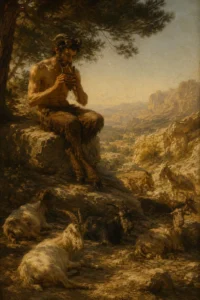
Pan
Pan
→ To the being
Papa Legba
Papa Legba
→ To the being
Pehar
Pehar
→ To the being
Peklenc
Peklenc
→ To the being
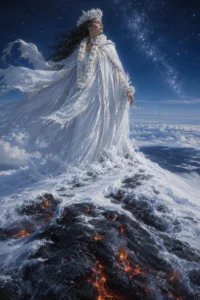
Pele: Hawaiian Goddess of Volcanoes
→ To the being
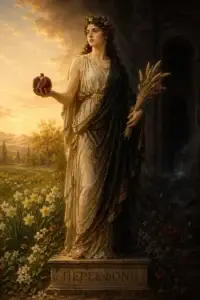
Persephone
Persephone
→ To the being
Perun
Perun
→ To the being
Phaya Naga
Phaya Naga
→ To the being
Phong
Phong
→ To the being
Pincoya
Pincoya
→ To the being
Pinga: Mistress of Land Animals and of Women in Childbirth
→ To the being
Pluto
Pluto
→ To the being
Poliʻahu
Poliʻahu
→ To the being
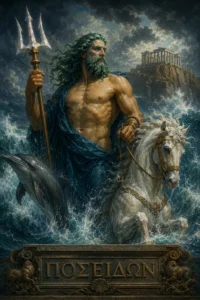
Poseidon
Poseidon
→ To the being
Proserpina
Proserpina
→ To the being
Ptah
Ptah
→ To the being
Qebui
Qebui
→ To the being
Ququmatz
Ququmatz
→ To the being
Ra
Ra
→ To the being
Raijin
Raijin
→ To the being
Rainbow Serpent: Serpent Creator of Aboriginal Religion
→ To the being
Repun Kamuy
Repun Kamuy
→ To the being
Resheph: Phoenician God of Plague and War
→ To the being
Rūaumoko
Rūaumoko
→ To the being
Ryujin
Ryujin
→ To the being
Sajama
Sajama
→ To the being
Samael
Samael
→ To the being
Samantabhadra
Samantabhadra
→ To the being
Samsin
Samsin
→ To the being
San Phra Phum
San Phra Phum
→ To the being
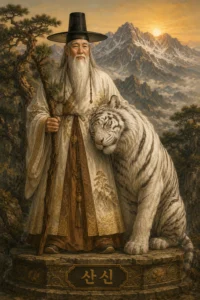
Sansin
Sansin
→ To the being
Sarruma: Hurrian Mountain God and Protector of Kings
→ To the being
Satan
Satan
→ To the being
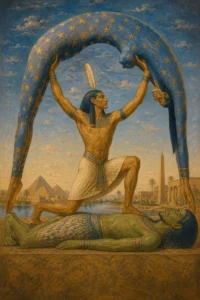
Shu
Shu
→ To the being
Black God
Black God
→ To the being
Sekhmet
Sekhmet
→ To the being
Seongju
Seongju
→ To the being
Seth
Seth
→ To the being
Sethlans: Etruscan God of the Forge and Fire
→ To the being
Shamash
Shamash
→ To the being
Shango
Shango
→ To the being
Shehbui
Shehbui
→ To the being
Shinatobe
Shinatobe
→ To the being
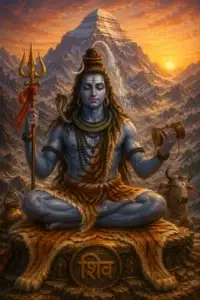
Shiva
Shiva
→ To the being
Silvanus
Silvanus
→ To the being
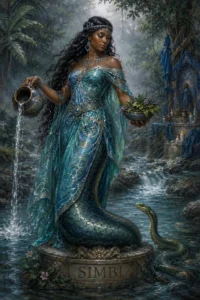
Simbi
Simbi
→ To the being
Sin: moon god of Ur and Harran
→ To the being
Skiron
Skiron
→ To the being
Sobek
Sobek
→ To the being
Sopdu
Sopdu
→ To the being
Susanoo
Susanoo
→ To the being
Svarog
Svarog
→ To the being
Svarožič
Svarožič
→ To the being
Szélanya
Szélanya
→ To the being
Szélatya
Szélatya
→ To the being
Taku Skanskan
Taku Skanskan
→ To the being
Tane Mahuta: God of Forests and Birds of the Maori
→ To the being
Tangaroa: Sea God of the Maori
→ To the being
Tanit: Chief Goddess of Carthage
→ To the being
Tapio
Tapio
→ To the being
Tarhunna: Weather God of the Hittites
→ To the being
Tate
Tate
→ To the being
Tatewari
Tatewari
→ To the being
Taweret
Taweret
→ To the being
Tawhirimatea
Tawhirimatea
→ To the being
Telipinu: Vegetation God of the Hittites
→ To the being
Tellervo
Tellervo
→ To the being
Teshub: Hurrian Weather God
→ To the being
Tezcatlipoca
Tezcatlipoca
→ To the being
Thanatos
Thanatos
→ To the being
Thor
Thor
→ To the being
Thoth
Thoth
→ To the being
Tiamat
Tiamat
→ To the being
Tinia: Supreme God of the Etruscans
→ To the being
Tjinimin: Bat Ancestor of the Murinbata
→ To the being
Tmolos
Tmolos
→ To the being
Triton
Triton
→ To the being
Tsukuyomi
Tsukuyomi
→ To the being
Tu Matauenga: War God of the Maori
→ To the being
Tunupa
Tunupa
→ To the being
Turms: Etruscan Messenger of the Gods and Guide of the Dead
→ To the being
Tuulikki
Tuulikki
→ To the being
Ülgen: God of Light of the Altai Peoples
→ To the being
Uriel
Uriel
→ To the being
Vajrakilaya
Vajrakilaya
→ To the being
Vajrapani
Vajrapani
→ To the being
Vanadevata
Vanadevata
→ To the being
Varuna
Varuna
→ To the being
Vayu
Vayu
→ To the being
Vejopatis
Vejopatis
→ To the being
Veles
Veles
→ To the being
Vellamo
Vellamo
→ To the being
Vir-ava
Vir-ava
→ To the being
Viracocha, Creator God of the Andes
→ To the being
Vishnu
Vishnu
→ To the being
Voltumna: Federal God of the Etruscan League
→ To the being
Waiau
Waiau
→ To the being
Wandjina: Cloud and Rain Beings of the Kimberley
→ To the being
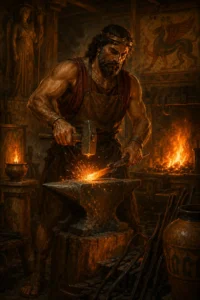
Wayland the Smith
Wayland the Smith
→ To the being
Xi Wangmu
Xi Wangmu
→ To the being
Xiuhtecuhtli
Xiuhtecuhtli
→ To the being
Yama
Yama
→ To the being
Yama (Judge of the Dead)
→ To the being
Yama-no-Kami
Yama-no-Kami
→ To the being
Yamantaka
Yamantaka
→ To the being
Yamaraja
Yamaraja
→ To the being
Yamuna
Yamuna
→ To the being
Yanluo
Yanluo
→ To the being
Yemoja
Yemoja
→ To the being
Yeomra
Yeomra
→ To the being
Yeongdeung Halmang
Yeongdeung Halmang
→ To the being
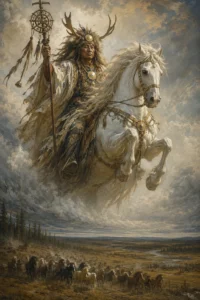
Yhych-Khan: Yakut Horse-Lord
→ To the being
Yong-wang
Yong-wang
→ To the being
Jade Emperor
Jade Emperor
→ To the being
Zephyros
Zephyros
→ To the being
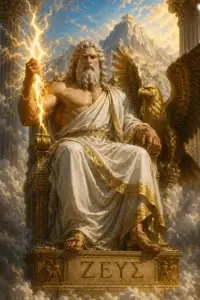
Zeus
Zeus
→ To the being
Zhong Kui
Zhong Kui
→ To the being
Zhurong
Zhurong
→ To the being

iWell Guard and protective traditions

Across all documented cultures, protective objects can be traced that people wore on the body, from Pazuzu amulets in Mesopotamia and the Hamsa in the Mediterranean region to the Mezuzah on Jewish doorposts and Christian protective medals. iWell Guard takes up this tradition in a contemporary material architecture, made in Germany, 41 layers, solid gold, platinum, silver. 30-day right of return.

Personal experiences may vary. Not a medical device. No promise of healing.