iWell Guard

Wanakawri, where Ayar Uchu turned to stone

Apu Wanakawri is a mountain god of the Quechua tradition.

Mountain of origin of the Inka, where an ancestor turned to stone.

GodQuechua

Table of Contents

Apu Wanakawri, the Origin Mountain of the Inca
Apu Wanakawri

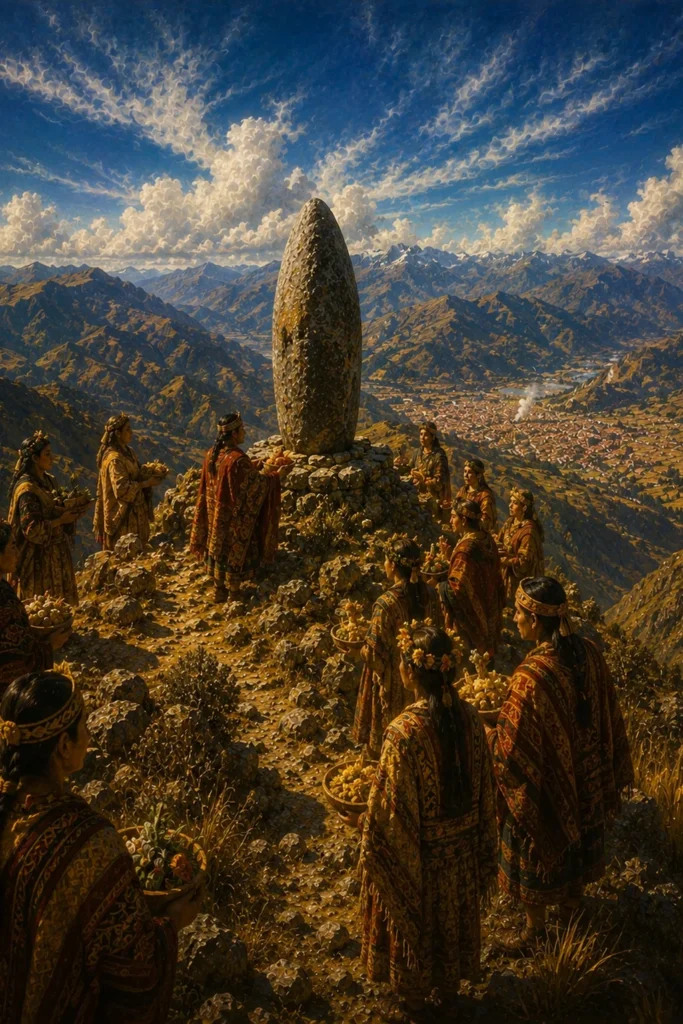
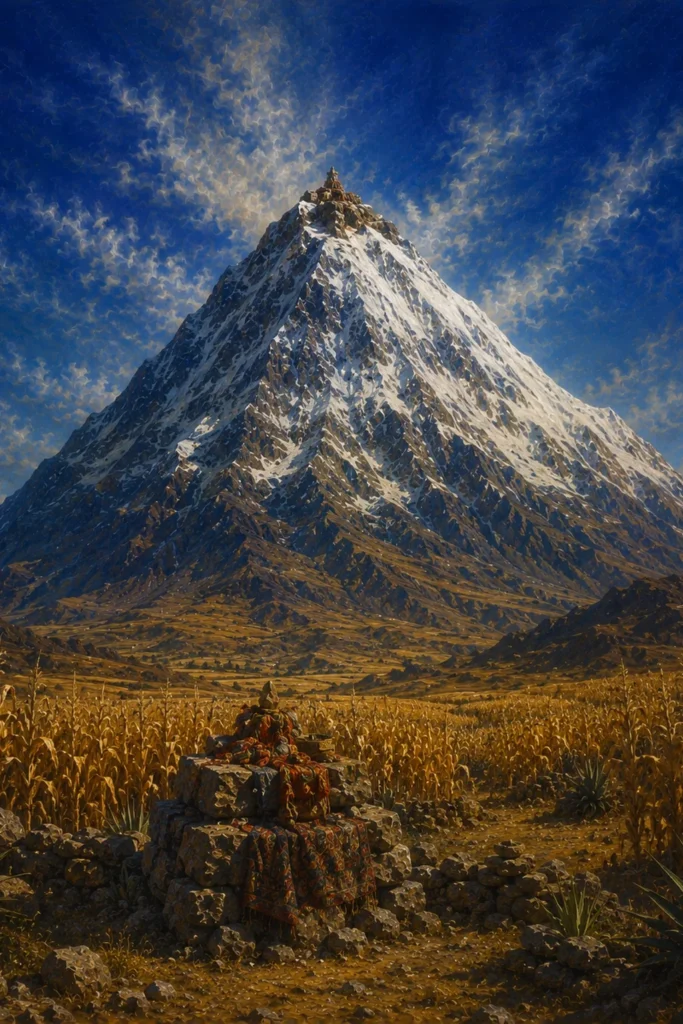
Apu Wanakawri, also Huanacauri, is a sacred mountain southeast of Cusco and one of the most important huacas of the Inka Empire. It is central to the Inka origin myth, for here the Ayar brother Ayar Uchu was transformed into a spindle-shaped stone and became a revered huaca.

Unlike the glaciated high peaks of the Andes, Wanakawri is a mountain of myth and dynasty: it legitimised the descent of the ruling house and accompanied young Inka nobles through their initiation rites.

At a glance: Apu Wanakawri

Type: Origin huaca, protector during initiation and war
Origin: near Cusco, Cusco region
Texts: colonial chronicles, Cieza de León, Cobo, Sarmiento
Period: from the Inka era, transmitted in the chronicles
Appearance: petrified ancestor as a spindle-shaped stone huaca

Textual history

Period of the Texts

The cult dates from the Inka era; it has been transmitted above all through the colonial chronicles of the sixteenth and seventeenth centuries.

Area of Diffusion

The mountain lies about twenty-five kilometres southeast of Cusco, near the Pacaritambo axis, in the heartland of the Inka Empire.

Sources

Well attested: Cieza de León, Cobo, and Sarmiento de Gamboa transmit the myth and cult of the mountain extensively and independently of one another.

Name and variants

Quechua: The origin of the name Wanakawri is unclear; it is usually listed simply as the proper name of the huaca mountain. The spelling Huanacauri is the common colonial variant.

Description

Appearance

Wanakawri appears as a petrified brother and ancestor: a stone huaca, a wawqi or stone double, connected to the ruling house.

Effect

As a huaca, Wanakawri legitimised the dynastic descent of the Inka and was a protector during initiation and war; within the ceque system of Cusco he held a fixed place.

Profile: Apu Wanakawri

The origin huaca of the Inka Empire in brief.

Cultural Context

One of the most important huacas of the Inka Empire, embedded in the ceque system and in the dynasty’s origin myth.

Relates To

The ruling house, whose descent the huaca legitimised, and the initiates of the Warachikuy rites.

Depiction

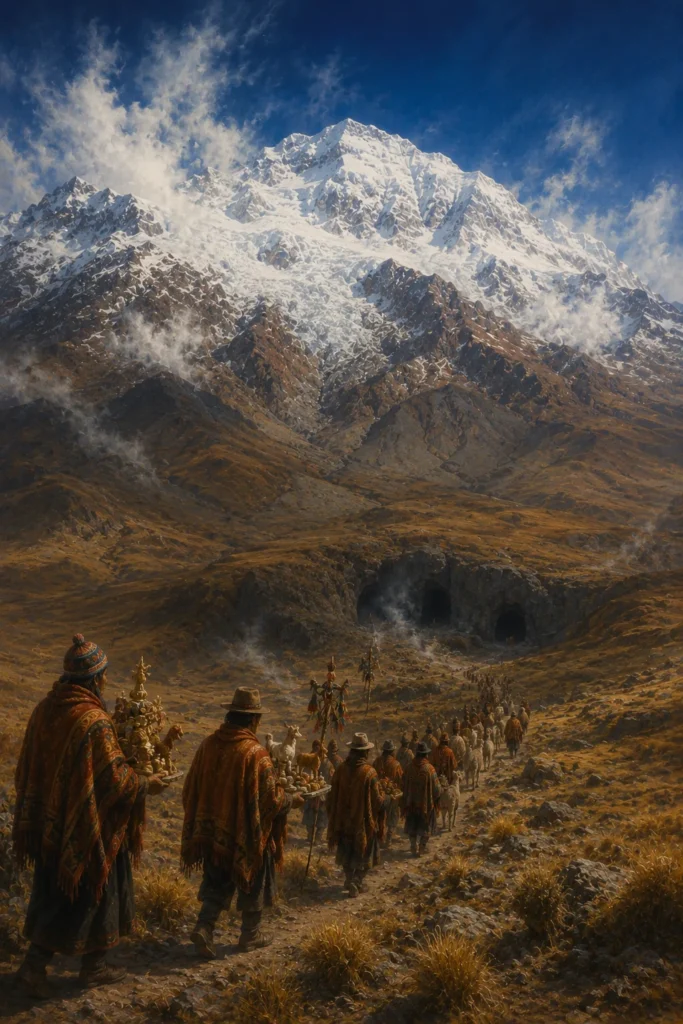
Spindle-shaped stone huaca, the petrified Ayar brother; as a wawqi, a stone double, he was carried in processions.

Function

Dynastic legitimation, protection during initiation and war, a fertility association in the rites of the Inka Empire.

Cult

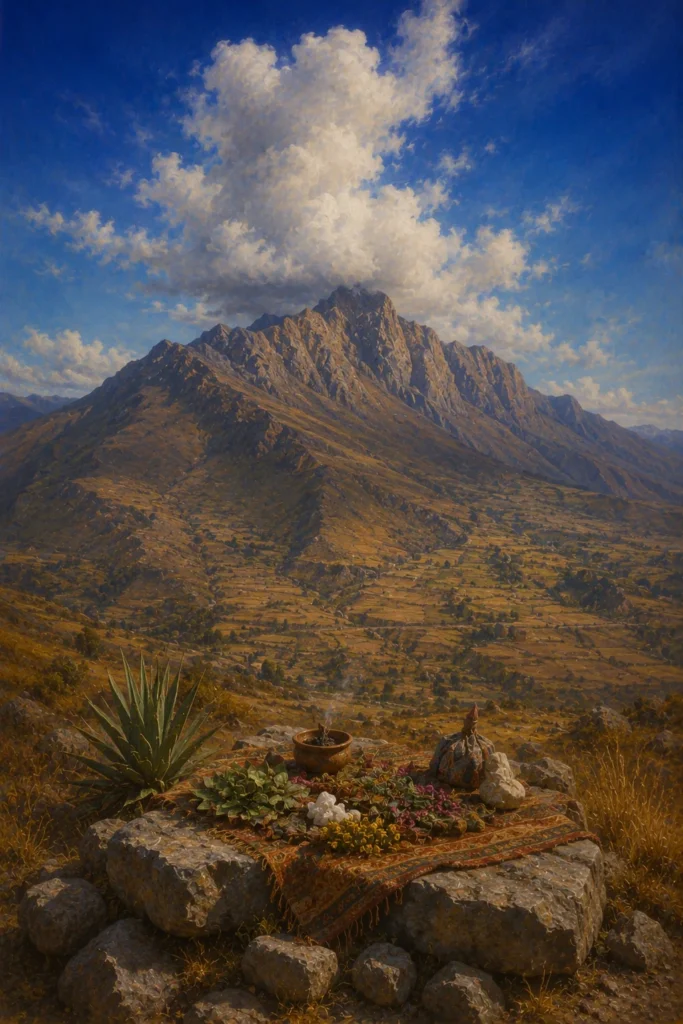
Rich offerings during the Warachikuy rites, and according to the chronicles also capacocha-like gifts; today, general pago forms.

Distinctions

Not a high-mountain volcano with frozen mummies like Apu Sara Sara, but an ancestral and mythical mountain of the heartland.

Ayar Uchu and the Pacaritambo axis

Wanakawri lies about twenty-five kilometres southeast of Cusco, near the Pacaritambo axis. In the origin myth of the Ayar brothers from Pacaritambo, Ayar Uchu turned to stone here; the mountain thus became one of the holiest sites of the emerging Inca empire. The origin of the name itself is unclear and is usually only recorded as a proper name.

In the imperial religion, Wanakawri was integrated into the Ceque system of Cusco and played a key role in fertility and war rites, but above all in the Warachikuy initiation rites, through which young Inca nobles entered manhood.

The Mountain of the Chroniclers

Wanakawri is a core element of the Inca founding myth and is widely recorded in the chronicles of Cieza de León, Cobo and Sarmiento de Gamboa.

From a religious studies perspective, Apu Wanakawri is primarily a huaca and ancestral mountain of the origin myth, not a high-altitude volcano with frozen mummies. Important clarification: the brother who turned to stone is usually Ayar Uchu, not Manco Cápac himself, who became the first ruler; however, the sources vary in details.

Warachikuy: Initiation at the Origin Mountain

Rich offerings are documented at the Warachikuy rites, through which young Inca nobles were initiated; according to the chronicles, the mountain also received Capacocha-like gifts. The stone huaca itself was carried in processions. Today, veneration follows the general Pago forms, in which coca leaves, llama fat and chicha form the offering to the ancestral mountain.

Huacas, Ancestral Stones and the Island of the Sun

Wanakawri is related to the Island of the Sun on Lake Titicaca as a dynastic place of origin, and more generally to the huaca ancestor worship of the Andes. As an Apu, he is comparable to the Aymara Achachila and is connected to the earth mother Pachamama; nearby lies the ritual mountain Apu Pachatusan.

Frequently Asked Questions about Wanakawri

Why is Wanakawri sacred?

Because here the Ayar brother Ayar Uchu turned into stone and became an important huaca of the Inca origin myth.

What role did it play in the Inca empire?

It legitimised the dynastic descent and served as a protector during initiation and war, especially in the Warachikuy rites.

Is Wanakawri a volcano?

No. It is a sacred ancestral and huaca mountain, not a high-altitude volcano with frozen mummies.

Further links

Recommended internal links:

Literature (selection)

A selection of key sources and studies:
  • Cobo, Bernabé: Inca Religion and Customs. Austin 1990.
  • Bauer, Brian S.: The Sacred Landscape of the Inca. The Cusco Ceque System. Austin 1998.
  • Bauer, Brian S.: Ancient Cuzco. Heartland of the Inca. Austin 2004.

Further standard works in the bibliography.

As the sacred mountain of Cusco, Wanakawri is not a peak of altitude records, but a place of beginning: in the Inca origin myth, a brother turned to stone here, and from this stone an entire dynasty derived its legitimacy.

Classification & Protection

ILEVEL
The Protection Compass assigns this being to influence level I, Minor influence.

Against its influence, cross-cultural tradition names these protective means:

Compare in the Protection Compass →

Recommended protective means

iWell Guard

The simplest protective means in this collection: 41 layers of fine gold 999, platinum, silver and silicon, manufactured in Ruhla, Thuringia. It requires no activation, is bound to no person, and is effective within a radius of around 50 meters, even without being worn.

All protective means at a glance →