Energy Drain, Concepts and Protection
By Ralf Ittermann · last reviewed on
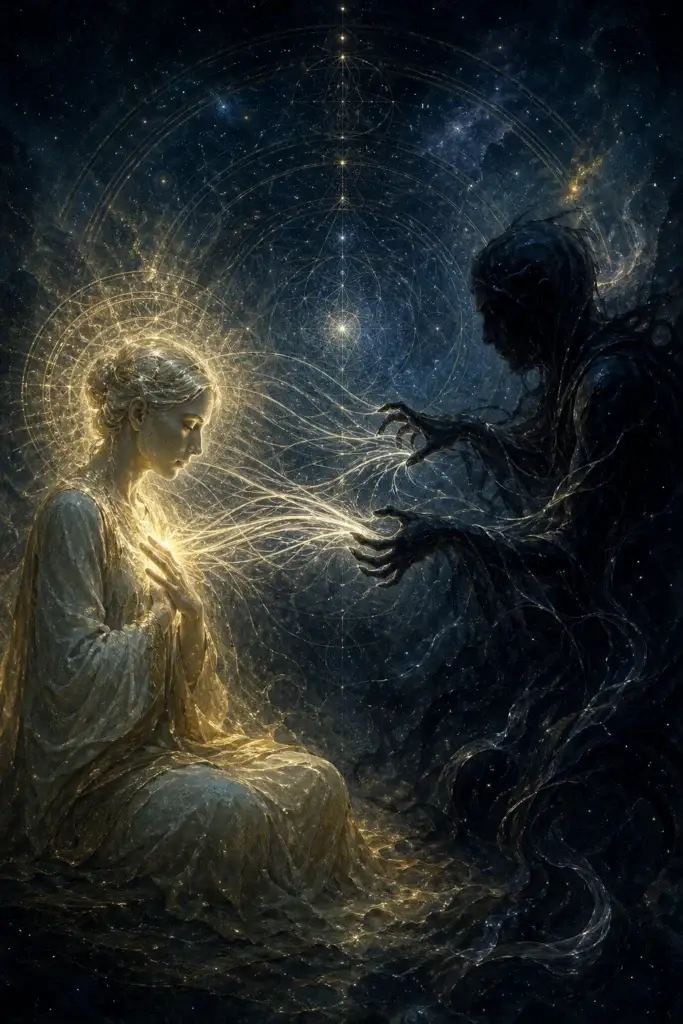
A concept from the spiritual vampirism tradition. The loss of personal life energy to external sources, whether energetic, emotional, or social.
Table of Contents
Quick Overview (Glossary)
Type: Esoteric phenomenon / magical practice Class: energy drain Distribution: Modern esoteric, New Age, and conspiracy discourses (global, especially North America and Western Europe) Main features: Subtlety, progressive weakening, often unnoticed, psychic or supernatural mechanisms, metaphysical Related sub-categories: Archons, emotional vampires, psychic attacks, demons
Concept and Distinction
Energy drain is specifically an esoteric theory of exploitation through the movement or extraction of energy. It differs from classic demonic possession (which causes direct, visible harm) and from witchcraft attacks (which operate through ritual means).
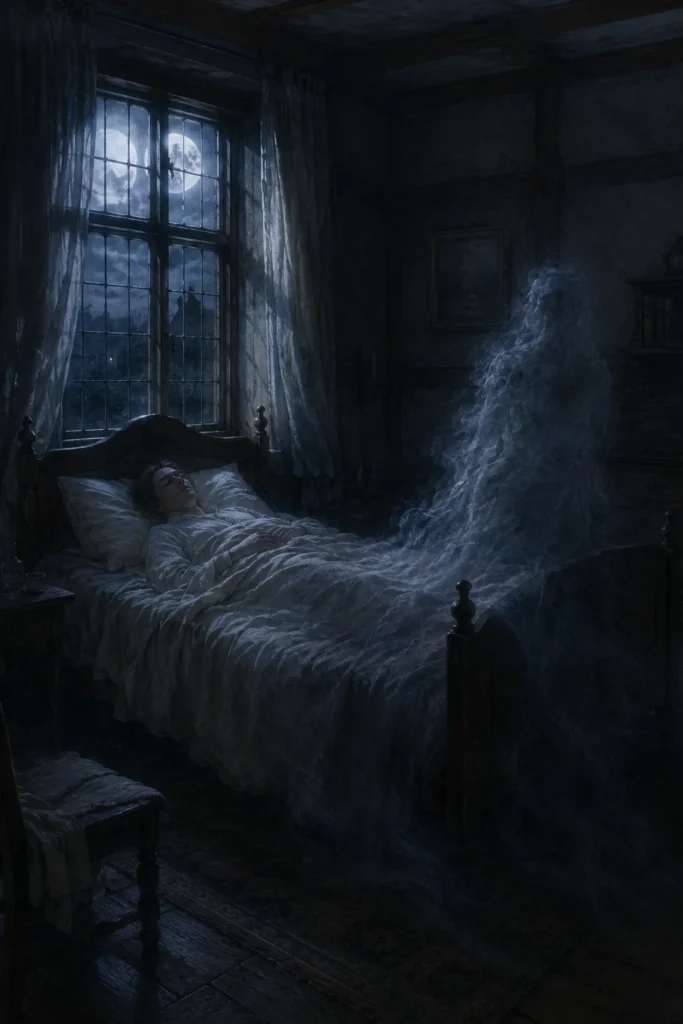
In theory, energy drain is continuous and unconscious: a psychic parasite on the etheric or astral body that absorbs life force day after day and weakens it. In esoteric circles, energy drain is often regarded as more common than direct demonic attacks.
One may also distinguish “emotional vampires” (a psychological concept, subtle emotional manipulation) from supernatural energy drain (a metaphysical concept). Some esoteric literature blends the two concepts or treats emotional vampirism as a “training stage” toward genuine supernatural energy drain.
Concept and Religious-Historical Depth
Energy drain is the term used in spiritual and esoteric traditions for the notion that a person, a spirit, or another being withdraws life energy from someone.
In terms of religious history, the concept has a long prehistory. The Mesopotamian tradition knows the Lilitu and Ardat-Lili as beings that draw life force from sleeping men.
The Greek tradition knows Lamia and Empusa, who suck the blood of young men. The Slavic tradition knows the Vampyr, which entered Western European discourse only in the 18th century through reports from Serbia and Hungary.
The Theosophical tradition (Helena Petrovna Blavatsky, Charles Webster Leadbeater) translated the concept of vampirism into a systematic energetic model.
Cultural-Historical Examples
Energy drain concepts are present in modern esoteric literature, especially since the 1990s. The psychic vampire or emotional vampire literature (from the 1990s onward) deals with people who seem instinctively to exploit others emotionally.
In the work of David Icke and similar conspiracy literature, reptilians and archons drain human emotional energy, fear, pain, and anger, in order to feed and to increase their power. In Robert Monroe and other out-of-body experience literature, archons are described as “loosh thieves” or parasites of emotional energy.
Tibetan Buddhist texts contain references to beings (yidak, “hungry spirits“, the pretas of the Six Realms of Existence) that suffer from insatiable hunger and thirst. In modern Paganism and witchcraft communities, energy drain is partly discussed as defensive magic: how to protect oneself from unconscious or deliberate energy drain.
In modern occult internet culture, malicious magical practices or psychic vampires are mentioned regularly. These examples show a mixture of newly invented esoteric concepts and reinterpretations of older traditions.
Classification of Energy Drainers
In the modern lightworker tradition, energy drainers are divided into three classes. Personal energy drainers are living people who, usually unconsciously and through their own energetic deficits, exploit others energetically; they are often called “energy vampires” (James Redfield, The Celestine Prophecy, 1993; Christiane Northrup, Dodging Energy Vampires, 2018).
Spirit-based energy drainers are non-incarnated beings that attach themselves to the living, often at sites of trauma or at open energetic wounds. Archon-based energy drainers are, in the Gnostic and neo-Gnostic tradition, cosmic power structures that exploit human life force as a collective resource (see /archonten/).
State of the Sources
Classical demonological texts know beings that draw off life force (Lilitu, Ardat-Lili, Lamia, Empusa); the modern concept of energy drain emerged in the late 20th century within New Age movements, esoteric literature, and online occult communities.
The psychological literature on emotional vampires has more academic support (psychotherapy literature). Esoteric authors often cite Qi or prana concepts, or Eastern energy teachings, selectively in order to justify energy drain; this is an over-interpretation of older traditions rather than an authentic transmission.
Present-Day Significance / Related Beings
iWell Guard Protection Against Energy Drain
In the protective mantra, energy drain is explicitly addressed in point 6 (Protection against energy drain and takeover). Attempts to withdraw or divert energy from the wearer, or to take them over energetically, are eliminated through the origin of all being. This clause covers all three classes of energy drainers named above.
The operative logic is not aimed at individual beings in a piecemeal way but is structural: the protective field recognizes patterns of energy outflow and interrupts them regardless of the source. A detailed functional overview of all mantra points is offered in the section /affirmationen/.
iWell Guard and Protective Traditions
The concepts of energy drain documented here are descriptions drawn from spiritual and religious traditions.
iWell Guard continues the millennia-old line of portable protective objects, from Pazuzu pendants in Mesopotamia through Hamsa and evil-eye amulets in the Mediterranean to the Mezuzah on Jewish doorposts and to Christian protective medals.
A contemporary form of this, made in Germany, with a clearly documented material architecture (41 layers, solid gold, platinum, silver). 30-day right of return.
Not a medical device. No promise of healing. Personal perceptions may vary.