iWell Guard

Demons at a Glance: Malevolent Beings Across Cultures

Demons are supernatural beings that are understood in nearly all religious systems as malevolent powers that disturb order or as active agents of harm against humans, ranging from punishing spirits and seductive tempters to chaotic cosmic forces.

The evidence extends from Akkadian incantation tablets and Jewish transitional demons to the ethnographic documentation of Islamic and Christian-European demonology. Their functional role varies across cultural history between antagonist, cosmic counterpole, and necessary component of the cosmological order.

CategoryCross-cultural

Table of Contents

Demons: harmful beings worldwide

This page provides an overview of demonic entities in the documented religions.

Introduction / Overview

What are “demons”?

The term “demon” is multifaceted and has developed over the course of history.

It derives from the ancient Greek word daimōn (δαίμων), which originally did not denote a purely evil being but rather a supernatural force or a spiritual being standing between gods and humans. In ancient Greek thought, daimones could be helpful as well as harmful.

Only in the course of religious development, particularly in Judaism, Christianity, and later Islam, did the term take on an increasingly negative meaning. Demons were now frequently interpreted as evil, destructive, or as beings fallen away from God.

This shift in meaning is decisive:
What we today call a “demon” is often a collective term for very different beings from various cultures that originally had quite distinct roles and meanings.

Demon vs. spirit vs. god vs. devil

The distinction between various supernatural beings is not always clear and varies by culture. Nevertheless, fundamental differences can be described:

Demons

Usually a supernatural being with specific functions or characteristics. Demons can be destructive, neutral, or even protective. They often stand between the divine and human spheres.

Spirits

A general term for immaterial beings. This includes ancestors, nature spirits, or the deceased. Spirits are not necessarily demonic and are often more closely tied to particular places or persons.

God

A higher, venerated being with creative or ordering power. Gods are central within religious systems and usually possess an established cult or a clear function within the structure of the world.

Devil

A specifically religious term (above all in Christianity and Islam) that represents personified evil. The devil is not simply a demon, but a central counter-figure to the divine principle.

👉 Important: in numerous cultures this clear separation does not exist. A being can be interpreted simultaneously as spirit, demon, or god.

Functions of demons

In mythological and religious systems, demons often fulfill concrete tasks. They are not random beings, but part of a larger worldview.

Illness and suffering

Many cultures explain illnesses through demonic influences.
Demons are regarded as the cause of:

  • physical complaints
  • psychological states
  • sudden misfortunes

Rituals, amulets, and incantations served to ward off these influences.

Temptation and moral trial

In later religious traditions, demons appear as tempters:

  • they influence thoughts
  • lead to misconduct
  • test faith or morality

This function is particularly pronounced in monotheistic religions.

Forces of nature

Demons are frequently associated with uncontrollable natural phenomena:

  • storms
  • desert winds
  • darkness
  • chaos

They embody the unpredictable aspects of the world.

Protection and order

Contrary to the modern notion, demons are not always negative.
In numerous cultures there exist:

  • protective demons
  • guardian beings
  • household spirits

These beings can:

  • protect people
  • guard places
  • keep evil forces away

The boundary between “demon” and “protective spirit” is often fluid.

Methodology of this page

This website pursues a comparative and interdisciplinary approach that combines three perspectives:

Scholarly

  • use of historical and philological sources
  • placement within cultural and temporal contexts
  • distinction between primary and secondary sources

The aim is to understand demons as part of human cultural history.

Mythological

  • presentation of the beings within their original narratives
  • consideration of symbolism, function, and meaning
  • comparison between different mythologies

Here the central question is:
What role do these beings play in the worldview of their culture?

Religious

  • placement within religious systems
  • consideration of demons as a component of belief
  • analysis of their role in rituals, moral concepts, and interpretations of the world

In doing so, no religious position is evaluated, but rather described.

Aim of the page

This page is not intended to be a simple “monster lexicon,” but a structured collection of knowledge that shows:

  • how differently demons are understood
  • which shared patterns exist
  • and what these conceptions say about human beings themselves

Cultures & Mythologies

The core of this part lies in the systematic presentation of demons within their respective cultural and mythological contexts. Rather than considering demons in isolation, they are understood here as part of a larger worldview, embedded in religion, society, and the understanding of nature.

Since the term “demon” is used across cultures, although the underlying conceptions are often very different, this page follows a clear principle:
Each culture is presented according to the same structure.

This allows for clarity and at the same time direct comparability between different traditions.

Uniform structure of the cultures

Each culture page is built according to a fixed scheme that captures the most important aspects of its demonology.

1. Introduction

Each presentation begins with a basic classification:

  • Time period
    When did the respective conception develop? Which historical phases are relevant?
  • Geographic area
    In which region is the mythology located?
  • Source situation
    Which kinds of transmission are available?
    • written texts
    • archaeological finds
    • oral traditions

This information forms the basis for understanding the respective conceptions of demons.

2. The concept of demon in this culture

The modern term “demon” is deliberately questioned and replaced or supplemented by the culture’s own respective term:

  • Examples:
    • daimōn (Greece)
    • shedim (Judaism)
    • asura (India)

In addition, the moral classification is examined:

  • Are these beings fundamentally evil?
  • Do they act neutrally or functionally?
  • Do they have both destructive and protective aspects?

In numerous cultures it becomes clear that demons cannot be unambiguously categorized in moral terms.

3. Typology

In order to organize the diversity of beings within a culture, demons are divided into functional groups. This typology serves as orientation and for later comparison between cultures.

Typical categories are:

  • Nature demons, connected with elements, landscapes, or weather
  • Disease demons, causes of physical or mental suffering
  • Underworld demons, associated with death, the afterlife, or shadow worlds
  • Protective demons, guardians, companions, or warding forces
  • Tricksters and tempters, beings that deceive, test, or seduce

This classification is an analytical tool and does not always correspond exactly to the original categories of the respective culture.

4. Important demons (individual profiles)

At the center of each culture stand the individual demons with their specific characteristics.

Each entry follows a uniform structure:

  • Name and variants
    Different spellings, translations, or regional forms
  • Description
    Appearance, behavior, and characteristic features
  • Function
    Role within the mythology or religion
  • Sources
    Texts, finds, or transmissions in which the being is mentioned
  • Iconography
    Pictorial representations, symbols, or typical attributes
  • Parallels in other cultures
    Comparable beings or similar functions outside one’s own tradition

This structured presentation enables detailed study as well as cross-cultural analyses.

5. Demonology in everyday life

Demons are not only part of abstract myths, but are often deeply rooted in the everyday lives of people.

This section examines practical aspects:

  • Rituals of warding
    Acts to drive away or appease demons
  • Incantations and formulas
    spoken or written means of exerting influence
  • Amulets and protective symbols
    Objects with a protective or apotropaic function

Here it becomes particularly clear how conceptions of demons have influenced daily life.

6. Development over time

Conceptions of demons are not static. They change through historical processes and cultural encounters.

Important factors of influence are:

  • Religious developments
    e.g. transition from polytheism to monotheism
  • Political upheavals
    Conquests, migrations, or social changes
  • Syncretism
    Fusion of different religious and cultural systems

As a result, the meaning, function, and evaluation of demons can change considerably over time.

Cultural Categories at a Glance

The diversity of demonological conceptions worldwide makes a clear arrangement necessary. To provide orientation, the cultures of this website are divided into larger cultural and geographic categories.

This division does not serve as a rigid system, but as a practical ordering principle that takes into account historical connections, religious developments, and regional proximity.

At the same time, it allows comparisons to be drawn within a category as well as across cultures.

Ancient cultures

The ancient high cultures provide some of the oldest transmitted conceptions of demons. Many later traditions build directly or indirectly upon them.

  • Mesopotamia (particularly central)
    One of the earliest known demonologies, with complex systems of disease, protective, and underworld demons. Many motifs reappear later in other cultures.
  • Egypt
    Demonic beings are closely connected with the afterlife, the trials of the dead, and protective functions. The boundaries between deity and demon are often fluid.
  • Greece
    The term daimōn arises here as a neutral or ambivalent spiritual force. Later interpretations significantly shaped today’s concept of the demon.
  • Rome
    Adopts many Greek concepts, but combines them with its own religious conceptions and a strongly ritualized relevance to everyday life.

Abrahamic traditions

In these monotheistic religions, the role of demons changes fundamentally. They are frequently understood as adversaries of the divine principle.

  • Judaism
    Multilayered development from early conceptions to complex demonologies with beings such as shedim or Lilith.
  • Christianity
    Strong focus on demons as fallen angels and the embodiment of evil. Exorcism and moral interpretation are central.
  • Islam
    A differentiated system with beings such as the jinn, who are not exclusively evil but possess free will.

Asia

The Asian traditions show a particularly great diversity of conceptions of demons, which are often closely connected with philosophical and religious systems.

  • Hinduism
    Complex distinction between various beings such as Asuras and Rakshasas, which play cosmic as well as moral roles.
  • Buddhism
    Demons frequently appear as manifestations of desire, ignorance, or inner conflicts.
  • China (Daoism and folk belief)
    An extensive world of spirits and demons with clear hierarchies, administrative structures, and a strong influence on everyday life.
  • Japan (Yōkai, Oni)
    A broad spectrum of beings, from playful to threatening, reflecting nature, emotions, and social fears.
  • Korea (Muism, Confucianism, Buddhism)
    Gwishin spirits of the dead, mischievous Dokkaebi, and the nine-tailed Gumiho, at the intersection of shamanism, Confucian order, and Buddhist cosmology.
  • Tibet (Bön and Tibetan Buddhism)
    Mountain, water, and king demons between pre-Buddhist Bön and tantric Buddhism; a highly differentiated typology of Klu, Btsan, Gnyan, Rgyal po, and Ma mo.

Europe (folk belief)

Alongside the major religions, there exist numerous local traditions in which demons are often closely connected with nature, the seasons, and community.

  • Germanic
    Beings between gods, spirits, and demons, often related to natural forces and fate.
  • Celtic
    A strong connection to the Otherworld, with beings that can be helpful as well as dangerous.
  • Slavic
    A rich demonology with many regional variants, frequently connected with house, forest, and water.

Africa

The African traditions are extremely diverse and can only partly be grasped within uniform systems. Nevertheless, common structures appear in the connection of spirit, demon, and ancestral being.

  • Yoruba
    A complex religious system in which spiritual beings take on various roles and are not strictly divided into “good” or “evil.”
  • Further regional traditions
    Numerous local belief systems with their own conceptions of demons, often closely connected with community, ritual, and nature.

The Americas

The pre-Columbian cultures as well as the indigenous traditions of North America offer independent and often less dualistic conceptions of supernatural beings.

  • Maya / Aztecs
    Demonic or dangerous beings are closely connected with cosmology, sacrificial cults, and natural cycles.
  • Indigenous North American traditions
    Diverse spiritual systems in which beings are often understood as part of a living, animate cosmos.

Comparative Demonology

While the individual cultures each develop their own conceptions of demons, closer examination reveals striking parallels and recurring patterns.

Comparative demonology investigates these similarities and differences across cultures. It makes it possible to look beyond the isolated demon and to understand such figures as part of universal human patterns of interpretation.

This area forms a bridge between the individual cultures and makes visible how similar ideas arise in different contexts.

Comparison of categories

A central approach is the comparison of demons according to their functions and spheres of effect. It becomes apparent that many cultures know similar types of beings, even without direct contact with one another.

Disease demons worldwide

In nearly all cultures there exist conceptions of beings that cause or influence illnesses.

They explain:

  • physical ailments
  • psychological states
  • sudden or inexplicable illnesses

They are often closely connected with rituals, healing practices, and protective measures.

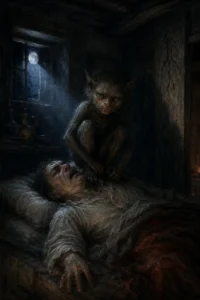
Night beings and sleep paralysis

Many cultures report beings that visit people in their sleep.

Typical features:

  • pressure on the chest
  • inability to move
  • feelings of fear or panic

These experiences are frequently interpreted as an encounter with a demon. Modern research connects them with sleep paralysis, yet the cultural interpretations remain varied.

Demons of sexuality and seduction

A recurring motif are beings associated with:

  • desire
  • seduction
  • sexual energy

These demons often reflect social norms, fears, and taboos, and appear in similar forms in numerous cultures.

Beings of chaos

Some demons embody the principle of chaos:

  • destruction
  • disorder
  • threat to the cosmic order

They often stand in opposition to divine or ordering forces and symbolize the uncontrollable aspects of the world.

Archetypes

Beyond individual functions, demons can also be understood as archetypes, fundamental patterns that recur again and again across various cultures.

The tempter

Beings that deceive, seduce, or morally test people.
They often appear in attractive or deceptive form and play on human weaknesses.

The destroyer

Demons that stand for catastrophe, death, or decay.
They embody extreme forms of violence and dissolution.

The trickster

An ambivalent archetype:

  • cunning
  • unpredictable
  • often humorous or subversive

Tricksters break rules and call existing orders into question.

The guardian

Not all demons are hostile. Some function as:

  • protectors
  • threshold guardians
  • defenders against other powers

This archetype shows particularly clearly the ambivalence of demonic beings.

Symbolism

Demons are frequently connected with particular symbols that can carry similar meanings across cultures.

Colors

Colors play an important role in representation and interpretation:

  • Black, death, darkness, the unknown
  • Red, blood, danger, energy
  • White, ambivalence: purity or emptiness

The meaning can vary by culture, but often shows similar basic patterns.

Animals

Many demons appear in animal or hybrid form:

  • Snakes → danger, transformation
  • Dogs → guardians or the underworld
  • Birds → transition between worlds

Animal representations connect demons with natural forces and instincts.

Elements

Demons are frequently linked with the classical elements:

  • Fire, destruction, purification, energy
  • Water, depth, chaos, the subconscious
  • Air, invisibility, movement
  • Earth, death, the underworld, stability

These associations reflect fundamental human experiences with nature.

The significance of the comparative perspective

Comparative demonology shows:

  • that similar conceptions can arise independently of one another
  • that demons often express fundamental human fears and questions
  • and that cultural differences are just as important as similarities

Sources & Texts

The understanding of demons is based on a multitude of historical, religious, and cultural transmissions. This area collects and organizes the most important sources and textual foundations on which the contents of this website rest.

The aim is to present results and at the same time make their origin transparent.

Original texts (translated)

A central component of this page are original sources, made accessible in translation where possible.

These include, among others:

  • religious writings
  • mythological narratives
  • incantation texts
  • magical formulas
  • inscriptions and clay tablets

These texts give direct insight into the conceptions of the respective culture and show how demons were actually described and understood.

Care is taken to:

  • preserve the original context
  • make translations comprehensible
  • and clearly mark interpretive interventions

Quotations

In addition to complete texts, targeted quotations are also used to highlight particular aspects.

Quotations serve to:

  • present central statements concisely
  • show typical descriptions of demons
  • make differences between sources visible

They are always:

  • clearly marked
  • placed within their context
  • and, where necessary, explained linguistically

Primary sources vs. secondary literature

A fundamental component of scholarly work is the distinction between various kinds of sources.

Primary sources

Primary sources are contemporary testimonies from the respective culture itself.

These include:

  • original texts (e.g. religious writings, myths)
  • archaeological finds
  • inscriptions
  • oral transmissions (insofar as documented)

They form the direct basis for understanding demons.

Secondary literature

Secondary literature comprises modern analyses and interpretations of these sources.

These include:

  • scholarly studies
  • historical classifications
  • comparative analyses
  • translations and commentaries

These help to:

  • recognize connections
  • evaluate sources critically
  • and understand different interpretations

Handling of the sources

This website pursues a deliberate and transparent approach to all materials:

  • separation of source and interpretation
  • marking of uncertain or disputed content
  • avoidance of simplifying or distorting representations

Particular attention is given to not distorting cultural concepts through modern terms, but instead understanding them as far as possible within their own context.

Aim of the sources area

The area “Sources & Texts” is intended to:

  • disclose the foundation of the presented content
  • enable independent research
  • and create a deeper understanding of the emergence and transmission of conceptions of demons

It makes clear that demonology consists of more than stories: it is transmitted knowledge, interpretation, and cultural development.

Modern Reception

Demons are a component of historical and religious conceptions, and at the same time a firm component of modern culture. In literature, film, popular culture, and esoteric movements, they are repeatedly reinterpreted, altered, and adapted to contemporary conceptions.

This section examines how the image of demons has continued to develop into the present, often far removed from their original meanings.

Literature

In literature, demons have played an important role for centuries, reflecting the respective intellectual and cultural movements of their time.

  • In classical literature they frequently appear as:
    • tempters
    • adversaries of the human being
    • symbolic figures for inner conflicts
  • In modern literature, demons are increasingly:
    • interpreted psychologically
    • portrayed as ambivalent or even sympathetic figures
    • embedded in complex moral gray areas

In doing so, the focus often shifts from a purely external enemy toward an inner confrontation of the human being with himself.

Films

Film and television have strongly shaped today’s image of demons.

Typical depictions are:

  • possession and exorcism
  • physical manifestations of evil
  • supernatural threats

In doing so, motifs from Christianity are frequently taken up, even when the original cultural backgrounds are strongly simplified or altered.

At the same time, new interpretations emerge:

  • demons as antiheroes
  • tragic figures
  • beings with their own morality and history

Popular culture

In popular culture, demons are omnipresent and appear in diverse forms:

  • video games
  • comics and manga
  • series
  • fantasy and horror genres

Here they are often:

  • stylized and visually strongly shaped
  • mixed with other mythologies
  • embedded in new narrative contexts

The original religious meaning frequently recedes into the background, while aesthetics and storytelling take center stage.

Esotericism

In esoteric and occult movements, demons undergo their own form of reception.

They are in part understood as:

  • real spiritual beings
  • forces or energies
  • archetypal aspects of consciousness

Practices can include:

  • incantations
  • protective rituals
  • symbolic work with demonic figures

These interpretations often draw on historical sources, but combine them with modern worldviews and individual belief systems.

Between tradition and transformation

Modern reception clearly shows that demons are not static figures. Their meaning changes according to time, medium, and cultural context.

In the process, there arise:

  • new interpretations of old motifs
  • mixtures of different traditions
  • shifts from “evil” to “ambivalent” or even “positive”

Aim of the methodology area

This section is intended to make clear:

  • how strongly modern conceptions of demons are shaped by media
  • how far they have often moved away from their original meanings
  • and how old concepts live on in new forms

It forms the conclusion of the page and connects the historical perspective with the present.

Selected bibliography on demons:

  • Lurker, Manfred: Lexikon der Götter und Dämonen. Kröner, Stuttgart 1989.
  • Bremmer, Jan N.: The Rise and Fall of the Afterlife. Routledge, London 2002.

Note: This selection serves as orientation; detailed articles follow their own curated source list.

Further standard works in the literature index.

Demons in this collection (137)

Abiku
Abiku
→ To the being
Adaro
Adaro
→ To the being
Aeshma
Aeshma
→ To the being
Afanc
Afanc
→ To the being
Agrat bat Mahlat
Agrat bat Mahlat
→ To the being
Ahuizotl
Ahuizotl
→ To the being
Aïsha Qandisha
Aïsha Qandisha
→ To the being
Ala
Ala
→ To the being
Alu
Alu
→ To the being
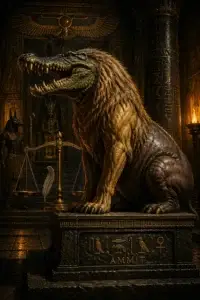
Ammit
Ammit
→ To the being
Anzu
Anzu
→ To the being
Apaosha
Apaosha
→ To the being
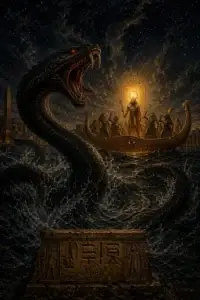
Apophis
Apophis
→ To the being
Asag
Asag
→ To the being
Asmodeus
Asmodeus
→ To the being
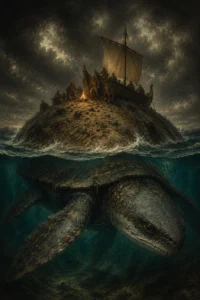
Aspidochelone
Aspidochelone
→ To the being
Astaroth
Astaroth
→ To the being
Aswang
Aswang
→ To the being
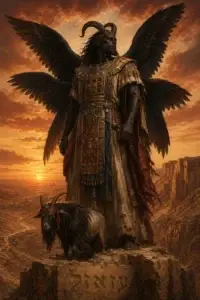
Azazel
Azazel
→ To the being
Baba Yaga
Baba Yaga
→ To the being
Babi
Babi
→ To the being
Bäckahäst
Bäckahäst
→ To the being
Bael
Bael
→ To the being
Banaspati
Banaspati
→ To the being
Baphomet
Baphomet
→ To the being
Beelzebub
Beelzebub
→ To the being
Belial
Belial
→ To the being
Berberoka
Berberoka
→ To the being
Bolotnik
Bolotnik
→ To the being
Bunyip: Water Demon of the Aboriginal Tradition
→ To the being
Cacus
Cacus
→ To the being
Kalku
Kalku
→ To the being
Ceffyl Dŵr
Ceffyl Dŵr
→ To the being
Charybdis
Charybdis
→ To the being
Cherufe
Cherufe
→ To the being
Churel
Churel
→ To the being
Div
Div
→ To the being
Doppelsauger
Doppelsauger
→ To the being
Drud
Drud
→ To the being
Dulhath
Dulhath
→ To the being
Each-uisge
Each-uisge
→ To the being
Empusa
Empusa
→ To the being
Erlik Khan: Ruler of the Altaic Underworld
→ To the being
Gallu
Gallu
→ To the being
Ghaddar
Ghaddar
→ To the being
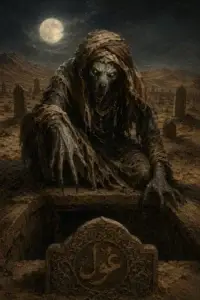
Ghul
Ghul
→ To the being
Gjenganger
Gjenganger
→ To the being
Greys
Greys
→ To the being
Grindylow
Grindylow
→ To the being
Habergeiß
Habergeiß
→ To the being
Harpies
Harpies
→ To the being
Ifrit
Ifrit
→ To the being
Iku-Turso
Iku-Turso
→ To the being
Ipupiara
Ipupiara
→ To the being
Jenny Greenteeth
Jenny Greenteeth
→ To the being
Jubokko
Jubokko
→ To the being
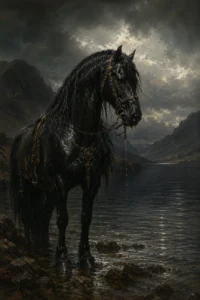
Kelpie
Kelpie
→ To the being
Ketev Meriri
Ketev Meriri
→ To the being
Krampus
Krampus
→ To the being
Krasue
Krasue
→ To the being
La Patasola
La Patasola
→ To the being
Lagahoo
Lagahoo
→ To the being
Lamashtu
Lamashtu
→ To the being
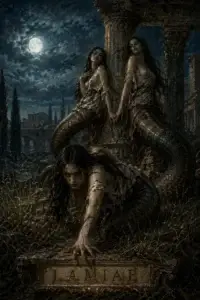
Lamia
Lamia
→ To the being
Lamiae
Lamiae
→ To the being
Langsuir
Langsuir
→ To the being
Legion: Possession and Collective Demons
→ To the being
Lilith
Lilith
→ To the being
Lilû and Lilītu
Lilû and Lilītu
→ To the being
Llamhigyn y Dŵr
Llamhigyn y Dŵr
→ To the being
Logi
Logi
→ To the being
Makara
Makara
→ To the being
Manananggal
Manananggal
→ To the being
Marid
Marid
→ To the being
Medea
Medea
→ To the being
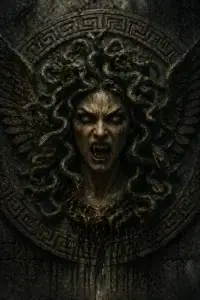
Medusa
Medusa
→ To the being
Mishiginebig
Mishiginebig
→ To the being
Mishipeshu
Mishipeshu
→ To the being
Moroi
Moroi
→ To the being
Nachzehrer
Nachzehrer
→ To the being
Naraka Guardian
Naraka Guardian
→ To the being
Nasnas
Nasnas
→ To the being
Nehebkau
Nehebkau
→ To the being
Nguruvilu
Nguruvilu
→ To the being
Nuckelavee
Nuckelavee
→ To the being
Nure-onna
Nure-onna
→ To the being
Ogbanje
Ogbanje
→ To the being
Oni
Oni
→ To the being
Paimon
Paimon
→ To the being
Pairika
Pairika
→ To the being
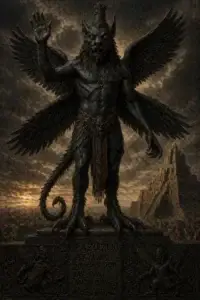
Pazuzu
Pazuzu
→ To the being
Peg Powler
Peg Powler
→ To the being
Penanggalan
Penanggalan
→ To the being
Penghou
Penghou
→ To the being
Phi Pop
Phi Pop
→ To the being
Pishacha
Pishacha
→ To the being
Pontianak
Pontianak
→ To the being
Pricolici
Pricolici
→ To the being
Qalupalik
Qalupalik
→ To the being
Qutrub
Qutrub
→ To the being
Rabisu
Rabisu
→ To the being
Rakshasa
Rakshasa
→ To the being
Reptilians
Reptilians
→ To the being
Sasabonsam
Sasabonsam
→ To the being
Se’irim
Se’irim
→ To the being
Sennentuntschi
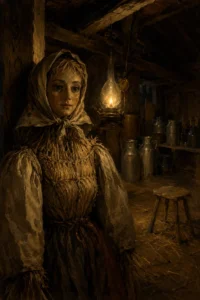
Sennentuntschi
→ To the being
Shanxiao
Shanxiao
→ To the being
Shayatin
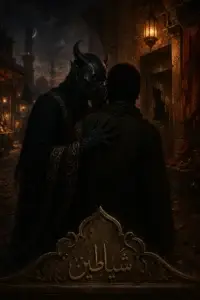
Shayatin
→ To the being
Shedim
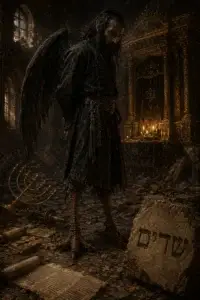
Shedim
→ To the being
Shezmu
Shezmu
→ To the being
Shiqq
Shiqq
→ To the being
Si’lat
Si’lat
→ To the being
Sinmara
Sinmara
→ To the being
Sirens
Sirens
→ To the being
Skadegamutc
Skadegamutc
→ To the being
Soucouyant
Soucouyant
→ To the being
Stikini
Stikini
→ To the being
Striga
Striga
→ To the being
Strigoi
Strigoi
→ To the being
Surtr
Surtr
→ To the being
Tatzelwurm
Tatzelwurm
→ To the being
Tiyanak
Tiyanak
→ To the being
Toggeli
Toggeli
→ To the being
Topielec
Topielec
→ To the being
Toyol
Toyol
→ To the being
Umibōzu
Umibōzu
→ To the being
Umm al-Duwais
Umm al-Duwais
→ To the being
Upiór
Upiór
→ To the being
Upyr
Upyr
→ To the being
Utukku: spirits of the dead and underworld demons
→ To the being
Vesihiisi
Vesihiisi
→ To the being
Vodník
Vodník
→ To the being
Vrykolakas
Vrykolakas
→ To the being
Vukodlak
Vukodlak
→ To the being
Wietrzyca
Wietrzyca
→ To the being
Yamauba
Yamauba
→ To the being
Yowie: Aboriginal Wild Man of the Australian Forests
→ To the being

iWell Guard and traditions of protection

Across all documented cultures, protective objects can be attested that people carried on their bodies, from Pazuzu amulets in Mesopotamia and the Hamsa in the Mediterranean region to the Mezuzah on Jewish doorposts and Christian protective medals. iWell Guard takes up this tradition in contemporary material architecture, manufactured in Germany, 41 layers, solid gold, platinum, silver. 30-day right of return.

Personal experiences may vary. Not a medical device. No promise of healing.