iWell Guard

Umm al-Duwais, the Beauty with Sickle Hands

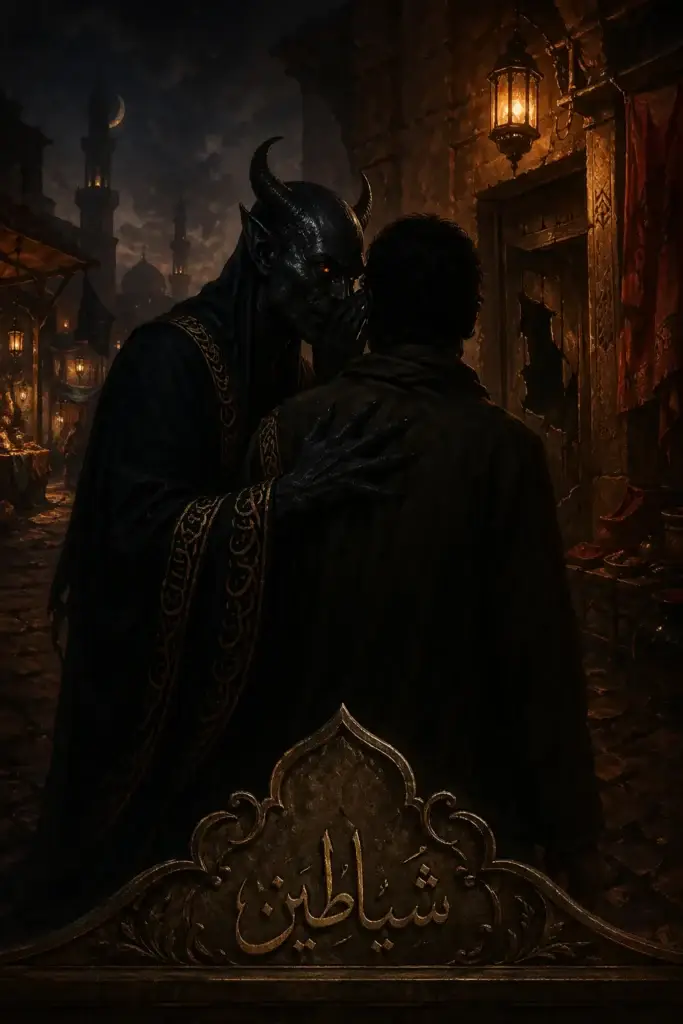
Umm al-Duwais is a demon of Arabian tradition.

The fragrant beauty who lures unfaithful men to their death.

DemonIslam

Table of Contents

Umm al-Duwais, the fragrant seductress
Umm al-Duwais

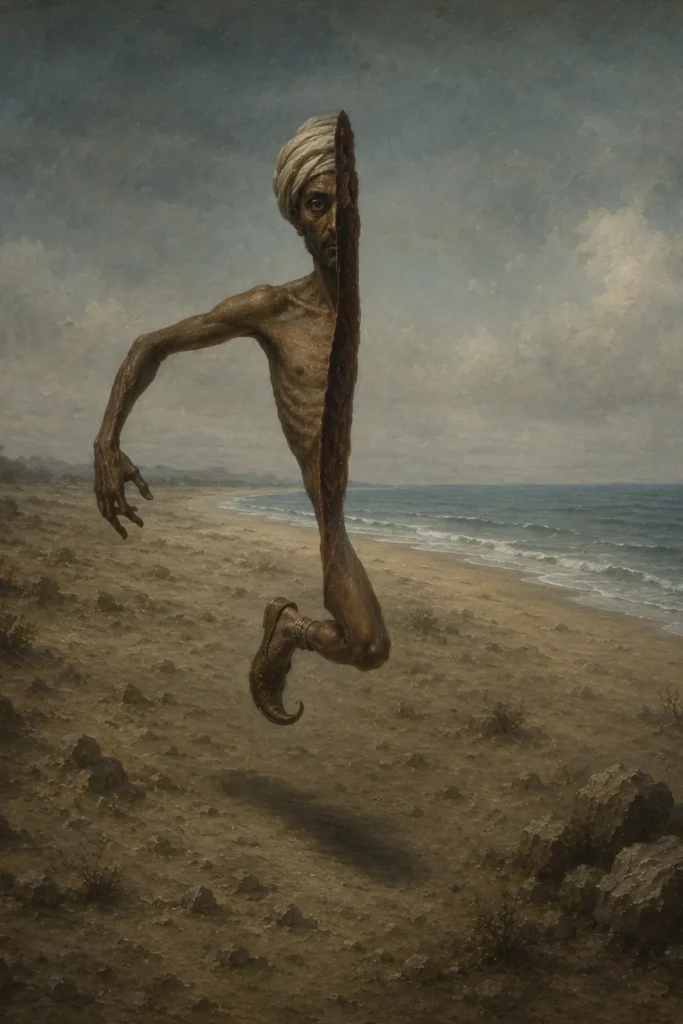
Umm al-Duwais is a seductive female djinn of Gulf folklore: a beautiful woman with an intoxicating scent who lures, seduces and kills unfaithful or sinful men at night in the desert.

Today she is the best-known female djinn of Emirati folklore, yet she is not attested as a classical medieval figure. She is the modern local embodiment of an ancient motif, the seductress who makes the night dangerous.

Overview: Umm al-Duwais

Type: Seductive female djinn (djinniya)
Origin: Modern folk belief of the Gulf states
Texts: no classical attestations, documented chiefly by Lebling
Period: modern Gulf folklore up to the present
Appearance: beautiful woman with an intoxicating scent, donkey leg and sickle hands

Historical Classification

Period of the Texts

Predominantly modern folk belief of the Gulf states; a classical medieval attestation is lacking, though the underlying motif is old.

Area of Diffusion

The Gulf states, chiefly the Emirates; a Qatari variant bears the name Umm Ghannan.

Sources

Sources: documented chiefly by Lebling, along with press coverage, horror collections and short films of Gulf popular culture.

Name and variants

Arabic: Umm al-Duwais, interpreted as mother of the little sickle, after the blade weapon; however, this interpretation is not linguistically secured. A Qatari variant is called Umm Ghannan.

Appearance

Appearance

Umm al-Duwais appears as a beautiful young woman, often with long raven-black hair, as a lost traveller. Her central lure is an intoxicating scent of oud and jasmine. Beneath her garment she hides animal traits, usually a donkey leg, and her hands are razor-sharp sickles.

Effect

She lures men, especially the unfaithful, sinful or those roaming at night, onto lonely paths, seduces and kills them. She appears alone and at night.

Profile: Umm al-Duwais

The characteristics of the fragrant seductress at a glance.

Tradition

Modern Gulf folklore: the best-known female djinn of the Emirates, a local embodiment of an ancient seductress motif.

Relates To

Unfaithful, sinful or nocturnally roaming men: the legend is aimed squarely at those who are up to no good at night.

Depiction

A beautiful young woman with raven-black hair and a scent of oud and jasmine; hidden beneath it, a donkey leg and sickle hands.

Sphere of Influence

Seduction and killing on lonely paths at night; her intoxicating scent is the lure, her sickle hand the weapon.

Approach

Quran recitation and remembrance of God, but above all prevention: avoidance of infidelity and nocturnal roaming.

Related

The shapeshifting Si’lat as the closest classical relative, along with the Ghula; typologically, Lilith-like night demonesses.

An Old Motif in Modern Gulf Form

The name is interpreted as mother of the little sickle, after the blade weapon, but this interpretation is not linguistically secured; in Qatar the figure is also called Umm Ghannan. She is predominantly modern folk belief of the Gulf states and today the best-known female djinn of Emirati folklore.

As a classical medieval figure, however, she is not attested. This makes her no less interesting, quite the opposite: Umm al-Duwais shows how an ancient motif, the deadly seductress of the night, takes on a concrete local form in the present, with its own signature, the scent of oud and jasmine and the sickle hand.

Popular Culture and Classification

Umm al-Duwais is firmly established in modern Gulf popular culture, in press, horror collections and short films; more recent reinterpretations portray her as a misunderstood, tragic figure.

From a religious-studies perspective, she is a textbook example of morally functionalised folklore, the seductress demon as a mechanism of social control. Three points of clarification belong here: presenting her as an old classical djinn figure is a mistake, she is predominantly modern. Her Gulf signature of oud scent and sickle hand gives a concrete form to an ancient motif. And the interpretation of her name remains uncertain.

Morality as Protection: Prevention Before Ritual

Protection against Umm al-Duwais is only partly apotropaic, through Quran recitation and remembrance of God. Above all, it is preventive and moral: avoidance of infidelity and nocturnal roaming. Whoever stays home at night and remains faithful to his wife has nothing to fear from the djinniya. The legend is thus itself a social protective mechanism, reinforcing desired behaviour with the fear of the sickle hand.

Si'lat, Ghula and the Night Demonesses

The closest classical relative is the Si’lat, the shapeshifting female djinn, along with the Ghula from the circle of the Ghul. Typologically, Lilith-like night demonesses and non-Arabian seductresses stand alongside her, as typological rather than genealogical connections. In the Maghreb, her closest counterpart is Aisha Qandisha, another seductress with a hidden animal trait.

Frequently Asked Questions about Umm al-Duwais

What is Umm al-Duwais?

A seductive female djinn of Gulf folklore who lures, seduces and kills unfaithful or sinful men at night in the desert.

How can she be recognised?

By her intoxicating scent of oud and jasmine, the donkey leg hidden beneath her garment, and her razor-sharp sickle hands.

Is she a classical figure?

No. She is predominantly a modern Gulf folk belief and the local embodiment of an old motif; a classical medieval attestation is lacking.

Further links

Recommended internal links:

Literature (selection)

A selection of key sources and studies:
  • Lebling, Robert: Legends of the Fire Spirits. Jinn and Genies from Arabia to Zanzibar. London 2010.
  • El-Zein, Amira: Islam, Arabs, and the Intelligent World of the Jinn. Syracuse 2009.
  • Wellhausen, Julius: Reste arabischen Heidentums. Berlin 1897.

Further standard works in the bibliography.

As a Gulf jinn and seductive demoness, Umm al-Duwais is the youngest face of a very old dread: beauty waiting by the roadside at night, whose scent is best not followed.

Classification & Protection

IVLEVEL
The Protection Compass assigns this being to influence level IV, Severe influence.

Against its influence, cross-cultural tradition names these protective means:

Compare in the Protection Compass →

Recommended protective means

iWell Guard

The simplest protective means in this collection: 41 layers of fine gold 999, platinum, silver and silicon, manufactured in Ruhla, Thuringia. It requires no activation, is bound to no person, and is effective within a radius of around 50 meters, even without being worn.

All protective means at a glance →