iWell Guard

Forest Spirits, Guardians of Wood and Wild

Spirits that dwell in forests or merge with the woods. From the Leshy through the Dryad to the Tengu, they are guardians of wild nature across cultures.

Thematic OverviewCross-Cultural

Table of Contents

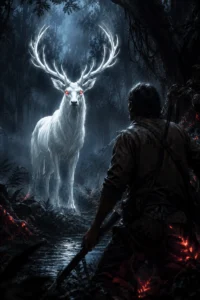
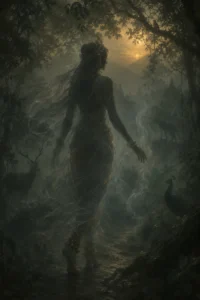
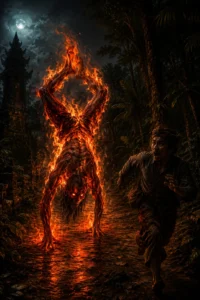
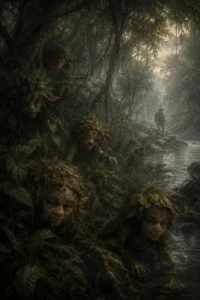
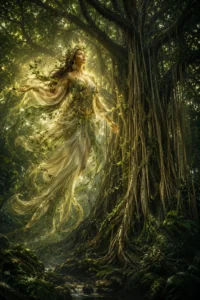
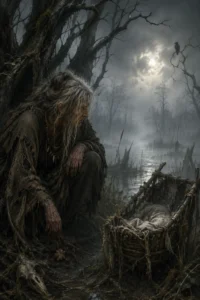
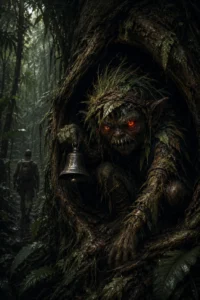
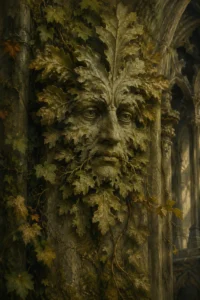
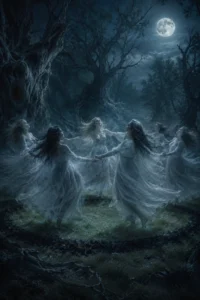
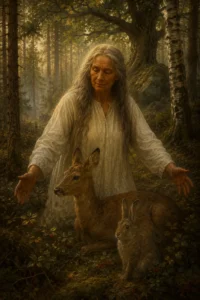
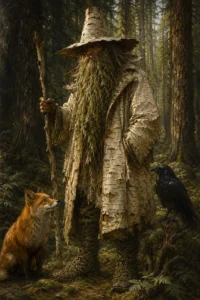
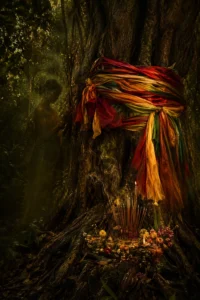
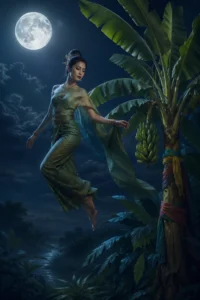
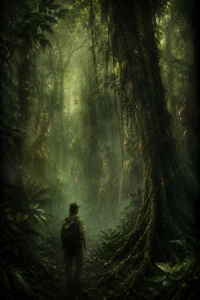
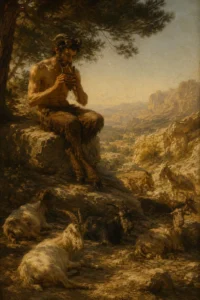
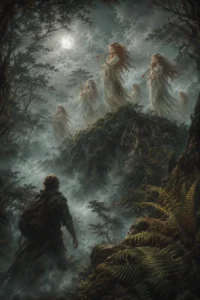
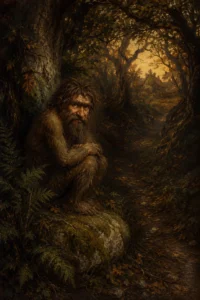
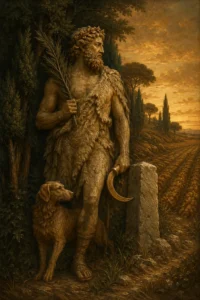
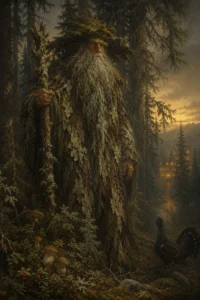
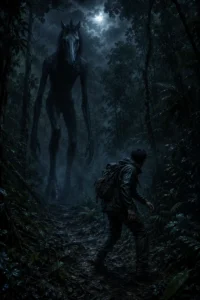
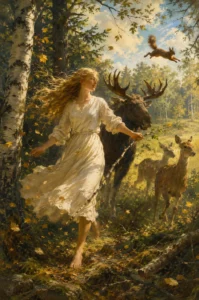
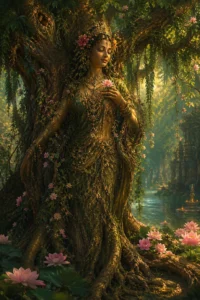
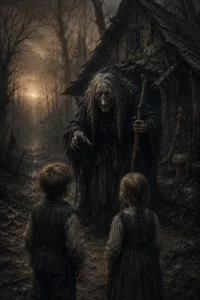
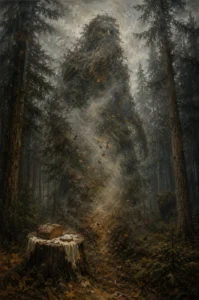
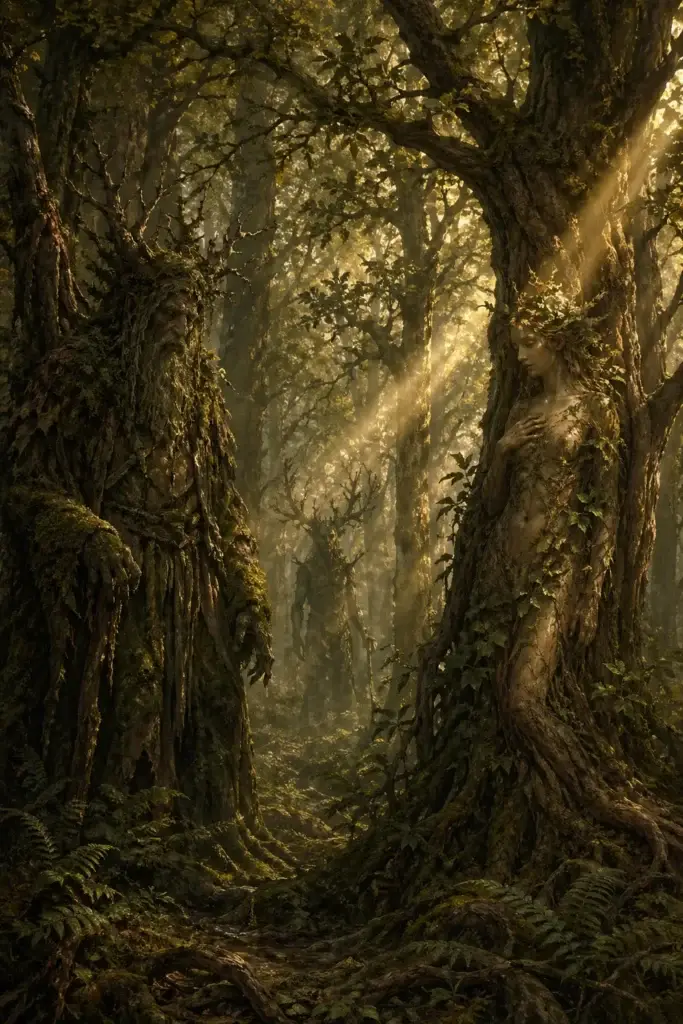
Forest spirits - cross-cultural collective illustration of the spirits sub-category

This page gives an overview of forest-spirit beings from various cultures.

Quick Overview (Definition List)

Type: Spirit / supernatural being Class: Forest spirits Distribution: Cross-cultural (Asia, Europe, British Isles) Main features: Territorial attachment, abduction/seduction of humans, ambivalence, often humanoid Related sub-categories: Messengers of death, haunting, shapeshifters

Concept and Distinction

Forest spirits differ from city spirits or house spirits through their agrarian strangeness: they belong to an order that contradicts the human one. They are rarely spirits of the dead, but rather primordial beings with a longer connection to the landscape.

In contrast to neutral nature spirits, which are mere manifestations of a place, forest spirits possess intellect, mischief or malice. Some are zoomorphic (part animal), some anthropomorphic (almost human), some hybrid. They bar the way to intruders, abduct people into parallel worlds, lay curses on woodcutters, or demand offerings.

Greek Pan, Fauns and Satyrs: Wilderness as Power

In classical Greek religion, fauns and satyrs (hybrid beings with a human upper body and animal legs) were not evil, but representative of uncultivated nature. They embody fertility, sexual energy, music and intoxication. Their role in myths is ambivalent: they are both seducers and companions of Dionysus and potentially dangerous to careless mortals.

Pan, the lord of all woodland beings, was a more comprehensive deity; his name means “all”, and he represents the cosmic life principle of the wilderness. This tradition shows that forest spirits in European cosmology were not primarily evil, but fundamentally untamed, morally indifferent yet alive.

Cultural-Historical Examples

The Japanese Tengu, in popular belief a bird- or monkey-like demon with wings and red skin, is notorious for abducting people, especially Buddhist monks, into the forest and leading them about in confusion for days, only to release them again, changed.

Tengu abductions are firmly documented in Shinto and Buddhism; whole villages reported Tengu invasions. The Irish Puca is a shapeshifter, now a black horse, now a dark humanoid, who confuses travellers, leads them astray onto byways, and brings misfortune if not treated respectfully.

The Scottish Leanan Sidhe (“fairy woman”) is female, seduces poets and artists, grants them inspiration, but consumes them in the process, a Faustian pact in the forest.

In European folklore, the Wild Hunters or Wild Host are processions of forest spirits that ride by night and can sweep mortal people along if they do not seek refuge in time.

Slavic Leshy and Japanese Tengu: Lords of the Forest

In Slavic folklore, the Leshy (also Leshii) is a great forest spirit that can appear as an animal or a human.

He possesses the woodland absolutely; hunters and gatherers must bring him offerings or lose their way. The Leshy is not evil, but dangerous through indifference; he protects his territory, but also kills on a whim.

The Japanese Tengu is similar, a bird demon or forest spirit that seduces monks, abducts people and occasionally helps. Tengu traditions developed over a millennium, and the Tengu are known in modern Japan as ambivalent tricksters, not as evil.

Both figures show that forest spirits in non-Western traditions function as centres of power, not as an evil that must be fought.

Source Situation

Forest spirits are documented in Japanese classics (Konjaku, Uji Shui), in Irish and Scottish folklore collections (19th c.), in Germanic and Scandinavian sagas, and in medieval European chronicles and fairy-tale cycles.

Romanticism (19th c.) idealised forest spirits in literature and music; Heinrich Heine and others took up the motif of the seductive water nymph or the woodland sprite. Ethnological studies link forest spirits with shamanistic complexes of tradition in Northern and Eastern Asia.

The Forest as Boundary Space and Psychological Wilderness

Forest spirits in all their forms (Pan, Leshy, Tengu, fairies and elves) represent the forest as a boundary space between cultivation and wilderness, between human consciousness and unconscious drive. Medieval European literature used the forest as a place of adventure and lethality; here rules dissolve, identities transform.

Fairy-tale traditions (Brothers Grimm, Charles Perrault) place critical trials in forests, because the forest psychologically represents the place of the unknown.

In modern esoteric practices, forest spirits are often understood as teacher figures, as embodiments of nature wisdom rather than as outsider demons. This reinterpretation reflects ecological awareness: the forest is understood as animate and intelligent, and forest spirits as its voices. See also Tengu.

Present-Day Significance / Related Beings

Forest-spirit archetypes live on in modern folk horror, in artists’ folklore and in nature mysticism. Many forests worldwide are considered “enchanted” or places where people vanish without trace, a modern projection of ancient fear of forest spirits.

The concept of the Leanan Sidhe appears regularly in artists’ biographies as an unconscious metaphor for inspiration at the price of life and health. Tengu remain alive in Japanese popular culture.

Related beings are shapeshifters (Tengu and Puca can change their form) and archetypes of the messengers of death, which forest spirits draw into their hunts.

Interpretation in the Anthropology of Religion

Conceptions of forest spirits are, in the anthropology of religion, closely tied to the ecological significance of the forest for the respective culture. In agrarian, sedentary societies that experienced the forest as a resource (timber, game, berries) and at the same time as a threatening space of the other, forest spirits are especially densely developed.

In nomadic and maritime cultures the forest recedes as a religious space. This correlation explains why the Slavic, Germanic and Celtic traditions are especially rich in forest spirits, while Mediterranean and Arabic traditions occupy the forest more weakly in religious terms.

Modern Renaissance of Forest Spirituality

In the 20th and 21st centuries, conceptions of forest spirits are experiencing a modern renaissance, in Neopaganism, in the deep-ecology movement, and in the various forms of “forest bathing” or forest-therapy practice.

Religious-studies research (Christopher Partridge, “The Re-Enchantment of the West”, 2004) sees in this an aspect of the broader spiritual re-enchantment movement of late modernity. In this modern practice, the old concepts of forest spirits are not taken up in a historically accurate way, but used as a symbol resource for a contemporary ecological-spiritual practice.

Standard literature (comparative religious studies):

In numerous cultures, forest spirits mark the boundary between ordered settlement and wilderness. They are neither clearly benevolent nor clearly hostile, but respond to behaviour: whoever respects the forest leaves it unharmed; whoever breaks taboos loses their way, falls ill or disappears.

The Slavic Leshy, the Finnish-Karelian Hiisi and the Japanese Kodama share this pattern despite the absence of any historical connection, evidence that the conception of forest spirits is a universal anthropological response to real experience with dense forests.

In research, with reference to Mircea Eliade and Vladimir Propp, such beings are called “threshold beings” that mark ritual spaces of transition (cf. Vladimir Propp: Die historischen Wurzeln des Zaubermärchens, Munich 1987).

Further standard works in the literature index.

Forest-Spirit Mythology across Cultures

Forest spirits are among the most widely distributed types of beings worldwide. From the Slavic Leshy through the Celtic Puca to the Japanese Tengu, almost every culture knows its own forest spirits with their own mythology. The function is similar: a being guards what does not belong to the human order, the uncleared forest as a space beyond field, city and temple. Forest-spirit mythology thus preserves an older relationship to nature, in which the forest was not a resource but a being in its own right.

Among the classically documented forest spirits are: Leshy (Slavic lord of the forest), Púca (Celtic shapeshifter), Cailleach (old woman of the high moor), Aos Sí (Irish hill-folk spirits), Tengu (Japanese mountain-forest spirits) and Silvanus (Roman forest god).

They share traits: territorial attachment, shapeshifting, an ambivalent relationship to humans, and their own system of rules of courtesy that a forest walker should observe.

Frequently Asked Questions about Forest-Spirit Mythology across Cultures

What are forest spirits?

Forest spirits are supernatural beings that inhabit and guard uncleared natural spaces. Corresponding beings exist in almost all cultures, from the Slavic Leshy through the Celtic Púca to the Japanese Tengu. They are mostly shapeshifting, ambivalent towards humans, and demand respect for the forest as a living space in its own right.

Which forest spirits are there in German mythology?

The German folk tradition knows Wild Women (Holzfräulein, Moosweibchen), the Wild Hunter, and in the older Germanic layer the Vanir god Freyr as lord of forest and fertility. The Wild Hunt moves through the forest on stormy nights and is part of the Germanic-German forest-spirit mythology.

Forest Spirits Worldwide

Aja
Aja
→ To the being
Alux
Alux
→ To the being
Anhanga
Anhanga
→ To the being
Aranyani
Aranyani
→ To the being
Aroni
Aroni
→ To the being
Aziza
Aziza
→ To the being
Banaspati
Banaspati
→ To the being
Basajaun
Basajaun
→ To the being
Bonbibi
Bonbibi
→ To the being
Borowy
Borowy
→ To the being
Caipora
Caipora
→ To the being
Chaneque
Chaneque
→ To the being
Chullachaqui
Chullachaqui
→ To the being
Curupira
Curupira
→ To the being
Diwata
Diwata
→ To the being
Dryad
Dryad
→ To the being
Dziwożona
Dziwożona
→ To the being
Eloko
Eloko
→ To the being
Faun
Faun
→ To the being
Faunus
Faunus
→ To the being
Ghillie Dhu
Ghillie Dhu
→ To the being
Green Man
Green Man
→ To the being
Hakuturi
Hakuturi
→ To the being
Hamadryad
Hamadryad
→ To the being
Holzfräulein
Holzfräulein
→ To the being
Huldra
Huldra
→ To the being
Iele
Iele
→ To the being
Iroko-Man
Iroko-Man
→ To the being
Jubokko
Jubokko
→ To the being
Kapre
Kapre
→ To the being
Kijimuna
Kijimuna
→ To the being
Kodama
Kodama
→ To the being
Leshy
Leshy
→ To the being
Maero
Maero
→ To the being
Makiawisug
Makiawisug
→ To the being
Medeina
Medeina
→ To the being
Meliai
Meliai
→ To the being
Metsaema
Metsaema
→ To the being
Metsavana
Metsavana
→ To the being
Meža māte
Meža māte
→ To the being
Mielikki
Mielikki
→ To the being
Moosleute
Moosleute
→ To the being
Muma Pădurii
Muma Pădurii
→ To the being
Nang Mai
Nang Mai
→ To the being
Nang Ta-khian
Nang Ta-khian
→ To the being
Nang Tani
Nang Tani
→ To the being
Neak Ta
Neak Ta
→ To the being
Nyyrikki
Nyyrikki
→ To the being
Orang Bunian
Orang Bunian
→ To the being
Pan
Pan
→ To the being
Patupaiarehe
Patupaiarehe
→ To the being
Penghou
Penghou
→ To the being
Polevik
Polevik
→ To the being
Poludnica
Poludnica
→ To the being
Púca
Púca
→ To the being
Pukwudgie
Pukwudgie
→ To the being
Rübezahl
Rübezahl
→ To the being
Sachamama
Sachamama
→ To the being
Satyr
Satyr
→ To the being
Schrat
Schrat
→ To the being
Shanxiao
Shanxiao
→ To the being
Silenus
Silenus
→ To the being
Silvanus
Silvanus
→ To the being
Tapio
Tapio
→ To the being
Tellervo
Tellervo
→ To the being
Tengu
Tengu
→ To the being
Tikbalang
Tikbalang
→ To the being
Tuulikki
Tuulikki
→ To the being
Vanadevata
Vanadevata
→ To the being
Vasorrú bába
Vasorrú bába
→ To the being
Vir-ava
Vir-ava
→ To the being
Vörsa
Vörsa
→ To the being
Wild Man
Wild Man
→ To the being
Wolpertinger
Wolpertinger
→ To the being
Yaksha
Yaksha
→ To the being