iWell Guard
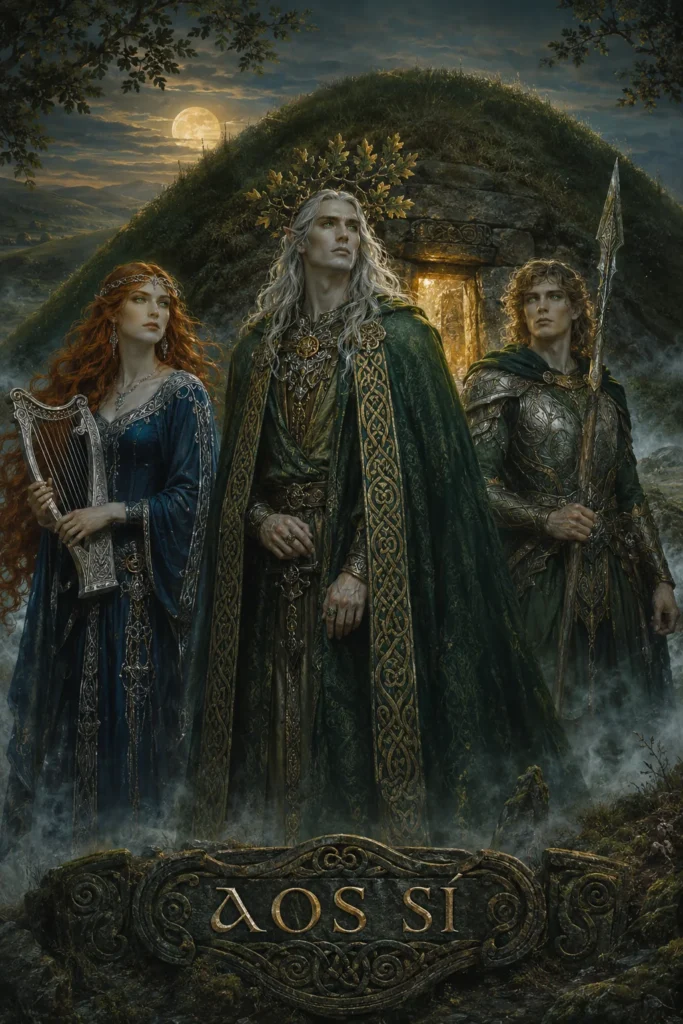
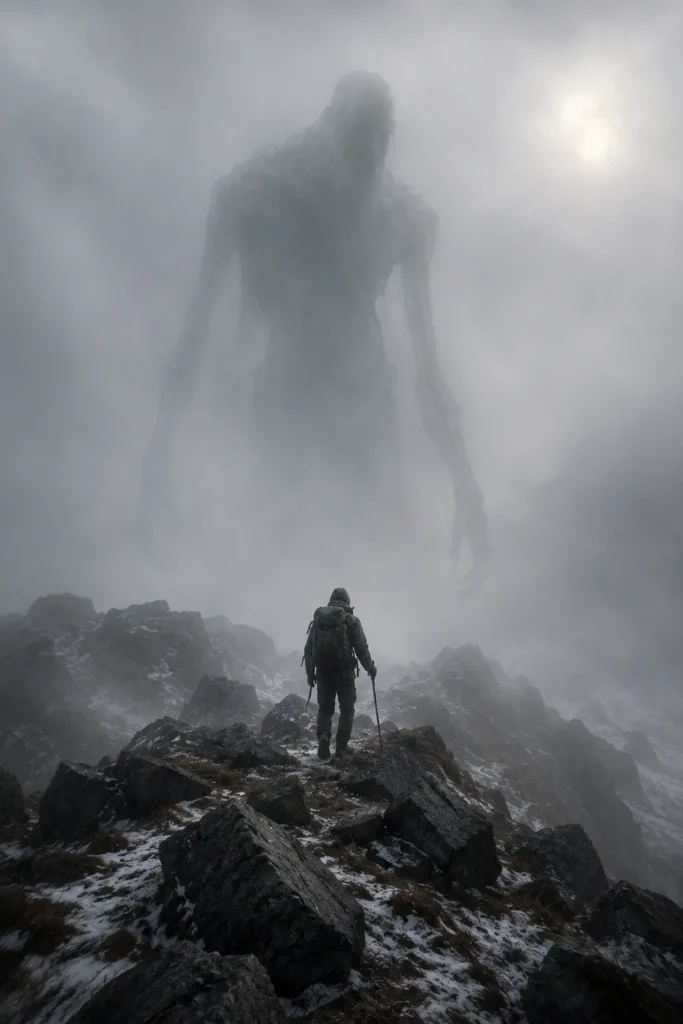
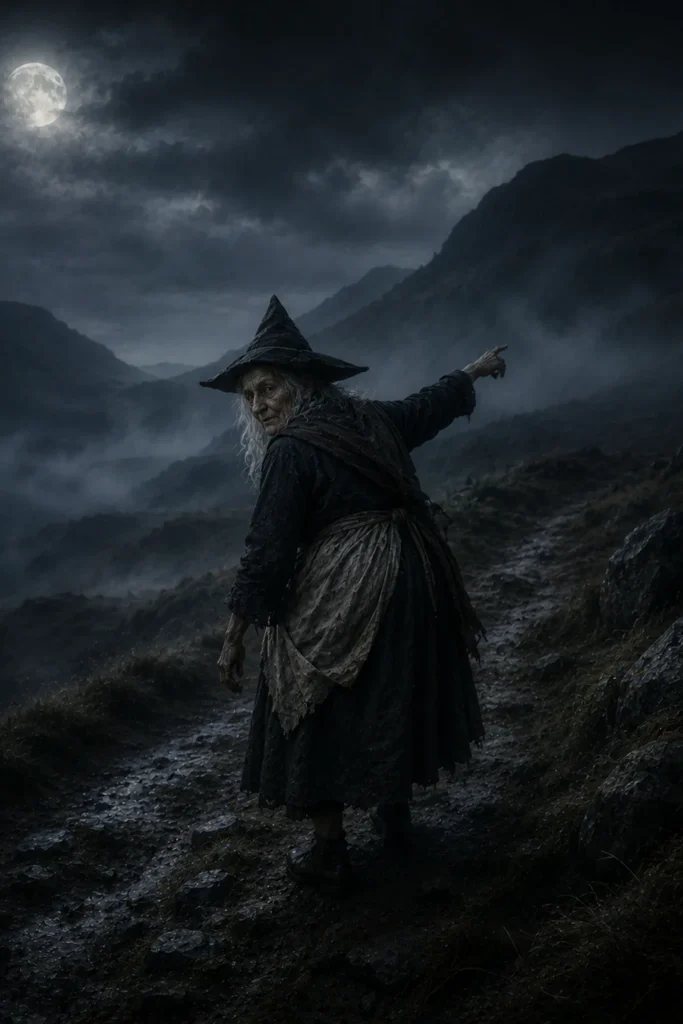
Aos Si - Spirits from the Celtic tradition, historical illustration

Aos Sí: Fairy Beings and People of the Mounds

SpiritsCelticFairy Beings

Aos Sí is the Irish collective term for the people of the mounds, the fairy beings of the Celtic Otherworld.

They are regarded as inhabitants of the ancient burial mounds and as descendants of a mythical pre-population of Ireland. This article provides an academic classification of the Aos Sí and examines their name, myth, custom, and scholarship.

Classification

Aos Sí, in older spelling also Aes Sídhe, is the Irish designation for a class of supernatural beings that play a prominent role in the tradition of Ireland and Gaelic Scotland.

The term literally means something like “people of the mounds” or “folk of the burial mounds.” It refers to the inhabitants of an invisible parallel world, the so-called Otherworld, whose entrances were imagined at certain places in the landscape, above all at prehistoric burial mounds and earthworks.

From the perspective of religious studies, the Aos Sí are difficult to reduce to a single category. They are neither clearly gods nor clearly the dead, neither pure nature spirits nor mere demons. Rather, they form a distinct category of beings that stands between categories.

In the older medieval tradition, they are closely associated with the Tuatha Dé Danann, a mythical divine people that, according to the Irish pseudo-histories, once ruled Ireland and withdrew into the mounds and underground after their defeat.

In this view, the Aos Sí are, in a sense, fallen gods who continue to exist in the Otherworld.

In the later folk tradition, as recorded by collectors from the eighteenth to the twentieth century, the Aos Sí appear more strongly as fairy beings in the narrower sense: a people in their own right, with their own society, living in close proximity to humans and in constant contact with them.

These two layers, the mythological and the folkloric, cannot be sharply separated but merge into one another.

The conception of the Aos Sí is deeply rooted in Irish and Scottish culture and has shaped the relationship of people to their landscape, to particular places, to illness, death, and fortune over the centuries.

It belongs to the most formative elements of the Celtic-language tradition overall and is a central subject in the study of the Celtic heritage.

Name and Etymology

The term Aos Sí consists of two parts. Aos means “people” or “folk,” designates the mound, more precisely the prehistoric burial mound or earthwork.

The word refers both to the visible mound in the landscape and to the Otherworld believed to reside within it. From this word derives the term shee, widespread in the English tradition, as well as the famous designation of the Banshee, the “woman of the mounds,” which will be discussed further below.

Alongside Aos Sí, numerous other designations are in use. Widespread is the phrase that can be translated as “good people” or “good neighbors.” This flattering form of address is no accident.

It follows the widely held belief that one should not call the fairy beings by their actual name, and certainly not offend them, because they might be listening and could take revenge. The friendly circumlocution is itself, therefore, a form of protective practice.

In Scotland, the Irish Aos Sí correspond to the Gaelic “people of peace” or the Daoine Sìth. Here too the tendency is to address the beings with a conciliatory, appeasing name.

In English-language usage, the Aos Sí were later subsumed under the collective term of fairies or fairy folk, which however blurs their specifically Celtic character.

The etymology reveals the close binding of these beings to a concrete place in the landscape. The name does not point to a particular form or quality but to the place of residence, the mound.

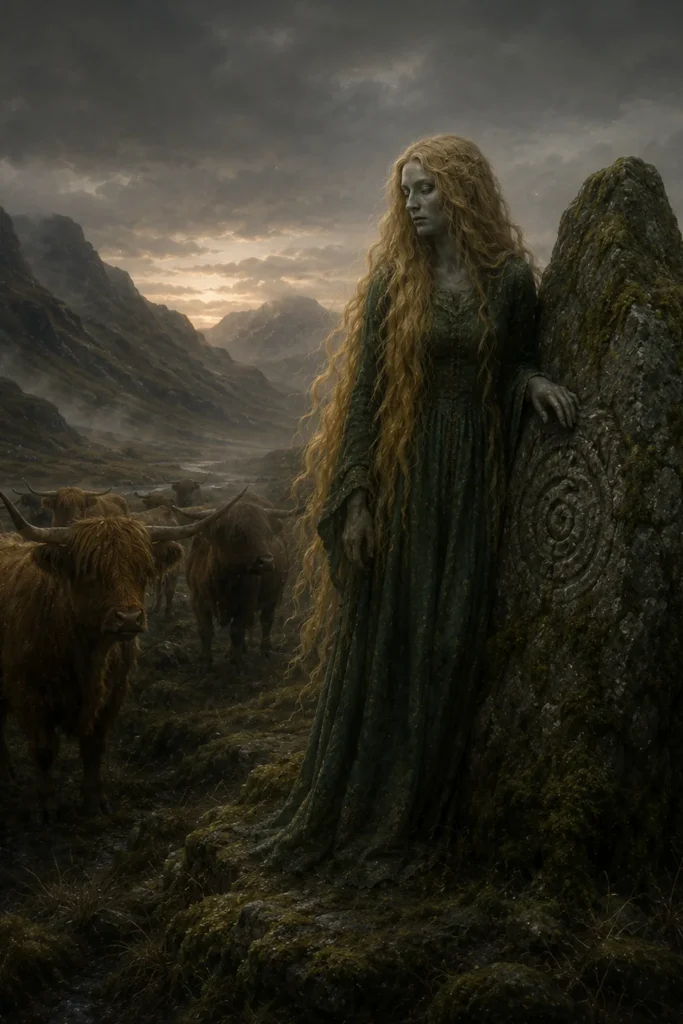
This establishes from the outset a central characteristic: the Aos Sí are place-bound beings, and the relationship of humans to them is always also a relationship to specific spots in their surroundings.

Description and Iconography

The Aos Sí resist a uniform description because the tradition portrays them in very different ways. In the older mythological literature they appear as a beautiful, noble people, outwardly resembling humans but far surpassing them in grace, power, and longevity.

They live in magnificent halls beneath the mounds, hold feasts, ride on horseback, and wear precious clothing. In this depiction they are less frightening than otherworldly and sublime.

The folkloric tradition presents a more varied picture. Here the Aos Sí can be tall or small, beautiful or repelling, appearing alone or in crowds.

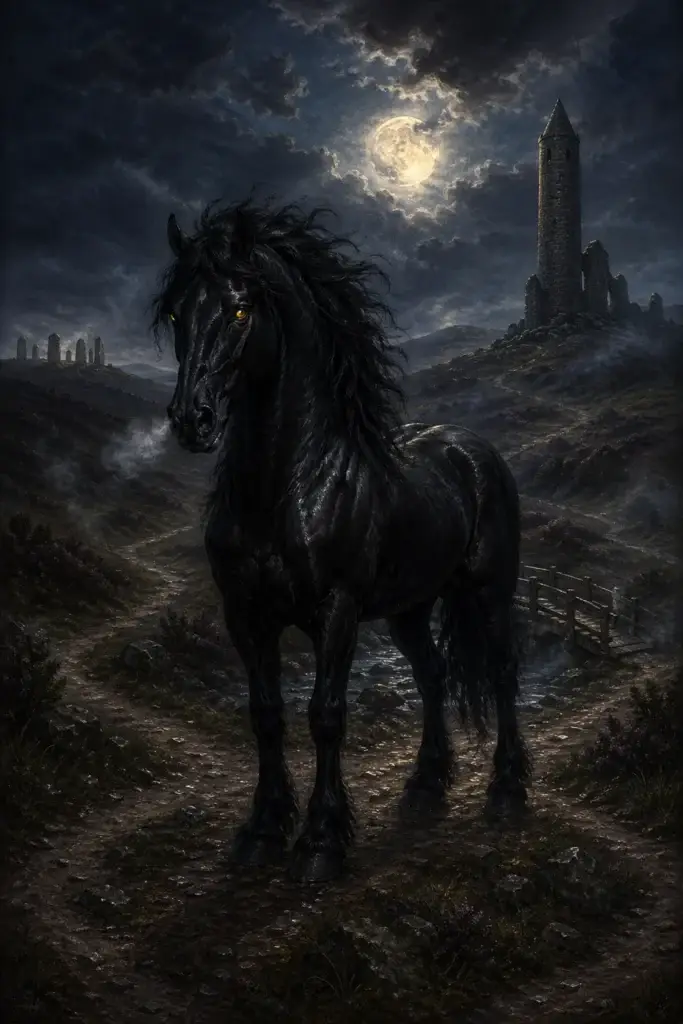
Some narratives describe them as tiny figures, others as human-sized. The color green is frequently associated with them, red occasionally. They can make themselves invisible, change their shape, and appear in animal form.

The Aos Sí have not developed a fixed iconography in the sense of a canonical pictorial type, since their tradition is predominantly narrative and oral. Where they are depicted visually, this usually occurs within the framework of later literary and artistic treatments.

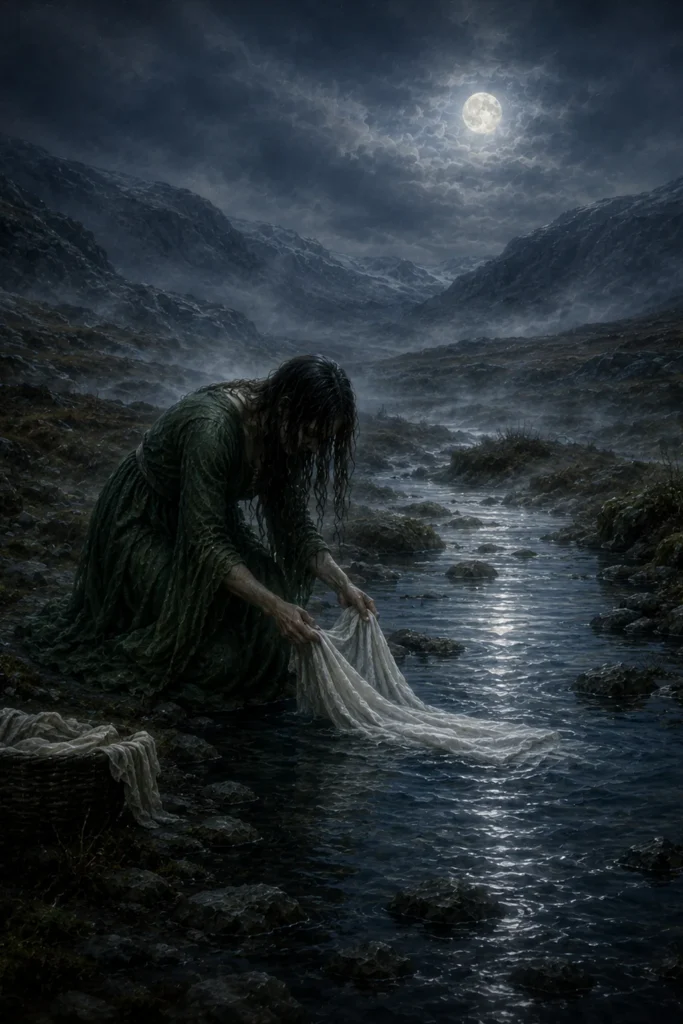
Certain forms of appearance are, however, clearly defined. Among these is the wild hunt or fairy procession, a troop of riders moving across the land at dusk. Among these is also the solitary lamenting female figure, the Banshee, whose wail announces the impending death of a person.

Also characteristic is the connection with music and dance. The Aos Sí are regarded as masters of a bewitchingly beautiful music, and narratives tell of humans who overheard their melodies or were lured by them into dancing in fairy rings.

Overall, the appearance of the Aos Sí is marked by a fundamental duality: they are simultaneously alluringly beautiful and dangerous, attractive and threatening.

Mythological Narratives

The mythological foundation of the Aos Sí lies in the narrative cycle surrounding the Tuatha Dé Danann, the divine people of the Irish tradition.

According to the medieval pseudo-histories, above all the so-called Book of Invasions, the Tuatha Dé Danann came to Ireland as one of the waves of peoples and ruled there until they were defeated by the subsequent Sons of Míl, the mythical ancestors of the Irish.

After their defeat they did not withdraw from the land but into it, beneath the mounds and into the Otherworld. This narrative explains why the Aos Sí were seen as fallen gods.

From this mythological stock come many of the well-known narratives. They tell of the magnificent mound residences of individual leaders of the Tuatha Dé Danann, of feasts in the Otherworld, of love relationships between Otherworld beings and humans, and of the birth of heroes who have an Otherworldly parent.

A recurring motif is the invitation or abduction of a human into the Otherworld, where time passes differently. Those who return from the Otherworld often find that centuries have passed in the human world.

The later popular storytelling tradition expanded this stock and gave it an everyday dimension.

Here one finds stories of midwives summoned to a fairy birth, of changelings, that is, fairy children secretly placed in the stead of a human child, of people who stumble into the fairy mound and find their way out only with difficulty, and of farmers who incur the wrath of the Aos Sí by felling a fairy tree or building over a fairy path.

An important narrative strand concerns the Banshee. This solitary female Otherworld figure is associated with particular families and announces the death of a family member through her lament.

She is not a malevolent being but a herald of inevitable fate. Taken together, the narratives portray the Aos Sí as beings with whom humans stand in a constant delicate relationship, defined by mutual obligations and dangers.

Cult and Veneration

Unlike the gods of major temple religions, the Aos Sí cannot be said to have a cult in the strict sense, with priesthood, temples, and fixed liturgical forms.

The relationship of humans to the Aos Sí was rather embedded in everyday life and in the agricultural year and consisted of a multitude of observance and avoidance rules as well as regular small offerings.

A widespread practice was the presentation of offerings, above all of food. In many places it was custom to set aside a portion of the meal, a splash of milk, or the first beer of a brew for the good people, or to pour it on the ground.

At certain places in the landscape, such as springs, individual trees, or the mounds themselves, offerings were laid down. These acts were less acts of veneration than of appeasement. The aim was to retain the goodwill of the Aos Sí and to avoid their anger.

The transitional periods of the year were of particular importance, above all the old festivals of Samhain in late autumn and Bealtaine at the beginning of summer.

On these days the boundary between the human world and the Otherworld was held to be especially permeable, and the Aos Sí were therefore regarded as especially active and dangerous. Accordingly, protective and appeasing customs accumulated around these dates.

Certain places also stood under special protection. Fairy mounds, fairy trees, often solitary hawthorn trees, and suspected fairy paths were not to be damaged, built upon, or ploughed over.

Observance of these rules was a consistent feature of rural life and has been maintained in part into the recent past. The relationship with the Aos Sí was thus less a religion of veneration than a religion of cautious neighborliness.

Protective Practice and the Apotropaic

In dealings with the Aos Sí, a remarkably rich protective practice developed. These are historically and folklorically well-documented customs; their description does not imply any statement about their efficacy.

A fundamental rule of protection concerned language. One avoided naming the Aos Sí directly and by name, and used friendly circumlocutions such as “good people” or “good neighbors” instead.

One took care not to speak ill of them, to thank them, or to offend them. This linguistic caution was one of the most important forms of protection.

A second group of customs concerned specific materials and objects to which warding power was attributed. Iron, especially cold-forged iron, was considered an effective means against the Aos Sí. An iron nail, a pair of scissors, or a horseshoe were used to protect houses, cradles, and thresholds.

Certain plants were also regarded as protective, above all the rowan tree, as well as St. John’s wort and other herbs. Salt, fire, and in the Christianized context holy water and the sign of the cross were also employed for warding.

Special attention was given to the protection of women who had recently given birth and of newborns, since unbaptized children and women in childbed were, according to folk belief, particularly at risk of being stolen by the Aos Sí and replaced by a changeling.

Here protective measures accumulated, from iron in the cradle to nights kept in watch.

A further aspect of apotropaic behavior was strict respect for fairy places. Whoever spared a fairy tree and kept a fairy path clear avoided provoking the wrath of the Aos Sí in the first place.

Overall, protective practice aimed primarily at making the delicate neighborliness with the Otherworld bearable through consideration, caution, and adherence to inherited boundaries.

Parallels in Other Cultures

The Aos Sí belong to a large comparative-religious group of beings that can be described as nature spirits, land spirits, or place spirits, encountered in many cultures of Europe and beyond.

Common to them is the idea that the landscape inhabited by humans is simultaneously shared by an invisible people toward whom one must show consideration.

In the Scandinavian world, beings from the Nordic tradition correspond to the Aos Sí, such as elves and the hidden beings imagined to dwell underground or in mounds, to whom similar offerings were made and similar avoidance rules were applied.

In Iceland, beliefs in the hidden people remain alive to this day. In the German-speaking world, dwarves, earth spirits, and house spirits can be compared; in Slavic traditions, various house, field, and forest spirits.

The connection within the Celtic-language world itself is particularly close.

The Scottish Daoine Sìth, the Welsh and Cornish fairy beliefs, and the tradition of Brittany and the Isle of Man form, together with the Irish Aos Sí, a coherent tradition space in which many motifs recur, from the changeling and the differently flowing time in the Otherworld to iron as a means of protection.

An overarching motif connecting the Aos Sí to other traditions is the conception of the Otherworld as a parallel realm whose entrances lie at specific places in the landscape and stand open at specific times.

The motif of time passing differently, the motif of dangerous hospitality, and the prohibition against eating in the Otherworld are likewise found in numerous mythologies. The comparison makes clear that the Aos Sí represent a culture-specific, distinctly Irish form of a widely distributed religious fundamental idea.

Contemporary Reception and Research

The conception of the Aos Sí remains culturally active in Ireland and Scotland to this day. Belief in the good people in the strict sense has largely declined, yet the customs, narratives, and place associations connected with it have remained present in many regions.

Well-known are cases in which building projects were altered or delayed in order to spare a hawthorn regarded as a fairy tree. Such events show how deeply the tradition is still anchored in the perception of the landscape.

In literature and art, the Aos Sí have received extensive reception. The Irish literary revival of the late nineteenth and early twentieth century, with authors such as William Butler Yeats and Lady Augusta Gregory, made the fairy people a central subject of modern Irish literature.

Yeats collected folk narratives and worked them into his writing. Down to today’s fantasy literature, film, music, and popular culture, the Celtic fairy beings remain a widely used subject.

In scholarship, the Aos Sí are treated by several disciplines. Celtic studies examines the medieval mythological texts and the connection of the Aos Sí to the Tuatha Dé Danann.

Folklore studies and narrative research have, since the nineteenth century, assembled and analyzed large collections of popular fairy narratives. Religious studies inquires into the position of the Aos Sí between gods, the dead, and nature spirits, and into the relationship between pre-Christian beliefs and Christian reinterpretation.

Research emphasizes that the tradition has never formed a uniform, closed system but is multi-layered, regionally varied, and grown over long periods. Also examined is the social function of fairy belief, for example as an explanatory model for inexplicable events, illness, and death, and as a means of endowing the landscape with meaning and boundaries.

The Aos Sí are thus regarded in research as a particularly rich example of the continued influence of pre-Christian ideas in the lived culture of a country.

Selected Bibliography

  • Proinsias Mac Cana: Celtic Mythology (1970)
  • Miranda Green: Dictionary of Celtic Myth and Legend (1992)
  • John T. Koch (ed.): Celtic Culture. A Historical Encyclopedia (2006)
  • William Butler Yeats: Fairy and Folk Tales of the Irish Peasantry (1888)
  • James MacKillop: Dictionary of Celtic Mythology (1998)

Related key terms: Aos Sí Otherworld Tuatha Dé Danann fairy beings Sídhe Banshee Samhain changeling.

iWell Guard and Protective Traditions

iWell Guard draws on the cultural-historical tradition of wearable protective objects, in the tradition of Celtic and many other cultures worldwide. 41 levels, real gold, platinum, silver, crafted in Germany. 30-day return policy.

Individual experiences may vary. Not a medical product. No healing promises.