iWell Guard

Celtic Gods, the Tuatha Dé Danann and Druidism

Beings from the Celtic tradition on iWell Guard. Celtic-Irish and Gaulish tradition. Main sources: the Irish mythological cycles (Ulster, Mythological), Lebor Gabála Érenn, archaeological finds from Gaul.

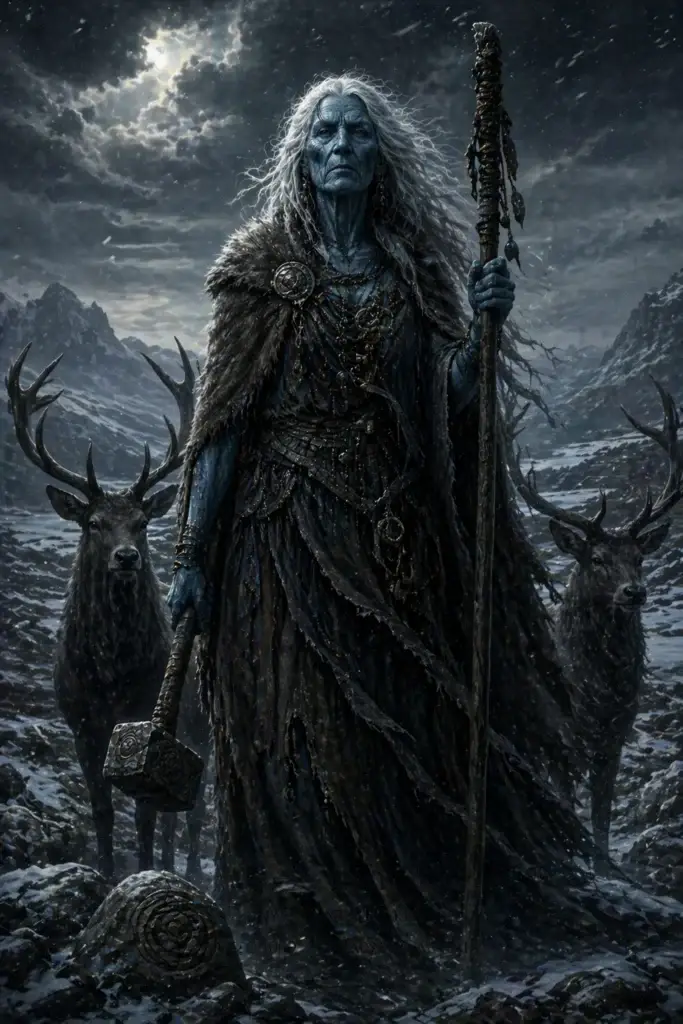
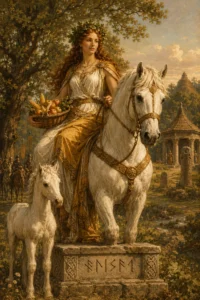
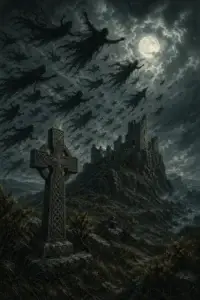
Cailleach - Gods from the Celtic tradition, historical illustration

This page documents the Celtic religion from Gaul to Ireland.

Druids, islands and oral tradition

The Celtic religion is the most poorly documented of the major European traditions. The Druids passed on religious knowledge exclusively by word of mouth, and written sources only emerge through Roman and medieval Irish transmission. Caesar and other antike authors describe the practice from an outsider’s perspective, often with a political slant.

The medieval Irish and Welsh literature preserves mythological material: the Lebor Gabála, the Ulster Sage, the Mabinogi tales, but through a Christian transmission filter. Gods appear euhemerised as former kings or heroes. The Tuatha Dé Danann are gods who withdrew into the Sídhe mounds.

Characteristic is the connection to the landscape: sacred springs, trees, hills and liminal places (between land and sea, forest and field) carry religious significance. Festivals such as Samhain, Imbolc, Beltane and Lughnasa structure the year. This layer has a long afterlife in Celtic folk religion and Neo-Pagan currents.

Classification

Period: Eisenzeit (800 BCE) to Christianisation (5th-9th century CE).

Distribution: the British Isles, Gaul, Hispania, the Danube region as far as Galatia (Asia Minor).

Sources: Irish sagas (Ulster Cycle, Mythological), Lebor Gabála Érenn, Táin Bó Cúailnge, Mabinogion (Welsh), Gallo-Roman inscriptions.

Pantheon and classes of beings: Tuatha Dé Danann (Dagda, Lugh, Brigid, Morrigan), Cernunnos, Manannán, Sidhe, Banshee, Leprechauns.

History and pantheon

The Celtic religion survives only fragmentarily, through oral tradition and late written testimony (Romans, later Christian monks). The original structure was decentralised: each tribe had local deities alongside supra-regional Pantheon figures.

A Druidic priestly caste administered knowledge orally, which led to its absorption into written cultures. Central divine figures are the Dagda (all-father), Lugh (craft, war), Brigid (healing, fire, poetry) and the Morrigan (war, fate).

The Sidhe concept describes supernatural beings who dwell in hills and hidden realms. Christianisation from the 5th to the 12th century displaced the practice; some deities were repurposed as saints (Brigid becomes Saint Brigid). The Celtic Revival of the 19th century attempted a romanticised reconstruction. Modern sources are speculative.

Beings in everyday life

Druidic priests led sacrificial rituals (human sacrifice attested by antike authors) and Divination. Samhain (the turn of the year) and other festival dates marked spiritually critical moments. Healing and Wahrsagung were specialised roles. Spirit beings and the Sidhe were not demonic but rather ambivalent: dangerous to the uninitiated, yet respectable to the initiated.

Protective rituals against the evil eye and the supernatural were widespread. Tribal totems and animal connections (Druids as shape-shifters) are documented. Volksglaube in fairies, spirits and magical techniques survived in folk tradition, especially in Ireland, Scotland and Wales. Sacred springs and groves were cult sites.

Significance today

A living Celtic religion no longer exists; Christianisation erased the tradition. Folk tradition (Irish and Scottish belief in fairies, selkies, banshees) preserves fragmentary remnants. The Celtic Revival of the 19th and 20th centuries (Yeats, Synge, the Celtic Twilight) romanticised the sources for literary purposes.

Modern Neo-Pagan movements attempt reconstruction but are speculative and ideologically mixed. Popular culture (fantasy literature, Harry Potter, video games) draws on Celtic aesthetics. Academically, Celtic religion remains uncertain and fragmentary. Cultural identity in Ireland and Scotland uses Celtic symbols as markers of nationalism rather than as a genuine faith tradition.

Frequently asked questions about the Celtic gods

How many Celtic gods are there?

The Celtic Pantheon varies greatly from region to region. In Ireland, the Tuatha Dé Danann centre on roughly 50-100 named gods (Dagda, Lugh, Brigid, Morrigan, Manannán, Aengus, and others).

In Wales, the Mabinogion supplies a parallel Pantheon (Rhiannon, Math, Arianrhod, Lleu Llaw Gyffes). Before the Roman conquest, Gaul had more than 400 documented gods, often highly local. Inscriptions and statues show extraordinary diversity; Celtic religion was polytheistic and strongly regional in character.

Who is the supreme Celtic god?

There is no single chief god; the Celtic religion is polycentric. In Ireland, the Dagda is regarded as the leader of the Tuatha Dé Danann (good, with a cauldron and a club).

Lugh is the god of light and the most versatile of heroes. Among the Gauls, Lugus (Lugh) was the chief god, whom Caesar (De Bello Gallico) identified with Mercury. In Wales there is no clear head. Druids mediated between the gods.

What are the Tuatha Dé Danann?

The Tuatha Dé Danann (the tribe of the goddess Danu) are the mythical divine people of Ireland. They came after the four preceding generations (Cessair, Partholón, Nemed, Fir Bolg) and brought four magical treasures: the sword of Nuada, the spear of Lugh, the cauldron of the Dagda and the Lia Fáil (coronation stone).

They were later defeated by the Milesians (ancestors of today’s Irish) and withdrew into the Otherworld (the Sídhe mounds), where they live on as fairies to this day.

What are the Druids?

The Druids were the Celtic priests, judges, teachers and healers, an elite intellectual class that underwent 20 years of study. They transmitted everything orally (writing no sacred texts), hence the drastic loss of sources after the Roman and Christian conquests.

Caesar reports that they believed in the transmigration of souls. Modern Druidism (founded by Iolo Morganwg in 1792 as a Welsh bardic movement, then an international movement) is a reconstruction without direct continuity.

What do Samhain, Imbolc, Beltane and Lughnasadh mean?

The four principal Celtic festivals mark the agricultural transitions: Samhain (1 November), the beginning of winter, a gateway to the Otherworld, the origin of Halloween. Imbolc (1 February), the beginning of spring, Brigid’s day.

Beltane (1 May), the beginning of summer, Belenos’ day, with fire rituals. Lughnasadh (1 August), the beginning of the harvest, Lugh’s games. Each of these dates falls about 6 weeks before the solstices and equinoxes; the Celtic year was structured differently from the Roman one.

What distinguishes Celtic, Gaulish and Welsh?

Celtic is a term for a language group; the Irish, Scots, Welsh, Bretons, Galatians and ancient Gauls speak, or spoke, related languages. The mythologies overlap in content, but each region has its own Pantheon.

Irish-Gaelic tradition: Tuatha Dé Danann (Dagda, Lugh, Morrigan, Brigid). Welsh: the gods of the Mabinogion (Rhiannon, Pwyll, Math, Arianrhod). Gaulish (pre-Roman in France): Belenos, Cernunnos, Epona, known today only fragmentarily through inscriptions. In religious studies, pan-Celticism is discussed controversially.

Further reading

Insular and Continental Celts

The Celtic religion encompasses two culturally related areas that are nonetheless documented very differently: the Insular Celts (Ireland, Wales, Scotland) and the Continental Celts (Gaul, Britain, Galatia).

Of the Continental Celts we have almost only Roman and Greek outside reports (Caesar, Strabo, Lucan) and epigraphic traces. The Insular Celts preserved their myths in writing, the Lebor Gabála, the Ulster Cycle, the Mabinogi, transmitted through a Christian lens.

The Druids and their power

In Celtic societies, the Druids were at once priests, judges, teachers, healers and astronomers. Caesar reports that they were trained for twenty years and transmitted everything orally.

The Roman conquest systematically suppressed the Druids in Gaul; in Ireland they survived until Christianisation in the 5th century. The bardic order (filid) took over part of their functions.

The Otherworld concept

Central to the Celtic worldview is the Otherworld (Tír na nÓg, Annwn), not a hereafter in the Christian sense but a parallel realm of reality that becomes permeable at certain places and at certain times (Samhain, Beltane). The Sidhe, the beings of the hill folk, dwell there and confront humans somewhere between benevolence and danger.

Revival and Neo-Paganism

In the 18th and 19th centuries, Celtic religion was reinvented, from Iolo Morganwg, who constructed forged Druidic rituals, to W. B. Yeats and the Irish literary revival.

The modern neo-Druidic movement and the Wicca current draw on this second, romantic layer. On iWell Guard we distinguish clearly between historically attested Celtic material and its romantic reception.

State of research

Celtic religion is methodologically tricky to study, because the written sources were composed only after Christianisation. Standard works are Miranda Green’s “The Celtic World” (1995) and Bernhard Maier’s “Die Religion der Kelten” (2001).

The critical appraisal of the modern “Celtic Revival” and its scholarly legitimacy is provided by Marion Bowman in several contributions on modern Celticity.

Standard literature (Celtic):

  • Ross, Anne: Pagan Celtic Britain. Studies in Iconography and Tradition. Routledge & Kegan Paul, London 1967.
  • Aldhouse-Green, Miranda: The Gods of the Celts. Sutton, Stroud 1986.

Further standard works in the literature index.

Means of protection in this cultural tradition

Celtic protective practice knew triskeles, knotwork pendants and Druidic amulets; bronze and gold objects with animal and spiral ornamentation accompanied warriors and travellers.

iWell Guard places itself within this cultural-historical lineage of wearable means of protection, in contemporary material architecture, made in Germany. 41 layers, solid gold, platinum, silver. 30-day right of return.

Personal experiences may vary. Not a medical device. No promise of healing.

Celtic Mythologie has not come down to us as a unified corpus but must be reconstructed from Insular Celtic narrative cycles, Continental Celtic inscriptions and Roman reports.

Protective symbols from the Celtic world

The lexicon of protective symbols treats several signs and objects from the Celtic world on their own pages: Awen, Brigid’s Cross, Celtic Knot, Celtic Cross, Triquetra and Triskele. A cross-cultural overview is offered by the page on protective symbols.