


New Age, Modern Esotericism and the Image of Beings
Beings from the New Age tradition on iWell Guard. Esoteric and modern spiritual movements since the 20th century. Syncretism drawing on Theosophy, Eastern religions, shamanism and conspiracy theories.
The New Age image of beings combines Eastern teachings with Western esotericism.
The New Age movement took shape from the 1960s onward and reached its first phase of broad social visibility around 1970.
Distinction from Ascended Masters: Unlike the Ascended Masters, a specific class of beings within the movement, New Age is a cultural-historical current, a broadly defined esoteric movement since the 1970s that encompasses many different concepts and beings.
Channeling, Syntheses and Modern Esotericism
New Age is not a closed religion, but a current of Western esotericism that has grown since the 1970s. It combines elements of Eastern traditions (karma, chakras, meditation), theosophical teachings (Ascended Masters, root races), spiritualism (channeling, spirit guides) and psychological self-help.
The image of beings is emphatically positive and development-oriented. At its center stand angels, guardian spirits, beings of light and Ascended Masters such as Kuthumi, Saint Germain or El Morya.
Classical demons are addressed less often, and the sphere of dark energies is usually treated in circumscribing terms, for instance as implants, attachments or low vibrations.
Characteristic is the individual synthesis: New Age practitioners combine their own personal mixture of yoga, tarot, astrology, Reiki, aura work, Pleiadian channeling and shamanic journeys.
In religious studies (Hanegraaff, Heelas, Sutcliffe), New Age is described as esotericism under the conditions of late modernity, a tradition that translates old conceptions of beings into the individualized idiom of self-optimization.
Classification
Period: Since the 19th century (Theosophy), main phase from the 1970s.
Distribution: The Western world, with global syncretisms.
Sources: Helena Blavatsky, Alice Bailey, Ramtha channeling, David Icke, modern: Bashar, Lyssa Royal.
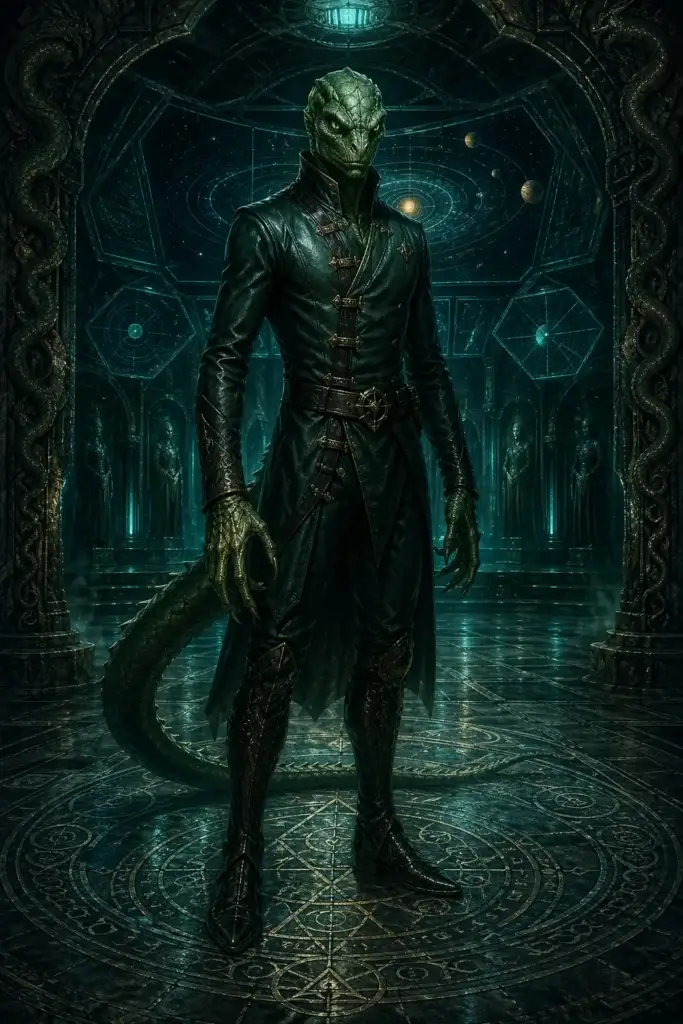
Pantheon and classes of beings: Ascended Masters (Saint Germain, Kuthumi), archangel resynthesis, Pleiadians, Reptilians, Greys.
History and Pantheon
New Age is not an organically grown religion, but a modern Western syncretism movement (from the 1960s) with roots in Theosophy (Blavatsky, 1875).
It links Eastern religions (Buddhism, Hinduism, Taoism) with Western esotericism, psychology, occultism and a romanticizing of science. The pantheon is heterogeneous and eclectic: Eastern deities, Ascended Masters, beings of light, aliens and channeled spirit beings coexist without hierarchy.
Central concepts are channeling (spirit communication), reincarnation, karma, energy healing and cosmic consciousness. The movement is decentralized, non-dogmatic and individualized. Conspiracy theories (reptilian elite, NWO, chemtrails) have established themselves as an undercurrent. New Age is more a cultural sensibility than an organized religion; adherents are difficult to count.
Beings in Everyday Life
New Age practice encompasses meditation, yoga, crystal healing, tarot, astrology and Reiki. Channelers are specialists who convey messages from spirit beings, Ascended Masters or aliens. Energy healing and alternative medicine are central. Protective rituals are less formal and more mental and intuitive. A seminar and workshop culture has become established for spreading knowledge.
Commercialization is prevalent: crystals, products and services are commodified. New altars display eclecticism: Buddha, Jesus, Krishna, Ascended Masters and fairies together. Trance and out-of-body experiences are sought. Space energy and Feng Shui are applied practices. Conspiracy theories permeate the everyday life of many adherents.
Significance Today
New Age is a widespread cultural force in North America, Europe and Australia, especially among more educated and affluent classes. It has influenced mainstream culture (the wellness industry, positive psychology, mindfulness). Criticism from academics and natural scientists is sharp; many claims (energy healing, crystal effects) have been refuted.
At the same time, it offers psychological comfort and spiritual meaning to adherents. Popular culture has aestheticized it extensively. In institutional-religious terms, New Age has remained fragmentary and diffuse; it has no centers or authorities. Conspiracy theories have in part driven it toward radicalization. Academic and esoteric reception run in opposite directions.


Beings of Light (2)

In Depth
Roots in the 19th Century
The New Age movement as a coherent phenomenon arose in the 1960s and 70s in California, but its roots reach deeper. Helena Blavatsky’s Theosophy (1875), Rudolf Steiner‘s Anthroposophy, the channeling tradition of Edgar Cayce, American spiritualism since the Fox sisters and the Hermetic tradition (Order of the Golden Dawn) form the precursors.
The Age of Aquarius and Channeling
The concept of the Age of Aquarius, a new age of consciousness, gave the movement its name. Channeling books such as A Course in Miracles (Helen Schucman, 1976) and Seth Speaks (Jane Roberts, 1972) popularized the notion that Ascended Masters, angels or extraterrestrials speak directly through mediums.
Angel, Crystal and Energy Cults
Within the movement, numerous sub-cults have developed: angel channeling, crystal healing with elaborate tables, Reiki, Theta Healing, Quantum-Touch and countless other energetic methods. Ascended Masters form a pseudo-pantheon, their names often deriving from theosophical tradition.
Criticism and Differentiation
Further standard works in the literature index.