iWell Guard

Perchta, Krampus and the World of Alpine Legends

The world of legend in the Alpine region, from Bavaria across Austria and Switzerland to South Tyrol, links the winter custom cycle of the Rauhnächte with Perchta and Krampus, alpine pasture spirits such as the Kasermandl, nightmare beings such as Drud and Toggeli, and mountain legends surrounding the Tatzelwurm. These traditions are closely interwoven with pastoral alpine and mountain farming, the Catholic liturgical year, and local customs such as Perchten runs.

The Alpine legends comprise a wide variety of regionally distinct beings, from the Waldfrau to the Bergkobold, that remain alive today in the customs, storytelling and tourism of the Alpine regions.

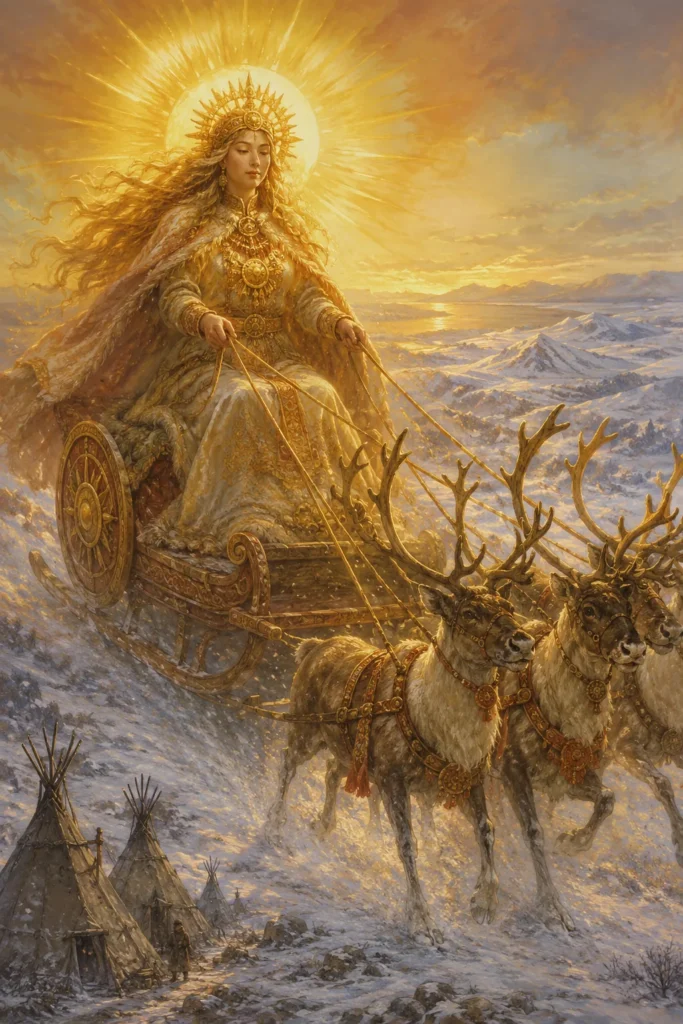
Beaivi: gods from the Sami tradition, historically illustrative
The Alpine Rauhnacht tradition forms the framework for much of the region’s winter legendary figures.

The Alpine legends fall into Rauhnacht figures such as Perchta and Krampus, alpine pasture spirits such as Kasermandl and Venedigermandl, nightmare beings such as Drud and Toggeli, and mountain legends surrounding the Tatzelwurm. They are still told today in Bavaria, Austria, Switzerland and South Tyrol.

Bavaria, Austria, Switzerland, South Tyrol: the religious landscape of the Alps

The Alpine region is predominantly Roman Catholic in character, with Reformed majorities in parts of Switzerland. The world of legend developed over centuries in the field of tension between church piety and older, pre-Christian ideas of nature and mountain beings, which held practical significance in pastoral alpine and mountain farming.

From Bavaria across Tyrol, Vorarlberg and Switzerland to South Tyrol, the names and forms of the legendary figures vary considerably; a Kasermandl in Tyrol is not necessarily identical to a comparable figure in the Bernese Oberland. This diversity reflects the small scale of Alpine valley landscapes, in which storytelling traditions were able to develop in relative isolation over centuries.

The basic outlines of this tradition: an annual calendar with the Rauhnächte as a threshold time, alpine pasture spirits as guardians of pasture and livestock, nightmare beings as an explanation for nightmares, and mountain legends as an interpretation of unexplained natural phenomena in the high mountains.

Perchta and the Rauhnächte

Perchta, also known as Frau Percht or Berchta, is one of the central figures of winter Alpine custom, venerated and feared in equal measure as mistress of wild game, house and household. According to tradition, during the Rauhnächte between Christmas and Epiphany she moves through villages and farmsteads with her retinue, testing diligence and order and punishing negligence.

At Perchten runs, Schiachperchten, schiach meaning ugly, grotesque figures with hideous masks and animal furs, and Schönperchten in splendid costumes still appear today, a custom that is kept especially alive in Salzburg, Tyrol and neighbouring regions and is meant to drive away evil spirits through noise.

Krampus: the companion of St Nicholas

In the Alpine region, the Krampus appears on the eve of St Nicholas’ Day, 5 December, as the dark counterpart to Saint Nicholas, with horns, fur, chains and a birch rod, to frighten misbehaving children. The precise origin of the figure has not been conclusively established by religious studies; a combination of pre-Christian winter-demon ideas with the church custom of St Nicholas is suspected.

Krampus runs, depending on the region also called Krampuslauf or Perchtenlauf and sometimes blended together, are today among the best-known winter customs of Austria, Bavaria and South Tyrol, and increasingly attract tourist interest as well.

Alpine pasture spirits: Kasermandl, Venedigermandl and Barbegazi

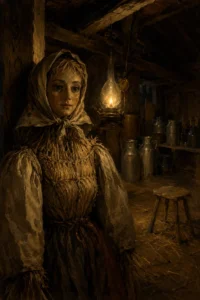
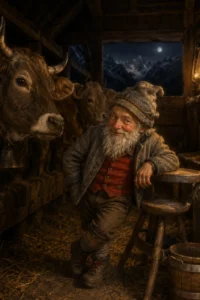
The Kasermandl is regarded as a small, usually good-natured spirit that lives in remote alpine huts (Kasern), guards cattle and hut at night, and helps the dairyman with his work, so long as the latter shows respect and leaves some milk or food for it; ingratitude or mockery is said to be repaid with pranks or misfortune.

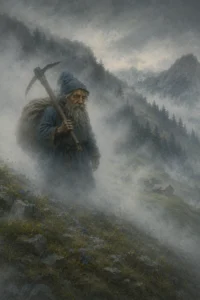
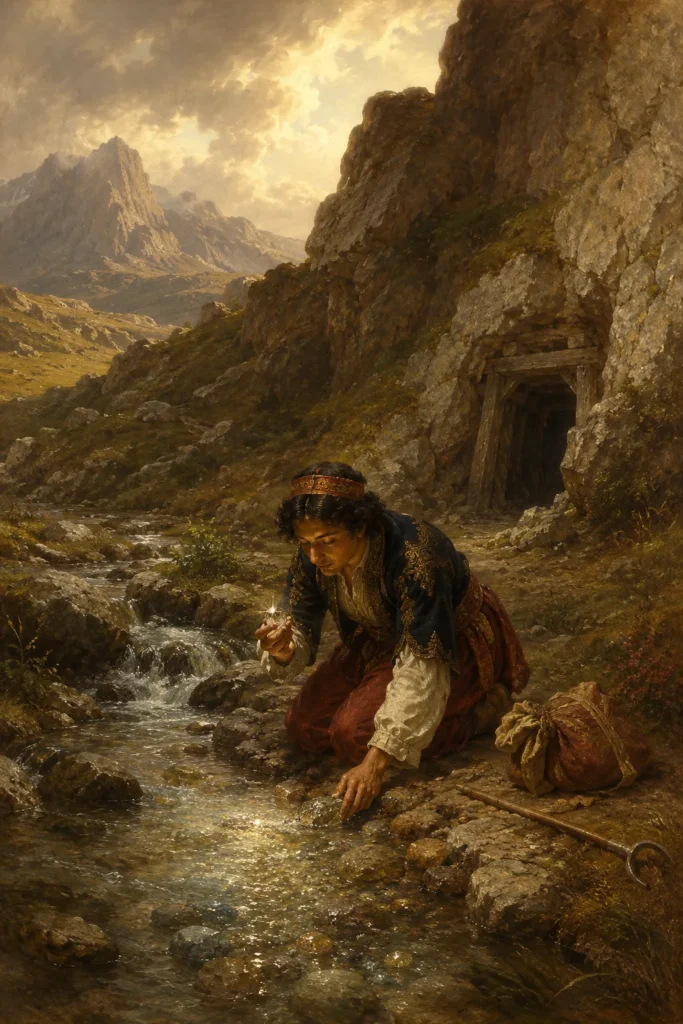
The Venedigermandl is a small-statured figure of Tyrolean and Salzburg mountain legend, associated with the so-called Venedigers, foreign treasure seekers from the south; it is said to possess knowledge of hidden ore and gold deposits and occasionally gives hints to shepherds or miners. The Barbegazi is a snow-spirit figure of the French-Swiss Alps, with oversized, ski-like feet and an ice-bearded face, which warns of avalanches and disappears into mountain crevices in summer.

Frequently asked questions about Alpine legends

What are the Rauhnächte?


The Rauhnächte are the twelve nights between Christmas and Epiphany, which in the Alpine region are regarded as a threshold time between the years, during which Perchta and other spirit figures are said to roam. Customs include incense burning and various forms of divination.

What is the difference between Perchta and Krampus?


Perchta is a Rauhnacht figure who tests diligence and order and moves through farmsteads with her retinue, while the Krampus appears as the dark companion of Saint Nicholas on 5 December and frightens misbehaving children. In some regions the two customs are combined or confused with one another.

What is a Kasermandl?


The Kasermandl is an alpine pasture spirit that lives in remote alpine huts, guards cattle and hut at night, and helps the dairyman, so long as the latter shows it respect and leaves a small gift such as milk.

Is the Tatzelwurm real?


There is no zoological evidence for the Tatzelwurm. It is regarded as a mountain-legend motif of the Alpine region, to which numerous sighting reports, some dating into the 20th century, are attributed, without this allowing the inference of a documented animal.

Nightmare beings: Drud, Toggeli and the Alpdruck

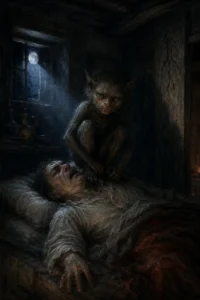
The Drud, also Trud, is a Bavarian-Austrian conception of a nocturnal tormenting spirit that presses on the chest of sleepers and causes nightmares, the so-called Alpdruck. The Drudenfuß, a five-pointed star, served as a protective sign and was placed over doors and beds.

In Switzerland, the corresponding figure is known as Toggeli, a nocturnal being that gains access to the bedroom in the shape of a cat or other animal and is likewise said to trigger nightmares and a sensation of paralysis. Both conceptions belong to the widespread European explanatory pattern of the Alpdruck, which gave a folk interpretation to sleep-physiological phenomena such as sleep paralysis.

Mountain legends: Tatzelwurm, Habergeiss and Nachtkrapp

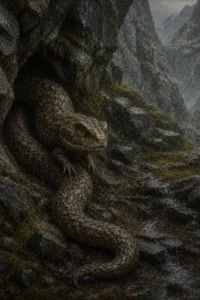
The Tatzelwurm is one of the best-known mountain legends of the Alpine region, a cat-headed, worm- or lizard-like being with short forelegs, to which numerous sighting reports, some dating into the 20th century, from Switzerland, Bavaria and Austria are attributed. In natural history terms, the Tatzelwurm is regarded as an unresolved legend motif without a documented zoological background; in cryptozoology it is occasionally associated with undiscovered reptiles.

The Habergeiss, a ghostly, goat-like composite being, appears above all in Perchten customs as a noisy fright figure. The Nachtkrapp, a giant raven, and the Butz, also Butzemann, of the Alemannic-Swabian region were regarded by children as nocturnal fright figures for those who did not go to bed on time, narrative figures with an educational function, known in similar form across large parts of Central Europe.

Rauhnacht customs: incense burning, the Drudenfuß and protective rites

The winter protective customs of the Alpine region include the burning of incense and blessed herbs in house, stable and alpine hut during the Rauhnächte, to keep evil spirits and illness away from the coming year. The Drudenfuß, a five-pointed star, was placed over doors, stables and beds to keep Drud and Toggeli away from the nocturnal Alpdruck.

At the Assumption of Mary on 15 August, herb bundles made of seven, nine or more plant species are tied and blessed in church in Catholic areas of the Alpine region, then kept in the house and sometimes burned as incense during thunderstorms or illness. The heavy bells and rolls of the Perchten and Krampus runs serve the same basic purpose: driving away winter demons and evil spirits through noise.

Regional diversity: from Bavaria to South Tyrol

The Alpine legends are not a uniform corpus but a collective term for the storytelling traditions of a region stretching across Bavaria, Austria, Switzerland, Liechtenstein and South Tyrol, each with its own dialects, landscapes and historical developments.

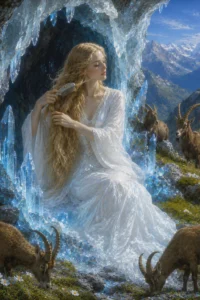
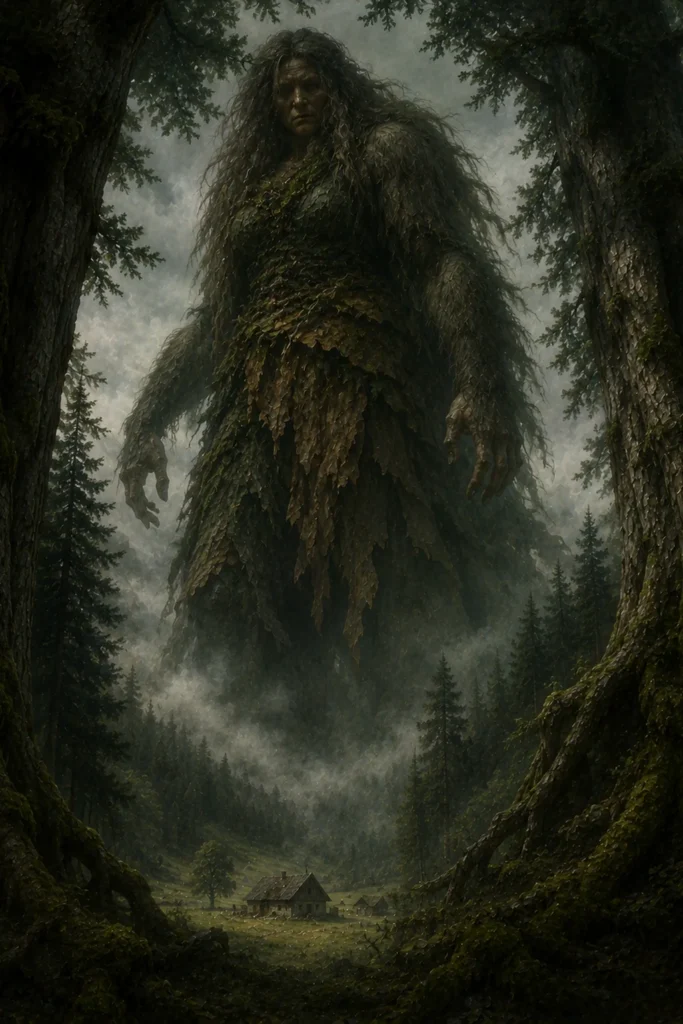
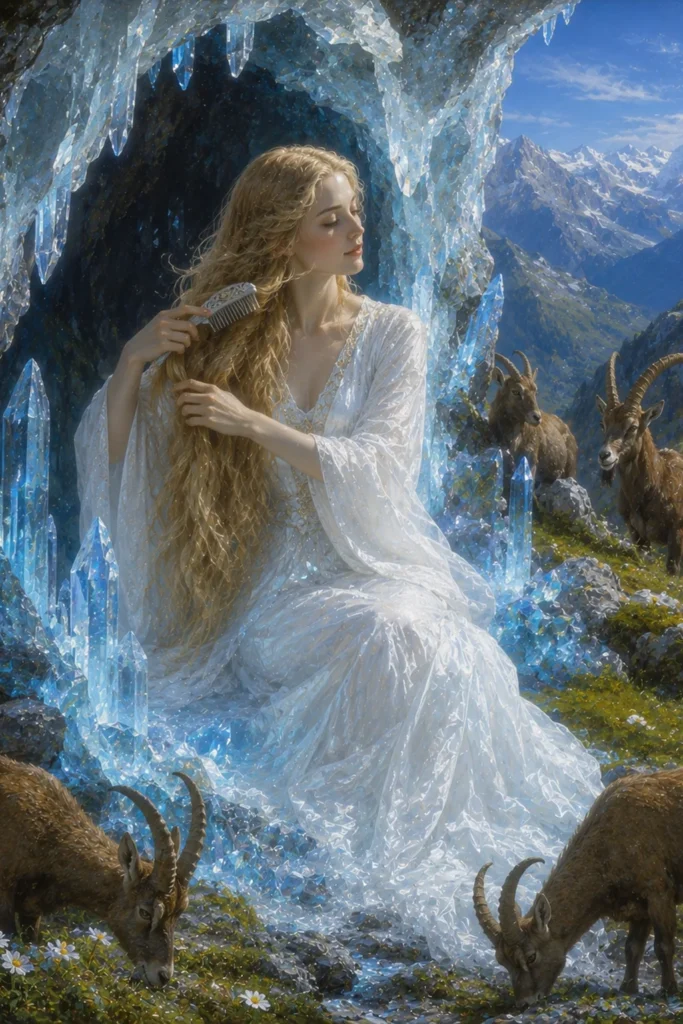
Beings such as the Nörgel (Nörggele) and the Fänggen are attested chiefly in South Tyrol and parts of Tyrol, closely related to the Salige Frau, a shy but helpful mountain woman who, according to tradition, taught shepherds weaving and arable farming. The Dellermännle comes from Vorarlberg tradition, the Isarnixe is bound to the Bavarian river Isar, and the Wolpertinger, a fabulous being assembled from parts of various animals, is regarded specifically as a Bavarian legendary figure with a humorous, tall-tale-like character.

Some motifs of these winter processions of masked figures show distant parallels to Germanic mythology, for instance in conceptions of wild nocturnal processions, without this allowing the inference of a continuous, documented continuity.

This small-scale distribution makes general statements about the Alpine legend difficult; it is more accurate to speak of a network of local and regional traditions that connect shared basic patterns, alpine pasture spirits, nightmare beings, mountain monsters, each with its own names and forms.

The calendar of the Rauhnächte

The twelve Rauhnächte between Christmas, 24/25 December, and Epiphany, 6 January, are traditionally regarded in the Alpine region as a threshold time between the years, in which the boundary between this world and the spirit world is described as permeable. During this time, Perchta and her retinue, but also other spirit and demon figures, are said to roam.

The customs of the Rauhnächte include the burning of incense and herbs in house and stable, to keep evil spirits away and bless the coming year, as well as various lot- and weather-oracles. Perchten runs frequently mark the transition from the Rauhnächte to ordinary time, with noisy processions meant to symbolically drive away winter demons.

The Krampus custom on the eve of St Nicholas’ Day falls chronologically before the actual Rauhnächte, but in public perception it is often seen together with them as part of a broader winter threshold time complex.

Sources: collections of legends from the 19th and 20th centuries

A large part of the Alpine legends known today was recorded in the 19th and early 20th centuries by regional collectors of legends, in the context of Romantic folklore studies following the model of the Brothers Grimm. For Tyrol, the collections of Ignaz Vinzenz Zingerle deserve mention, while comparable works by local regional scholars emerged for other areas.

These early collections are important but not unproblematic sources: they were often reworked literarily after the fact, compiled regionally and smoothed according to the aesthetic ideas of the time, so that oral variants and their original narrative context can only be reconstructed to a limited extent.

Modern folklore studies and religious studies place these legendary figures within broader contexts, such as the European complex of Alpdruck conceptions, Drud and Toggeli, the explanation of unexplained natural phenomena, Tatzelwurm, or child-frightening figures with an educational function, Nachtkrapp and Habergeiss. Digital legend archives have made this scattered material considerably easier to access in recent decades.

From the field barn to the Perchten-run stage: customs in transition

Many Alpine legends are closely tied to concrete pastoral working contexts: alpine pasture spirits such as Kasermandl or Barbegazi arose in the context of alpine pasture and grazing economy, nightmare beings such as Drud and Toggeli explained nocturnal states of oppression, and mountain legends such as the Tatzelwurm interpreted unexplainable observations in the high mountains.

In the 20th and 21st centuries, part of this custom, in particular Perchten runs and Krampus runs, has detached itself from its original pastoral setting and developed into a publicly staged, tourism-marketed event, with elaborately carved masks, organised associations and, at times, a supra-regional audience.

Figures such as the Sennentuntschi, a legend about an alpine-hut doll made of straw and cloth that comes to life and takes revenge on its creators, show at the same time that the world of Alpine legend also includes dark, morally charged narratives of loneliness, isolation and transgression on the alpine pasture, which differ markedly from the more protective alpine pasture spirits.

In religious-studies terms, this shift can be described as a transition from a tradition anchored in lived experience to a consciously cultivated cultural heritage, without the older protective and explanatory functions of the legends having disappeared entirely in the process.

The perchtenlauf brauchtum and the further almgeister alpen surrounding Kasermandl, Venedigermandl and Barbegazi combine Rauhnacht incense burning, the Drudenfuß and blessed herb bundles into a distinct protective practice meant to safeguard house, farmstead and alpine pasture from winter demons and nightmare beings.

Related key terms: Perchta Krampus Rauhnächte Kasermandl Drud Toggeli Tatzelwurm Habergeiss Salige Frau Alpine region South Tyrol Tyrol.

Protective objects in this cultural tradition

Alpine tradition knows the Drudenfuß over doors and beds, blessed herb bundles for the Assumption of Mary, the Rauhnacht incense burning of house and stable with frankincense, and the heavy bells of the Perchten and Krampus runs, whose noise is meant to drive away winter demons. The Protection Compass offers a cross-cultural overview.
iWell Guard aligns itself with this cultural-historical line of portable protective objects, in a contemporary material architecture, manufactured in Germany. 41 layers, real gold, platinum, silver. 30-day right of return.

Personal experiences may vary. Not a medical device. No promise of healing.