Censing and Purification
By Ralf Ittermann · last reviewed on
Censing is among the oldest forms of ritual purification. The principle is the same everywhere: a substance is burned, its smoke rises and, according to tradition, alters not only the atmosphere of a space but also its unseen quality.
Harmful influences are meant to be bound, driven off or neutralised; thresholds, persons and objects worthy of protection are meant to be consecrated or shielded by the smoke.
What drove cultures on different continents to do this is structurally almost identical. Egyptian priests censed temple chambers with kyphi before sacred acts began. Indigenous peoples of North America carried out purification rituals with bundles of white sage.
In German-speaking folk belief, evil powers were driven out of house and stable with blazing juniper branches during the smoke nights. Catholic priests have swung the censer for centuries at Mass and at prayers for the dying.
All of these practices assume that smoke is a substance of the threshold: it belongs neither wholly to the solid nor to the airy, it moves between the levels.
This hub page presents the six substances represented in the Protection Compass. Each detail page explains the origin, the operative principle according to tradition, and the beings against which the respective material was used.
Censing serves both purification and the protection against unwanted influences.
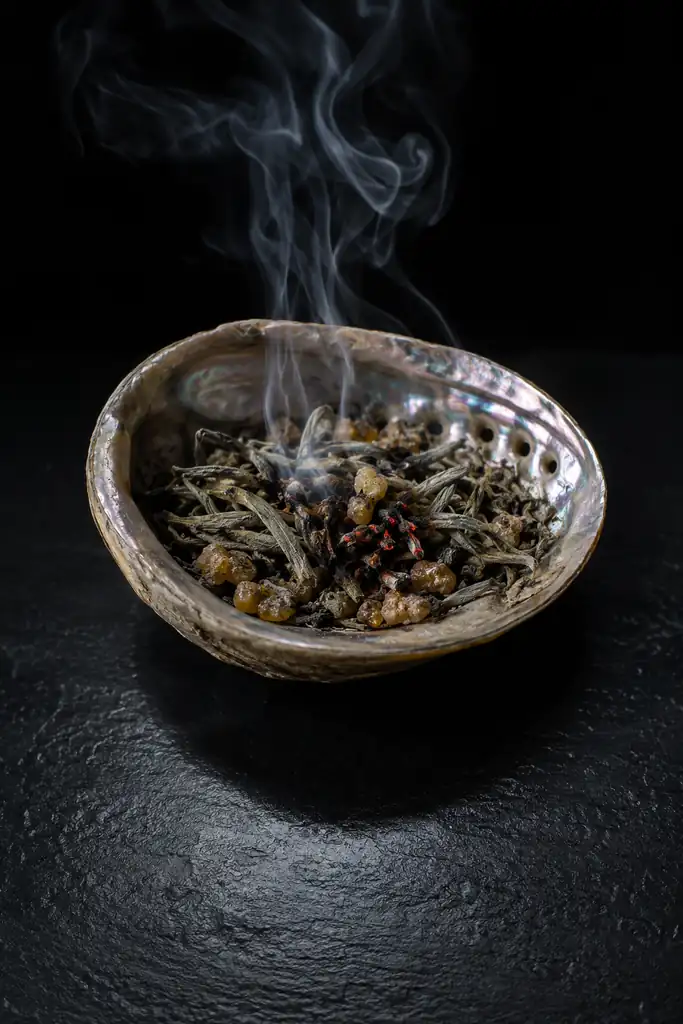
Common Features and Operative Principle
In folk tradition all censing materials share a common basic pattern. The rising smoke is regarded as a carrier: it takes harmful influences upward and carries them away; at the same time it forms a kind of curtain that prevents unwanted beings from acting.
This curtain can be spatial, when a house is censed, or personal, when a person is led through the smoke or censed directly.
Alongside this there is the aspect of marking. Censing smoke indicates that a space, a person or an act has been placed under protection. In many traditions the scent itself is the protective element: what smells pleasant or holy to people is avoided by what is harmful.
Frankincense and myrrh give off their scent in the Christian as well as in the ancient Near Eastern tradition as a sign of nearness to God; where this nearness prevails, evil has no place.
For the effect, according to most traditions, the chemical substance matters less than the knowledge of its origin, its correct application and the intention of the user. This is what distinguishes ritual purification from the mere burning of material.
Cross-Cultural Overview
Frankincense is the oldest documented censing material in written history. The resin of the Boswellia tree was already being burned in temples in ancient Egypt and Mesopotamia to invoke deities and to keep harmful influences away.
In the Christian liturgy frankincense remains to this day the central censing material for blessing, consecration and the accompaniment of the dead.
Sage stands for the North American smudging ritual. White sage (Salvia apiana) was used by numerous Indigenous peoples of what is today the United States to purify spaces, persons and ceremonial areas of negative influences. The smoke of the sage bundle is said to bind harmful energies and carry them out of the space.
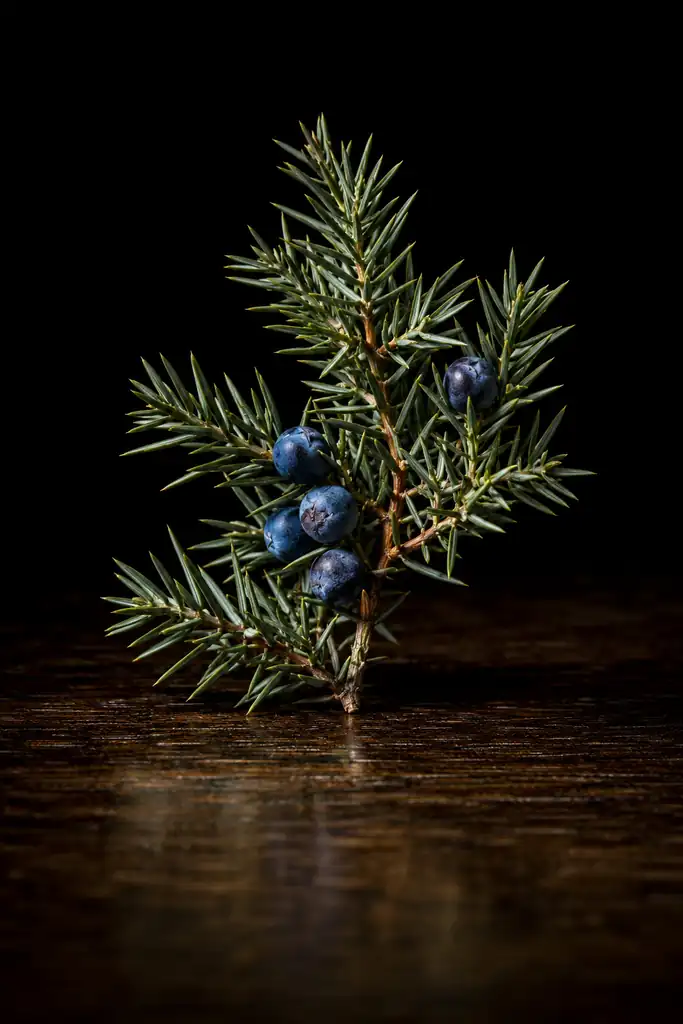
Juniper is the classic censing material of German-speaking folk belief. During the so-called smoke nights, the twelve nights between Christmas and Epiphany, members of a household moved through house and stable with burning juniper branches to drive out evil spirits and spirits of sickness.
The pungent, resinous smoke was held to be especially effective against nocturnal beings.
Palo Santo is the sacred wood of the Andean region. The censing wood from the Bursera tree is used in the folk medicine and shamanism of South America to drive off evil spirits, purify spaces and accompany protective rituals. The characteristically sweet scent is regarded in this tradition as a sign of the wood’s holiness.
Myrrh is the companion resin of frankincense. In ancient Egypt, in the Semitic world and in the Christian tradition, myrrh stood for purification and the accompaniment of the dead.
As the counterpart to bright frankincense, myrrh, with its heavy, bitter scent, has a reputation as the resin of demarcation: it accompanies the passage between the worlds and protects in doing so.
Holy water also belongs among the purifying substances, although it is not a censing material in the narrower sense.
The blessed water of the Christian tradition fulfils the same function as censing smoke: it purifies, consecrates and protects through sprinkling. Since the logic of protection is identical, holy water is treated here together with the censing materials.
Application and Limits
All six substances are applied in their respective tradition according to particular rules: at the right time, in the right place, with the right intention.
Folk tradition distinguishes between a purification that works preventively (and is therefore carried out regularly) and a purification as a reaction to a specific event, such as moving into a new house, a serious illness or the sense of an outside influence.
The limits of these practices are named by the tradition itself: a censing material does not replace a comprehensive concept of protection. In many traditions censing is therefore combined with further means of protection, such as symbols, formulas or the wearing of an amulet.
The Protection Compass on iwell-guard.com shows which means of protection were used in which traditions against which kinds of beings, and thus makes visible the combinations that cultures have handed down as especially effective.
Beyond this it holds that the traditions describe folkloric practices. This page documents and explains, without making any promises of healing or guarantees of protection.
In the Protection Compass
The censing materials presented on this hub page are linked in the Protection Compass with the kinds of beings against which they were used according to tradition.
Anyone who wishes to know which censing material was used in which culture against which kind of spirits or demons will find the complete overview there. The filters by culture, class and being make it possible to search specifically for the traditions that lie closest to one’s own background of experience.
Literature (Selection)
Related key terms: censing protection incense smoke cleansing frankincense purification ritual.
iWell Guard and Protective Traditions
The diversity of censing practices shows that people on different continents arrived at similar conclusions: a space or a person can, through deliberate actions, be brought into a state that makes outside influence more difficult or prevents it. The iWell Guard takes up these traditions and condenses them into a worn token of protection.
What cultures achieved for a space through censing, the pendant is meant to achieve for the person: a lasting, carried reminder of the will to protection, drawn from cross-cultural traditions.
Personal experiences may vary. Not a medical device. No promise of healing.