iWell Guard

Myrrh: Incense Resin for Cleansing

Incense materialSmudging and Cleansing

Myrrh and frankincense have formed a pair for thousands of years. Where one substance appears, the other is usually not far away; both come from resin-bearing trees of the same geographical zone, both were transported along the same ancient trade routes, and both made their way into the same religious systems.

Even so, each of the two incense materials has its own profile.

Myrrh is the darker, more bitter resin, with a scent that swings between spicy and medicinal.

In tradition it stands not for the bright and inviting, but for the demarcating, the cleansing in the sense of the wound and the passage: in many traditions it accompanies death, the healing ritual, and the warding off of what is harmful.

As part of the Smudging and Cleansing range, myrrh represents the deep, medicinal-ritual line of cleansing.

Quick Overview

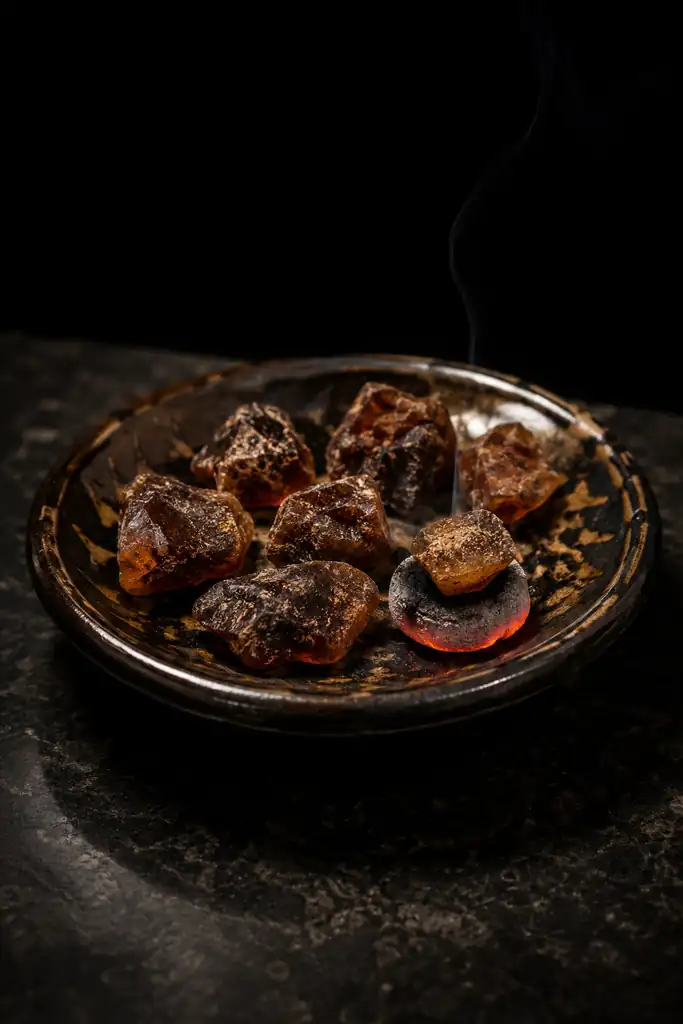
Myrrh is the gum resin of the Commiphora tree, native chiefly to Somalia, Ethiopia, Eritrea, and the countries of the Arabian Peninsula. The reddish-brown resin flows from natural cracks or cut wounds in the trunk and dries in the air into irregular grains.

When burned on charcoal, myrrh releases a heavy, slightly bitter scent. In tradition it is regarded as a cleansing resin for wounds and passages, as protection for the dead and the dying, and as a means against harmful spirits that operate at the thresholds between life and death.

Origin and Tradition

The oldest evidence for the use of myrrh comes from ancient Egypt. It was a fixed component of the embalming process; in this context it stands for the protection of the dead body on the way to the afterlife.

The body of the deceased was to be protected by the resin against decay, but also against the influence of harmful powers that, according to Egyptian belief, endangered the path of transition.

In the Old Testament, myrrh appears in several passages, both as a perfume oil, as in the Song of Songs, and as part of the holy anointing oil (Exodus 30:23).

In the New Testament, the wise men from the East bring the newborn Jesus gold, frankincense, and myrrh; the myrrh is traditionally interpreted by theologians as a reference to the future suffering and death, since myrrh in Jewish and early Christian practice was associated with accompanying the dead.

In Greco-Roman antiquity, myrrh was known as a fragrance, a remedy, and an offering. The writers Dioscorides and Pliny the Elder describe its medicinal properties; its ritual use ran in parallel.

In rabbinic literature, myrrh is one of the ingredients for the incense of the Temple (Ketoret), where it was offered daily together with other resins and herbs on the golden incense altar.

Mode of Action According to Tradition

The mode of action of myrrh in the protective tradition differs from that of frankincense through its orientation toward the demarcating. While frankincense in tradition tends rather to draw in the sacred and to open the space for the divine, myrrh is regarded as a resin that draws boundaries and seals them.

The body of the dead is sealed with it; the room or the person treated with its smoke receives a kind of invisible shell.

Within the interpretive framework of several traditions, myrrh has a special affinity for the boundary between life and death.

This boundary is regarded as a dangerous point of permeability: in many traditions, harmful powers use the moment of dying or the space around a deceased person to exert influence. In doing so, myrrh protects both the dying person and the bereaved.

The bitterness of the resin is regarded as protective in the symbolism of several cultures: what is bitter has the ability to repel the harmful, because it itself possesses a strong, repellent quality of its own.

Cross-Cultural Distribution

The area of distribution of myrrh as an incense material corresponds largely to that of frankincense: North Africa, the Near East, the Mediterranean region, and, through trade, all of Europe and Western Asia.

In Ethiopia, where the Commiphora tree is native, myrrh remains part of everyday life in the Coptic Orthodox Church to this day: it is burned as incense during worship and used for the holy oil (Qibat) with which Christians are anointed.

In the Islamic world, myrrh is widespread as an incense material and a remedy; in Arab folk medicine it is considered, alongside frankincense, a means against djinn and a protection of the house against influence.

On the Indian subcontinent, the closely related species Commiphora wightii (guggul) is the central incense resin in Hindu rituals, fulfilling structurally the same cleansing function as myrrh does in the Semitic region.

What It Is Used Against

The protective tradition uses myrrh above all in boundary situations: during dying, in the house of a deceased person, and at points of transition between worlds. The categories of harmful beings against which myrrh works are accordingly oriented toward these boundary zones:

  • Spirits of the dead and spirits that haunt the dying or the family of a deceased person
  • Demons that use thresholds between life and death (attested in several ancient traditions)
  • Harmful influences from the realm of the dead upon the living, for example through unresolved bonds or unfulfilled claims of the dead
  • Impure influences that cling to illness and wounds

In combination with frankincense, as classically handed down in Christian and Jewish ritual, myrrh complements the frankincense: the latter opens the space for the sacred, the former seals it against the harmful. The Protection Compass contains the assignment of the types of beings for which myrrh is handed down as a countermeasure.

Application and Limits

Myrrh is usually burned as grains on a piece of incense charcoal, either alone or in mixtures, classically with frankincense. The smoke is heavier than frankincense smoke and lingers longer in the room.

In the liturgical tradition of the Orthodox and Catholic Church, myrrh is used as part of the incense preparation, although the burning of pure myrrh resin is less common in the Western rite than in the Eastern tradition.

For domestic use, the same basic rules apply in folk tradition as for frankincense: deliberate intention, the right moment, and a systematic smudging of the room. According to tradition, myrrh is especially suited to rooms that have come into contact with illness or death, and to cleansings after distressing events.

As a limit of the practice, the same applies here as elsewhere: smudging does not replace a comprehensive protection concept. According to tradition, myrrh is especially effective in the boundary situations it traditionally accompanies; for other protective needs, tradition recommends other or complementary means, which the Protection Compass lists.

Literature (Selection)

  • Nigel Groom: Frankincense and Myrrh: A Study of the Arabian Incense Trade. London: Longman, 1981.
  • Lise Manniche: An Ancient Egyptian Herbal. London: British Museum Press, 1989.
  • Karel van der Toorn, Bob Becking, Pieter W. van der Horst (ed.): Dictionary of Deities and Demons in the Bible. Leiden: Brill, 1999.
  • Paul Faure: Parfums et aromates de l'Antiquité. Paris: Fayard, 1987.
  • Manfred Lurker: Wörterbuch der Symbolik. Stuttgart: Kröner, 1991.

Related key terms: myrrh smudging myrrh resin incense resin.

iWell Guard and Protective Traditions

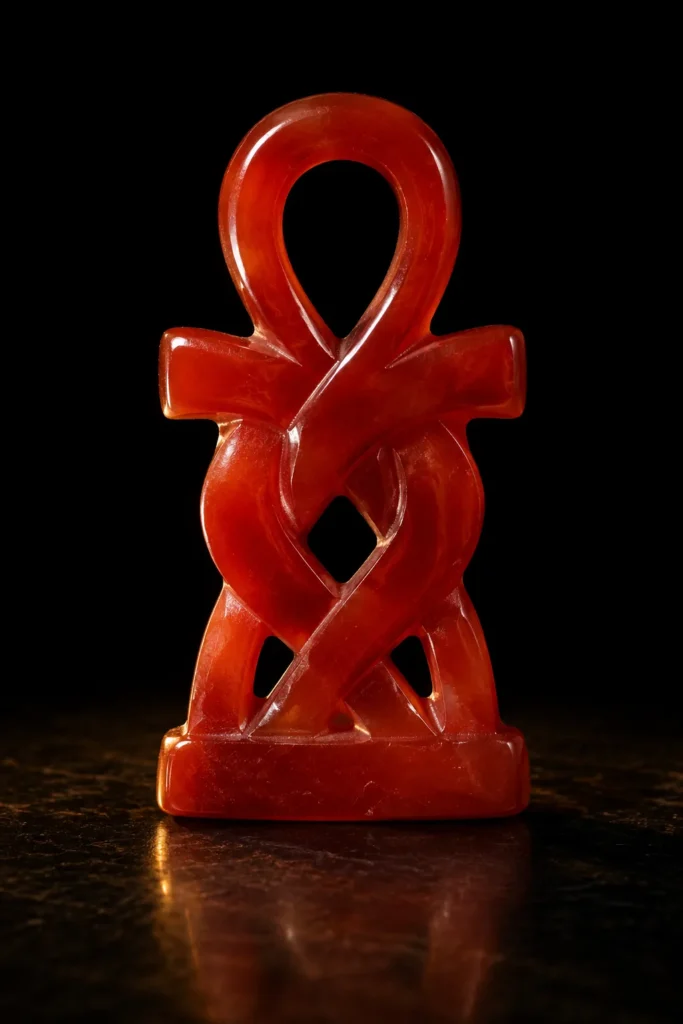
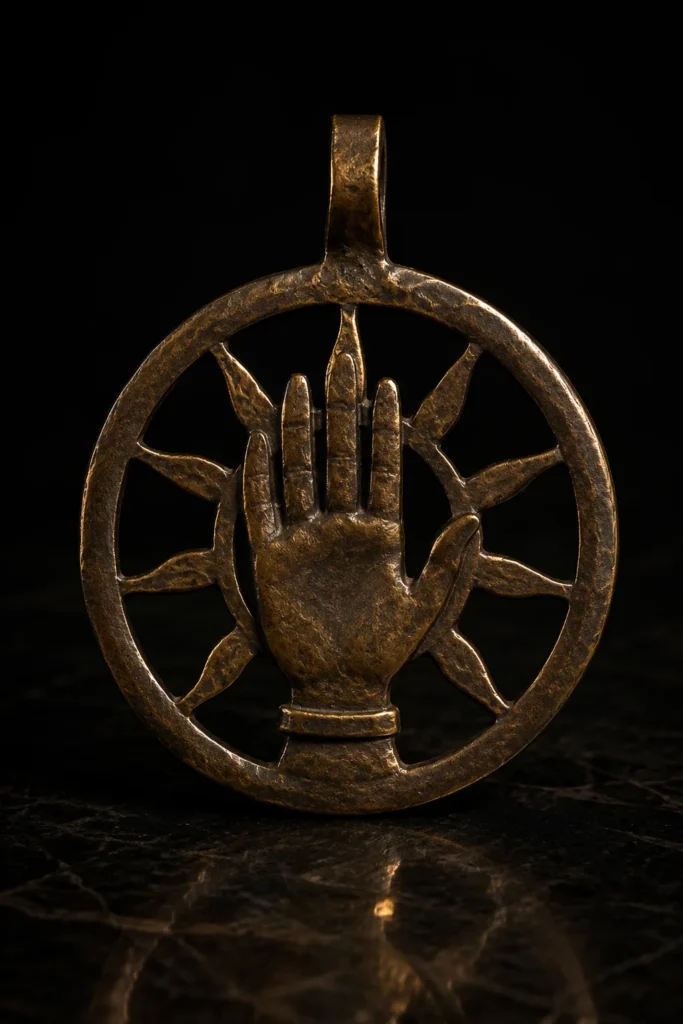
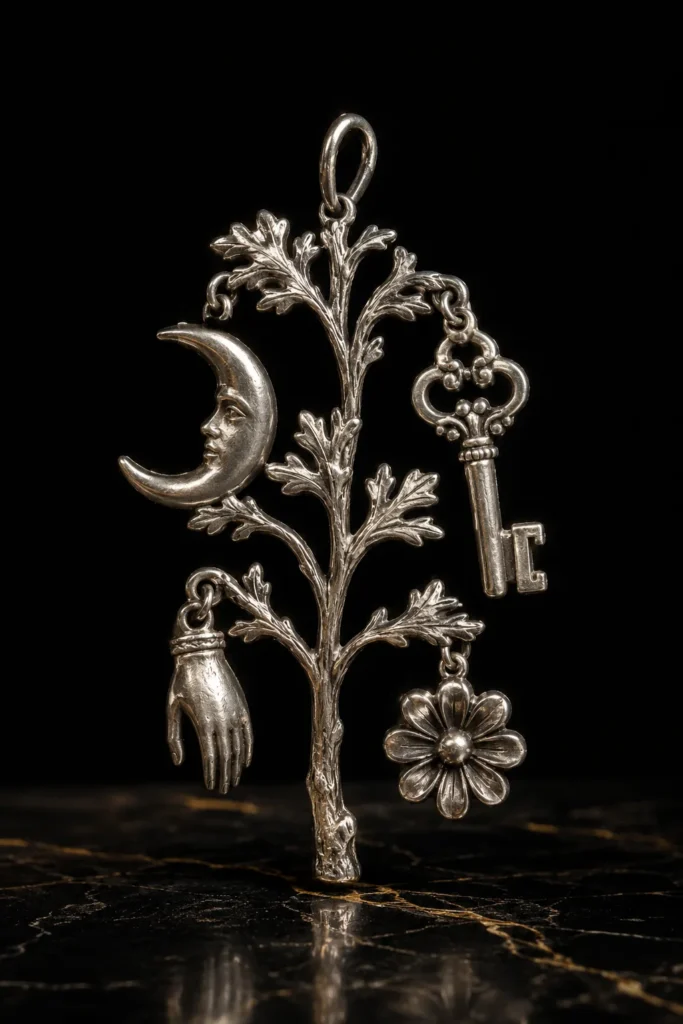
Myrrh stands for the idea that protection is especially important in situations of transition: when life changes, when boundaries become permeable, when one finds oneself between states. The iWell Guard is intended as a lasting companion that is present precisely in such moments of transition.

It condenses the protective intentions of various cultures into a sign carried along, and thus makes the principle of myrrh-like demarcation accessible close to the body and permanently, without being tied to a smudging process.

Personal experiences may vary. Not a medical device. No promise of healing.