Cimaruta: the Neapolitan silver amulet of the rue sprig
By Ralf Ittermann · last reviewed on
The cimaruta is a silver amulet from Naples in the shape of a rue sprig. Several small symbols hang from its branches. As a composite protective amulet, it serves to ward off the evil eye and misfortune.
Classification
The cimaruta is a protective amulet from southern Italy, especially from Naples. The name means roughly sprout or sprig of rue. It belongs to the independent protective symbols of the Mediterranean region.
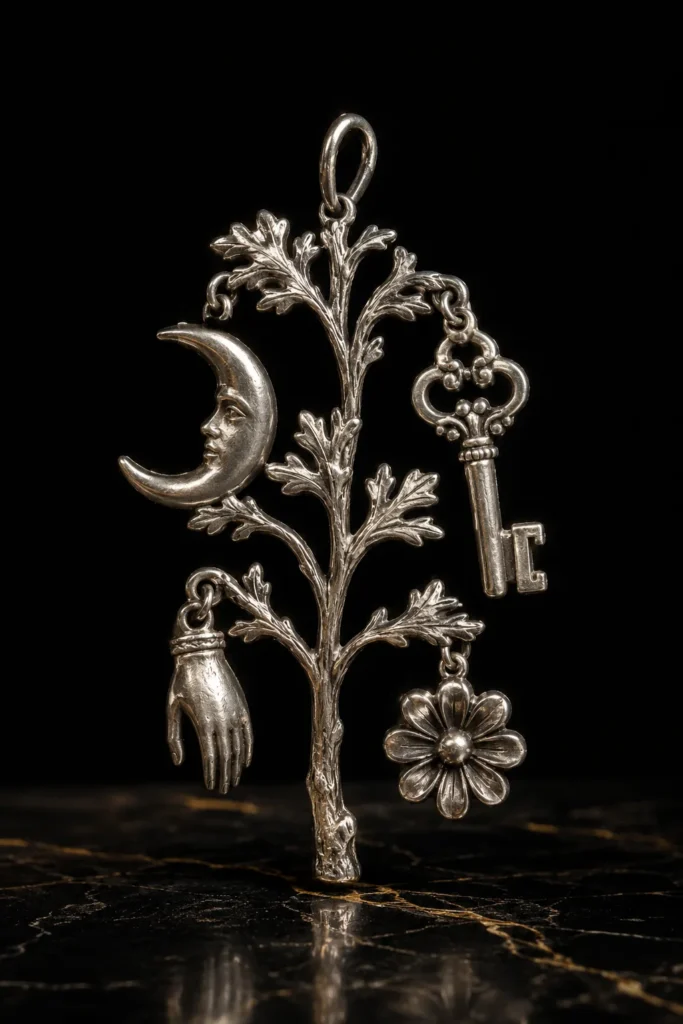
The cimaruta is usually made of silver. It reproduces a branching plant sprig, at the ends of which several small symbols are attached. This makes it a composite amulet.
The plant being reproduced is rue, a herb to which the folklore studies of the Mediterranean region attributed a protective meaning. The amulet takes its basic form from the sprig of this plant, the amulet.
Various small signs hang from the branches of the cimaruta, such as a hand, a moon, a key, a blossom or a heart. Each of these signs contributes a meaning of its own.
Its task is to ward off the evil eye and misfortune. In folklore studies, the cimaruta is regarded as a particularly richly designed amulet that bundles several protective signs in a single object.
This page presents the cimaruta from the standpoint of protection. It describes the form, the rue plant, the individual signs, the working principle and the place of the amulet in Neapolitan folk culture.
Form and material
The cimaruta has a distinctive shape. It reproduces a plant sprig that divides into several branches, so that a finely articulated, spreading form arises.
The preferred material is silver. The bright metal was itself regarded as protective and was associated in many cultures with averting harm and with the moon. A silver cimaruta thus combined form and material into a means of protection.
The small symbols are attached at the ends of the branches. They are worked from the same silver and firmly joined to the sprig, so that the whole amulet forms a single piece.
The size of the cimaruta is limited. It is intended as a pendant that could be worn or hung above a cradle and on a door. The fine articulation required careful silverwork.
The design could vary from piece to piece. Which signs hung on the branches and in what arrangement varied. The basic form of the branching rue sprig, however, was retained.
The cimaruta is thus an artful amulet. Its form combines the reproduced plant with the attached signs into a richly articulated object of the silversmith’s craft.
Rue as the basic form
The basic form of the cimaruta is the sprig of rue. This plant gave the amulet its name and its form.
Rue is a strongly scented herb of the Mediterranean region. It was assigned a special place in the old folklore studies and medicine. It was regarded as a potent plant with an evil-averting effect.
In the folklore studies of the Mediterranean region, rue was used against the evil eye and against harmful powers. It could be hung up in the house or worn on the body.
The cimaruta derives from this protective meaning of the living plant. The amulet reproduces the rue sprig in durable silver and thus preserves its protective power.
The reproduced sprig has an advantage over the living plant. It does not wither and remains permanently intact. The silver amulet carries the power of the rue in a fixed, lasting form.
The cimaruta is thus a plant amulet. Like other means of protection of the Mediterranean region, it rests on a plant to which an evil-averting power was attributed, and transfers this into a durable object.
The signs on the branches
What is special about the cimaruta are the small signs that hang from the ends of the branches. They make the amulet a composite means of protection.
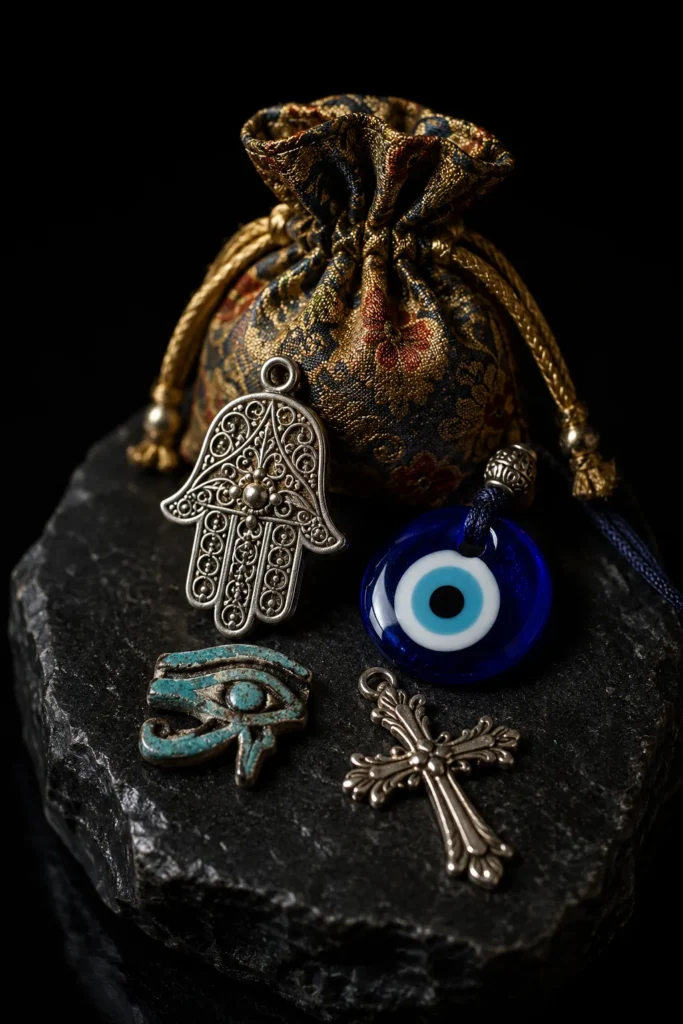
A small hand often appears on one of the branches. The hand is an old protective sign of the Mediterranean region that stands for warding off harm and for blessing, as is set out in detail with the Hamsa.
Another frequent sign is the moon, usually as a narrow crescent. The moon connects the cimaruta with the silver and with old ideas of a feminine, protective celestial body.
A key, too, can hang on the branches. The key stands for opening and closing, for the safekeeping of the house and for the power to shut out misfortune.
Alongside these appear blossoms, a heart, a fish, a small sword or a bird. Each of these signs contributes its own protective or blessing meaning and complements the others.
The cimaruta thus bundles several protective signs in a single amulet. It is, as it were, a collection of small signs that hang together on a rue sprig and reinforce one another.
Warding off the evil eye
The most important task of the cimaruta is warding off the evil eye. In the Italian region this is known as malocchio, which literally means evil eye.
According to this belief, a gaze can cause harm. The evil eye is often connected with envy. Belief in it is widespread throughout the Mediterranean region and is set out in detail on the page about the evil eye.
The cimaruta counters this belief as a means of defense. Whoever wears it or hangs it up in the house is, according to tradition, protected against the malocchio and against other misfortune.
The cimaruta was especially intended for the protection of children. It was hung above the cradle or placed on the child and was meant to accompany it through the first vulnerable years of life.
The house and the family, too, stood under the protection of the cimaruta. Hung on the door or in the living room, it was meant to preserve the place and those living there.
The cimaruta is thus firmly embedded in the belief in the evil eye. It gives a widespread fear a particularly richly designed answer by uniting several protective signs in a single amulet.
The working principle of the bundled signs
The cimaruta follows a working principle of its own. Its protective power rests not on a single sign but on the bundling of several signs in one amulet.
The basis is the rue. The protective plant gives the amulet its shape and its first protective meaning. The remaining signs build on this foundation.
Each attached sign adds a further protective meaning. The hand wards off harm, the moon protects, the key locks the house, the blossom brings blessing. Together they form a dense web.
Behind this arrangement lies the idea that many signs offer more protection than a single one. The cimaruta assembles various means so that one takes hold where another does not suffice.
To this is added the protective material. The silver is itself regarded as evil-averting. Thus the cimaruta combines the power of the plant, the power of the signs and the power of the material.
The cimaruta is thus a composite amulet. Its working principle is accumulation. It protects not through a single strong sign but through the interplay of many small signs.
Cimaruta and related amulets
The cimaruta belongs to the rich family of protective amulets of the Mediterranean region. Within this family it occupies a place of its own through its composite form.
It is related to the cornicello, the horn-shaped amulet. Both come from the Neapolitan region and serve to ward off the malocchio. The cornicello, however, is a single sign, the cimaruta a bundled one.
Equally related are the hand signs, the mano cornuta and the mano fico. They too belong to the warding off of the evil eye in the Italian region. A small hand also often appears as a sign on the cimaruta itself.
Beyond Italy, the cimaruta can be compared with the Hamsa. The Hamsa, too, often bears several signs, such as an eye and a fish, and thus combines various protective meanings.
What distinguishes the cimaruta is its particularly rich bundling. While other amulets bear one or two signs, the cimaruta assembles a whole series of small signs on a branching rue sprig.
The cimaruta is thus a good example of a composite amulet. It shows how the protective practice of the Mediterranean region could combine various signs into a single artful object.
Cimaruta in Neapolitan folk culture
The cimaruta was firmly anchored in the folk culture of Naples and southern Italy. It belonged to the means of protection that accompanied family life.
Its connection with the protection of children was especially close. Hung above the cradle, the cimaruta was meant to preserve the newborn, which was regarded as especially endangered by the evil eye.
The cimaruta was often given as a gift, for instance at the birth of a child. As a gift, it combined the protective idea with the expression of good wishes for the young life.
The amulet was passed down over generations. An old cimaruta that had already accompanied several children of a family was regarded as especially bound up with the protection of that family.
In scholarship the cimaruta was at times connected with old cults. Such far-reaching interpretations are, however, uncertain. What is established is its place as a popular protective amulet of the modern era.
The cimaruta is thus not merely an object but part of a living folk culture. Giving, hanging up and passing on were fixed practices in which the amulet was embedded.
Reception today
The cimaruta is less widespread today than the simpler cornicello, yet in the Neapolitan region and among collectors it remains well known.
As an amulet, the cimaruta continues to be made. Silversmiths produce it after the old models, with the branching rue sprig and the attached small signs.
In collections devoted to the folklore studies of the Mediterranean region, the cimaruta is well represented. It is regarded as one of the most artful and most layered amulets of this region.
In present-day use, artistic and tradition-conscious interest often comes to the fore. The cimaruta is valued as an old Neapolitan piece of jewelry, even without the full old protective belief.
For folklore studies and the study of religion, the cimaruta remains an instructive object. It shows how various protective signs could be combined into a single composite amulet.
The cimaruta is thus a striking example of a composite protective amulet. In it are combined the protective rue, a multitude of small signs and the wish to preserve children in particular from the evil eye.
Literature (selection)
Related key terms: cimaruta rue sprig rue silver amulet Naples evil eye malocchio apotropaion Mediterranean region child protection.
iWell Guard and protective traditions
iWell Guard stands in the cultural-historical line of portable protective objects to which the cimaruta also belongs. A modern companion for people who live with protective symbols: made in Germany, 41 layers of solid gold, platinum and silver, with a 30-day right of return.
Personal experiences may vary. Not a medical device. No promise of healing.