iWell Guard

Water spirits, rivers, lakes, seas worldwide

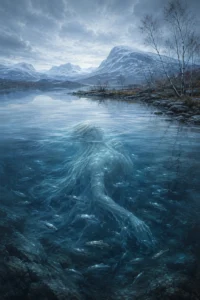
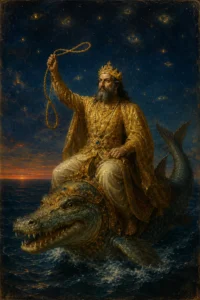
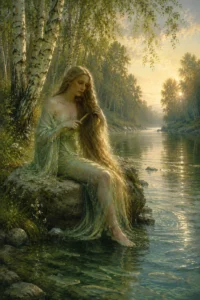
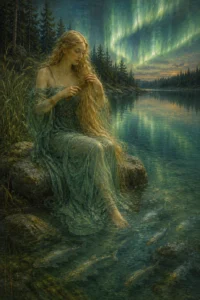
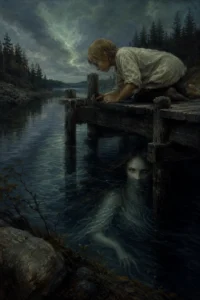
Spirits that dwell in rivers, lakes and seas. Transmitted across cultures, from Rusalka through Kappa to the Nixie.

Water spirit concepts are found worldwide, beings bound to rivers, lakes and seas.

Topic OverviewCross-Cultural

Table of Contents

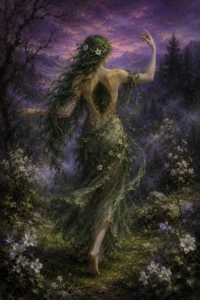
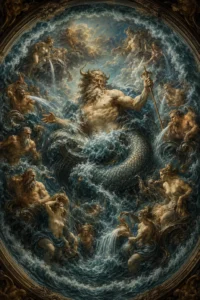
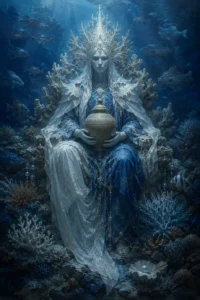
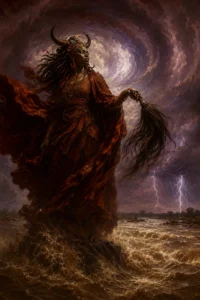
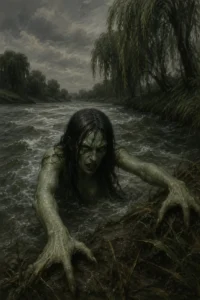
Water spirits - cross-cultural collective illustration of the spirits sub-category

Quick Overview (Definition List)

Type: spirit / supernatural being Class: water spirits Distribution: Global (Asia, Europe, Africa, the Americas, all cultures with bodies of water) Main features: bound to bodies of water, intelligence, cunning, motives of lust and violence, dependence on water Related sub-categories: spirits of the dead, hauntings, shapeshifters, night beings

Concept and Distinction

Water spirits differ from mere nature spirits in that they show their own intentions and personality. They are not only manifestations of water energy, but conscious actors with a will.

In contrast to spirits of the dead, who are bound to trauma or unfinished tasks, water spirits inhabit their bodies of water out of an innate nature.

Some are cannibalistic, some are enamored of human beauty, some are merely territorial and hostile toward intruders. Their essence is aquatic; they can only exist in or in close proximity to water.

Cultural-Historical Examples

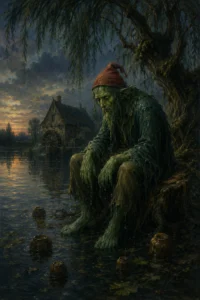
The Japanese Kappa is perhaps the best-documented example: a green, turtle-like humanoid that lives in watercourses, drowns children and enjoys magical contests. The Kappa has a moist crown on its head from which its power flows; if it loses the water, it becomes weak.

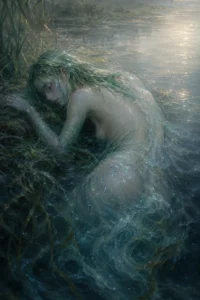
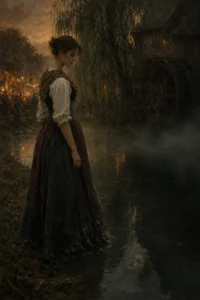
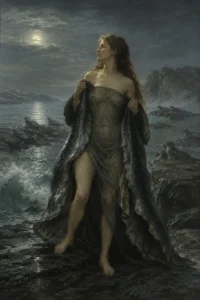
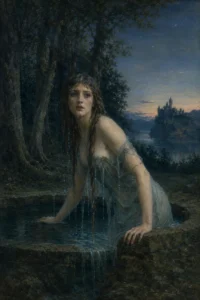
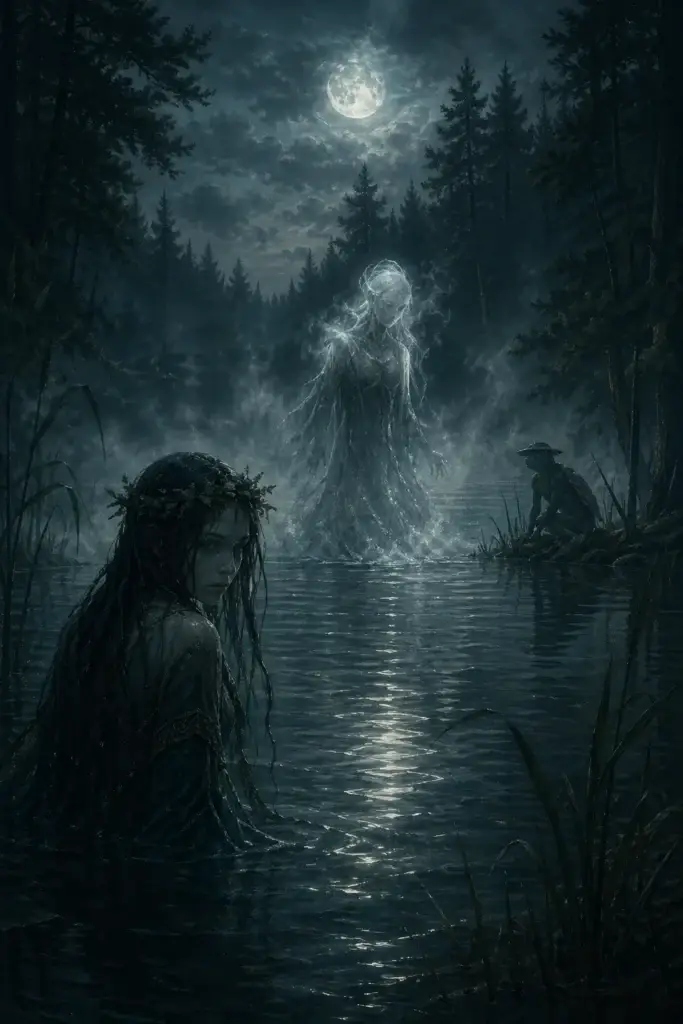
Japanese folklore offers hundreds of regionalized variants of the Kappa. The Slavic Rusalka, by contrast, is female, often a variant of a spirit of the dead: a girl who has drowned and now, as a water-bound spirit, seduces men at night and pulls them into the water, fatal and alluring.

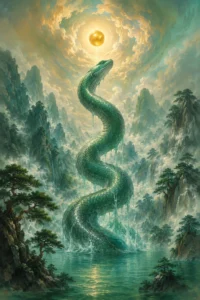
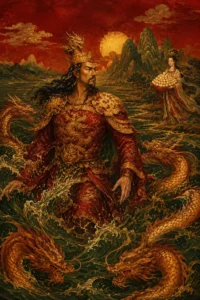
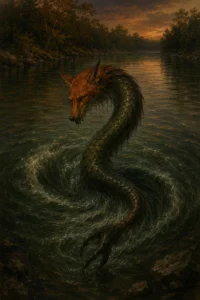
In the Chinese tradition, the Lu (a lu-deity or water-dragon variant) represents an older, less anthropomorphic power, more a ruler of nature than an individual personality with emotions.

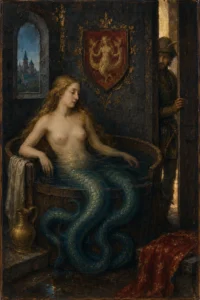
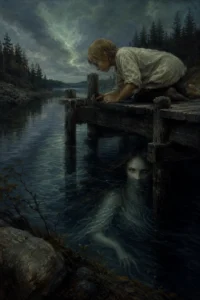
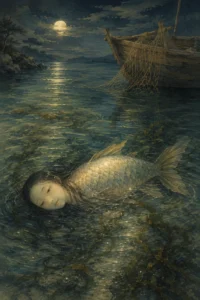
In the Nordic region, the Nixie or Havfrue is described: half woman, half fish, dangerously beautiful, sovereign in her animal world. European river spirits, often nameless, are regarded in the Bavarian and Austrian Alps as drowners and stone-throwers, phenomena that frightened travelers.

State of the Sources

Water spirits are central to Japanese folklore collections (Konjaku Monogatarishu, 12th century Kappa tales), Slavic folk legends (19th-century collections, Rusalka variants), Chinese classical novellas and European fairy tales and legends.

Renaissance natural-history texts reported on “watermen” and “mermaids” as supposedly real species, possibly misidentifications of manatees or dolphins. Religious studies classifies many of these beings as transitional forms between animal, human and the supernatural.

Present-Day Significance / Related Beings

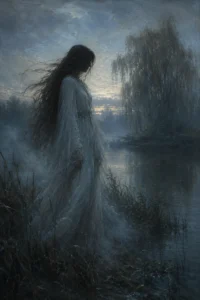
Water spirits remain influential in art-house film, literature and paranormal research. The motif of the “white lady” at lakes and rivers, who causes drownings, is regularly documented in modern paranormal investigations.

Some lakes in Scotland, Scandinavia and the Alps are considered known for spirit apparitions; water sports enthusiasts report eerie encounters and fatalities attributed to water spirits. The connection to shapeshifters is often thematic: water spirits can slip into various aquatic or human forms. Haunting at bodies of water and lakes is another related category.

Gender Construction in the Water-Spirit Tradition

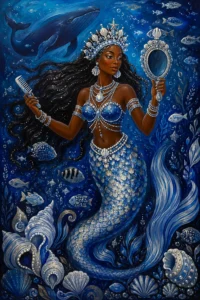
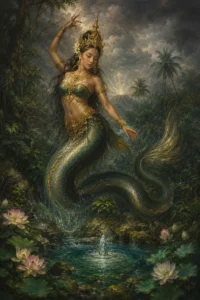
Water spirits carry female connotations in almost all traditions that are well documented in the history of religion: the Slavic Rusalka, the German Nixie, the Italian Sirena, the African Mami Wata, the Afro-Caribbean Yemoja.

Religious anthropology sees in this gender construction a reflex of the ambivalent cultural meaning of water, fertile like a mother, dangerous like a devouring element. The male water spirits (Waterman, Triton, Kappa) are generally secondary figures, often conceived as husbands or sons of the female main figures.

Connection to the Siren Tradition

The Greco-Roman siren tradition is complex in the history of religion. In Homer (Odyssey XII), the sirens are bird-like beings with a seductive voice; in the later tradition they are increasingly merged with water spirits (above all with the mermaid conception).

This merger is completed in the Hellenistic novel, in the medieval bestiary tradition and finally in modern pop culture (Disney’s Ariel). The scholarly treatment appears in Daniel Ogden (“Drakon”, 2013) and in modern classical philology.

Selected bibliography on water spirits:

  • Wolfram, Herwig: Geschichte der Goten. Beck, München 1979.

Note: This selection serves as orientation; detailed entries follow their own curated list of sources.

Further standard works in the literature index.

Alongside the well-known figures such as Kappa, Rusalka, Nix or Selkie, traditions worldwide know numerous other water spirits that, in regional cults, are often closely bound to a particular river, lake or stretch of coast.

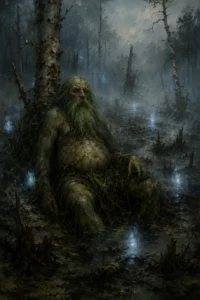
These include, among others, the Slavic Vodyanoy figure, the Baltic Laume, the Andamanese Juruwin tradition or the Andean-Amazonian Yacumama. This overview brings together such other water spirits alongside the prominent representatives in order to make region-specific functions, protective relationships and taboos comparable.

Water-Spirit Mythology Worldwide

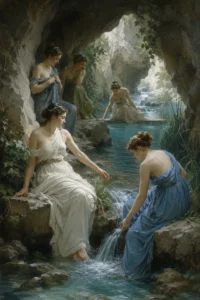
Water spirits form one of the oldest and most enduring classes of beings in the history of religion. Wherever there is water, a spring, river, lake, sea or well, mythology features a being that inhabits and guards this water. Water-spirit mythology ranges from the Mesopotamian Apsu conception to the Slavic Vodyanoy and Rusalka, from the Germanic Nixies to the Japanese Kappa and the West African Mami Wata.

Well-known water spirits in the iWell Guard lexicon: Nix and Nixie (Germanic), Vodyanoy (Slavic lord of the water), Vila (Slavic water nymph), Rusalka (Slavic spirits of the drowned), Kappa (Japanese river demon), Selkie (Celtic-Orcadian seal woman), Sirens (Greek singers of the sea).

Function: reverence for water as both a source of life and a realm of death.

Frequently Asked Questions about Water-Spirit Mythology Worldwide

What are water spirits?

Water spirits are supernatural beings that inhabit springs, rivers, lakes or the sea. Corresponding mythologies are found in nearly all cultures: Nixies, Rusalki, Vodyanoy, Kappas, Selkies, Sirens. They are often ambivalent: they draw people to the water and into the water, but they also protect those who are drowning and, in many traditions, are regarded as guardians of springs.

Which water spirits exist in German mythology?

The German folk tradition knows Nixies (the Lorelei as the best-known example), watermen, Nöcks and well-women. They are usually seductive and dangerous, drawing wanderers into the water, and they are part of a broader Germanic water-spirit complex that is widespread from the Rhine to the North Sea.

Water Spirits in Comparison

Abzu
Abzu
→ To the being
Achelous
Achelous
→ To the being
Adaro
Adaro
→ To the being
Afanc
Afanc
→ To the being
Ahti
Ahti
→ To the being
Ahuizotl
Ahuizotl
→ To the being
Akkorokamui
Akkorokamui
→ To the being
Amphitrite
Amphitrite
→ To the being
Anahita
Anahita
→ To the being
Apam Napat
Apam Napat
→ To the being
Apsara
Apsara
→ To the being
Aspidochelone
Aspidochelone
→ To the being
Asrai
Asrai
→ To the being
Bäckahäst
Bäckahäst
→ To the being
Ben Varrey
Ben Varrey
→ To the being
Berberoka
Berberoka
→ To the being
Bereginya
Bereginya
→ To the being
Bolotnik
Bolotnik
→ To the being
Boto Encantado
Boto Encantado
→ To the being
Caicai-Vilu
Caicai-Vilu
→ To the being
Ceffyl Dŵr
Ceffyl Dŵr
→ To the being
Chalchiuhtlicue
Chalchiuhtlicue
→ To the being
Charybdis
Charybdis
→ To the being
Dakuwaqa
Dakuwaqa
→ To the being
Dragon King
Dragon King
→ To the being
Each-uisge
Each-uisge
→ To the being
Enbilulu
Enbilulu
→ To the being
Funayūrei
Funayūrei
→ To the being
Ganga
Ganga
→ To the being
Glaukos
Glaukos
→ To the being
Grindylow
Grindylow
→ To the being
Gwragedd Annwn
Gwragedd Annwn
→ To the being
Havmand
Havmand
→ To the being
He Bo
He Bo
→ To the being
Iara
Iara
→ To the being
Iku-Turso
Iku-Turso
→ To the being
Imugi
Imugi
→ To the being
Ipupiara
Ipupiara
→ To the being
Isarnixe
Isarnixe
→ To the being
Jenny Greenteeth
Jenny Greenteeth
→ To the being
Kāmohoaliʻi
Kāmohoaliʻi
→ To the being
Kappa
Kappa
→ To the being
Kelpie
Kelpie
→ To the being
Kul
Kul
→ To the being
La Sirène
La Sirène
→ To the being
Lạc Long Quân
Lạc Long Quân
→ To the being
Llamhigyn y Dŵr
Llamhigyn y Dŵr
→ To the being
Loreley
Loreley
→ To the being
Lu
Lu
→ To the being
Makara
Makara
→ To the being
Mami Wata
Mami Wata
→ To the being
Marakihau
Marakihau
→ To the being
Marbendill
Marbendill
→ To the being
Marie Morgane
Marie Morgane
→ To the being
Melusine
Melusine
→ To the being
Merrow
Merrow
→ To the being
Mishiginebig
Mishiginebig
→ To the being
Mishipeshu
Mishipeshu
→ To the being
Mul Gwishin
Mul Gwishin
→ To the being
Näcken
Näcken
→ To the being
Näkki
Näkki
→ To the being
Naga (Bicol)
Naga (Bicol)
→ To the being
Naiads
Naiads
→ To the being
Nammu
Nammu
→ To the being
Navka
Navka
→ To the being
Nereids
Nereids
→ To the being
Nereus
Nereus
→ To the being
Nguruvilu
Nguruvilu
→ To the being
Ningyo
Ningyo
→ To the being
Nix
Nix
→ To the being
Nixe
Nixe
→ To the being
Nommo
Nommo
→ To the being
Nuckelavee
Nuckelavee
→ To the being
Nure-onna
Nure-onna
→ To the being
Nyami Nyami
Nyami Nyami
→ To the being
Oceanids
Oceanids
→ To the being
Oceanus
Oceanus
→ To the being
Olokun
Olokun
→ To the being
Oshun
Oshun
→ To the being
Oya
Oya
→ To the being
Pania
Pania
→ To the being
Peg Powler
Peg Powler
→ To the being
Phaya Naga
Phaya Naga
→ To the being
Pincoya
Pincoya
→ To the being
Qalupalik
Qalupalik
→ To the being
Repun Kamuy
Repun Kamuy
→ To the being
Roane
Roane
→ To the being
Rusalka
Rusalka
→ To the being
Selkie
Selkie
→ To the being
Shellycoat
Shellycoat
→ To the being
Sirena
Sirena
→ To the being
Sumpall
Sumpall
→ To the being
Taniwha
Taniwha
→ To the being
Topielec
Topielec
→ To the being
Triton
Triton
→ To the being
Umibōzu
Umibōzu
→ To the being
Undine
Undine
→ To the being
Varuna
Varuna
→ To the being
Ved-ava
Ved-ava
→ To the being
Vedava (Mari)
Vedava (Mari)
→ To the being
Vellamo
Vellamo
→ To the being
Vesihiisi
Vesihiisi
→ To the being
Vodník
Vodník
→ To the being
Yacuruna
Yacuruna
→ To the being
Yamuna
Yamuna
→ To the being
Yemoja
Yemoja
→ To the being