Naiads, whose lives depend on their own spring
By Ralf Ittermann · last reviewed on
Naiads are spirits of the Greek tradition.
Spring nymphs whose lives end when their water dries up. The entry emphasizes that these nymphs depend on their own spring, fading the moment it runs dry.
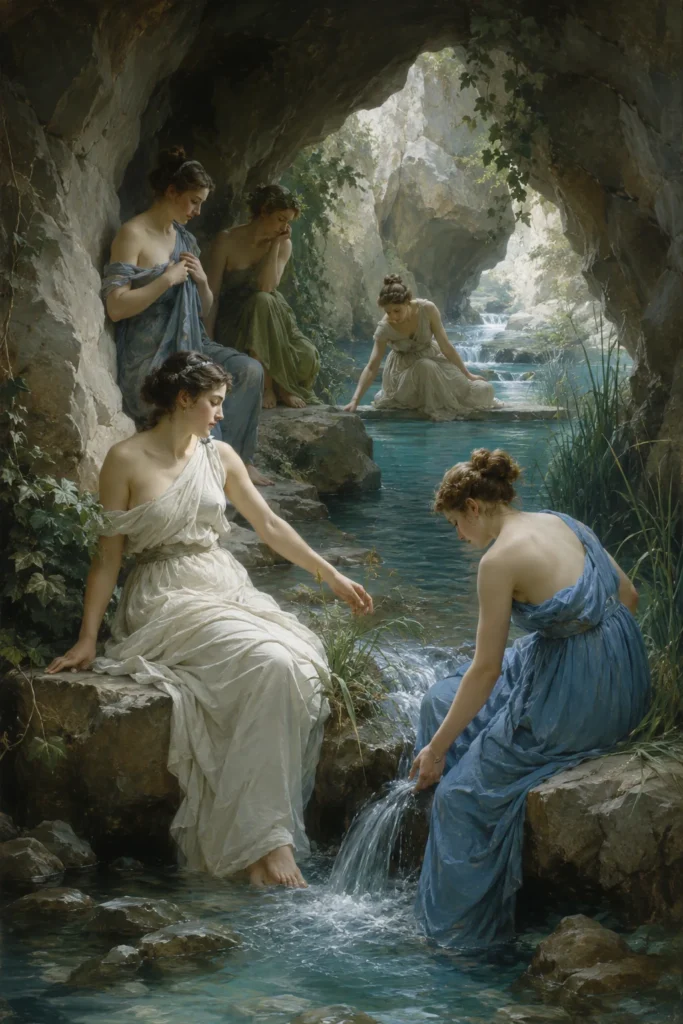
The Naiads are the freshwater nymphs of Greek mythology: beautiful, generally benevolent beings bound to a spring, stream, river or well. Homer and Hesiod already know them as daughters of the river gods.
Their lives are so closely tied to the body of water that they end when the spring dries up: a bond that makes them guardians of a place.
Type: Freshwater nymphs at springs
Origin: Daughters of the river gods
Texts: Homer through to Roman times
Period: 8th/7th century BC to the Imperial era
Appearance: young woman with a water jug
Traditional context
Period of the Texts
Attested from Homer and Hesiod through to Roman literature.
Area of Diffusion
The Greek cultural sphere, always bound to a single spring.
Sources
Good: mostly attested as a collective, examined in depth by Larson.
Name and variants
Greek: Naiads, also Najads, derives from the root meaning to flow.
Appearance
Appearance
Young women with a water jug or reeds, often near wellhouses. They embody life-giving fresh water.
Effect
Benevolent, yet with the flip side of rapture. Whoever was seized by nympholepsy was considered blessed or entranced.
Profile: Naiads
The spring nymphs at a glance.
Minor nature deity, genius loci of its spring.
Local fertility deity at springs.
Young woman with a water jug or reeds.
Healing water, but also rapture.
Votive offerings and sacrifices at the nymphaea.
Their sea sisters, the Nereids and Oceanids, remain confined to salt water.
Daughters of the river gods
As nymphs of flowing fresh water, the Naiads are daughters of the river gods, some of Oceanus, some of Zeus, distinct from the Nereids and Oceanids as well as from mountain and tree nymphs. The name derives from the root meaning to flow.
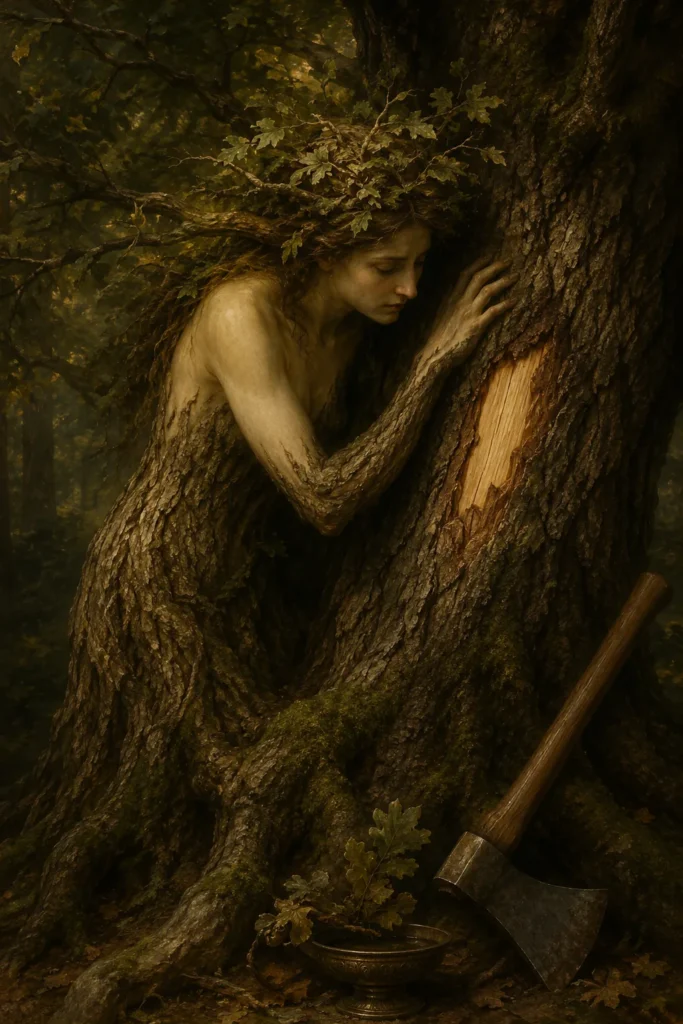
Mortality is to be taken literally: if the spring dries up, their life ends.
Afterlife and classification
The Naiads are a subgroup of the nymphs; the motif of the bathing nymph shaped Renaissance painting.
From a religious-studies perspective, they are the genius loci of their spring; nympholepsy shows the closeness of veneration and fear of rapture.
Veneration at the spring
The practice involved was not a ban but veneration at the spring: nymphaea, votive offerings, sacrifices by the water, with desecration considered dangerous. Holy water, salt and the amulet build on this.
Water nymphs compared
Frequently asked questions about the Naiads
Are Naiads immortal?
Not unconditionally: they die as soon as their spring dries up.
Are Naiads dangerous?
Mostly benevolent, but they could carry humans off, as in the legend of Hylas.
Literature (selection)
Further standard works in the bibliography.
Anyone searching for Naiads nymphs of the Greek springs, or asking about spring nymphs Greece, means the Naiads: guardians of their water, whose life lasts as long as their spring.