iWell Guard

Nixe, the Water Woman with the Wet Hem

Nixe is a spirit of the Germanic/Nordic tradition.

She dances with humans and pulls bathers into the depths.

SpiritGermanic

Table of Contents

Nixe, spirit of the Germanic/Nordic tradition
Nixe

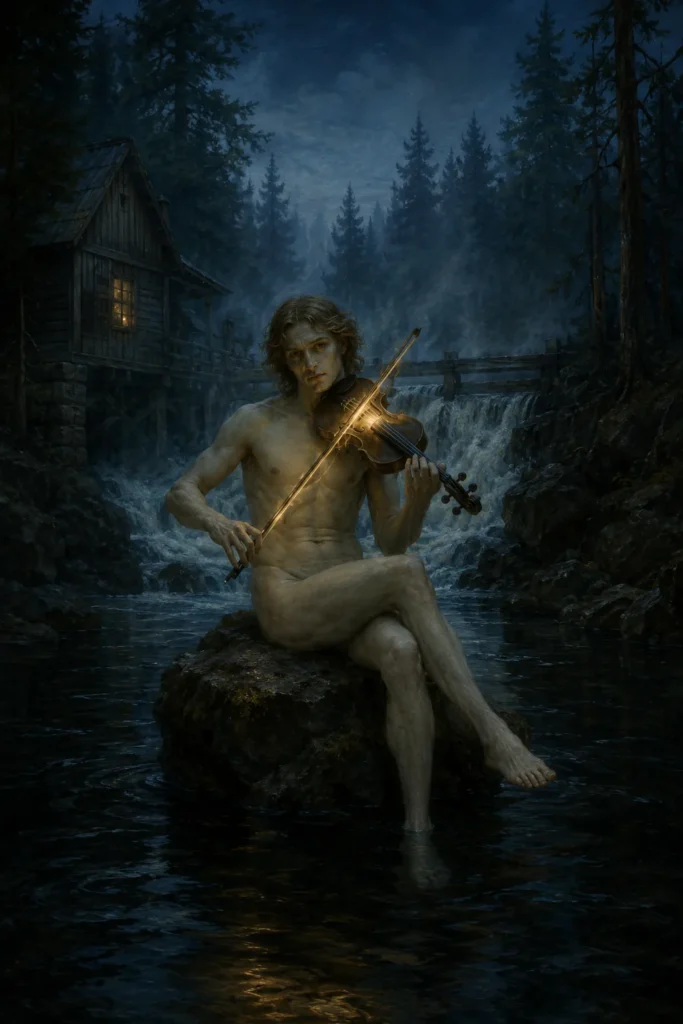
The water spirit Nixe dwells in rivers, lakes and mill ponds, the female counterpart of the Nix: she dances, warns of storms, but also draws bathers into the depths.

Recognisable by her wet skirt hem; at a fixed hour she must return to the water.

At a glance: Nixe

Type: female water spirit of the waters
Origin: common Germanic nykr word family
Texts: Old High German glosses, Grimm’s tales
Period: 10th to 19th century
Appearance: beautiful woman, wet hem of her garment

Textual history

Period of the Texts

The earliest evidence dates to the late 10th century; the Nixe took on her established form in the 19th-century collections of legends.

Area of Diffusion

Widespread in the German-speaking region, with related figures in Scandinavia and England.

Sources

Good sources: the Handwörterbuch des deutschen Aberglaubens and the collections of the Brothers Grimm.

Name and variants

Language: Old High German nihhus meant a water monster, related to Old English nicor and Old Norse nykr; from these comes the feminine form Nixe.

Appearance

Appearance

Young, beautiful, greenish shimmering hair, hem always wet. The legendary Nixe did not yet have a fish tail.

Effect

She warns of storms, but also draws bathers under; the water sometimes demands a sacrifice.

Profile: Nixe

The key aspects of the water woman at a glance.

Cultural Context

German legendary tradition, related to Näcken and other Nordic water beings.

Relates To

Bathers, fishermen, millers and dancing parties by rivers and lakes.

Depiction

Beautiful woman, wet hem, cool hand, originally without a fish tail.

Function

Warner and dancer, but also mortal danger by the water.

Dealing with it

Avoidance rules, the sign of the cross, bell ringing and respect for warnings.

Related

Näcken and Havmand from the same Nordic-Germanic word family.

Glosses and the Grimm Tale

Old High German nihhus meant a water monster, related to Old English nicor and Old Norse nykr.

The Nixe took on her form in Grimm’s collections of legends, for instance in the Nixe in the pond: wet hem, obligation to return. The Nix, by contrast, plays music and takes those who drown.

From Belief to Artistic Image

Fouqué’s Undine and Heine’s Loreley poem shaped the Romantic image of the water woman.

The Nixe belongs among the local spirits of the waters; behind her likely lies pre-Christian veneration of springs, later demoted to that of a demoness.

Avoidance Rules

Avoidance rules have been handed down: not to bathe at midday or at night, and to avoid the water when, according to legend, it demands its sacrifice. In addition, the sign of the cross and holy water before bathing, an amulet and salt at the threshold.

Related Water Women

The Nixe is closely related to the Loreley and the Undine. The male Nix remains her nearest, opposite counterpart.

Frequently Asked Questions about the Nixe

What is the difference between the Nixe and the Nix?

The Nixe is female, the Nix male: she dances and warns, he plays music and takes those who drown.

How can you recognise a Nixe?

By her wet skirt hem and her haste as her hour of return approaches.

Further links

Recommended internal links:

Literature (selection)

Key source:
  • Grimm, Jacob and Wilhelm: Kinder- und Hausmärchen. 1812–1857.

Further standard works in the bibliography.

Known as the Nixe water spirit, the legend of the Nixe with her wet skirt hem lives on to this day, a tale of attraction and danger alike.

Classification & Protection

IIILEVEL
The Protection Compass assigns this being to influence level III, Burdensome influence.

Against its influence, cross-cultural tradition names these protective means:

Compare in the Protection Compass →

Recommended protective means

iWell Guard

The simplest protective means in this collection: 41 layers of fine gold 999, platinum, silver and silicon, manufactured in Ruhla, Thuringia. It requires no activation, is bound to no person, and is effective within a radius of around 50 meters, even without being worn.

All protective means at a glance →