iWell Guard

Japanese Gods, Shinto, Kami and Yokai

Beings from the Japanese tradition on iWell Guard. Shinto and Buddhist synthesis. A rich world of yokai (spirits, demons, nature beings), kami of the forces of nature, ancestor veneration.

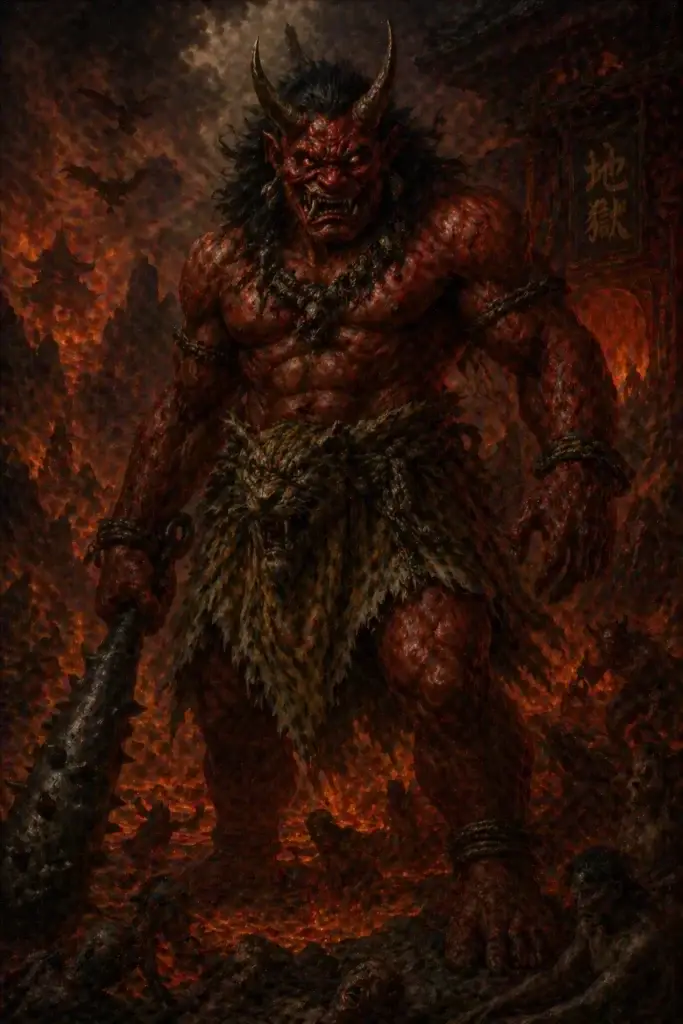
Oni - demons from the Japanese tradition, historical-illustrative

Kami, Shinto and the yokai world

The Japanese religious landscape is a double layer: Shinto (with the kami) and Buddhism (imported more than a thousand years ago) exist side by side and permeate one another. Alongside them stands a rich folk religion with yokai (supernatural beings), yurei (spirits) and onryo (vengeful spirits).

The kami are not gods in the Western sense. They may be natural phenomena (a mountain, a waterfall, a storm), ancestors, exceptional persons or abstract forces.

The Kojiki and the Nihon Shoki of the 8th century provide mythological narratives, Amaterasu as the sun goddess, Susanoo as the storm god, Izanami and Izanagi as the primordial parents, yet Shinto itself is a local cult practised at shrines.

The yokai tradition (Mizuki Shigeru, Komatsu Kazuhiko) forms its own strand of the religious imagination. Oni (demons), tengu (mountain beings), kappa (water spirits), kitsune (fox spirits): these beings are neither clearly divine nor simply evil. They embody the ambivalent zones between human and nature, city and wilderness, the living and the dead.

Classification

Period: Yayoi period (300 BCE) to the present, with a Shinto layer and Buddhist syncretism since the 6th century.

Distribution: the Japanese archipelago.

Sources: Kojiki (712), Nihon Shoki (720), Engi-shiki, Edo-period yokai encyclopaedias (Toriyama Sekien).

Pantheon and classes of beings: kami of nature, gods of the court (Amaterasu, Susanoo, Tsukuyomi), yokai (tengu, kappa, yuurei), Buddhist bodhisattvas.

History and pantheon

Japanese religion rests on a syncretic system between indigenous Shinto and Buddhism, imported since the 6th century. Shinto venerated kami (spiritual beings) in nature, ancestors and household spirits, a pantheistic structure without a strict hierarchy.

Buddhism brought cosmology, doctrines of the afterlife and an organised priesthood. During the Edo period (1603 to 1868), popular culture saw a flourishing of yokai literature: classifications of supernatural beings (kitsune, tanuki, yuki-onna, rakshasas).

The pantheon is decentralised and fluid; local deities overlap with national ones. The Meiji Restoration (1868) attempted an artificial separation of Shinto and Buddhism, yet this coexistence was later accepted once more. Japanese conceptions of the supernatural are less morally dualistic and more aesthetically animistic than Western systems.

Beings in everyday life

Japanese everyday spirituality combines Shinto household worship and Buddhist meditation: a household altar (butsudan) for ancestors and Buddhist prayer, a kami altar (kamidana) for the veneration of household spirits. Omamori (protective amulets) and ema (wish tablets) are folk practices. Exorcisms against malevolent yokai are carried out by Shinto priests.

Cemeteries and old houses are places of spirit possession and require special rituals. Obon (the festival of ancestors) and Shogatsu (New Year) are central festivals with spiritual elements.

Mediumship and communication with spirits (seances) are rarer in modern times but are documented in folklore. Spiritual specialists (miko, priests) mediate between the human and the supernatural world.

Significance today

Japanese syncretism remains a living practice, especially among older generations. Shinto and Buddhism have stabilised as institutions kept separate by the state. Younger Japanese today often practise in a superficial or folkloric manner. Global Japanese popular culture (anime, manga, video games) has heavily aestheticised and spread yokai and the Japanese supernatural.

Western audiences receive Shinto and Zen Buddhism in a romanticised form. Yokai studies are academically established. Tourism promotes ritual practice as cultural heritage. The combination of modernity and belief in spirits remains characteristic of Japan.

Demons (1)

Frequently asked questions about the Japanese gods

How many Japanese gods are there?

In Shinto one traditionally speaks of Yaoyorozu no Kami (八百万の神), the eight million gods, a figurative number for countless many.

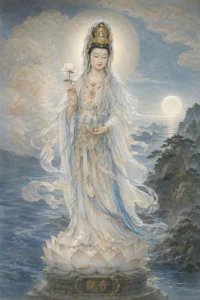
In practice, about 800 important kami deities are venerated in Japan, alongside thousands of local guardian spirits and nature kami (mountains, trees, waterfalls), as well as the Buddhist bodhisattvas (Kannon, Jizo). The Seven Gods of Fortune and the Shinto pantheon with Amaterasu at its head are the most popular principal gods.

Who are the most important Japanese gods?

Amaterasu (sun goddess, protectress of Japan and ancestress of the imperial house), Susanoo (storm god, her brother), Tsukuyomi (moon god), Izanagi and Izanami (the creator couple), Inari (rice and success), Hachiman (war and the samurai), Raijin (thunder), Fujin (wind), Ebisu (fortune) and Kannon (Buddhist compassion).

These ten gods are the most popular; alongside them there are regionally central kami such as Ōkuninushi (Izumo) and Tenjin (Sugawara no Michizane).

Who is the supreme Japanese goddess?

Amaterasu Ōmikami (Great August Sun Goddess) is the most important deity of Japanese Shinto. She is the ancestress of the imperial house; according to Shinto tradition, Emperor Naruhito is regarded as her direct descendant.

Her principal shrine, the Ise Jingū, is rebuilt entirely every 20 years (Shikinen Sengū), a 1,300-year-old custom. During the myth she hid in a cave (Ama-no-Iwato), whereupon the world grew dark, until the other gods lured her out with a mirror.

What is the difference between kami and yokai?

Kami are venerable gods and nature spirits; they dwell in shrines (jinja), and people approach them with reverence. Yokai are supernatural beings, mostly troublesome, sometimes helpful, often comical.

Famous yokai are oni (demons), tengu (mountain beings), kappa (water beings), yuki-onna (snow woman), kitsune (shape-shifting foxes). Some beings can be both: the fox is sacred as a messenger of Inari, yet dangerous as a transformed woman.

What are the Seven Gods of Fortune (Shichifukujin)?

The Shichifukujin are seven gods of fortune who sail together through the bay in a treasure ship (Takarabune) and bring New Year’s luck: 1. Ebisu (the fisherman’s fortune), 2. Daikokuten (prosperity), 3. Bishamonten (war and protection), 4. Benzaiten (music and knowledge, the only woman), 5. Fukurokuju (long life), 6. Jurojin (wisdom) and 7. Hotei (contentment, the pot-bellied one).

Six are imported from China and India; only Ebisu is genuinely Japanese.

What is Shinto as distinct from Buddhism in Japan?

Shinto is the native Japanese religion, the veneration of the kami in shrines with purification rituals, a bond with nature and the ancestor cult. Buddhism arrived in the 6th century from Korea and China.

Over centuries the two merged into shinbutsu-shūgō; gods and Buddhas were venerated as different aspects of the same reality. In 1868 (the Meiji Restoration) they were separated by the state. Today many Japanese practise both: Shinto for birth and marriage, Buddhism for funerals and the ancestor cult.

Further reading

Shinto and its roots

Shinto (the Way of the Gods) is the original religion of Japan, having grown most likely out of prehistoric animism and ancestor cults. The gods, kami, are not otherworldly but present in mountains, trees, rivers, rocks, storms and extraordinary people.

The oldest written sources, the Kojiki (712) and Nihon Shoki (720), record the creation myths only after contact with Chinese script and Buddhist thought.

Buddhism in Japan

Buddhism reached Japan in the 6th century by way of Korea. The first great schools, Tendai and Shingon, were founded in the 9th century by Saichō and Kūkai.

In the Middle Ages the schools typical of Japan emerged: Pure Land, Zen, Nichiren. Rather than displacing Shinto, it merged with it; many kami were read as local manifestations of cosmic Buddhas (shinbutsu shūgō).

Yokai and folk belief

Japan has one of the richest yokai traditions in the world, supernatural beings beyond gods and spirits: tengu, kappa, kitsune, tanuki, onryō, yūrei. Toriyama Sekien systematised the yokai pantheon in his picture books of the 18th century. Modern manga and anime culture keeps this tradition alive and exports it worldwide.

Religion in the present day

Statistically, more than 70 per cent of Japanese describe themselves as without religion, yet practice tells a different story: shrine visits at New Year, weddings in Shinto form, funerals in Buddhist form, Obon festivals for the ancestors. Japanese religion is less a question of personal belief than of ritualised life practice.

State of research

Japanese religious studies were broadly developed in the 20th century by Japanese scholars (Yanagita Kunio, Hori Ichiro) and Western researchers (Joseph Kitagawa, Helen Hardacre).

On the yokai tradition: Komatsu Kazuhiko, “An Introduction to Yokai Culture” (2017); on the yuurei tradition: Iwasaka and Toelken, “Ghosts and the Japanese” (1994). The distinction between Shinto, Buddhism and folk religion is treated with methodological precision in scholarship.

Means of protection in this cultural tradition

The Japanese protective tradition includes omamori pouches from Shinto and Buddhist shrines, small bronze bells (suzu) and hamaya arrows at New Year.

iWell Guard takes its place within this cultural-historical line of wearable protective objects, in a contemporary architecture of materials, made in Germany. 41 layers, solid gold, platinum, silver. 30-day right of return.

Personal experiences may vary. Not a medical device. No promise of healing.

Japanese mythology joins the creation narratives of the Kojiki and Nihon Shoki with local Shinto cults, Buddhist layers and folk spirit figures into a dense fabric of religious history.

Protective symbols from Japan

The encyclopaedia of protective symbols treats several signs and objects from Japan on their own pages: Daruma, Hamaya, Maneki-neko, Ofuda, Omamori, Shimenawa and Shisa. The page on protective symbols offers a cross-cultural overview.