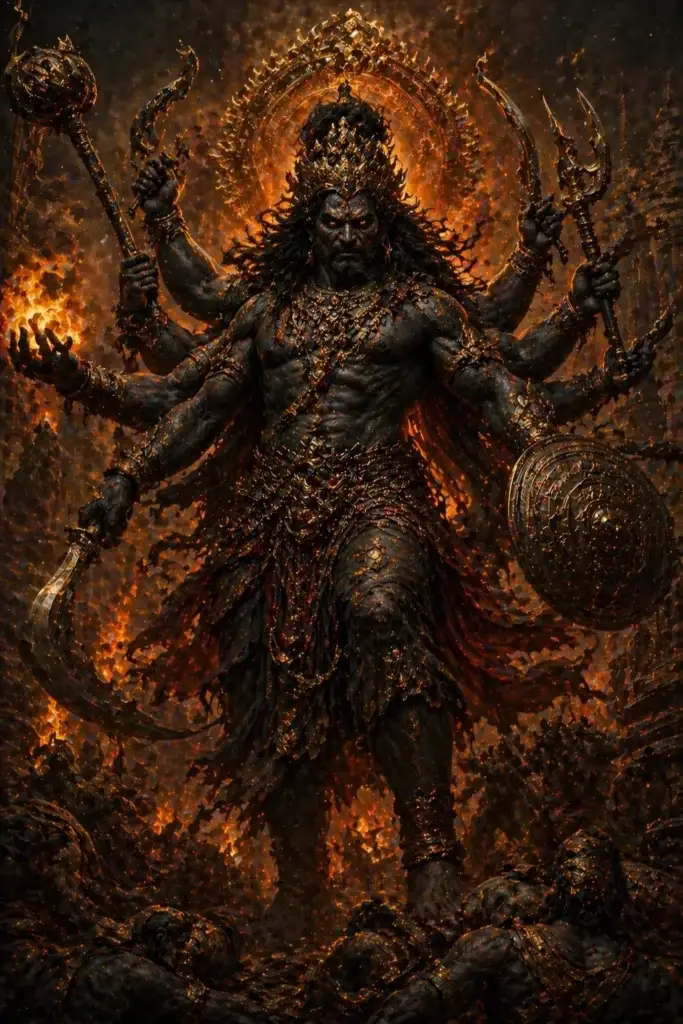
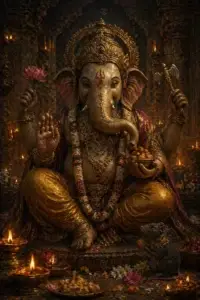
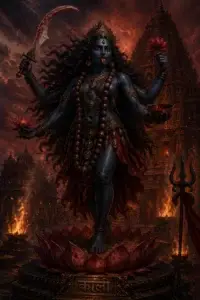
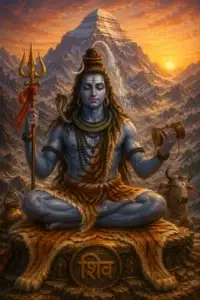
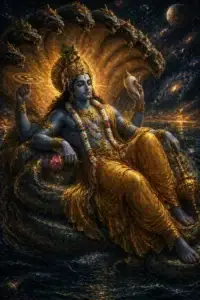
Beings from the Hindu tradition on iWell Guard. A Vedic Indian religious tradition dating back to roughly 1500 BCE. More than 30 million deities in regional and sectarian diversity, organised along the main Trimurti lines (Brahma, Vishnu, Shiva).
Hinduism is not a uniform religion but a family of traditions that has grown over more than three millennia.
The oldest layers, the Vedas from the second millennium BCE, know gods such as Indra, Agni, Varuna; the later classical mythology centres on the Trimurti of Brahma, Vishnu and Shiva, as well as on the feminine Shakti.
Characteristic is the doctrine of the avatara: gods manifest in various forms and incarnations. Vishnu appears as Rama, as Krishna, as Buddha; Shiva as Rudra or as Bhairava. This theological flexibility allows regional gods to be absorbed into the pan-Indian system without rupture.
The spectrum of beings is broader than in monotheistic religions: alongside the great gods stand demigods (Devas), Asuras (divine antagonists who are not unambiguously evil), Yakshas (nature spirits), Pretas (tormented hungry spirits), Pishachas (corpse eaters) and Rakshasas (demons).
The boundaries between divine, demonic and spiritual are permeable, shaped by the cyclical thinking of Karma and rebirth.
Period: Vedic age (1500 BCE) to the present, with a classical Puranic phase (300-1500 CE) and a modern phase.
Distribution: Indian subcontinent, Southeast Asia (Bali), the global diaspora.
Sources: the four Vedas, the Upanishads, the Mahabharata, the Ramayana, the 18 Maha Puranas, the Tantras.
Pantheon and classes of beings: Trimurti (Brahma, Vishnu, Shiva), Devis, Asuras, Bhairavas, Apsaras, Yakshas, Rakshasas.
Hinduism is the oldest continuously practised world religion and developed over four millennia: from the Vedic priestly religion (1500 BCE) through the Brahmana and Vedanta period to the classical Puranic religion and the Tantric schools.
The system is not unitary but decentralised and highly diverse from region to region. The Trimurti (Brahma, Vishnu, Shiva) represents cosmic functions (creation, preservation, dissolution).
Each deity has multiple aspects and localisations: Durga, Kali and Lakshmi embody different emanations. Vedanta philosophy presented the abstract Brahman as the ultimate reality, while the Bhakti movement celebrated personal relationships with God.
Dharma (ethics), Karma (action and its consequences) and Samsara (the cycle) form the cosmological structure. Tantric Hinduism integrates shakti (feminine power) and transgressive rituals as spiritual paths.
Hinduism is not a uniform doctrine but a web of distinct traditions. Which deity is regarded as the highest reality, which texts are recognised as authoritative and how worship is shaped differs considerably from current to current.
Most of the beings described on this page do not belong to “Hinduism” in general, but have their place within one of these traditions. A brief overview helps to classify them correctly.
Vishnuism (Vaishnavism) venerates Vishnu and his descents, especially Krishna and Rama, as the highest deity. It is the largest current in numerical terms and shapes large parts of northern and western India. At its centre stands personal devotion (Bhakti) to an accessible, gracious God.
Shivaism (Shaivism) places Shiva at the centre, who is at once ascetic, destroyer and renewer. This current includes philosophical schools such as Kashmir Shaivism, as well as ascetic orders and Tantric lineages.
Shaktism venerates the divine power in feminine form, for instance as Durga, Kali or Lalita. Here the goddess is regarded not as the companion of a male deity, but as the active reality itself. Shaktism is closely bound up with Tantric practice.
Smartism, finally, knows no single highest deity but regards several principal deities as equivalent approaches to an abstract ultimate reality (Brahman). It is strongly shaped by Vedanta philosophy.
Alongside these classical currents, organised reform and devotional movements have arisen over the past two hundred years or so. One of them is the Swaminarayan tradition, founded in the early 19th century by Bhagwan Swaminarayan in Gujarat and close to Vishnuism.
From it emerged, among others, the community BAPS (Bochasanwasi Akshar Purushottam Swaminarayan Sanstha), formalised in the early 20th century by Shastriji Maharaj.
Its body of teaching, the Akshar Purushottam doctrine, distinguishes between the highest God (Purushottam) and an eternal divine being assigned to him (Akshar), said to be present in a continuous line of spiritual teachers.
BAPS maintains more than a thousand temples worldwide and is also represented in Europe and North America with large complexes. It shows that Hinduism is not a closed mythology but a living religion with ongoing theological development.
This section will be expanded at a later point with dedicated pages on individual currents and movements.
Hindu practice runs through the daily life of roughly a billion people: daily Puja (a rite of veneration), a household altar with the family’s patron deities, pilgrimages to sacred rivers and temples. Major festivals such as Diwali, Holi and Navaratri give the year a ritual structure.
Offerings, mantras and meditations are everyday practices. Visits to priests, yogis and healers belong to spiritual hygiene. Protective threads, Yantras (mystical diagrams) and mantras serve personal defence. Regional variation is great: some communities venerate Tantric deities, others follow Bhakti traditions. Shamanic and spiritist practices overlap with Brahmanical rituals.
Hinduism remains a living mass religion with around a billion followers, concentrated in India and among the Indian diaspora. It continuously preserves its pantheon, its Karma teachings and its doctrines of the afterlife.
Western reception focuses on yoga, meditation and Tantric esotericism, while the full cosmological and ethical complexity is left aside. Academically, Hinduism remains a source for comparisons in religious studies and philosophy. In India, Hindutva movements are experiencing a political revival. Popular culture (Bollywood, video games) draws on Hindu mythology for mass entertainment.


The traditional answer is 33 million (kotis), but the Sanskrit term koti also means kind or class, so modern translators tend to assume 33 kinds of gods: 12 Adityas (sun gods), 11 Rudras (storm gods), 8 Vasus (nature gods) and 2 Ashvins (divine twins).
The tens of thousands of local gods and spirits are added to these, which explains the high figure. In practice, usually 20 to 30 central deities are venerated.
The Trimurti is the Hindu trinity of the highest gods, Brahma (creator), Vishnu (preserver) and Shiva (destroyer-renewer). They represent the three cosmic functions: becoming, being, passing away.
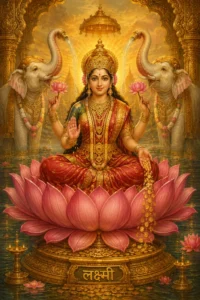
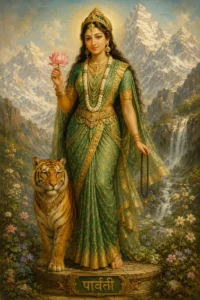
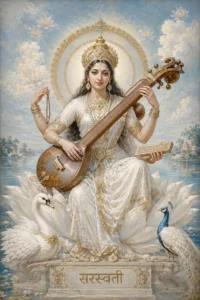
Brahma has almost no modern cult (only a single significant temple in Pushkar), while Vishnuism (Vaishnavism) and Shivaism (Shaivism) are the two great main currents. The three consorts, Sarasvati, Lakshmi and Parvati, form an analogous feminine Trimurti (Tridevi).
The answer depends on the current. In Vaishnavism, Vishnu is the highest god, all others are subordinate to him or are his manifestations. In Shaivism, Shiva is the highest reality. In Shaktism, the goddess (Devi, Parvati, Durga or Kali) is the origin and ultimate ground.
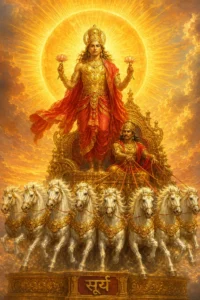
In Smartism, all five great deities (Vishnu, Shiva, Devi, Surya, Ganesha) are venerated as equal manifestations of the one Brahman. From the standpoint of religious studies, there is no single supreme god; Hinduism is polycentric.
The ten avatars (Dashavatara) of Vishnu are: 1. Matsya (fish, who saves Manu from the flood), 2. Kurma (tortoise), 3. Varaha (boar), 4. Narasimha (man-lion), 5. Vamana (dwarf), 6. Parashurama (warrior), 7. Rama (king of the Ramayana), 8. Krishna (central figure of the Bhagavad Gita), 9. Buddha (incorporated in some traditions) and 10. Kalki (the rider on a white horse still to come, who will end the age). Avatars appear when Dharma is in danger.
Shakti denotes the cosmic feminine energy, the creative power without which the male god would be inactive. Every male god has a Shakti: Brahma-Sarasvati, Vishnu-Lakshmi, Shiva-Parvati.
In the Tantra tradition (Shaktism), Shakti is the highest reality, Mahadevi, the great goddess, from whom all other manifestations arise. Her terrible aspects are Durga and Kali, her gentle aspects Lakshmi and Parvati. The 51 Shakti Pithas are sacred sites.
Devas (gods) and Asuras (counter-gods, sometimes demons) are, in Vedic mythology, two hostile divine groups contending for supremacy in the cosmos. In the oldest Rigveda, Asuras are still high-ranking gods (Varuna is an Asura); only in later Hinduism do they become negatively cast antagonists.
In the Persian Avesta the situation is reversed: Ahura (Asura) denotes the good gods, Daeva (Devas) the evil ones. The split may go back to religious conflicts between Iran and India.

Hinduism is not a uniform religion but a complex of traditions that have grown over thousands of years. Four main currents are distinguished: Shaivism, Vaishnavism, Shaktism and Smartism. The source base is vast: the Vedas (1500-500 BCE) as the oldest layer, the Upanishads, the two great epics Mahabharata and Ramayana, the Puranas and the Tantras.
The Hindu pantheon knows several classes of supernatural beings. The Devas are the bright gods. The Asuras are their rivals, by no means simply demons but an older category of gods.
Yakshas and Yakshinis are nature spirits. Apsaras and Gandharvas are heavenly dancers and musicians. Rakshasas and Pisachas are aggressive demons. Naga serpent beings connect human and animal.
The Trimurti, Brahma (creator), Vishnu (preserver), Shiva (destroyer-renewer), structures the distribution of functions among the principal gods. Vishnu’s ten avatars are manifestations that restore Dharma in times of cosmic crisis. Krishna’s work in the Bhagavad Gita is religiously central; Rama’s story in the Ramayana structures a moral ideal.
Further standard works in the literature index.
Hindu protective practice uses Yantras, Rudraksha malas, Tilak markings and images of protective deities, from Hanuman to Durga.
iWell Guard fits into this cultural-historical line of wearable objects of protection, in a contemporary material architecture, manufactured in Germany. 41 layers, solid gold, platinum, silver. 30-day right of return.
Personal experiences may vary. Not a medical device. No promise of healing.
The lexicon of protective symbols treats several signs and objects from Hinduism on dedicated pages: Hanuman Kavach, Nazar Battu, Om Symbol, Rudraksha, Black Thread, Sri Yantra, Swastika, Tilaka and Trishula. A cross-cultural overview is offered by the page on protective symbols.