The Hittite Empire ruled large parts of Anatolia between the 17th and 12th centuries BCE and rose to become a great power of the eastern Mediterranean, on a par with Egypt and Babylonia.
Its religion was highly syncretic; the “thousand gods of the land of Hatti” integrated Hattic, Hurrian, Luwian, Akkadian and Syrian elements into a liturgically differentiated system.
Hittite religion developed in Anatolia out of Indo-European, Hattic and Hurrian strands.
The Hittites spoke an Indo-European language (Nesite) and adopted the pre-Hittite substrate of the Hattic people in central Anatolia. The imperial capital Hattusa (modern Boğazkale) was founded at the beginning of the 2nd millennium and developed into a metropolis.
Under Suppiluliuma I (around 1350 BCE) the empire became a great power; the Battle of Qadesh against Ramesses II (1274 BCE) and the peace treaty between the Hittites and the Egyptians (the first fully preserved state treaty in history) are central pieces of evidence.
Around 1190 BCE the empire collapsed in the context of the Sea Peoples upheavals.
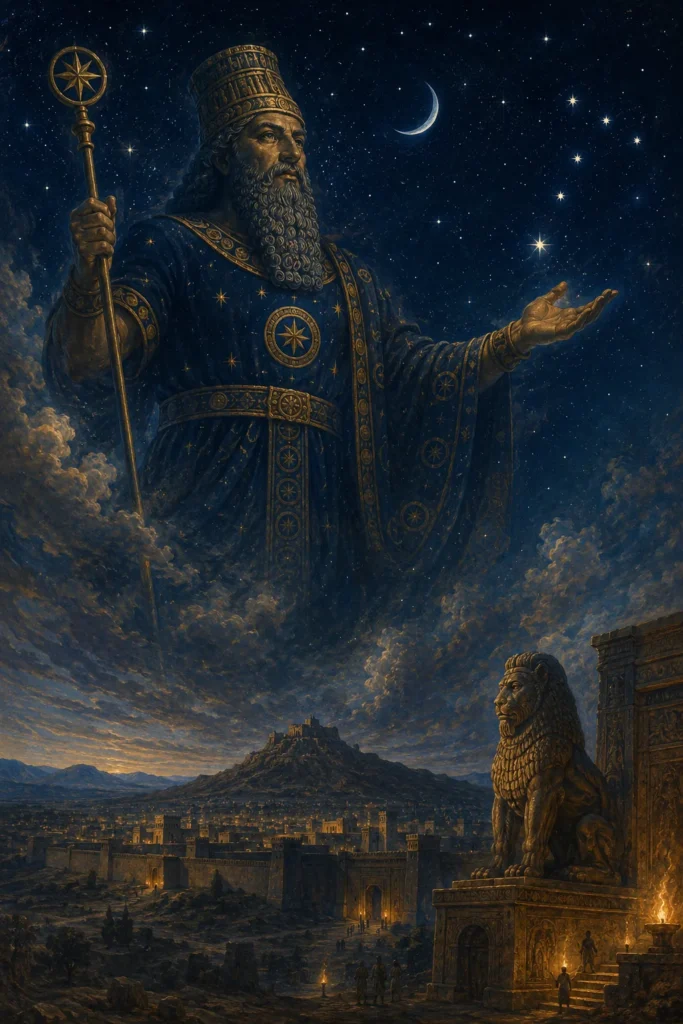
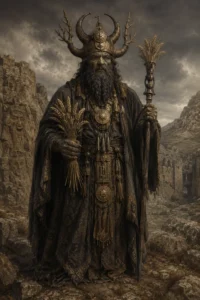
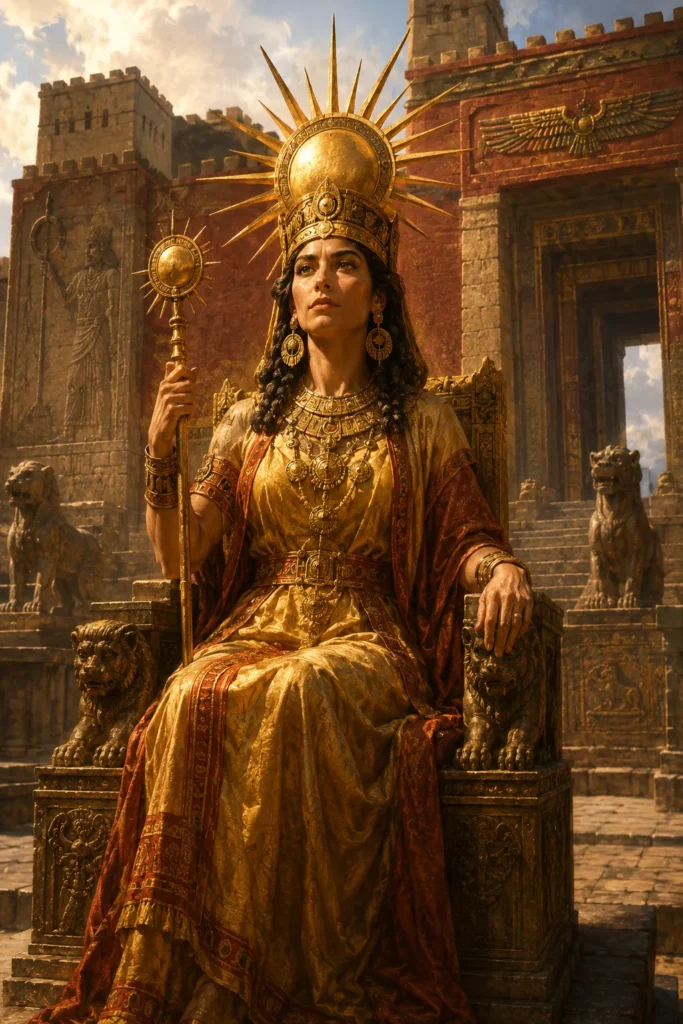
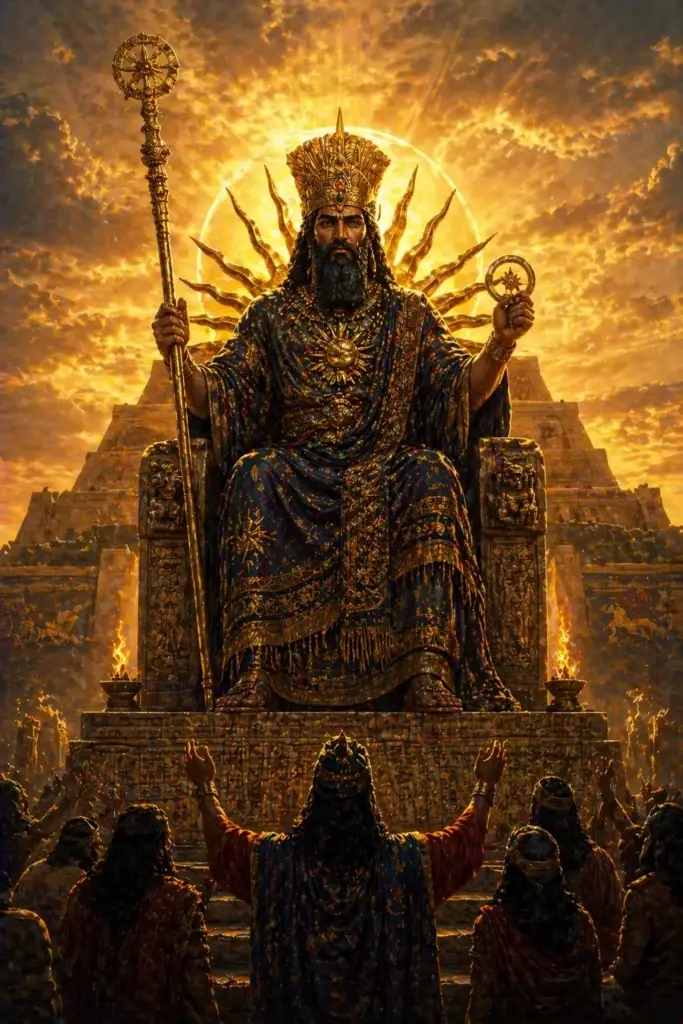
At the top stands Tarhunna, the weather god (in Luwian form Tarhunzas, in Hurrian Teshub), as the supreme imperial god. His consort is the sun goddess of Arinna, venerated as the “mother of the land”.
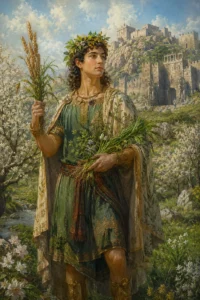
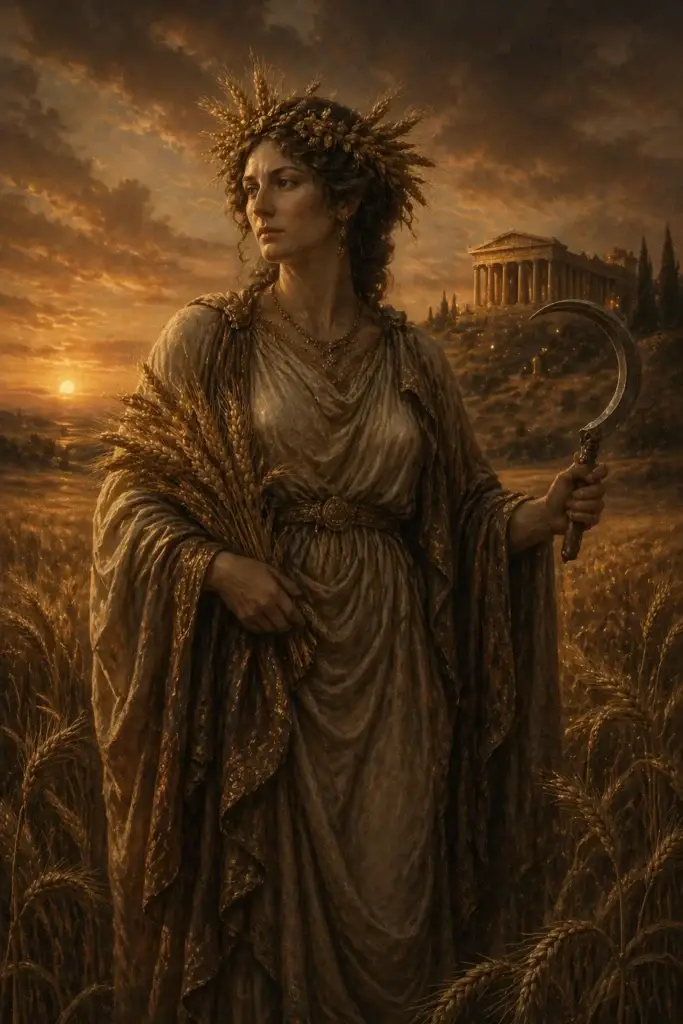
Telipinu, son of the weather god, is an agricultural vegetation deity; his wrath and his return form the central myth.
Alongside them appear hundreds of further gods: from the Hurrian pantheon (Kumarbi, Hebat), from the Luwian (Runtiya, Santas), and from the Akkadian heritage (Ishtar, Anu). In the open sanctuary of Yazılıkaya near Hattusa, the procession of the gods is immortalised in reliefs.
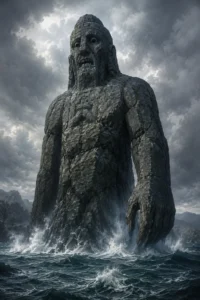
From the Hurrian substrate comes the Kumarbi cycle, a series of myths about generations of gods and struggles for the heavenly throne. Kumarbi wrests the throne from his father Anu, swallows his genitals and from them gives birth to the weather god Teshub.
In later compositions Teshub wrestles against monsters such as Ullikummi and Hedammu. These narratives show structural kinship with Hesiod’s Theogony, evidence of the Anatolian-Greek transfer of myths.
Hittite religion was strongly ritualised, with more than 200 rituals preserved in cuneiform texts. Important genres include: festival rituals (the spring festival AN.TAH.SUM, the autumn festival nuntarriyasha), healing rituals (against illness, infertility), protective rituals (purification of the house, protection of the king) and mouth-washing rituals.
Magical practice knew “old women” (SAL ŠU.GI) as ritual specialists. Portable protective objects included divine figurines of gold and silver and seals bearing images of the gods (the royal seal of Tudhaliya IV is a famous example).
The Hittite tradition itself speaks of a thousand gods of Hatti, a deliberately hyperbolic way of describing the multitude. In fact, around 200 to 300 gods are known by name.
The Hittites integrated the gods of conquered peoples, Sumerian, Akkadian, Hattic, Hurrian and Luwian, into their pantheon. The principal gods are Teshub (weather), Hebat (sun), Šarruma (son), Ḫutena/Ḫutellura and Telipinu (vegetation).
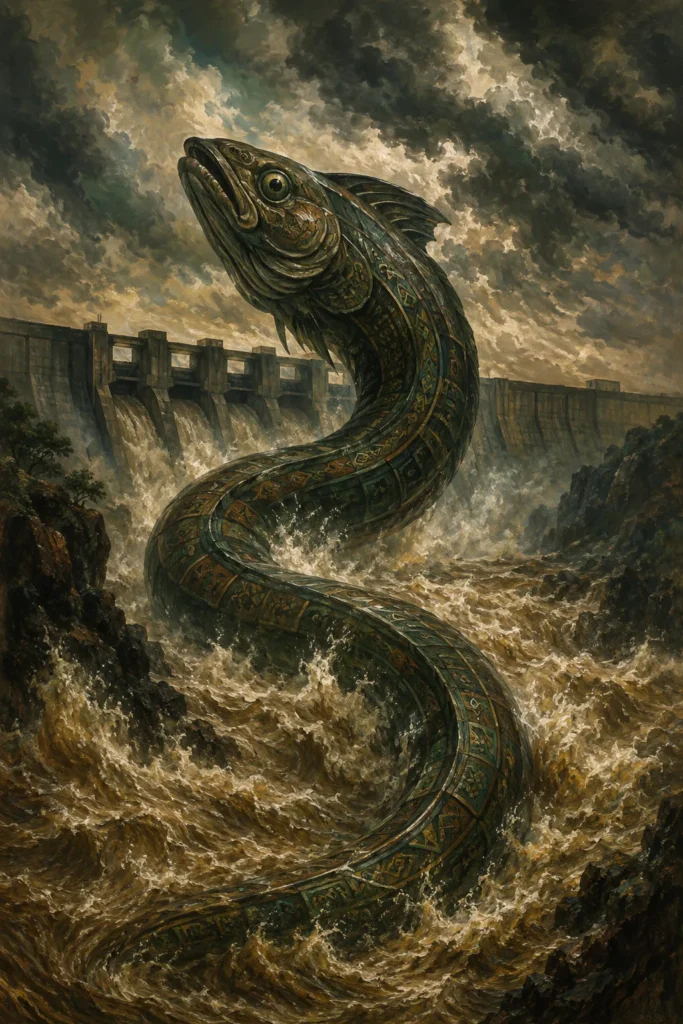
Teshub is the Hittite thunder god and chief god of the empire, analogous to Zeus, Indra and Thor. His myth of the dragon combat against Illuyanka is probably the oldest dragon-combat mythology recorded in writing and the model for later dragon battles from Marduk to Saint George.
Yazılıkaya (Turkish for “inscribed rock”) is the most famous Hittite rock sanctuary, about 2 km north-east of the capital Hattuša (modern Boğazkale, Turkey).
On two rock chambers are reliefs of the entire Hittite pantheon, gods and goddesses in solemn procession, led by Teshub and Hebat. The sanctuary was created in the 13th century BCE and is a UNESCO World Heritage Site.
The Hittite Empire collapsed in 1180 BCE during the Sea Peoples upheaval. The religious tradition continued in the Neo-Hittite city-states of northern Syria (Karkemiš, Malatya, Tabal) until about 700 BCE.
With the Assyrian conquest the Hittite heaven of the gods came to an end, but many myths lived on in Greek and Semitic literature (the dragon combat, the succession myth of Kumarbi-Anu-Teshub as a model for Hesiod’s Theogony).

Temples were the residential and economic centres of the gods, with their own personnel and estates. The Hittite king was also high priest and had to perform the most important rites in person.
Accounts of the king’s journeys through his realm to maintain local cults are preserved in the so-called “festival protocol”. The queen (Tawananna) held her own priestly functions, a distinctive feature of Hittite religion. Temple reliefs (Yazılıkaya) display the religious-political programme.
After the collapse of the great empire, smaller states survived, the Luwian-Aramaean kingdoms of Karkemiš, Aleppo and Hamath, into the 8th century BCE, and transmitted Anatolian religious elements onward into the Syrian-Phoenician sphere.
The Luwian hieroglyphic script outlasted the cuneiform tradition. The late confidence in “Anatolian mysteries” among classical authors such as Lucian of Samosata shows the long-term effect.
The Hittite library of Hattusa (over 30,000 clay tablets) is the largest surviving written source of Bronze Age Anatolia. The language was deciphered by Bedřich Hrozný (1915).
Important works include: Volkert Haas, Geschichte der hethitischen Religion (1994), Trevor Bryce, The Kingdom of the Hittites, Gary Beckman and Itamar Singer. In terms of religious studies, the Hittite material provides decisive bridging data between the Mesopotamian, Syrian and Aegean traditions.
Hittite religion is known almost entirely from clay-tablet archives found in the capital Hattuša, modern Boğazkale in central Anatolia.
Since the German excavations began in 1906, around thirty thousand tablets and fragments have come to light, written in Akkadian cuneiform but predominantly in the Hittite language. The texts derive above all from the second millennium BCE and belonged to temple and palace archives.
A large part of these tablets is religious in content. They comprise festival descriptions, prayers, oracle enquiries, incantations and myths. Particularly informative are the ritual texts, which often name the ritual expert and his or her origin.
This makes it possible to distinguish regional traditions, for example Luwian, Hurrian or Hattic practices. The Hittites themselves called the totality of their gods the thousand gods of Hatti, an expression that reflects the deliberate reception of foreign cults.
The decipherment is owed to Bedřich Hrozný, who in 1915 demonstrated that Hittite is an Indo-European language. This discovery had far-reaching consequences for linguistics, because it revealed Anatolian as a distinct, early-branching family.
For the study of religion, the source situation means that we know Hittite religion above all as an administered, textually ordered system, less from the perspective of the ordinary population.
Hittite religion was not a uniform edifice but a multi-layered structure. The oldest discernible layer is that of the Hattians, a non-Indo-European population of central Anatolia who lived there before the formation of the Hittite state.
From Hattic origins come central deities, including the sun goddess of Arinna, who rose to become the highest state deity, as well as the weather god and his circle.
Numerous cult sites and festival names are also of Hattic origin, and in certain rituals Hattic recitations were retained, although the language had long ceased to be spoken.
A second significant layer came with the Hurrians from the south-east. Especially in the empire of the 13th century BCE, Hurrian religion gained strongly in influence, mediated among other things by queens from the Hurrian-influenced sphere.
The weather god Teššub, his consort Hebat and the warrior and hunting god become prominent in this phase. The rock sanctuary of Yazılıkaya near Hattuša shows in its reliefs a procession of gods whose inscriptions bear predominantly Hurrian names.
The Luwian population of southern and western Anatolia contributed further elements, above all in the area of protective and incantation rituals. This diversity was no contradiction in Hittite thought.
Foreign gods were deliberately incorporated into one’s own pantheon through so-called evocation rituals, in order to bind their power to the state. Scholarship, for instance the work of Volkert Haas and Gary Beckman, therefore emphasises that Hittite religion was above all a religion of integration.
Among the Hittite myths, one group forms a distinct type, which may be called myths of the vanished god. In the best-known, the vegetation god Telipinu withdraws in anger, whereupon plants, animals and humans become infertile and the fire on the hearths goes out.
The other gods search for him in vain until a bee finds him and wakes him with a sting. The god is then appeased by an incantation ritual and led back into the world.
These myths were not purely narrative literature but were embedded in rituals performed in times of drought or crisis. The text thus describes at once what was narrated and what was practically done. In this the Hittite tradition differs from the purely literary myth collections of other cultures.
A second group of myths, the Kumarbi cycle, is of Hurrian origin and depicts a struggle for kingship in heaven across several generations of gods.
Scholars have long seen here points of contact with the Greek narrative of Uranus, Cronus and Zeus in Hesiod. Whether this is a matter of direct borrowing or of a shared ancient Near Eastern tradition remains disputed.
Overall, the Hittite worldview shows a strong binding of the divine order to the wellbeing of land and king. Disturbances of the cosmos manifested concretely in crop failure, plague or war, and religious practice aimed above all at restoring disturbed relationships between human and god.
A particularly striking genre of texts is the royal prayers, which strike an unusually personal tone. The best known are the plague prayers of King Muršili II, who interpreted an epidemic that raged for years as a divine punishment.
In the texts the king systematically searches for the cause, consults oracles, confesses the transgressions of his father and asks the gods to regard the guilt as atoned.
These prayers are valuable for the history of religion because they reveal a concept of transgression, punishment and reparation that rests on a legally conceived relationship between human and god.
The Hittite Empire stood in constant exchange with its neighbours. From Mesopotamia came cuneiform, Akkadian scholarly texts and deities such as Ištar, who appears in Hittite texts as Šaušga. With Egypt, after the Battle of Kadesh, there was a famous peace treaty whose religious clauses invoked both pantheons as witnesses.
To the west there are points of contact with the early Aegean world, the precise extent of which scholarship continues to discuss.
With the collapse of the empire around 1180 BCE the Hittite high culture disappeared, yet in south-eastern Anatolia and northern Syria smaller, so-called Neo-Hittite principalities lived on, leaving Luwian hieroglyphic inscriptions.
Through them, and through the Old Testament, which speaks of Hittites, the name remained in memory, while actual knowledge was recovered only through the archives of Hattuša in the twentieth century.


The Hittite protective tradition rests on an extensive protective practice of incantations, purification rituals and temple services, as attested in the cuneiform archives of Hattusa for the thousand gods of Anatolia.
Related key terms: Hittites Hattusa Tarhunna Arinna Telipinu Hattic Hurrian Luwian Tarhunzas Suppiluliuma Yazılıkaya.
The Hittite-Anatolian tradition used divine figurines of gold and silver, cylinder and stamp seals with images of the gods and small lucky pendants as portable protective objects; ritual practice knew mouth-washing and purification rituals.
iWell Guard fits into this cultural-historical line of portable protective objects, in a contemporary material architecture, made in Germany. 41 layers, real gold, platinum, silver. 30-day right of return.
Personal experiences may vary. Not a medical device. No promise of healing.