iWell Guard

Korean Gods, Hwanin, Sansin and the Shamanism Pantheon

Beings from the Korea tradition on iWell Guard. Korean mythology and shamanism (Musok). Distinct gods alongside Sino-Korean syncretisms.

In Korean folk worship, shamanic practices remain alive to this day.

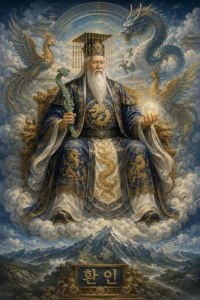
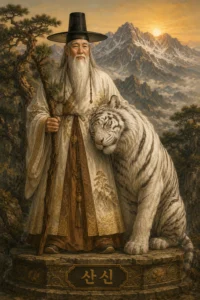
The shamanism pantheon of Korea encompasses the lord of heaven Hwanin, the mountain counsellor Sansin and the numerous spirit beings whom the mudang invokes in her rites.

Contents of this page:

At the heart of Korean shamanism stand the lord of heaven Hwanin and the mountain counsellor Sansin, joined by the many spirit beings invoked in the rites of the mudang.

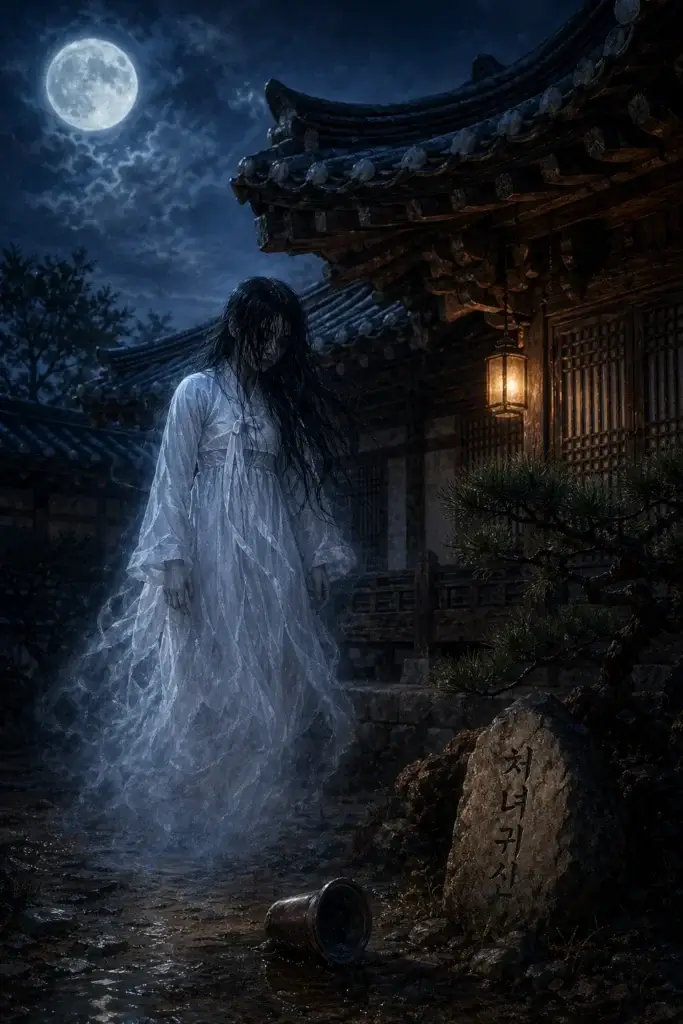
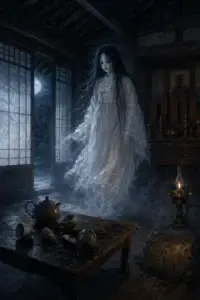
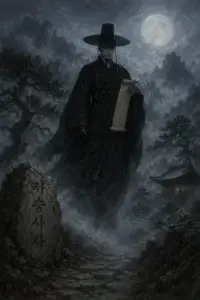
Cheonyeo Gwishin - spirits from the Korean tradition, historical-illustrative

The Korean mythology is a layering of three traditions: the original shamanism (Mu-Sok), Korean Buddhism since the 4th century, and the Confucian ancestor worship of the Joseon dynasty.

Mu-Sok, Buddhism and Confucian ancestor worship

The Korean religious landscape is a layering of three great traditions: the indigenous Mu-Sok (shamanism), the Buddhism imported from the 4th century onward, and the Confucianism that became state-bearing from the Joseon period (15th century). These layers did not replace one another but interpenetrated each other, down to the present day.

The Mu-Sok is the oldest layer. Mudang (female shamans) mediate between people and spirits through gut rituals, in which gods and ancestors descend. The cosmological world knows heavenly gods (Cheongun), mountain spirits (Sansin), ancestral spirits, and especially powerful dead who can be raised to the status of deities.

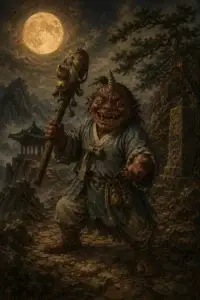
The Buddhism developed a rich Korean school (Seon, related to East Asian Zen), while Confucianism shaped the social order and ancestor worship. Alongside these exists a world of folk spirits: Cheonyeo-Gwishin (the spirit of an unmarried deceased woman), Mul-Gwishin (water spirits), Tokkaebi (goblin-like beings). This mixture makes Korea especially interesting from a comparative-religion perspective.

Classification

Period: prehistory to the present, with a shamanism layer (Musok), and Buddhist and Confucian imports.

Distribution: Korean peninsula.

Sources: Samguk Sagi (12th c.), Samguk Yusa (13th c.), the mudang tradition.

Pantheon and classes of beings: the Hwanung-Dangun myth, Yeomra (king of the underworld), Samsin (birth goddess), Gwishin (spirits), Dokkaebi.

History and pantheon

Korean religion developed in layers: original shamanic traditions, imported Buddhism (4th century), Confucianism as state ethics (10th century onwards) and Christianity (19th century). The Hwanung-Dangun myth (2333 BC) is a founding myth and connects the heavenly and earthly spheres. The Korean pantheon is syncretistic: Sinsang (house spirits), Buddhist deities, Confucian ancestors and shamanic spirits coexist.

Mudang (shamans, mostly female) mediated contact with supernatural beings, despite formal suppression by Confucianism and Buddhism. The tradition varies considerably from region to region.

With modernisation and Christianisation (Korea is about 30 percent Christian), traditional practices were marginalised. The Musok (shamanism) persists as a religious practice, but is often stigmatised as “superstition“.

Beings in everyday life

Shamanic rituals (Gut) are specialist ceremonies for healing, protection and ancestor veneration. Mudang fall into trance and become possessed by spirits in order to offer healing and counsel. Household-altar veneration of house spirits and ancestors is an everyday matter. Ancestral festivals (Seollal, Chuseok) structure the year with spiritual and family rituals.

Protective rituals against evil spirits and harmful influences are widespread. The veneration of mountain spirits and water beings connects shamanism and Daoism. During the Japanese colonial period (1910, 1945), shamanism was suppressed; this led to its marginalisation in urban culture. Folk belief survived in village cultures, especially in southern Korea.

Significance today

Shamanism is a recognised traditional practice and has been intangible cultural heritage of UNESCO since 2018. Modern Korean cities have largely secularised it, while villages preserve traditional practices.

Christianisation and Western secularisation have displaced the tradition, but not extinguished it. Academically, Korean shamanism is studied as a synthesis system (shamanism + Buddhism + Daoism + Confucianism). Popular culture (Korean dramas, films) uses mudang and the supernatural for entertainment. Diaspora Koreans preserve traditions as cultural heritage. Tourism promotes shamanism as a folkloric attraction.

Frequently asked questions about the Korean gods

How many gods are there in Korea?

The Korean pantheon has no closed list of gods; shamanism (Mu-isam) knows hundreds of spirits and gods, differing by region and by theme. The important ones are Hwanin (highest heaven), Hananim (the shamans’ supreme god), Sansin (mountain), Yong-wang (sea), Toji-shin (earth), Joyong-shin (kitchen).

To these are added countless ancestral shin and local saints. In all, there are roughly 200 to 300 named gods in active folk belief.

Who is the supreme Korean god?

Hwanin (heavenly grandfather) is regarded as the supreme god of Korean creation mythology, father of Hwanung and grandfather of Dangun, the mythical founder of the realm.

In shamanism, Hananim (lord of heaven) is often invoked, the same god in a different linguistic form. Both stand above all other deities and are exceedingly remote, which is why intermediary spirits are usually invoked instead.

What is the Dangun story?

Dangun is the mythical founder of Korea, born in 2333 BC from the union of the heavenly prince Hwanung with Ungnyeo, a bear-woman who became human through patience and a diet of garlic and mugwort.

He founded Gojoseon, the first Korean realm, and ruled for 1,500 years. In the Samguk Yusa (13th c.) the myth was set down in writing. Today the 3rd of October (Gaecheonjeol, day of the founding of the realm) is a South Korean national holiday.

What is Korean shamanism?

Mu-isam is the indigenous religion of Korea, in which female shamans (Mu-dang) and male shamans (Baksu) mediate between humans and spirits. The principal ritual is the Kut, a ceremony lasting up to several days, with dance, trance, offering and spirit invocation.

Despite Buddhist and Christian dominance, Mu-isam is alive in Korea; above all in times of crisis such as illness, business problems or a family curse a mudang is consulted.

What role do mountains play in Korean religion?

Mountains in Korea are sacred; the holy mountains Baekdusan, Taebaeksan, Geumgangsan, Hallasan and others have their own Sansin (mountain gods). Before any larger undertaking (building, travel, birth), offerings are often made on a mountain.

Buddhist temples are typically built on a mountain and have a Sansin chapel integrated there. Mount Mudeungsan in Gwangju is regarded as the spiritual centre of South Korea.

What distinguishes Mu-isam, Buddhism and Christianity in Korea?

Mu-isam is the indigenous shamanistic tradition, the oldest and most closely bound to the people. Buddhism came in the 4th c. from China, was the state religion in the Goryeo dynasty (918-1392), and was pushed back in the Joseon period in favour of Confucianism.

Christianity arrived at the end of the 18th c. (Catholicism) and in the 19th c. (Protestantism). Today: about 56% non-religious, 23% Christian, 16% Buddhist; shamanism is less widespread as a religion and more as a cultural practice.

In depth

Shamanism as the foundational layer

Korean shamanism (Muism) forms the oldest religious layer of the peninsula. The mudang (mostly female shamans) conduct gut rituals, complex ceremonies of dance, trance, offering and the invocation of gods. Despite centuries of Confucian and Christian opposition, shamanic practice remained unbroken in rural Korea.

Buddhism and Confucianism

Buddhism reached Korea in the 4th century and shaped the kingdoms of Silla and Goryeo as the state religion. Impressive temples such as Bulguksa and Haeinsa bear witness to this. With the Joseon dynasty (1392-1910), Confucianism became the dominant state ideology. Confucian family and ancestral ethics shape Korean society to this day.

Christianity as a special case

Korea is the only country in East Asia with a large Christian population, today about 30 percent. Unlike in China, Japan or Vietnam, where Christianity was experienced primarily as a Western colonial force, it came to Korea without military accompaniment.

The severe persecution in the 19th century and the close connection with the anti-Japanese resistance gave Christianity a national aura.

Folk religion and beings

Despite modernisation, folk-religious beings live on culturally: Dokkaebi, Gwishin, Gumiho, Cheonyeo-Gwishin. The Samsin trinity, three sisters as protective deities of birth, is venerated to this day in families wishing for children.

On iWell Guard we classify the Korean beings in terms of the history of religion and attend to their interweaving with Chinese and Japanese parallel motifs.

Means of protection in this cultural tradition

Korean folk religion works with Bujeok talismans, sword figures and hanging signs at the entrance; shamanic practice adds images of protective demons.

iWell Guard places itself within this cultural-historical line of wearable means of protection, in a contemporary material architecture, made in Germany. 41 layers, real gold, platinum, silver. 30-day right of return.

Personal experiences may vary. Not a medical device. No promise of cure.

Protective symbols from Korea

The lexicon of protective symbols treats several signs and objects from Korea on their own pages: Bujeok, Dokkaebi tile and Haetae. A cross-cultural overview is offered by the page on protective symbols.