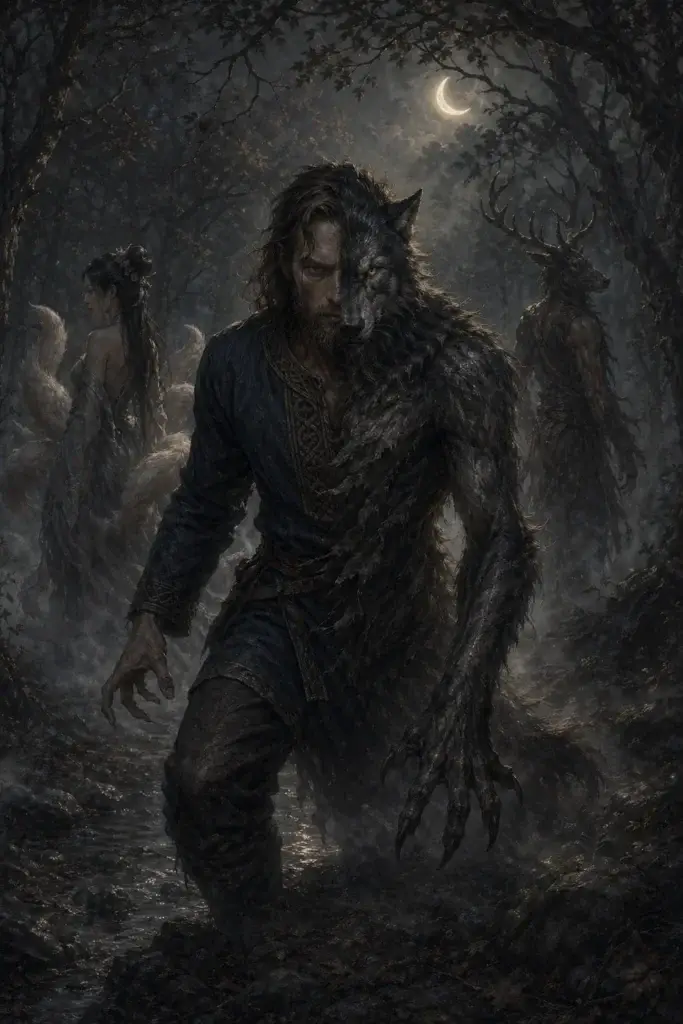
Beings that change between human and animal form. Werewolf, Huli Jing, selkie and others, handed down across cultures.
Classic shapeshifter beings include the Huli Jing in China, the Gumiho in Korea or trolls in Nordic folklore.
Animal-human beings appear worldwide as central shapeshifter figures.
Topic overviewCross-cultural
Table of contents
Quick overview (definition list)
Type:demon / spirit / magical being Class: shapeshifters Distribution: cross-cultural (Asia, Europe, the Americas) Main features: change of form, intelligence, unpredictability, often seductive or dangerous Related sub-categories: forest spirits, night beings, demons
Definition and distinction
Shapeshifters differ from mere witches or sorcerers in that their change of form is neither acquired nor learned, but innate, an inner property. While a magician transforms through spells, transformation is as natural for a shapeshifter as breathing.
In a shamanic context, a shaman may temporarily take on animal form; this, however, is not necessarily classified as a shapeshifter being, but as a magical practice. The true shapeshifter, by contrast, is an independent entity, a supernatural being whose essence is fluid.
Cultural-historical examples
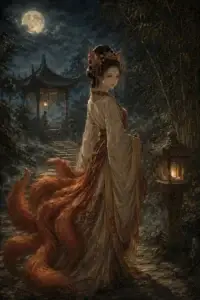
The Chinese Huli Jing (fox spirit) is one of the most archetypal examples: a white or golden fox that lives for centuries and gradually takes on human form in order to seduce people, especially men, and to absorb their qi (life energy).
Classic novellas of the Tang dynasty tell of Huli Jing who appear as beautiful women but are recognized by grains or water, signs of their fox nature. The Korean Gumiho resembles her, but is often more destructive and man-eating.
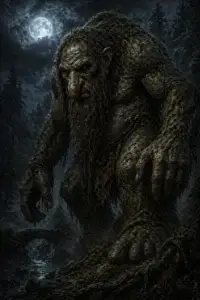
In European legends and fairy tales, the troll is a shapeshifter that varies between a giant beast and an almost human form; its shape often depends on the time of day or on magic. The Nordic troll from Scandinavia can conceal itself or make itself appear large in order to outwit or terrorize people.
In Mesoamerican traditions (Aztec, Maya), nagual or animal skins were mystical doppelgangers: a person had an animal alter ego. In West Africa and the diaspora (Vodou), shapeshifter abilities are signs of spiritual power or demonic corruption.
State of the sources
Shapeshifters are extensively documented in Chinese classical novellas (Liaozhai, 17th c.), Korean classics, European folklore and fairy-tale cycles (Brothers Grimm, Scandinavian sagas). Anthropological research connects shapeshifter belief with shamanism and with animal cults. Psychoanalysts and ethnologists interpret shapeshifter narratives as an expression of fear of the foreign, unfathomable Other and of unconscious drives.

 English
 Deutsch
 Italiano
 Polski
 Nederlands
 Français
 Ελληνικά
 हिन्दी
 Magyar
 日本語
日本語 Português
 Português
 Русский
 Español
 اردو
اردو  Albanian
 العربية
 Euskara
 Български
 Català
 简体中文
简体中文 繁體中文
繁體中文 Hrvatski
 Čeština
 Dansk
Dansk Galego
 Íslenska
 Indonesia
 Gaeilge
 한국어
한국어 Kurdish
 македонски
 Melayu
 Mongolian
 Nepali
 Norsk bokmål
 فارسی
فارسی Punjabi
 Română
 српски
 Slovenčina
 Slovenščina
 Svenska
 ไทย
ไทย Türkçe
 Tiếng Việt
 Cymraeg
 বাংলাদেশ
 Suomi
Suomi Українська