iWell Guard

Aboriginal Gods, the Rainbow Serpent and Tjukurpa Mythology

The Aboriginal peoples of Australia, more than 250 language groups present on the continent continuously for at least 65,000 years, maintain one of the oldest documented religious traditions of humankind.

At its centre stands the Tjukurpa (also Dreamtime, Dreaming), a layer of creation that is at once past, present and ever-present, in which the Ancestor beings established the landscape, laws and forms of life.

The gods of the Aboriginal cultures do not form a single, unified pantheon but many regional traditions.

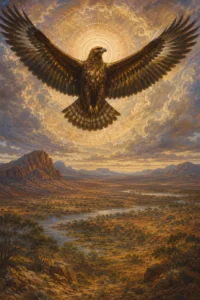
Baiame: gods from the Aboriginal tradition, historical and illustrative

Dreamtime, Tjukurpa and the Logic of Creation

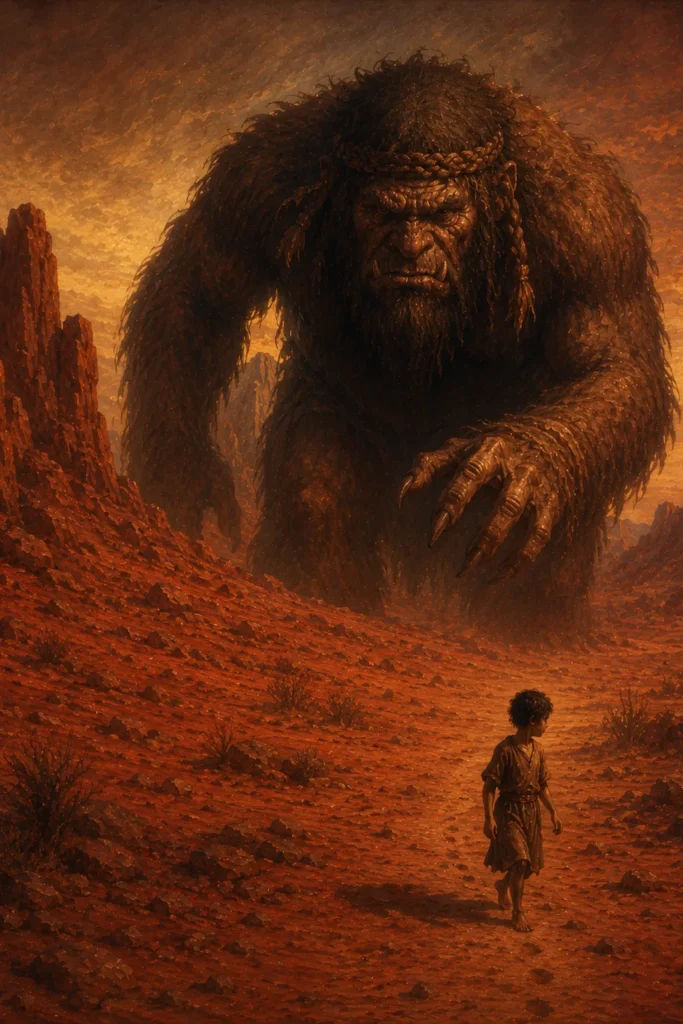
Tjukurpa (Anangu/Pitjantjatjara) or Dreaming denotes the creation layer of the world, in which the Ancestor beings, snake, emu, lizard, kangaroo, Wandjina, moved through the still-unformed landscape and, through their actions, brought forth mountains, waterholes, animals and plants.

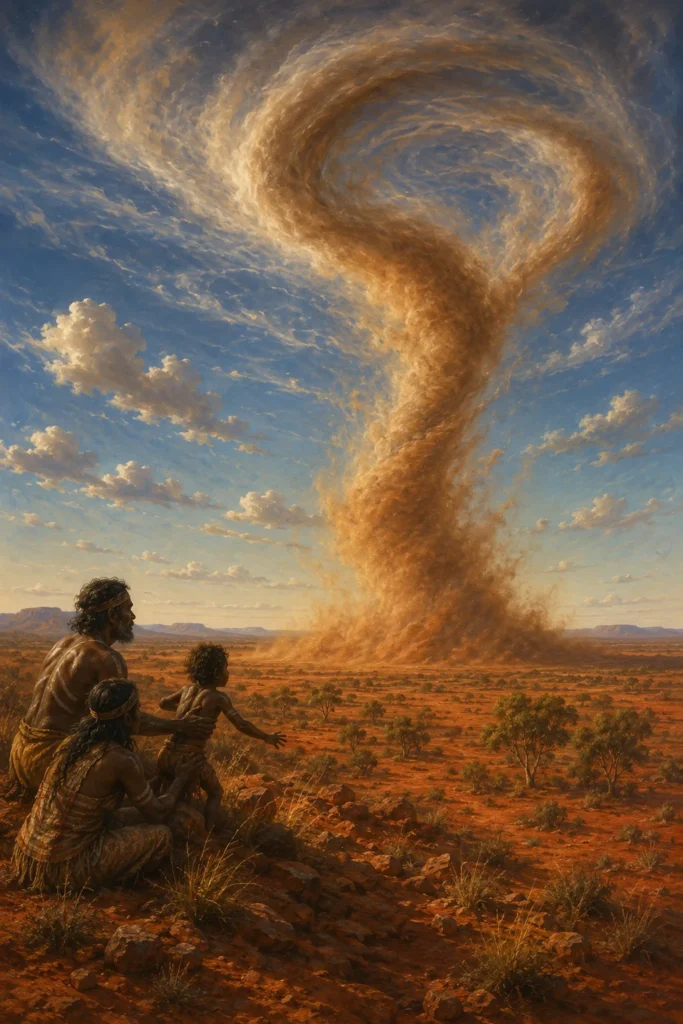
This time is not concluded but remains active; through ritual repetition the Tjukurpa is renewed. Every person has a personal connection to particular Ancestor beings and thereby to particular sections of country.

The Aboriginal gods and Tjukurpa mythology are not a dogmatic system but a dense web of creator ancestors whose journeys established the landscape and the social order of the individual language groups.

Songlines, Creation Mapped

Songlines (Iwi among the Western Desert peoples, Yiri among the Pintupi, referred to in Aboriginal English as “Dreaming Tracks”) are the paths along which the Ancestor beings moved through the country.

They are memorised as a song cycle, with each verse identifying a place, an event, an animal, a plant. Whoever knows the song can navigate the land, a cartographic and poetic tradition reaching across hundreds of kilometres. Bruce Chatwin’s book The Songlines (1987) brought the concept to international attention.

Rather than a fixed body of doctrine, Tjukurpa mythology knows wandering creator ancestors: their journeys formed the landscape and grounded the social order of the individual language groups.

Churinga and Portable Protective Objects

Churinga (tjurunga) are sacred objects of wood or stone, often elongated and oval, with engraved concentric patterns that encode Tjukurpa connections. They belong to clans, are kept in secret storehouses and are shown during initiation rites.

To see or photograph churinga without authorisation is a grave violation of religious law. Alongside these, bullroarers (rotating pieces of wood on cords that produce a roaring sound), ochre painting, body painting and antler or bone pendants are part of ritual practice.

Wandjina, the Rainbow Serpent and Ancestor Beings

The Rainbow Serpent is one of the most widespread Ancestor beings, attested from northern Australia into the desert; it created waterholes and rivers and is at once creator and destroyer.

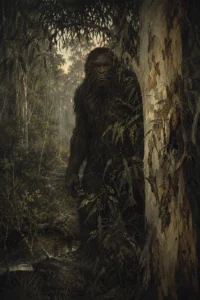
Wandjina spirits in the Kimberley region are depicted in rock paintings with large eyes, mouthless faces and radiant haloes. They bring rain and fertility. The Bunyip is the water-bound dangerous apparition of swamps and rivers, often ambivalent or cautionary.

Rock Art and Religious Material Culture

Aboriginal rock art is the longest continuous artistic tradition in the world; sites such as Murujuga (Burrup Peninsula), Uluru and Kakadu hold works spanning 30,000 years. The X-ray style of Arnhem Land shows the internal organs of the depicted animals and is structured by Tjukurpa.

The dot and line painting of the Western Desert is today internationally traded art, and the works of artists such as Emily Kngwarreye, Clifford Possum Tjapaltjarri and Rover Thomas carry religious substance.

Frequently Asked Questions about Aboriginal Religion

What is the Dreamtime?

Tjukurpa (Anangu) or Dreamtime is the central conception of Aboriginal religion, the ever-present dimension of creation. Not a past, but a reality in which the creation beings shaped the country and continue to act in the world today. Tjukurpa encompasses law, history and spirituality in a single concept.

Who is the Rainbow Serpent?

The Rainbow Serpent (Wagyl, Yurlunggur, Almudj, depending on the people) is the central creator figure of Australian Aboriginal religion. It created watercourses, rocks and animal species. Rock paintings of the Rainbow Serpent are 6,000 to 30,000 years old, among the oldest religious depictions in the world.

What are songlines?

Songlines are sacred paths through the country along which the beings of the Tjukurpa journeyed and shaped the world. They are passed down through songs and dances over generations, and songlines can extend across thousands of kilometres. Bruce Chatwin’s book The Songlines (1987) made the concept known worldwide.

How old is Aboriginal religion?

Aboriginal religion is the oldest continuous religion in the world, at least 65,000 years old (the Madjedbebe finds in Arnhem Land). Rock paintings in Kakadu and the Kimberley reach back more than 30,000 years. Its continuous transmission across more than 2,000 generations is unique in the world.

The Sacredness of Places: Uluru, Kata Tjuta

Certain places are sacred; Uluru (Ayers Rock) and Kata Tjuta (Mount Olga) are the internationally best known and religiously central to the Anangu.

Climbing Uluru was a tourist practice for decades but was officially banned in 2019. Sacred sites are protected under land rights legislation, and their locations are often kept secret. A religious-studies insight: for Aboriginal tradition, religion cannot be abstracted from the concrete land; it is always geography.

Colonisation and the Situation Today

British colonisation from 1788 brought catastrophic consequences for the Aboriginal population: disease, massacres, dispossession of land, and from the 1880s the Stolen Generations (the removal of children for assimilation, continuing into the 1970s).

The National Apology of 2008 (by Prime Minister Kevin Rudd) and land rights legislation (the Mabo decision of 1992) are late and incomplete steps towards recognition. Religious-studies works: W. E. H. Stanner, Ronald and Catherine Berndt, Tony Swain, Diane Bell.

Diversity Rather Than Unity: Hundreds of Language Groups, Not One Religion

The collective term Aboriginal conceals an extraordinary diversity. Before British colonisation, several hundred distinct groups lived on the Australian continent, each with its own language, its own country and its own religious traditions.

Estimates speak of around two hundred and fifty languages with numerous dialects. There is therefore no single religion of the Aboriginal peoples, but a great number of related yet independent traditions.

These traditions are deeply tied to specific country. Religious knowledge belongs to a particular group and refers to particular places, waterholes, rocks or paths.

Knowledge from one region cannot readily be transferred to another, and much is graded by gender, age and degree of initiation. Part of the tradition is regarded as restricted, that is, intended only for particular persons, while another part is open.

This structure has consequences for any account. Sweeping statements about Australian religion are methodologically questionable.

Religious-studies works today emphasise that one must speak of the respective groups, for example of the traditions of the Arrernte, the Yolŋu, the Warlpiri or the Pintupi, and that the diversity must not be levelled in favour of a uniform picture.

The term Aboriginal itself is also an outside designation, which many communities today replace with their own names.

The Dreaming as a Religious-Studies Concept

The English expression Dreaming or Dreamtime goes back to a word from the Arrernte language which the anthropologist Francis Gillen, and later Baldwin Spencer, rendered around 1900 as “dream”. This translation is disputed in scholarship because it evokes the nocturnal dream, whereas the terms in question denote something else.

What is meant is a reality of creation and order in which Ancestor beings shaped the country, brought forth animals and plants, instituted laws and distributed languages. This reality is not merely past.

It persists and is present in the country, which is why some scholars speak of an “everywhen” or of an enduring presence. The Ancestor beings are often connected with particular animals or natural phenomena, such as the Rainbow Serpent, which plays a role in many, though not all, regions.

The knowledge of the Dreaming is stored in narratives, songs, dances and images and is bound to places. The so-called songlines connect places into a singable path through the country that is at once a geographical and a religious map.

Religious-studies scholars such as W. E. H. Stanner have pointed out that this system inseparably links religion, law, history and geography. It is therefore misleading to treat the Dreaming as mere mythology.

Rock Art and Oral Tradition as Sources

Because the traditions of the Aboriginal peoples were not written down until the colonial period, this knowledge rests on two kinds of sources. The first is the material tradition, above all rock art.

In regions such as Arnhem Land and the Kimberley there are paintings and engravings whose age in some cases reaches into the tens of thousands of years. Certain pictorial traditions, such as the so-called Wandjina figures or the X-ray style depicting internal organs, are religiously significant and are in some cases renewed to this day.

The second source is the oral tradition of the communities themselves. It is passed on through song, narrative and ceremony and is the authoritative source for the meaning of the images. Where this transmission was interrupted by colonial violence, displacement and the forcible removal of children, the key to many images has also been lost.

A third, derived layer is formed by the ethnographic records. Spencer and Gillen, and later anthropologists such as A. P. Elkin, Ronald and Catherine Berndt and numerous more recent researchers, have collected material.

These works are valuable but must be read critically, because early observers often misunderstood what they saw, and because restricted knowledge was in some cases published unlawfully. Today the principle holds in Australian scholarship that the communities concerned have a say over the use of their knowledge, a principle that also qualifies older accounts.

Colonial Violence, Mission and the Situation of the Traditions Today

British colonisation from 1788 had devastating consequences for the religious traditions. Disease, displacement and violence destroyed entire communities. Where people were driven from their country, they also lost the reference point of their religion, since it is bound to specific places.

Christian missions often gathered survivors in stations, prohibited ceremonies and languages and thereby contributed to the breakdown of transmission.

Especially consequential was the policy of the forcible separation of children, who entered history as the Stolen Generations. It interrupted the chain of knowledge transmission between elders and the young, which is central to these traditions. Some communities thereby lost large parts of their ritual knowledge, while others preserved it in secret.

The situation today is mixed. In parts of northern and central Australia, languages, ceremonies and songlines continue to be actively practised and passed on to the next generation. In other regions a deliberate reclamation is taking place, drawing in part on the few surviving elders and in part on archival material.

Land rights laws since the 1970s have enabled individual groups to return to their country, which is of great importance for religious practice.

A serious account avoids both the image of an irretrievably lost heritage and the romanticisation of an unbroken continuity. The reality varies greatly from region to region and is marked by a long history of violence.

In Australia, the Dreamtime and songlines form the spiritual foundational order of the Aboriginal peoples; from this derives a differentiated tradition of protection that encompasses sacred places, ancestral tracks and personal churinga alike.

Related key terms: Aboriginal Dreamtime Tjukurpa Songlines Churinga Rainbow Serpent Wandjina Bunyip Uluru Pitjantjatjara Arrernte.

Protective Objects in This Cultural Tradition

Aboriginal tradition knows churinga objects of wood or stone with engraved Tjukurpa patterns, bullroarers as ritual sound objects and body painting with ochre as a sign of protection and identity.

iWell Guard takes its place within this cultural-historical lineage of portable protective objects, in a contemporary material architecture, made in Germany. 41 layers, solid gold, platinum, silver. 30-day right of return.

Personal experiences may vary. Not a medical device. No promise of healing.