Ngayurnangalku, the ancestor beings beneath the salt lake
By Ralf Ittermann · last reviewed on
Ngayurnangalku are spirits of the Aboriginal tradition of Australia.
The man-eaters whose name itself is the warning.
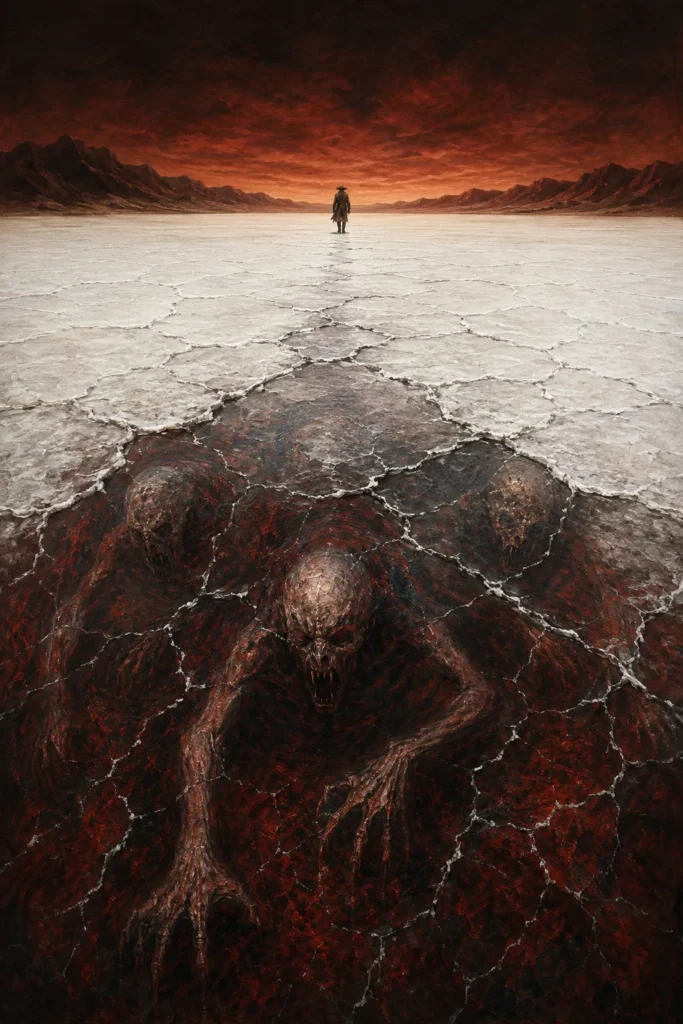
Ngayurnangalku are man-eating ancestor beings of the Martu who live beneath the salt lake Kumpupintil, formerly Lake Disappointment, in Western Australia. Their name means roughly ‘they will eat me’ and is itself the warning.
In the non-linear logic of the Dreaming, they remain present beneath the lake to this day, which is why the Martu traditionally avoided the lake. The lake is also genuinely hostile to life; the belief encodes this danger.
Type: Man-eating ancestor beings
Origin: Martu tradition of the Dreaming
Texts: ethnographic documentation, above all Tonkinson
Period: Dreaming tradition, still alive today
Appearance: human-like, large fangs, claw-like fingernails
Context of Tradition
Period of the Texts
The tradition belongs to the Dreaming of the Martu and remains alive today; it was documented ethnographically above all by Robert Tonkinson.
Area of Diffusion
The western edge of the Gibson Desert in the Pilbara region of Western Australia; the traditional land of the Martu surrounds the salt lake Kumpupintil.
Sources
Unusually well attested for a desert monster: through Tonkinson’s fieldwork among the Martu as well as through the Martu artists themselves.
Name and variants
Martu (Western Desert language): ngayurnangalku, roughly ‘they will eat me’, formed on the verb for eating meat. The name does not describe the being but the danger from the human point of view; it is itself the warning.
Appearance and behaviour
Appearance
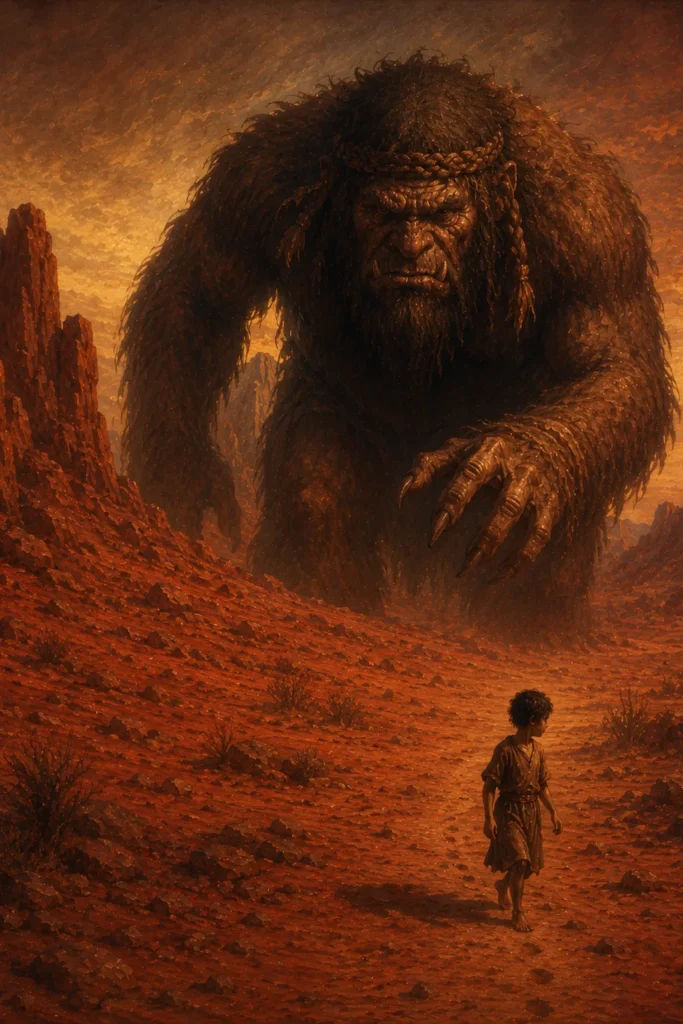
Ngayurnangalku are human-like ancestral man-eaters with large fangs and long, curved, claw-like fingernails with which they seize their victims, some partly bald. They live in their own world beneath the lake.
Effect
They appear to snatch passers-by. In the Dreaming, they gathered at the lake and split into two groups, one of which renounced cannibalism while the other continued it. As ancestor beings, in the non-linear logic of the Dreaming they remain present beneath the lake to this day.
Profile: Ngayurnangalku
The most important aspects of the salt-lake beings at a glance.
Dreaming tradition of the Martu at the western edge of the Gibson Desert; part of the man-eater complex of the Western Desert.
Passers-by: anyone who enters the salt flat or approaches the lake is considered at risk.
Human-like, with large fangs and long, curved claw-like nails, some partly bald; at home in a world of its own beneath the lake.
The tradition encodes the genuine danger to life posed by the salt lake; the name itself voices the warning.
Complete avoidance of the lake; anyone who has to go near it passes by quickly. Travellers muffled the bells on their animals so as not to alert the beings.
Pangkarlangu and Mamu from the man-eater complex of the Western Desert.
Dreaming split and avoidance taboo
Ngayurnangalku is a Martu word of the Western Desert language and means roughly ‘they will eat me’. The tradition is carried by the Martu at the western edge of the Gibson Desert in the Pilbara region, whose traditional land surrounds the salt lake. In the Dreaming, the Ngayurnangalku gathered at the lake and split into two groups: one renounced cannibalism, the other continued it.
Because the Dreaming does not pass linearly, the beings remain present beneath the lake to this day, which is why the Martu avoided the lake. At the same time, the lake is genuinely hostile to life, and the belief encodes this danger; myth and geography say the same thing here by different means.
From fieldwork to the renaming of the lake
Ngayurnangalku are a major theme among the Martumili Artists, above all in the work of Yunkurra Billy Atkins and in the 2012 animated film Cannibal Story. The lake was officially renamed Kumpupintil Lake on 11 November 2020, at the request of the Martu traditional owners.
In religious studies, Ngayurnangalku are man-eating ancestor beings. Important clarifications: Robert Tonkinson conducted fieldwork precisely among the Martu around this lake and documented the avoidance taboo. For a desert monster, this being is unusually well attested, both academically and through the Martu artists themselves. And the name is itself the warning.
The avoidance taboo at Kumpupintil
The Martu traditionally avoid the lake entirely, do not set foot on the salt flat and move on quickly if they have to go near it. An often-cited detail is that travellers muffled the bells on their animals so as not to alert the Ngayurnangalku. The relationship to these beings does not consist in warding-off rituals but in avoidance.
Man-eaters of the Western Desert compared
The Ngayurnangalku belong to the man-eater complex of the Western Desert, which also includes the Pangkarlangu of the Warlpiri and the spirit power Mamu of the Anangu. A characteristic moral motif is the good-evil split in the origin myth: one group of beings renounced cannibalism, the other did not.
Frequently asked questions about the Ngayurnangalku
What are Ngayurnangalku?
Man-eating ancestor beings of the Martu who live beneath the salt lake Kumpupintil in Western Australia.
What does the name mean?
Roughly ‘they will eat me’; the name is itself the warning.
Why did the Martu avoid the lake?
Because the Ngayurnangalku remain present there to this day in the non-linear logic of the Dreaming; at the same time, the lake is genuinely hostile to life.
Further links
Further reading:
- Pangkarlangu – the child-eating ogre of the Warlpiri
- Mamu – the evil spirit power of the Anangu
- Salt, Amulet, Smoke cleansing – traditional protective means
- Protection Compass – protective means at a glance
Literature (selection)
Further standard works in the bibliography.
As both Martu man-eaters and salt-lake beings, the Ngayurnangalku show how closely myth and geography are interwoven in the Western Desert: the warning about the life-hostile lake is already contained in their name.