iWell Guard

Huldra, the beautiful forest woman with the cow's tail

The Huldra is a spirit of Scandinavian tradition.

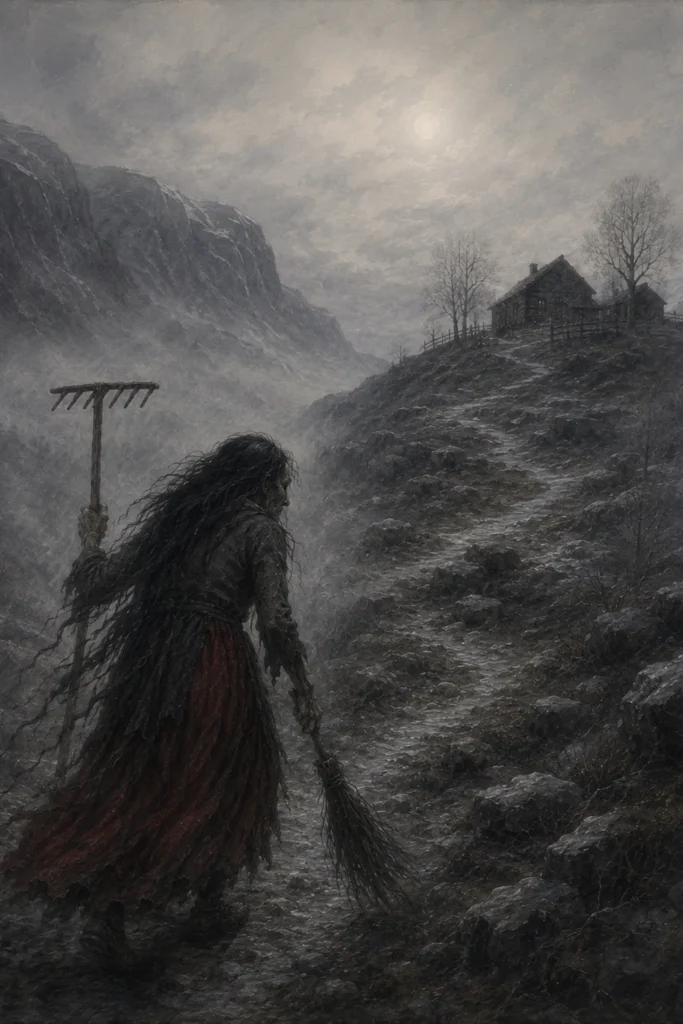
Beautiful forest woman in front, cow’s tail and hollow bark behind.

SpiritGermanic

Table of Contents

Huldra, spirit of Scandinavian tradition
Huldra

The Huldra, Swedish Skogsrå, is the beautiful forest woman with a cow’s tail from Scandinavian tradition, the mistress of the forest. She seduces charcoal burners and hunters in the forest, rewards the courteous and punishes those who offend her with disorientation or death.

The Norwegian and Swedish folk tradition about her is extensive and was widely recorded in the 19th and 20th centuries; her Sami counterpart is called Ulda.

At a glance: Huldra

Type: forest woman and mistress of the forest, a rå spirit
Origin: Norway and Sweden, Sami counterpart Ulda
Texts: Norwegian and Swedish folk tradition, widely recorded in the 19th and 20th centuries
Period: oral tradition into the present
Appearance: beautiful young woman with long hair, but with a cow’s tail, in Sweden additionally with a hollow back

Source context

Period of the Texts

The extensive Norwegian and Swedish folk tradition was widely recorded in the 19th and 20th centuries and catalogued in the legend collections of folklore studies.

Area of Diffusion

Norway and Sweden; in the Sami north her counterpart is the Ulda. Her domain is the forest, charcoal-burning sites and the solitude of men’s work in the woodland.

Sources

Very good: the legend catalogues of af Klintberg and Christiansen, as well as the Swedish research on erotic nature beings by Ebbe Schön.

Name and variants

Nordic: The name belongs to a root meaning veiled, hidden, Old Norse hulda; the Huldra belongs to the Huldrefolk, the hidden people, and is etymologically the Veiled One. The Swedish name Skogsrå means forest being or forest mistress, from skog, forest, and , the essential lord of a place, and places her explicitly among the rå spirits. A Christian origin legend explains her as one of Eve’s children, whom Eve hid unwashed before God.

Appearance and behaviour

Appearance

Beautiful from the front, animal-like from behind, with a cow’s tail or hollow like a rotten tree trunk: the symbol of deceptive allure and the dual nature of the wilderness. The hollow, bark-covered back literally makes her a piece of the forest. If the tail is discovered while dancing or in church, the spell is broken.

Effect

The Huldra lures men into the forest: whoever treats her politely is rewarded with hunting luck and protection, whoever offends or disappoints her is led astray or killed. As Skogsrå she is mistress over game and forest; towards charcoal burners she is generally regarded as benevolent, watching over the charcoal kilns while they sleep, and is rewarded with leftover food. At times she swaps children for her own.

Profile: Huldra

The key aspects of the forest mistress at a glance.

Tradition

Part of the Huldrefolk, the hidden people of Scandinavia, and as Skogsrå also a rå-spirit: the essential mistress of a place, here the forest.

Relates To

Charcoal burners, hunters, woodcutters and lone men in the forest: the occupations whose forest solitude gave rise to the tales of allure and punishment.

Depiction

Beautiful young woman with long, often golden hair, but with a cow’s tail; in Sweden also with a hollow back like a rotten tree trunk.

Sphere of Influence

Dominion over game and forest, hunting luck and protection for the polite, getting lost or death for those who offend her, watch over the charcoal kilns.

Forms of Warding

Politeness in the forest, offerings at the charcoal kiln, steel and iron as protection, church bells and Christian signs; her magic breaks on consecrated ground.

Parallels

Functionally the female equivalent of the Slavic Leshy; the page on the Holzfräulein covers the German relatives.

The Veiled One: name and origin of the Huldra

The name belongs to a root meaning veiled, hidden, Old Norse hulda; the Huldra belongs to the Huldrefolk, the hidden people, and is etymologically the Veiled One. The Swedish name Skogsrå explicitly places her, as mistress of the forest, among the rå-spirits, the essential lords of a place.

A Christian origin legend explains her as one of Eve’s children, whom Eve hid unwashed before God and who therefore remained forever hidden from humankind. In the tradition of the charcoal burners and hunters, the Hidden One then takes on a very concrete shape: as a beautiful woman at the nocturnal charcoal kiln, whose true nature is revealed only by a glimpse of her tail or back.

Reception and classification

The Huldra is very present in Norwegian and Swedish culture, in the imagery of Theodor Kittelsen and National Romanticism, and in modern popular culture, including the 2012 Norwegian film Thale. She is a fixed presence in Scandinavian folklore.

In religious studies, the Huldra is a wild woman and mistress of the forest, a rå-spirit, and a seductive borderline figure between civilisation and wilderness. She embodies the dangers and temptations of forest solitude for the male occupations of charcoal burners and hunters.

Politeness, steel and bells: the forms of protection

Well attested are politeness in the forest, that is, behaving in a friendly and respectful manner and not offending the Huldra, as well as offerings such as leftover food at the charcoal kiln. Steel and iron, such as a knife over the door or a blade in the fire, are regarded in Nordic tradition as protection, as are church bells and Christian signs, whose proximity drives her away; her magic breaks as soon as she sets foot on consecrated ground or her tail is recognised.

Forest mistresses and forest lords compared

As Skogsrå, the Huldra is functionally the female equivalent of the Slavic Leshy, the lord of the forest. Within the rå-series she is joined by the Bergsrå, who assigns the same type to the mountains. Related figures include the Greek tree nymph, the Dryad, the Nordic Troll and the Sami Stallo, as well as the German forest women, the Holzfräulein and the Moosleute; in the child-swapping motif she touches on the Slavic Dziwożona.

Frequently asked questions about the Huldra

How can you recognise the Huldra?

By her cow’s tail or by her hollow, bark-covered back. From the front she appears as a beautiful young woman with long hair; only a look at her back reveals her dual nature.

Is the Huldra dangerous?

Ambivalent: she rewards politeness, especially among charcoal burners, over whose kilns she watches, and punishes offence with getting lost or death. The danger depends entirely on the person’s behaviour.

How can you protect yourself?

Through politeness, steel and fire, as well as proximity to churches and bells. Her magic breaks when she sets foot on consecrated ground or her tail is recognised.

Further links

Recommended internal links:

Literature (selection)

A selection of key sources and studies:
  • af Klintberg, Bengt: The Types of the Swedish Folk Legend. Helsinki 2010.
  • Schön, Ebbe: Erotiska väsen. Stockholm 2010.
  • Christiansen, Reidar Thoralf: The Migratory Legends. Helsinki 1958.

Further standard works in the bibliography.

As Huldra in Norway and as Skogsrå in Sweden, the mistress of the forest is still one of Scandinavia’s most familiar legendary figures to this day: beautiful from the front, forest from behind, and always mistress over the rules of her domain.

Classification & Protection

IIILEVEL
The Protection Compass assigns this being to influence level III, Burdensome influence.

Against its influence, cross-cultural tradition names these protective means:

Compare in the Protection Compass →

Recommended protective means

iWell Guard

The simplest protective means in this collection: 41 layers of fine gold 999, platinum, silver and silicon, manufactured in Ruhla, Thuringia. It requires no activation, is bound to no person, and is effective within a radius of around 50 meters, even without being worn.

All protective means at a glance →