Chalchiuhtlicue and the Flood of the Fourth Sun
By Ralf Ittermann · last reviewed on
Chalchiuhtlicue is a goddess of Aztec tradition.
Goddess of lakes and rivers, called She of the Jade Skirt.
Chalchiuhtlicue is the Aztec goddess of fresh water, of lakes, rivers and springs, as well as of birth and ritual purification. Her name combines the Nahuatl chalchihuitl, jade, and cueitl, skirt, meaning She of the Jade Skirt.
As the consort of the rain god Tlaloc, she embodies water in its twofold nature, nourishing and at the same time deadly. Together with him and the Tlaloque, the rain helpers, she rules the water paradise Tlalocan.
Type: Aztec water goddess, consort of the rain god Tlaloc
Origin: Central Mexico, the highland valley of Mexico around Lake Texcoco
Texts: Pre-Hispanic pictorial manuscripts and the 16th-century Florentine Codex
Period: Pre-colonial era, with effects continuing to the present
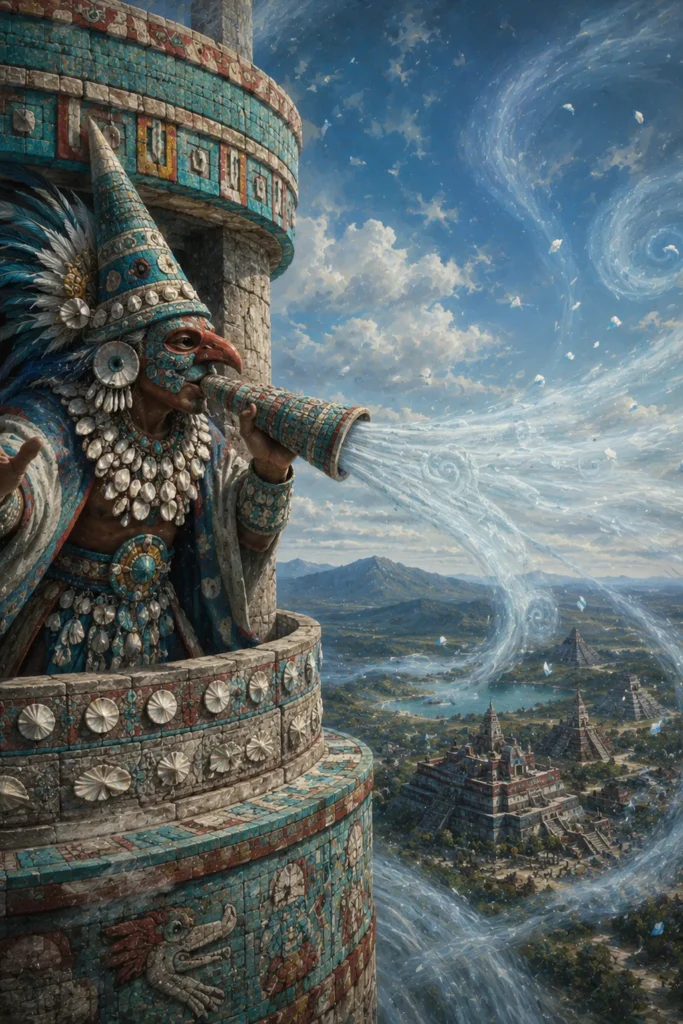
Appearance: Anthropomorphic goddess in shades of blue, with water streaming from her

Area of origin and sources
Period of the Texts
Pre-Hispanic to colonial: Chalchiuhtlicue is documented in pictorial manuscripts such as the Codex Borgia and the Codex Borbonicus, as well as in the 16th-century Florentine Codex.
Area of Diffusion
Central Mexico, the highland valley of Mexico around Lake Texcoco, the heartland of Nahua culture.
Sources
Good: pre-Hispanic codices, Sahagún’s account and surviving stone sculptures document the goddess.
Name and variants
Nahuatl: chalchihuitl means jade or greenstone, cueitl means skirt: Chalchiuhtlicue means She of the Jade Skirt. The name refers both to water and to preciousness, since jade and greenstone were seen as symbols of both.
Form and effect
Appearance
Chalchiuhtlicue is depicted in blue and turquoise tones, the colour of water, often with flowing water around or beneath the figure. She wears her namesake jade skirt and a triangular shoulder garment, the quechquemitl, sometimes edged with a band of jade symbols. Her attributes include golden ear discs, a golden chest medallion and foam sandals.
Effect
Chalchiuhtlicue enlivens and nourishes: she represents the fresh water of lakes and rivers, agriculture, birth and the ritual purification of the newborn. At the same time she can destroy, through flooding and drowning. Those who drowned in her waters were considered chosen by the water deities and entered the paradise of Tlalocan.
Profile: Chalchiuhtlicue
The key aspects of the water goddess at a glance.
A central water deity of the Tlaloc complex in the Aztec pantheon, recorded in pre-Hispanic codices and by Sahagún.
Fresh water, lakes and rivers, birth and the ritual bath of the newborn.
Anthropomorphic goddess in blue and turquoise, with a jade skirt, quechquemitl, golden jewellery and foam sandals.
Nourishing and deadly at once: she grants fresh water and fertility, but can also bring flood and drowning.
The festivals Etzalcualiztli and Atlcahualo, ritual washings and offerings at the whirlpool of Pantitlan in Lake Texcoco.
Tlaloc's Consort and Ruler of the Fourth Sun
Chalchiuhtlicue belongs to the Tlaloc complex of water and fertility deities of the Nahua. In the sources she appears as wife, sister or female counterpart of the rain god Tlaloc; together with him and the Tlaloque, the rain helpers, she rules the water paradise Tlalocan. She is recorded in pre-Hispanic pictorial manuscripts such as the Codex Borgia and the Codex Borbonicus, as well as in the colonial compilations of the 16th century, above all in the Florentine Codex of the Franciscan Bernardino de Sahagún.
In the Aztec cosmology of the five suns, Chalchiuhtlicue is the ruler of an earlier world age. According to the prevailing scholarly reading, she governs the fourth sun Nahui Atl, Four Water, which ends in a great flood in which humans are turned into fish; the present fifth sun follows afterwards. Sahagún describes her responsibility for birth, the ritual bath and purification, as well as her dual nature as both giver and destroyer.
The Museum Presence of a Water Goddess Today
Chalchiuhtlicue remains present in modern Mexican culture as a water goddess, including through sculptures in the National Museum of Anthropology in Mexico City and through exhibitions on the art of Teotihuacan and the Aztecs. In popular reference works and in neopagan circles, she appears as the goddess of fresh water.
From a religious-studies perspective, Chalchiuhtlicue represents the type of the ambivalent fertility and water deity, life-giving and deadly at once, embedded in a cyclical model of world ages. Her iconography follows fixed construction rules of Aztec deity imagery. Death by drowning as admission into Tlalocan shows how closely cult, conceptions of the afterlife and the ethics of water were connected in Nahua religion.
Festivals, Washings and the Bath of the Newborn
The traditional approach to Chalchiuhtlicue was veneration, not warding off. The great water and rain festivals were dedicated to her; Etzalcualiztli and the New Year festival Atlcahualo are recorded. According to Sahagún, these included ritual washings and offerings at bodies of water; the whirlpool of Pantitlan in Lake Texcoco is recorded as a site of offering. The child sacrifices documented in the context of the rain cults should also be understood historically in this light, not as a model to follow. Under her protection stood the purifying bath of the newborn, the first ritual water of life. Following on from her role, protective and purifying signs include consecrated holy water for the life-giving bath, salt in dealing with the forces of water, and a worn amulet for birth and journeys over water.
Water Goddesses Across Cultures Compared
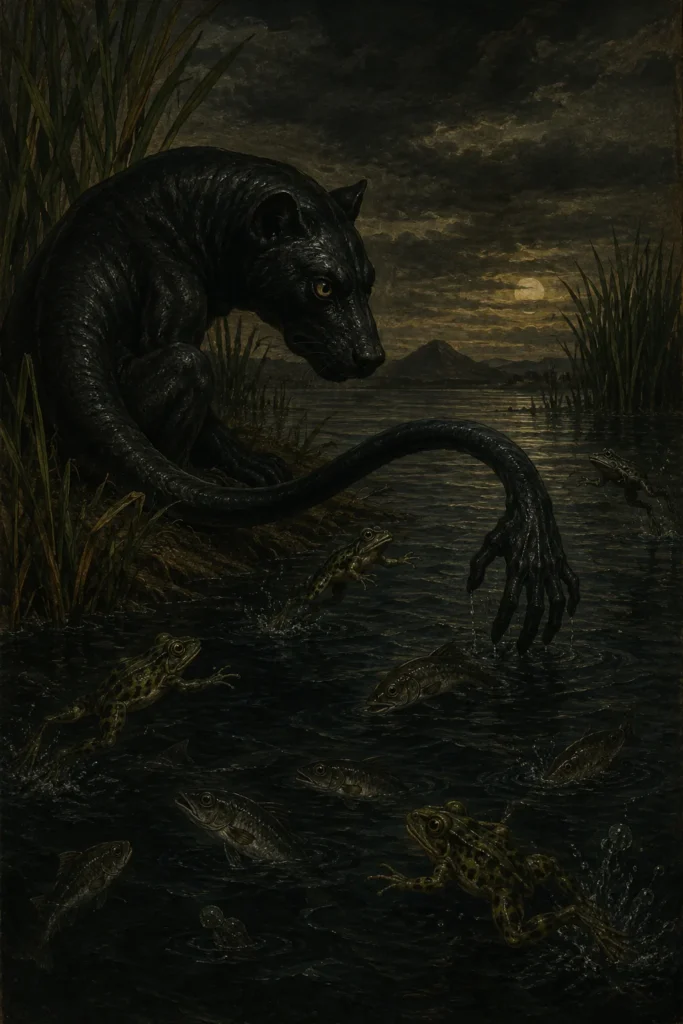
Chalchiuhtlicue stands alongside the great water deities of other cultures. As a river and water goddess, she resembles the Indian Sarasvati and the Hindu water rulers Varuna and Ganga. She shares her life-giving and deadly dual nature with the Germanic Nix; within Mesoamerica, her partner Tlaloc is the closest related figure, while the capturing being Ahuizotl acts on her behalf.
Frequently Asked Questions about Chalchiuhtlicue
Is Chalchiuhtlicue related to Tlaloc?
Yes. In the sources she appears as his wife, sister or female counterpart. Together with him and the rain helpers, she rules over the water paradise Tlalocan.
Which world age did she bring to an end?
According to the scholarly reading, the fourth sun Nahui Atl, Four Water, which ends in a flood in which humans turn into fish. The present fifth sun follows afterwards.
Where does her name come from?
From the Nahuatl chalchihuitl, jade, and cueitl, skirt. The name She of the Jade Skirt refers both to water and to preciousness.
Further links
Further reading:
- Ahuizotl – the Aztec capturing being in the service of the water gods
- Varuna, Ganga – water deities of Hinduism
- Holy water, Salt, Amulet – traditional protective means
- Protection Compass – protective means at a glance
Literature (selection)
Further standard works in the bibliography.
Chalchiuhtlicue is known as the goddess of the Aztec waters: as an Aztec water goddess, she stands for birth and purification as well as for the nourishing and death-bringing power of lakes and rivers.