Ganga, descended from Shiva's hair
By Ralf Ittermann · last reviewed on
Ganga is a goddess of the Hindu tradition.
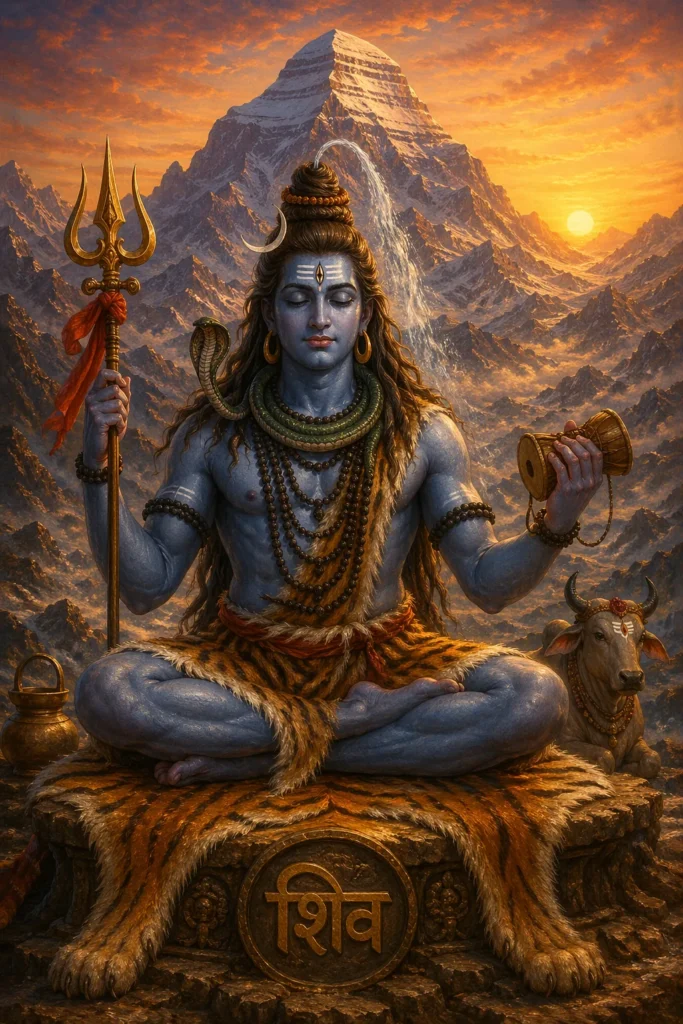
Ganga, goddess of the Ganges: descent from Shiva’s hair. The tradition holds that she descended from Shiva’s hair before becoming goddess of the Ganges.
Ganga is the figure venerated as goddess of the Ganges. The Rigveda names the river, while epics and Puranas tell how Bhagiratha, through asceticism, brought about her descent and how Shiva caught her fall in his hair.
Her water is considered purifying even beyond death: bathing removes wrongdoing, and drops given at the deathbed accompany the passage.
Type: river goddess, personification of the Ganges
Origin: Northern India
Texts: Rigveda, epics, Puranas
Period: Vedic to the present
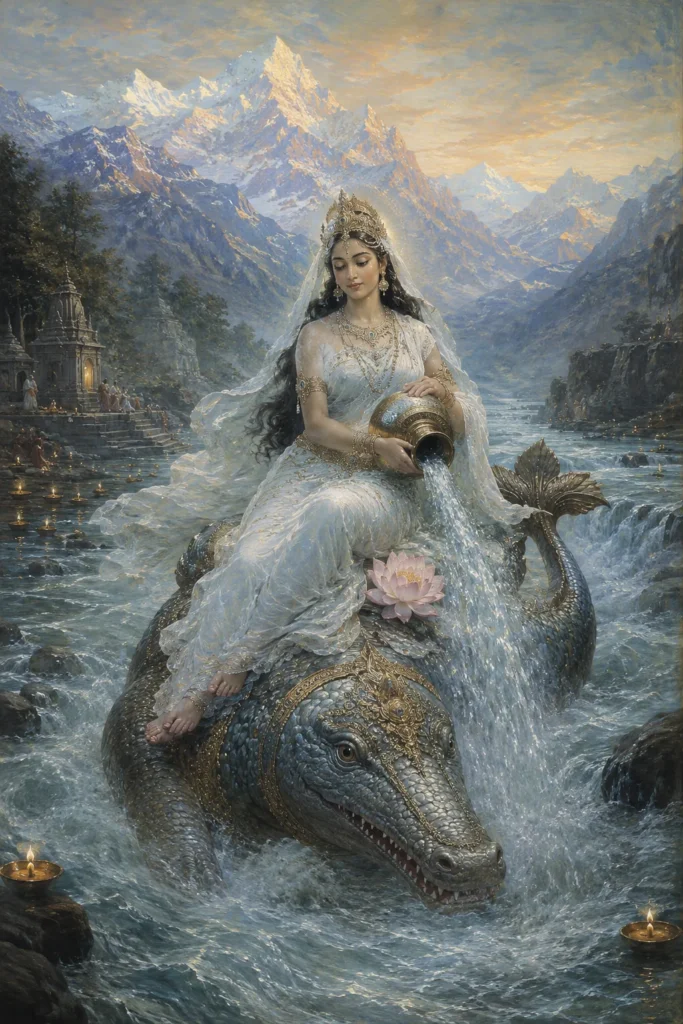
Appearance: crowned woman with water jar on the Makara
Textual history
Period of the Texts
Vedic to present day: from the Rigveda through epics and Puranas to living cult practice today.
Area of Diffusion
Northern India and the Ganges plain, venerated across the entire subcontinent and in the diaspora.
Sources
Very good: Sanskrit texts, temple art and extensive modern research.
Name and variants
Sanskrit: The source stream is named Bhagirathi after Bhagiratha, and as the river of the three worlds she bears the name Tripathaga, popularly Ma Ganga.
Appearance
Appearance
A fair, crowned woman with a water jar and lotus, borne by the Makara. Since the Gupta period she has flanked temple entrances in Northern India alongside Yamuna.
Effect
Purification: bathing removes wrongdoing, Gangajal accompanies rites of passage, and the ashes of the deceased are given over to her.
Profile: Ganga
The key aspects of the river goddess at a glance.
Central river goddess of the Vedic-Hindu pantheon.
Purification from sins, rites of passage, fertility of the plain.
A crowned woman with a water jar, riding the Makara.
A maternal purifier without a punishing side.
Ganga Aarti, the festival Ganga Dussehra, the Kumbh Mela.
Her mount Makara and the god Varuna.
Bhagiratha's penance and the fall from heaven
King Sagara’s sixty thousand sons had been burned to ashes; only the heavenly river could deliver them. After years of asceticism, Bhagiratha brought about the descent of Ganga, and Shiva caught her fall in his hair.
As Tripathaga she flows through three worlds; the texts make her the daughter of Himavat and, in the Mahabharata, the wife of Shantanu and mother of Bhishma.
River, legal person and political issue
Ganga remains a public issue: in 2017 a court in Uttarakhand declared the river a legal person, a ruling suspended by India’s Supreme Court that same year.
Research interprets Ganga as a hierophany of water; the often-discussed contradiction between ritual purity and physical pollution does not disprove the pure Ganga but lies on a different level.
Gangajal and the rules along the riverbank
Protection from Ganga is foreign to the tradition; what is regulated is the reverent handling of her power. Gangajal is kept in the home and used at birth, marriage and death, while worn amulets and ritual salt accompany contact with the river. Pollutions such as washing laundry in the water were considered forbidden.
Deified rivers in comparison
Frequently asked questions about Ganga
Why is Ganges water considered purifying?
The river is regarded as the body of the goddess; its water removes wrongdoing and accompanies transitions from pilgrimage baths to the deathbed.
How did Ganga come to earth?
Bhagiratha requested the heavenly river, and Shiva caught her fall in his hair so that the earth would not break apart.
Further links
Further reading:
- Hinduism – Hindu water spirits
- Holy water, Salt, Amulet – protective means
Literature (selection)
Further standard works in the bibliography.
As the river goddess of the Ganges, Ganga embodies the purifying water of Northern India; the descent of Ganga from Shiva’s hair remains the core myth of her worship.