Boto Encantado, the dolphin in the white suit
By Ralf Ittermann · last reviewed on
Boto Encantado is a spirit of Brazilian tradition.
By day a dolphin, by night a seducer in a white suit. As an enchanted dolphin, Boto Encantado embodies a well-known figure of Brazilian tradition.
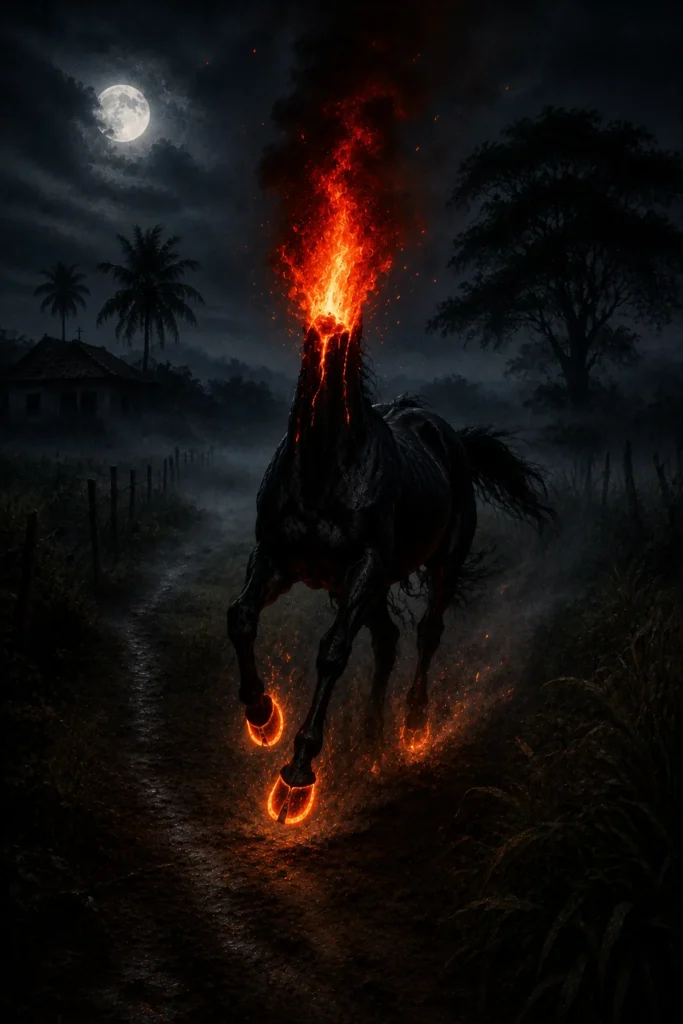
The Boto Encantado, the enchanted pink river dolphin, is one of the most vivid figures of Amazon folklore. By day he swims in the river as a dolphin, at night he transforms into a good-looking man in a white suit who seduces young women at festivals and returns to the river before sunrise.
The story is a creation of northern Brazil with indigenous roots and was documented ethnographically and folkloristically in the 20th century, above all by the folklorist Luís da Câmara Cascudo. In the river communities of the Amazon basin, it often served to explain the pregnancy of an unmarried woman; such children were popularly regarded as a child of the Boto.
Type: Shapeshifter, by day a river dolphin, by night a seductive man
Origin: folk tale of northern Brazil with indigenous origin
Texts: oral tradition, folkloristically documented by Câmara Cascudo
Period: living oral tradition, recorded in the 20th century
Appearance: by day a pink river dolphin, by night a man in a white suit with a hat

Context of the tradition
Period of the Texts
The Boto legend is a living oral tradition of northern Brazil with indigenous origin, documented folkloristically in the 20th century.
Area of Diffusion
The Amazon basin in northern Brazil, especially the river communities along the great waterways.
Sources
Predominantly oral: ethnographic and folkloristic records, above all the collections of Luís da Câmara Cascudo.
Name and variants
Portuguese: boto denotes the river dolphin, encantado means enchanted: Boto Encantado literally means the enchanted river dolphin, a name that directly names the dual nature between animal and human.
Form and effect
Appearance
Characteristic of the Boto in human form is the white suit and the hat, which he never removes. The hat conceals the blowhole at the top of his head, which does not close during the transformation and remains the telltale sign of his true nature.
Effect
At night the Boto transforms into an elegant man, appears at festivals and enchants a young woman with charm, music and dance, seduces her and returns to the river as a dolphin before sunrise. In other strands of the tale, he draws bathers into the underwater world Encante, from which there is no return. The Boto thus embodies the ambivalence of the river, seductive and dangerous, yet also a protector, for he is regarded as the rescuer of shipwrecked people, especially women, whom he pushes to the shore.
Profile: Boto Encantado
The key aspects of the enchanted river dolphin at a glance.
Folk tale of northern Brazil, rooted in indigenous tradition and in the festival culture of the Amazon region, such as at the Parintins Festival.
Young, often unmarried women at nocturnal river festivals, especially during full moon and the June festivals.
By day a pink river dolphin, by night an elegant man in a white suit and hat, which conceals the telltale blowhole.
Both seducer and protector: he is regarded as the rescuer of shipwrecked people, especially women, whom he pushes to the shore.
Avoiding river bathing during menstruation or pregnancy, not being alone by the water at night, intervention by shamans and blessing-speakers.
Between dolphin and seducer: the Boto legend
The Boto legend is a tale of northern Brazil with indigenous roots that centres on the pink river dolphin of the Amazon. In social practice it often served to explain the pregnancy of an unmarried woman or the paternity of a child of unknown father; such children were popularly regarded as a child of the Boto. The folklorist Luís da Câmara Cascudo classified Boto and Iara as mixed indigenous-European formations and, in the case of the Boto, pointed to a learned heritage of the dolphin motif from the ancient Mediterranean world.
The Boto is also the subject of the festival culture of the Amazon region, for instance in connection with the Parintins Festival. The pink river dolphin itself is taboo: killing or harming it was considered to bring misfortune, which traditionally contributed to the protection of the animal. In more recent times, the legend is often reinterpreted ecologically to protect the endangered river dolphin.
Folk festival, species protection and a critical view
The Boto Cor-de-Rosa is part of the core stock of Brazilian national folklore and is especially vivid in the Amazon region; it is the subject of festivals, music, television and film, and was given a folkloristic interpretation by Câmara Cascudo. More recently, the legend has increasingly served the conservation of the endangered river dolphin. At the same time, its social function is discussed critically: in the region, the legend has demonstrably also been used to conceal sexual violence and unwanted pregnancies.
From a religious-studies perspective, the Boto is a classic shapeshifter myth with a social explanatory and taboo function: it accounts for unexplained pregnancies while also protecting the dolphin itself, whose killing is considered to bring misfortune. It combines the indigenous concept of an otherworldly underwater realm, the Encante, with Christian and Mediterranean motifs. As a figure, he carries the ambivalence between threat, protector and ecological symbol.
Rules of conduct at the river by night
The best documented rules of conduct concern women at the river: elders advise against bathing in the river during menstruation or pregnancy, so as not to attract the Boto, against attending nocturnal festivals when at risk, and against being alone by the water. Also recorded is the unmasking by removing the hat that conceals his breathing hole; the Boto can also be recognised by the way he hastily leaves the festival and hurries to the river. In the Amazonian tradition, the intervention of shamans and blessing-speakers against the bewitchment is likewise documented. Christian remedies and everyday means such as garlic are mentioned in the narrative tradition, but are less well attested and should rather be regarded as regional.
Protective means include holy water, a sign against the bewitchment in the Christian-influenced Amazonian tradition, a worn amulet for staying on the riverbank at night, and salt as an old means of purification and protection against the powers of the water.
Related water shapeshifters
The closest structural parallel to the Boto is the Scottish-Irish Selkie, an animal being that takes on human form and enters into relationships with humans. In the neighbouring tradition of Peru, the pink river dolphin is likewise regarded as a transformation of the Yacuruna, the water people of the Amazon there. As a seductive water being, the Boto stands alongside the Slavic Rusalka, the Greek sirens and the Germanic Nix; more closely related are the West African Mami Wata and, above all, the Brazilian Iara, who, unlike the Boto, seduces less often and kills more frequently. The monstrous Ipupiara, the demonic forerunner of the Iara from the same colonial chronicles, also belongs within this circle of Amazonian water beings.
Frequently asked questions about the Boto Encantado
How can the Boto be recognised in human form?
By the hat he never removes, because it conceals the breathing hole on his head, and by the fact that he hurries back to the river before daybreak. If his hat is taken off, he is unmasked.
Why does the legend exist as a social phenomenon?
It traditionally explained the pregnancies of unmarried women and children with unknown fathers. Critics note that it could also conceal real sexual violence.
Is it permitted to kill a Boto?
No, this is considered taboo and believed to bring misfortune. This taboo effectively protects the endangered pink river dolphin to this day.
Further links
Literature (selection)
Further standard works in the bibliography.
Known as the Boto cor de rosa, the Boto Encantado remains Brazil’s most famous Amazon river dolphin legend: a dolphin by day, a seducer in a white suit by night, whose legend still protects the endangered river dolphin today.