Topielec and the chain of the drowned
By Ralf Ittermann · last reviewed on
Topielec is a demon of Slavic tradition.
The restless soul of a drowned person seeks a successor. Topielec is the drowner of Polish legends, and the section below explains which bodies of water are associated with it.
The Topielec is the drowner of Polish folk tradition: the restless soul of a drowned person, who finds peace only once it has pulled another down in its place. Unlike the placatable Vodník, he cannot be won over.
Type: Drowner demon
Origin: Poland, West Slavic region
Texts: attested since the 16th century
Period: heyday 1800 to 1900
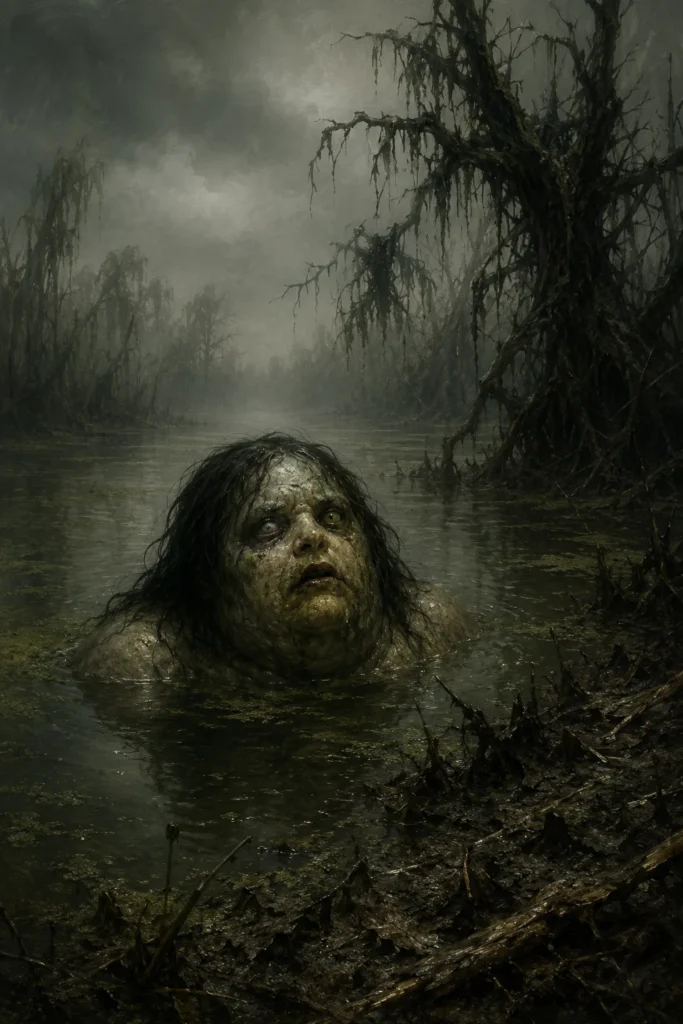
Appearance: human-like, dull eyes, greenish skin
Context of tradition
Period of the Texts
Attested since the 16th century, with a folklore heyday around 1800 to 1900 in Poland.
Area of Diffusion
Poland and the West Slavic region, regionally also called utopiec or topielnik.
Sources
Well attested through the collections of Afanasyev and Moszyński.
Name and variants
Polish: Derived from the verb for drowning: the drowner or the drowned one, feminine Topielica.
Appearance
Appearance
Human-like, with dull eyes, tangled hair and slimy, green skin; he gives off a smell of swamp gas.
Effect
He pulls people into the water and drowns them; the newly drowned person becomes a Topielec themselves, a chain of restless dead.
Profile: Topielec
The key features at a glance.
Part of the Polish water demon bestiary since the 16th century.
Bathers and children at lakes, rivers and swamps.
Bloated greenish skin, dull eyes, tangled hair, swamp odour.
Pure mortal danger without ambivalence; also kills livestock at the shore.
Avoiding still waters, children never going alone.
The Vodník is considerably more placatable.
From the name to the chain logic of the drowned
Attested since the 16th century, the Topielec was a firm part of rural Polish folklore around 1800 to 1900. At its core lies the soul of someone who died in the water: whoever drowns finds no peace until they pull another down in their place, thereby becoming the next Topielec themselves.
Between bestiary and fantasy world
The Topielec lives on in Polish folk legends and modern fantasy, for instance within the Witcher world. In religious studies terms he is not a god but a demon, a revenant of a restless soul.
Avoidance rather than banishment
Avoidance and caution are central: still waters should be avoided, and children should not be left alone near water. The Topielec is considered unappeasable; protection means distance. Traditionally, salt, threshold protection signs and holy water are used.
Distinction within the Slavic water circle
Frequently asked questions about the Topielec
How does a Topielec come into being?
From the soul of a drowned person, more rarely from children who died unbaptised; the newly drowned person becomes a Topielec.
Can he be placated?
No, unlike the Vodník. Protection means avoidance alone.
Further links
Internal links:
Literature (selection)
More in the bibliography.
The epithet Topielec, drowner of Polish legend, fits him precisely: a Polish water demon with no conciliatory side, who turns every drowned person into the next link in his chain.