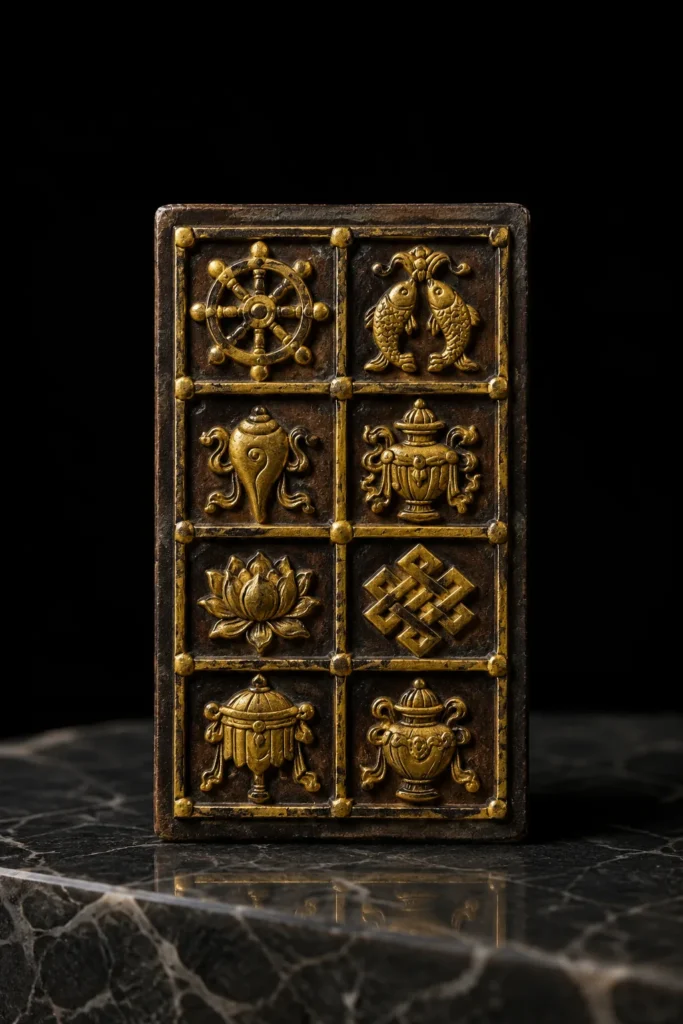
iWell Guard

Threshold Protection: The Protection of the Doorsill, Window and House Entrance

Threshold protection covers all customs by which the doorsill, window and house entrance were secured against harmful influences.

It rests on the idea that an opening is a particularly vulnerable spot, because something can enter through it. This article places the securing of doorsill, window and entrance within the study of religion and traces its history from antiquity to its present-day reception. In doing so, it distinguishes between historically documented custom and modern interpretation.

Protective symbolCross-culturalProtective principle
Threshold protection - protective symbol, museum-style illustration

Classification: What Threshold Protection Means

Threshold protection is a collective term for customs directed at the openings of a building. What is meant above all are the doorsill, the door frame, the windows and the entire house entrance. In many cultures these spots were understood as particularly sensitive.

The basic idea is simple. A house counts as a protected space, yet this space has necessary openings. People go in and out through them, and according to a widespread notion an influence considered harmful could also enter through them.

Threshold protection therefore focuses precisely on these points of transition. It consists of signs, objects or actions placed at or above the threshold and intended to secure the opening.

The means are very varied. Engraved signs, hung objects, walled-in items, scattered materials and painted patterns have all been handed down. They all share their reference to the place of the opening.

Within the protective symbols, threshold protection is less a single symbol than a field of application. It brings together what was done at a particular place, namely at the entrance.

Threshold protection is closely connected with the protective circle. While the circle bounds an entire area, threshold protection secures the individual opening through which this area is entered.

Threshold protection is not directed only at harm in the narrower sense, but also at the good fortune of a house. Some customs were meant to prevent well-being from escaping the house, others to draw it in. Thus, alongside its defensive side, threshold protection also carries a preserving and an inviting side.

Origin and Historical Depth of Threshold Protection

The protection of doors and windows is as old as the permanent house. Customs for securing entrances are known as far back as the ancient Near East, which can be inferred from texts and archaeological finds.

In Mesopotamia, small figures were buried in the floor of doorways. These so-called apotropaia were meant to secure the entrance. Accompanying texts describe the procedure and the ideas connected with it.

In pharaonic Egypt, signs and inscriptions with a protective meaning are found on doors and above entrances. Here too the entrance was regarded as a place that required special attention.

In the Greek and Roman world, the entrance was assigned to the domain of certain deities, and signs and objects were placed on doors. The door frame appears in ancient sources as a significant spot of the house.

In medieval and early modern Europe, threshold protection continued in domestic custom. Engraved signs on door beams and above entrances are amply attested on surviving buildings.

Overall, threshold protection appears as a behaviour documented across very long periods and many cultures. It is less a wandering motif than a concern for the entrance that arose again and again.

The Underlying Idea of the Endangered Transition

The conceptual core of threshold protection is the idea of the endangered transition. The threshold is the spot where the interior ends and the exterior begins. It is thus both a boundary and, at the same time, a gap in this boundary.

In many systems of folk belief, harmful influences were regarded as something that comes from outside and must enter a space in order to take effect. The opening is therefore the spot at which such an entry seemed possible at all.

The threshold was understood as a place of its own kind, lying neither wholly inside nor wholly outside. Such in-between places were considered particularly significant in many cultures, and at the same time particularly sensitive.

For this reason the protection was directed not at the whole wall, but specifically at the opening. A closed wall counted as safe, whereas the doorway was seen as the spot at which the boundary is breached.

Signs and objects at the entrance were meant, as it were, to close the gap in the boundary again. They supplemented the solid wall with protection at exactly the spot where the wall is necessarily open.

The idea described here is a cultural-historical explanation. It describes why people secured the entrance, and documents a belief. It is not evidence of an effect. Scholarship describes the idea without confirming it.

Examples from Antiquity and the Ancient Near East

In Mesopotamia, rows of small clay figures were buried beneath the thresholds of houses and palaces. Accompanying incantation texts name the figures and describe that they were meant to secure the entrance.

Mesopotamian sources also know of the placing of signs and inscriptions on door frames. In these texts the entrance appears as a place to which special attention was given in construction and in custom.

In pharaonic Egypt, lintels and doorposts were furnished with inscriptions that, among other things, carried a protective meaning. Signs to which a defensive function was attributed also appear at entrances.

In the Roman world, the door area was assigned to certain deities, and signs and objects were placed at entrances. Ancient texts mention customs directed at the threshold and the door frame.

In the Jewish tradition, the placing of an inscribed scroll container on the doorpost is known, and it remains part of religious practice to this day. It refers expressly to the doorpost as a significant spot.

These examples show that the entrance was a place of its own customs in the ancient Mediterranean world and the ancient Near East. Threshold protection is thus well attested across several cultures.

From the Greek world it is handed down that the entrance was assigned to the domain of certain deities and that branches, ribbons and small signs were placed on doors.

Ancient writers mention customs directed at the threshold, for instance when moving into a new house. There the entrance appears as a place where transition and concern come together.

Examples from European Folk Magic

In European folk magic, threshold protection is richly attested. On surviving farmhouses, engraved signs are found on door beams, above entrances and on windows. Folklore collections have recorded such signs in detail.

Among the means handed down were horseshoes placed above the door, engraved star figures and crosses, walled-in objects, and plants hung at or above the entrance.

Materials such as salt were also scattered on thresholds. This connection links threshold protection with the idea of salt and iron as defensive substances, which is treated in a separate article.

Certain times were considered particularly sensitive, for instance certain nights of the year. On these occasions doors and windows were deliberately marked with signs or secured with objects.

Reports about threshold protection document the expectations of those who practised it, not a proven effect. They show that securing the entrance was understood as an action that creates a sense of safety.

With the decline of magical domestic custom, threshold protection lost its everyday role. What remained, above all, were the engraved signs on old buildings, which are studied today in architectural research.

The choice of certain woods and plants at the entrance is also attested in folklore. Branches of elder, juniper or rowan were fastened to doors and above entrances, and a defensive meaning was attributed to them. Such plant-based means supplemented the engraved signs and linked threshold protection with the wider field of protective plants.

Examples from Asia and Further Cultures

In South Asia, floor and threshold patterns made of flour, rice flour or coloured powder are laid before doorsills. These patterns adorn the entrance and at the same time mark it as a significant place of the house.

In China, strips of sayings, pictures and signs are placed on doors, especially at the turn of the year. The door leaves and the door frame are fixed places of domestic custom, where signs with a protective meaning appear.

In the Islamic world, inscriptions, hand and eye motifs placed above entrances are widespread. There the entrance is a favoured place for signs such as the Nazar Boncugu, which is directed against the gaze considered harmful.

In parts of Africa, objects, plants and signs are placed at entrances and are meant to secure the house. Entering a homestead often leads through a marked area.

Across these regions it becomes clear that the entrance is a place of its own customs almost everywhere. Threshold protection is not a motif of a single culture, but a widely shared concern.

The variety of the examples makes clear that threshold protection is to be understood as a field of application. It arises wherever a house is conceived of as a protected space with necessary openings.

In the ancient Near East, inscribed door nails and foundation deposits are also known, which were set into thresholds and walls during construction.

They name the builder and at the same time invoke protection for the building. These finds show that concern for the entrance already had its fixed place when a house was being erected.

Application in Ritual and Everyday Life

Threshold protection was often established in everyday life when a house was built. Walled-in objects and engraved signs were created while the building was being erected and then remained permanently in place.

Other forms were renewed continually. Scattered salt, hung plants and painted threshold patterns had to be replaced regularly. This renewal made threshold protection a recurring custom.

Certain occasions reinforced threshold protection. Before sensitive nights, at festivals or at special events in the life of the family, doors and windows were additionally furnished with signs or objects.

Behaviour at the threshold was also regulated. In many cultures it is considered improper or unlucky to stand or linger on the doorsill. Such rules of conduct belong to the wider circle of threshold protection.

Threshold protection was often connected with spoken words of blessing. When placing a sign or scattering a substance, a saying could be spoken that accompanied the action.

There is no uniform ritual order for threshold protection. The exact form depended on region, building method and tradition, as folklore research has noted on several occasions.

Actions at the threshold were also regulated when leaving and entering the house. Crossing the threshold with a particular foot and carrying a bride over the threshold belong to this circle. Such customs show that the threshold counted not only as a place of signs, but also as a place of regulated behaviour.

Related Forms of Protection and Distinctions

Threshold protection is closely related to the protective circle. Both work with the idea of a boundary. The circle encloses an area; threshold protection secures the individual opening in this boundary.

Threshold protection is also closely connected with the idea of salt and iron as defensive substances. A horseshoe above the door and salt on the threshold link the place of the entrance with the substance used there.

Many objects placed at the entrance are at the same time amulets and talismans. The eye motif above the door or the hung hand are protective signs in their own right, used here at the place of the threshold.

Threshold protection differs from the mere amulet through its tie to a place. An amulet can be worn on the body. Threshold protection, by contrast, is bound to a fixed place of the building.

A boundary exists toward mere architectural ornament. Decorations on doors and windows do not necessarily carry a protective meaning. What is decisive is whether a defensive function was attributed to a sign at the entrance.

Placing it within this neighbourhood helps to define threshold protection precisely. It is a place-bound field of application that gathers protective signs, substances and actions in their own right at the entrance.

Present-Day Reception of Threshold Protection

Some forms of threshold protection are still alive today. The Jewish scroll container on the doorpost is part of current religious practice. The horseshoe above the door is also still placed in many places, often more as a custom than as a means of protection.

In architectural research and in folklore studies, engraved signs on old buildings are a recognised object of study. They are recorded, dated and interpreted as testimonies of past domestic custom.

In modern esotericism and in popular guidebooks, threshold protection is sometimes taken up. Such offerings should be viewed critically, since the effects attributed to them are not proven.

In popular culture, thresholds and entrances often appear as places of transition and danger. Films and stories take up the old idea of the threshold as a sensitive spot.

For the study of religion, threshold protection is a clear example of a protective principle that is bound to a particular place. It shows how the idea of the endangered transition has given rise to customs in many cultures.

Anyone who takes up threshold protection today will find in it, above all, a cultural-historical subject. A factual approach separates the documented history of the custom from modern promises of effect, which do not hold up under examination.

Architectural history has also studied the entrance as a significant spot. Lintels, door surrounds and threshold stones were often given special form and furnished with inscriptions. This structural emphasis on the entrance corresponds to the idea that the transition deserves attention of its own.

Literature (Selection)

  • Hanns Bächtold-Stäubli (ed.): Handwörterbuch des deutschen Aberglaubens (1927-1942)
  • Liselotte Hansmann, Lenz Kriss-Rettenbeck: Amulett und Talisman. Erscheinungsform und Geschichte (1966)
  • Arnold van Gennep: Les rites de passage (1909)
  • Carlo Ginzburg: Die Benandanti. Feldkulte und Hexenwesen im 16. und 17. Jahrhundert (1966)
  • Jeremy Black, Anthony Green: Gods, Demons and Symbols of Ancient Mesopotamia (1992)

Related key terms: threshold protection, doorsill, house entrance, door protection, window protection, horseshoe, threshold pattern, engraved signs, entrance, apotropaic.

iWell Guard and Protective Traditions

iWell Guard stands in the cultural-historical line of portable protective objects, to which threshold protection also belongs. A modern companion for people who live with protective symbols: made in Germany, 41 layers of genuine gold, platinum and silver, with a 30-day right of return.

Personal experiences may vary. Not a medical device. No promise of healing.