Salige Frau, culture-bringer of the Eastern Alps
By Ralf Ittermann · last reviewed on
The Salige Frau is spirit of alpine legend.
The wise mountain fairy who teaches cheese-making and watches over the chamois. As culture-bringer of the Eastern Alps, the Salige Frau is credited with teaching mountain crafts.
The Salige Frau, also called Salige Fräulein or Saligen, is a benevolent, wise and beautiful mountain fairy of the Eastern Alps. She helps shepherds and hunters, teaches cheese-making and healing, and is bound to the chamois; she flees from intrusiveness and betrayal.
As a bringer of culture, she teaches cheese- and butter-making, healing herbs and farming, and in the Vinschgau valley, buckwheat as well as flax and spinning. The Saligen are attested in North and South Tyrol, in Carinthia as Salkweiber, and among the Carinthian Slovenes as žalik žene.
Type: Benevolent, wise mountain fairy, bringer of culture and mistress of the chamois
Origin: alpine legend tradition of the Eastern Alps
Texts: Zingerle, Alpenburg, Heyl
Period: collected in the 19th century
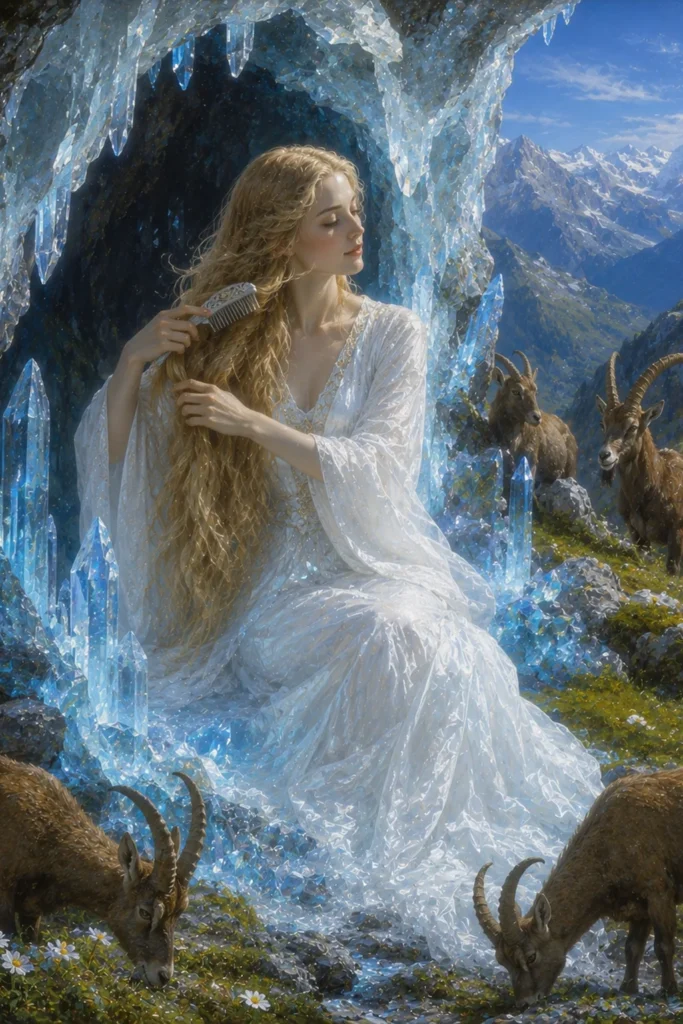
Appearance: beautiful young woman in white garments with long hair
Area of tradition and sources
Period of the Texts
The legends of the Salige Frau belong to alpine tradition and were collected in the 19th century, by Zingerle, Alpenburg and Heyl.
Area of Diffusion
North and South Tyrol, Carinthia and the Eastern Alps; in Carinthia the Saligen are called Salkweiber, among the Carinthian Slovenes žalik žene.
Sources
Good: Zingerle’s tales from Tyrol, Alpenburg and Heyl offer a broad, regionally spread body of material.
Name and variants
Origin of the name: Salig derives from Middle High German sælec, meaning blessed or bringing blessing, related to English seely. The esoteric derivation of salig as equivalent to Celtic or radiant is not linguistically substantiated.
Appearance and gifts
Appearance
The Saligen are beautiful young women in white, shining garments with long blonde hair, which they comb at the entrance of caves, and with wonderful singing; they are shy and dwell in crystal grottoes and glacier caves. In the Carinthian variant, they have misshapen feet and feed on fish.
Effect
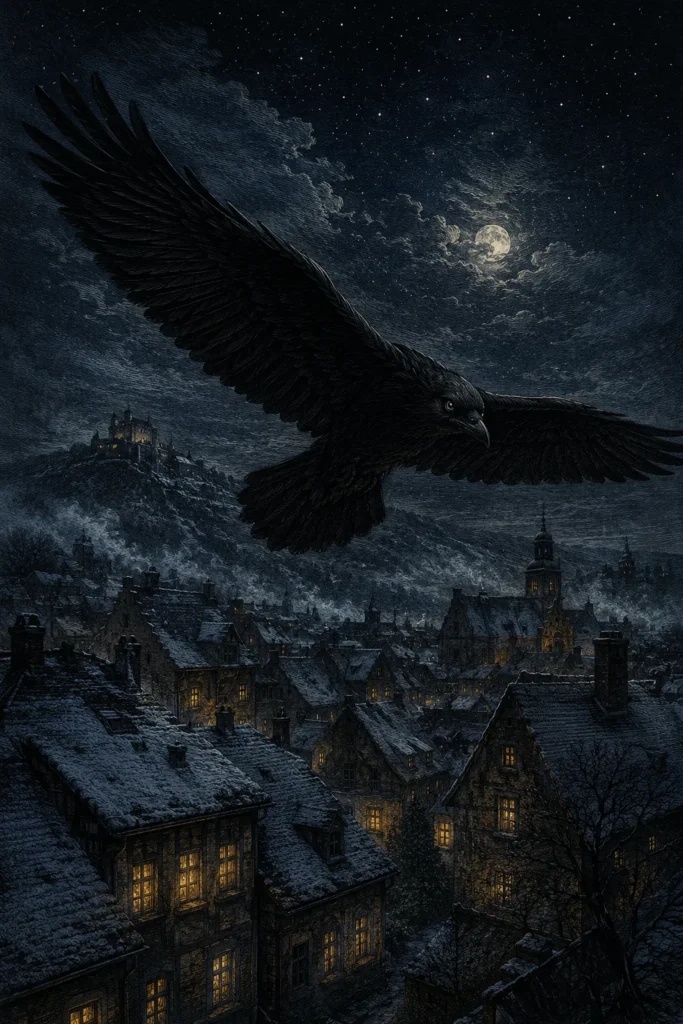
The Saligen are bringers of culture: they teach cheese- and butter-making, healing herbs and farming, buckwheat in the Vinschgau valley, as well as flax and spinning. They are mistresses of the chamois and appear as bearded vultures while herding.
Profile: Salige Frau
The most important aspects of the benevolent mountain fairy at a glance.
Benevolent mountain fairy of the Eastern Alps, attested in Carinthia as Salkweib, among the Carinthian Slovenes as žalik žene.
Shepherds, hunters and farmers: the Saligen help with herding, teach alpine dairy farming and healing, and watch over the chamois.
Beautiful young woman in white, shining garments, combing long blonde hair at the entrance of a cave, dwelling in crystal grottoes and glacier caves.
Bringer of culture: cheese- and butter-making, healing herbs, farming, buckwheat, flax and spinning; also mistress of the chamois.
Keeping the taboos remains the basic rule. The protective practice adds magical protective symbols, banishing spells, garlic, salt, amulets, protective herbs and calling upon the guardian angel.
White Women, fairies and the Scottish Seelie Court; related are the little wood women, to be distinguished from the wild Fänggen.
From sælec to salig: origin and evidence
Salig derives from Middle High German sælec, meaning blessed or bringing blessing, related to English seely; the esoteric derivation of salig as equivalent to Celtic or radiant is not linguistically substantiated. Even the name thus carries the benevolence that defines the figure.
The Saligen are attested in the Eastern Alps, in North and South Tyrol, in Carinthia as Salkweiber, among the Carinthian Slovenes as žalik žene. Sources include Zingerle’s tales from Tyrol, Alpenburg and Heyl. Striking is the breadth of their profile as bringers of culture: from cheese-making to healing herbs to buckwheat in the Vinschgau valley, legend attributes to the Saligen everything that makes life on the alpine pasture possible in the first place.
Reappropriation and interpretation
The Saligen are a firm part of the Tyrolean and South Tyrolean world of legend and tourism and undergo a feminist-spiritual reappropriation.
In religious studies, the Salige Frau is a model example of the benevolent, culture-bringing mountain fairy. Important clarifications: she is not to be equated with the wild Fänggen, but forms with them a continuum from beautiful-benevolent to wild-coarse; and salig means blessed, not holy.
Taboos instead of a protective ritual
There is no attested protective ritual against the Saligen, for they themselves are the protectors. Only marginal motifs exist: noise keeps the more intrusive Carinthian Salkweiber away, and the sign of the cross serves as protection for them against their counterpart, the Wild Man. What matters are the taboos: the Saligen flee at betrayal, curiosity, ingratitude, mockery or the killing of chamois. Whoever wants to keep their help must abide by these rules.
In protective practice, classic means are nonetheless named for encounters with the Saligen: magical protective symbols and banishing spells, garlic and salt at the threshold, a worn amulet, protective herbs in a pouch, as well as calling upon the guardian angel. These are directed less against the Salige Frau herself than against the unrest that a breach of taboo brings with it.
White Women, fairies and the Seelie Court
The Saligen stand alongside the White Women, the fairies and the Scottish Seelie Court; popularly they are placed in a line with the Norns and matron deities and are related to the little wood women. They are to be distinguished from the wild Fänggen, with whom they share the chamois motif. In the same legendary landscape live the small Nörgel and the penitent Dellermännle.
Frequently asked questions about the Salige Frau
Who is the Salige Frau?
A benevolent, wise mountain fairy of the Eastern Alps, bringer of culture and mistress of the chamois.
Why does she flee?
Upon breach of taboos such as betrayal, curiosity, ingratitude, mockery or the killing of chamois.
Is she the same as a Fänggen?
No. Both form a continuum from benevolent to wild, but are not identical.
Further links
Further reading:
- Fänggen – the wild counterpart to the benevolent Salige
- Nörgel, Dellermännle – small spirits of alpine legend
- Sage, Amulet, Protective candle – traditional protective means
- Protection Compass – an overview of protective means
Literature (selection)
Further standard works in the bibliography.
As an alpine mountain fairy and wise woman of the mountains, the Salige embodies the friendly face of the heights: a helper who remains, as long as people refrain from betrayal, mockery and ingratitude.