Banishing Formula and Banishing Ritual
By Ralf Ittermann · last reviewed on
A banishing formula is a traditional formula used in folk magic and in religious traditions to bind, dismiss or prevent a harmful being, force or condition from exerting further influence.
The term combines two related but distinct ideas: binding, that is, the immobilization of a force, and dismissing, that is, sending it back to a place that lies outside the area of protection.
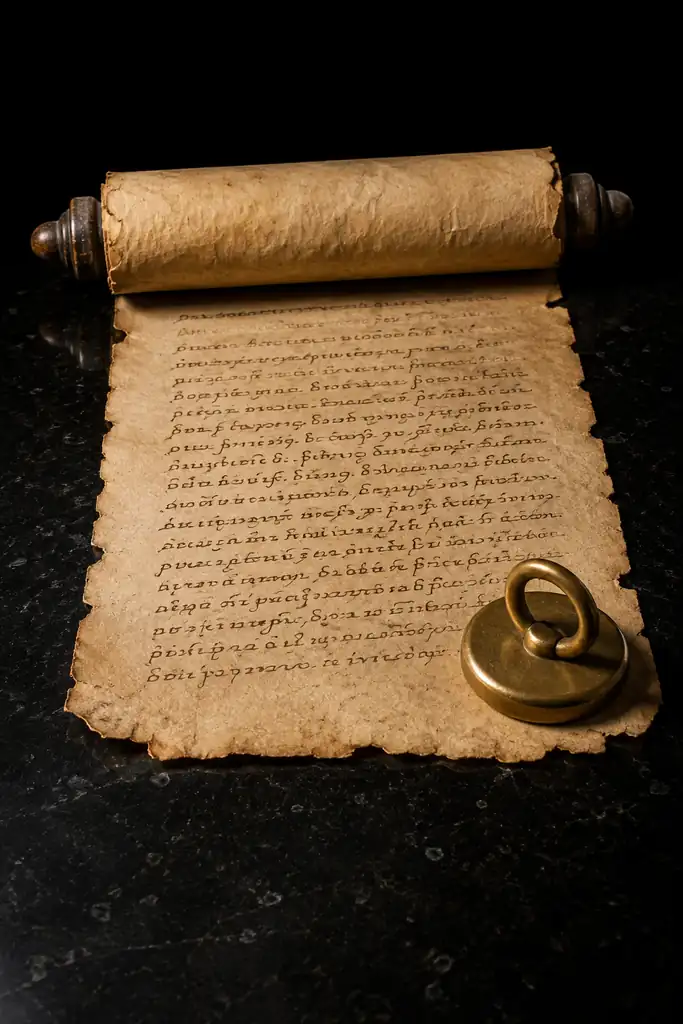
Banishing formulas are among the best-documented means of protection in human history, because by their very nature they depend on writing or were at least fixed in writing: the formula must be correct, it must be preserved in full.
In this way they have survived in cuneiform tablets, Greek papyri, medieval manuscripts, ecclesiastical ritual books and folk-religious transcriptions. This density of tradition makes them especially accessible to research.
The banishing formula belongs to the category of protective rituals and invocations.
The banishing formula is often part of a larger banishing ritual that combines words, gestures and protective signs.
Quick overview
In tradition, the correctly spoken or written banishing formula is regarded as an effective means against demons, evil spirits, the evil eye and magical attack.
In many cultures the formula follows a fixed scheme: naming the being or force, the command to remove or bind it, an appeal to a divine or sacred authority. According to tradition, its effect requires correct execution. It is attested in Mesopotamian, Egyptian, Jewish, Christian, Islamic and European folk-religious traditions.
Origin and tradition
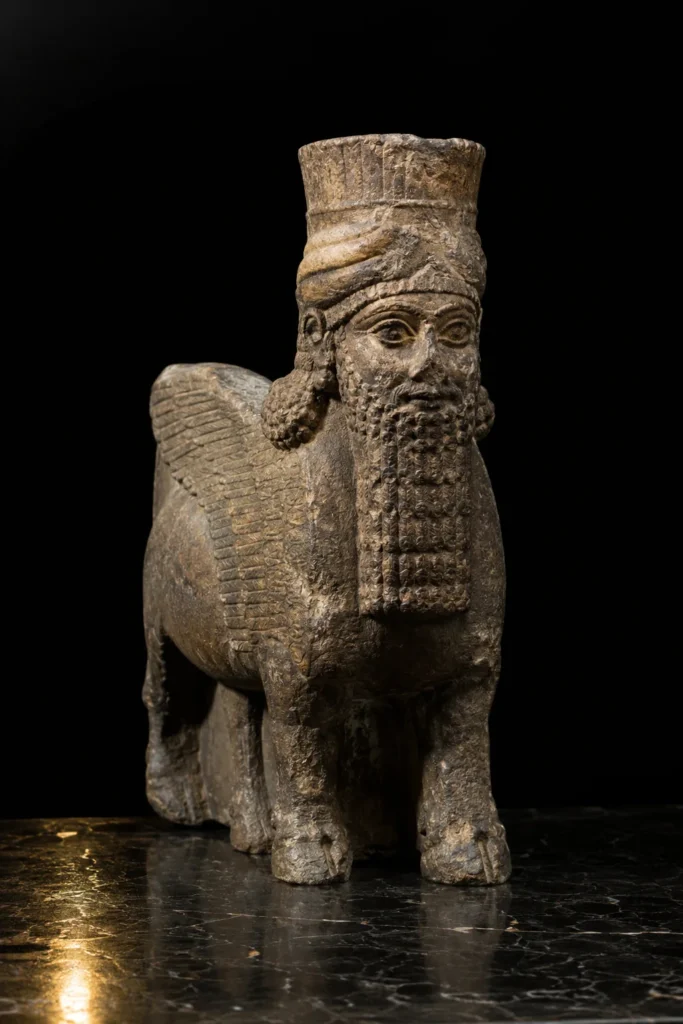
The oldest surviving banishing formulas come from ancient Mesopotamia. The Maqlu incantations, an extensive Akkadian collection of texts from the first millennium before the common era, contain formulas against witchcraft, demons and illness.
The structure and content of these texts reveal a highly developed system: the priest names the being, calls upon it to turn back, appeals to the gods Marduk, Ea or Asalluhi, and accompanies the speaking with gestures, fumigations and symbolic acts.
Binding and loosing are central metaphors here: evil is to be “bound” like a prisoner.
In Egypt, banishing formulas are known from the context of the realm of the dead, but also from everyday magic.
Ostraca, that is, potsherds with written texts, and amulets occasionally bear short banishing formulas against particular dangers. The notion that pronouncing the name of an evil also banishes it is deeply anchored in the Egyptian worldview.
In the Jewish context, extensive traditions of banishment develop from biblical models, especially from the figure of Solomon as a subduer of demons. Jewish incantation literature, including the Sefer Raziel and various Hekhalot texts, contains formulas for warding off Lilith and other harmful demons.
In Christian Europe these traditions are partly adopted and linked with the name of Jesus and the saints. The ecclesiastical exorcism liturgy, which has endured to the present day, follows the same basic scheme as its millennia-old Mesopotamian predecessors: naming, command, authority.
In the Germanic sphere, the Merseburg incantations from the 10th century are the best-known surviving example. Both incantations, one for freeing prisoners, one for healing a broken horse’s leg, follow the structure typical of banishing formulas, consisting of a mythological precedent and an executed command.
Working principle according to tradition
The working principle of the banishing formula can be reduced to three elements: naming, command and authority.
According to this tradition, whoever names a being correctly gains power over it. Whoever commands it within the proper framework is to be obeyed by it. Whoever in doing so appeals to a recognized authority, to God, to an angel, to a holy book, lends the command a force that the being cannot ignore.
This three-stage scheme explains why banishing formulas are regarded as dangerous in many traditions when applied incorrectly: whoever speaks the wrong formula, mispronounces a name or reverses the order, risks that the invoked authority does not respond or that the being which feels addressed, without a command to depart, continues its influence.
Cross-cultural spread
Besides Mesopotamia, Egypt and the Jewish and Christian spheres, the banishing formula is attested in numerous other cultures. In the Islamic context, the surahs of the Quran, especially the so-called “Muawwidhat” (Surahs 113 and 114), play an important role as spoken protective formulas.
In folk tradition, their recitation or writing is regarded as a banishing formula against evil spirits, the evil eye and sorcery.
In India, mantras are a related form: short, rhythmic formulas whose effect, according to Vedic tradition, is bound to correct pronunciation and intonation. Protective mantras spoken against demons or disease spirits follow the same structural principle as the Mesopotamian incantations.
In Tibetan Buddhism, mantras and dharanis likewise carry apotropaic functions, that is, a defensive effect against harmful spirits and forces. There, the concentration of sacred syllables is regarded as a kind of spiritual barrier raised protectively around the speaker or the one being protected.
In European folk belief, the banishing formula has survived in charms and incantations that were still collected by folklorists in the 19th and 20th centuries. They often display a striking structural similarity to the medieval Latin models, even though the language was translated into the vernacular and the colloquial.
What it is used against
According to tradition, banishing formulas are directed against a broad spectrum of harmful beings and forces. These include above all:
Demons and evil spirits of all kinds, from the Mesopotamian disease demons through Jewish harmful demons to the fallen angels described in Christian tradition. Witchcraft and magical attack, that is, a harmful force sent out by human hand that is to be turned back to its sender or bound.
The evil eye, as a force transmitted from one person to another through envy or ill intent. Nightmare spirits and night hags, against which specialized banishing formulas are handed down in Central European sources.
Finally, also beings such as vampires and revenants, for which banishing formulas are used together with other means to prevent their return.
Application and limits
According to tradition, the effectiveness of a banishing formula requires the completeness of the formula. Gaps, slips of the tongue or the omission of essential components are regarded as flaws that render the formula ineffective or reverse its effect.
In addition, the person who speaks it plays a role: in many traditions not everyone is qualified for the practice, but only someone vested with a particular authority, whether through consecration, training or an ability understood as a special gift.
The banishing formula has a close connection to the protective circle: in many ritual contexts the circle is drawn, and the banishing formula then defines who may not enter this circle. The two means complement one another without being interchangeable.
The banishing formula also has a temporal limit: in many traditions it applies only for the duration of the performance or for a fixed period, after which it must be renewed. It is not a permanent state but an act.
Literature (selection)
Related key terms: banishing formula banning formula banishing spell formula of defense.
iWell Guard and traditions of protection
The tradition of the banishing formula shows how cultures worldwide have understood the word as a means of setting boundaries and turning back harmful forces.
This conviction, that language and symbol can exert an ordering effect on the cosmic information field, is also reflected in the idea of the iWell Guard: an object that unites protective symbols of various cultures and can be worn as a reminder of these millennia-old traditions.
Personal experiences may vary. Not a medical device. No promise of healing.