iWell Guard

Shuigui, the Drowned Man Caught in the Pull of the Substitute Victim

Shuigui is a spirit of Chinese tradition.

A drowned man lurks in the water and seeks a substitute.

SpiritChina

Table of Contents

Shuigui, spirit of Chinese tradition
Shuigui

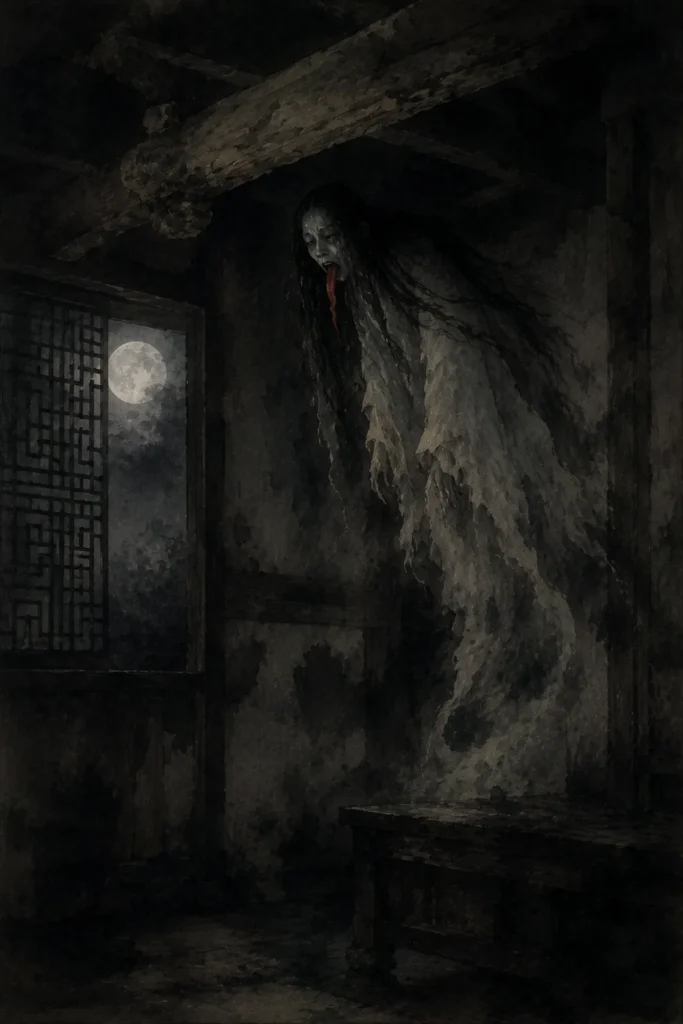
Shuigui is the spirit of a drowned person in Chinese folk tradition, lurking in or beneath the water where they died. Its aim is a substitute victim: only when another person drowns in its place is its own soul set free, while the victim itself becomes the new Shuigui.

The violent, unnatural death in water binds the soul to the place of the misfortune; it is regarded as a restless, unattended dead. The belief remains alive today: parents still warn their children about dangerous rivers, ponds and lakes by invoking the Shuigui.

At a Glance: Shuigui

Type: spirit of a drowned person, bound to the waters where they died
Origin: Chinese folk belief concerning water, death and substitute victims
Texts: collections such as Pu Songling’s Liaozhai Zhiyi, along with folkloristic studies
Period: folk belief that remains alive to this day
Appearance: spirit of a drowned person, lurking in or beneath water

Context of the tradition

Period of the Texts

Alive to this day: belief in the Shuigui is an unbroken part of Chinese folk belief and continues to be passed down into the present.

Area of Diffusion

The entire Chinese cultural sphere, particularly along rivers, ponds and lakes where drowning accidents occur.

Sources

Good: the Shuigui is as tangible in classic ghost tales such as Pu Songling’s Liaozhai Zhiyi as in the oral tradition that remains alive today.

Name and variants

Chinese: shui means water, gui spirit: Shuigui literally means water spirit. It refers to the spirits of drowned people who lurk at the place of their death and remain bound there.

Appearance and Pull

Appearance

The Shuigui is the spirit of a drowned person, lurking in or beneath the water at its own place of death. The water is at once the place of its binding and of its death; bodies of water thereby become dangerous places that sustain a cycle of misfortune.

Effect

The core motif is ti shen, the replacement of the body: the Shuigui pulls unsuspecting victims underwater and drowns them in order to take possession of their body. Only once it has lured another person to a drowning death is its soul set free, while the victim itself becomes the new Shuigui. This gives rise to an ongoing cycle of substitute drowning.

Profile: Shuigui

The most important aspects of the water spirit at a glance.

Cultural Context

A firm part of Chinese folk belief concerning water, death and restless souls, alive to this day.

Relates To

Swimmers, children and anyone at rivers, ponds and lakes who may be considered a possible substitute victim.

Depiction

The spirit of a drowned person, lurking in or beneath the water, bound to the place of their own death.

Sphere of Influence

Pulls the living underwater in order to free its own soul through the substitute victim, ti shen.

Approach

Avoiding dangerous waters, offerings during the ghost festival and the recovery of the body.

Distinctions

Structurally related to the Diao-si-gui, with which it shares the substitute-victim logic; unlike the headless Wutou-gui, the Shuigui does exhibit this motif.

The Unattended Dead in the Water

The name Shuigui combines shui, water, and gui, spirit: it refers to the spirits of drowned people who lurk precisely at the place where they died. The violent, unnatural death in water binds their soul to this place; they are regarded as restless, unattended dead who found no proper passage.

The water is at once the place of binding and of death: bodies of water thereby become dangerous places that sustain a cycle of misfortune. The belief remains alive today, as parents still warn their children about dangerous rivers, ponds and lakes by invoking the Shuigui.

Horror Film and the Warning During the Ghost Month

The Shuigui is a firm part of Chinese folk belief and of Hong Kong and Chinese horror cinema. During the ghost month, the warning is not to swim, so as not to fall victim to the Shuigui.

The Shuigui is the unattended dead par excellence: the never-recovered, never-ritualised drowned person. Its logic of substitution and substitute victims corresponds structurally to the Diao-si-gui and reflects the fear of bodies of water as places of recurring misfortune.

Avoidance, Offerings and the Recovery of the Body

Folk prevention consists of warning against and avoiding dangerous waters. Offerings are made for the drowned during the ghost festival, accompanied by incense burning and priestly rites of release. Holy water is regarded as a sign in dealing with the water spirit, and the sound of consecrated bells was considered protective near bodies of water. The recovery of the body is also considered essential, in order to break the cycle of substitute drowning.

The Pull of the Water in Other Cultures

The Shuigui corresponds to the Slavic Rusalka, the spirit of a drowned woman who lures men into the water and drowns them, and like her is bound to a place at the water. Related beings are the Germanic Nix and the Water Man as drowners, as well as the Japanese Kappa, who pulls people into the water.

Frequently asked questions about the Shuigui

Why does the Shuigui pull people into the water?

To be released itself through the substitute sacrifice ti shen: only once another person drowns in its place does its own soul become free, while the victim itself becomes the new Shuigui.

How does one protect oneself from the Shuigui?

By avoiding dangerous waters and, culturally, through the recovery of the body and proper death rites.

Is the Shuigui related to the Rusalka?

In motif, yes: both are place-bound water spirits of the drowned who pull the living into the depths, even though the Rusalka and the Shuigui come from separate cultural spheres.

Further links

Recommended internal links:

Literature (selection)

A selection of key sources and studies:
  • Pu, Songling: Liaozhai Zhiyi. China, c. 1740.
  • Teiser, Stephen F.: The Ghost Festival in Medieval China. Princeton 1988.
  • Jordan, David K.: Gods, Ghosts, and Ancestors. Berkeley 1972.

Further standard works in the bibliography.

As both a Chinese water spirit and a spirit of the drowned, the Shuigui shows how closely folk belief is entwined with the real danger of drowning: no place by the water is considered entirely safe as long as the cycle of substitute sacrifice remains unbroken.

Classification & Protection

VLEVEL
The Protection Compass assigns this being to influence level V, Profound influence.

Against its influence, cross-cultural tradition names these protective means:

Compare in the Protection Compass →

Recommended protective means

iWell Guard

The simplest protective means in this collection: 41 layers of fine gold 999, platinum, silver and silicon, manufactured in Ruhla, Thuringia. It requires no activation, is bound to no person, and is effective within a radius of around 50 meters, even without being worn.

All protective means at a glance →