Diao-si-gui, the hanged one seeking a substitute victim
By Ralf Ittermann · last reviewed on
Diao-si-gui is a spirit of Chinese tradition.
The spirit of the hanged, with its red tongue, seeks a substitute victim. The article describes the Diao-si-gui as ever seeking a substitute victim to release it from its torment.
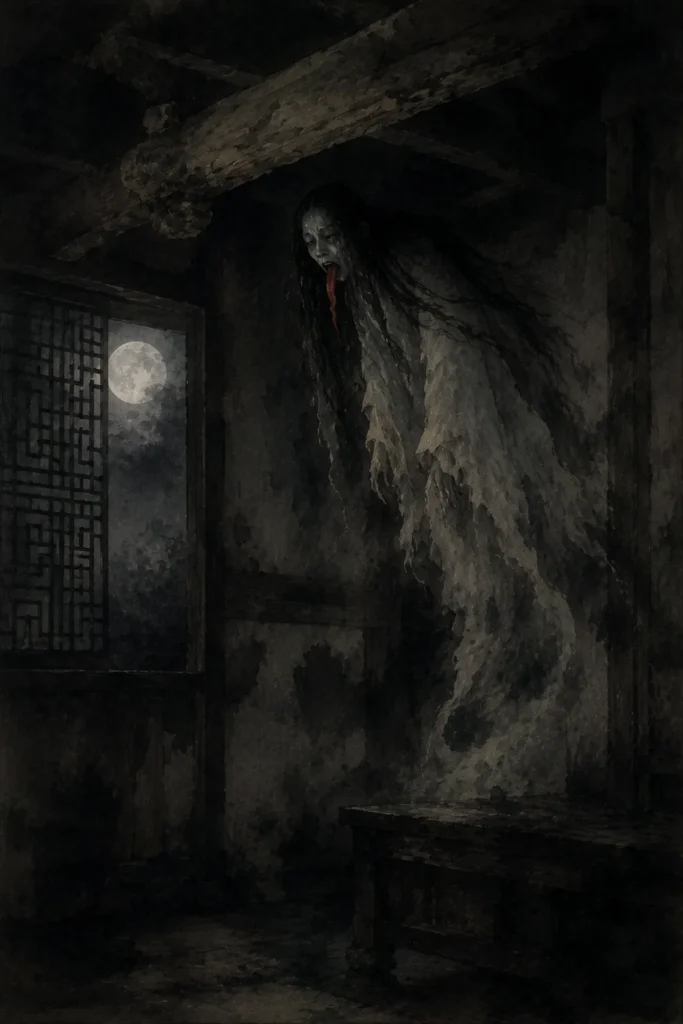
Diao-si-gui, also written diao si gui in Pinyin without diacritics, is the spirit of a hanged person in Chinese folk tradition. It is recognisable by its long, red, hanging tongue, both a physiological trace of death and a fearsome image, and often by the noose it carries with it. Trapped at the place of its death, it seeks a living person to lure into the same death, so as to be released and reborn itself.
The belief is widespread throughout the entire Chinese cultural sphere and is not bound to a particular region; the source base is moderate and rests mainly on oral folk narrative. The Diao-si-gui is considered actively dangerous because it is said to specifically lure the desperate to their own death in order to gain a substitute victim.
Type: Spirit of a hanged person, bound to the substitute-victim motif ti shen
Origin: Chinese folk belief surrounding the hanged and unnatural death
Texts: Folk tradition, classical narrative literature, modern horror
Period: firmly established, still alive in today’s horror film
Appearance: spirit with a long, red, hanging tongue and its own noose
Source context
Period of the Texts
Firmly established in folk tradition, with appearances in classical narrative literature and continued presence in modern horror film and fiction.
Area of Diffusion
The entire Chinese cultural sphere; the belief clings especially to specific places where people have hanged themselves or been hanged.
Sources
Moderate: mainly oral folk narrative, supplemented by scattered references in classical literature, without a single canonical textual basis.
Name and variants
Chinese: The name diao si gui is composed of diao, to hang, si, to die, and gui, spirit: the spirit of one hanged to death. It thus directly names the manner of death, not the origin or character of the spirit.
Form and effect
Appearance
The hanging red tongue is the iconic feature of the Diao-si-gui, both a physiological trace of death and a fearsome image. The noose it carries symbolises its continuing bond to its manner of death and the place of dying.
Effect
Central is the ti-shen motif, the replacement of the body: the spirit is trapped at the place of its death and can only be reborn once it has lured a living person to the same death. It is considered highly persuasive, at times able to render the living without will, so that they hang themselves.
Profile: Diao-si-gui
The key aspects of the spirit of the hanged at a glance.
Against the Buddhist-Daoist background, the hanged person is regarded as having died unnaturally, without completing their predetermined path through life.
The living, especially those in despair, as well as people who linger at the place of death.
Spirit of a hanged person with a long, red, hanging tongue and its own noose.
Search for a substitute victim: only once a living person has been lured to the same death is the spirit considered released.
Priestly Daoist and Buddhist atonement and release rites, along with offerings for the person who died a violent death.
Unnatural death and the law of rebirth
Diao-si-gui becomes the spirit of people who died by hanging, whether through execution, suicide or accident. According to tradition, a particularly slow, agonising death favours the transformation. Against the Buddhist-Daoist background, the hanged person is considered an unnaturally deceased individual who has not completed their predetermined life path and therefore cannot be reborn in the regular way.
From this exclusion from regular rebirth arises the ti-shen motif: only by bringing a living person to the same death can the spirit relinquish its place at the noose and continue its own life path. In early modern interpretation, this pattern was used to explain real chains of suicides at certain places.
From the Ghost Month to the cinema
The Diao-si-gui appears in classical Chinese narrative literature and in modern horror, including in the context of Wuxia. It is one of the fixed frightening figures of the Ghost Month.
From a religious-studies perspective, the Diao-si-gui is a model case of the unprovided-for, violently deceased: the abrupt, unnatural death binds the soul to the place and prevents regular rebirth. The substitute-victim motif condenses the fear of places of recurring self-inflicted death.
Rites of atonement for the violently deceased
For the violently deceased such as the Diao-si-gui, priestly Daoist and Buddhist rites of atonement and salvation, along with offerings, are central. Holy water is regarded as a consecrated sign in dealing with the violently deceased. More broadly, the Zhongyuan Ghost Festival with its offerings, the burning of incense of joss paper, and ancestor veneration are meant to appease the restless dead; the sound of consecrated bells was regarded as a protective sign at places of death.
The substitute-victim motif in comparison
The Diao-si-gui shares the substitute-victim motif with the Shuigui, the water spirit, as a direct parallel within China. In other cultures, it corresponds to European notions of cursed suicide sites and recurring hanged men. Within the Chinese gui series, it is closely related to the resentful Yuan-gui and the Wutou-gui, both of which, however, lack the substitute-victim motif.
Frequently asked questions about the Diao-si-gui
What does the substitute victim, ti shen, mean?
The spirit is trapped at the place of death and is only released once it brings a living person to the same death, hanging; the victim then takes its place.
How can it be recognised?
By its long, red, protruding tongue and often by the noose it carries with it.
How is it appeased?
Through priestly salvation rites and offerings, especially during the Ghost Festival.
Further links
Further reading:
- China – all beings of the Chinese tradition
- Shuigui, Yuan-gui, Wutou-gui – related Chinese spirits of the gui series
- Holy water, incense burning, bells – traditional protective means
- Protection Compass – protective means at a glance
Literature (selection)
Further standard works in the bibliography.
As a hanged spirit, the Diao-si-gui exemplifies the Chinese notion of the unredeemed dead: a Chinese Gui that does not rest until a substitute takes its place at the noose.