Mishiginebig, horned serpent at odds with the Thunderbird
By Ralf Ittermann · last reviewed on
Mishiginebig is a demon of the Anishinaabe tradition of North America.
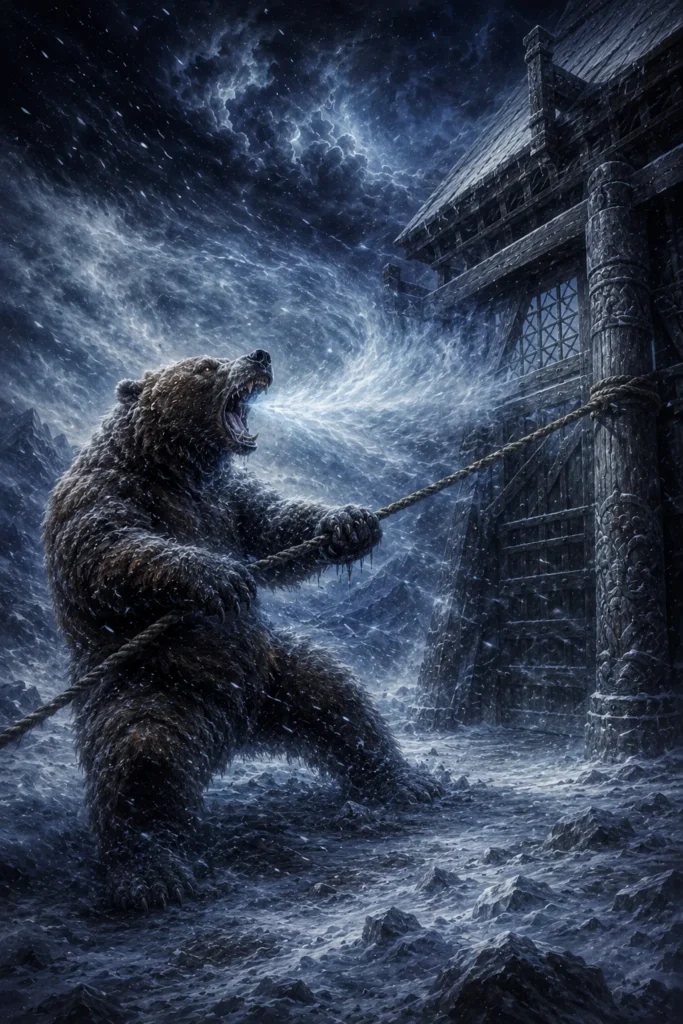
Horned water serpent, adversary of the Thunderbird. The tradition places this horned serpent at odds with the Thunderbird, locked in lasting rivalry.
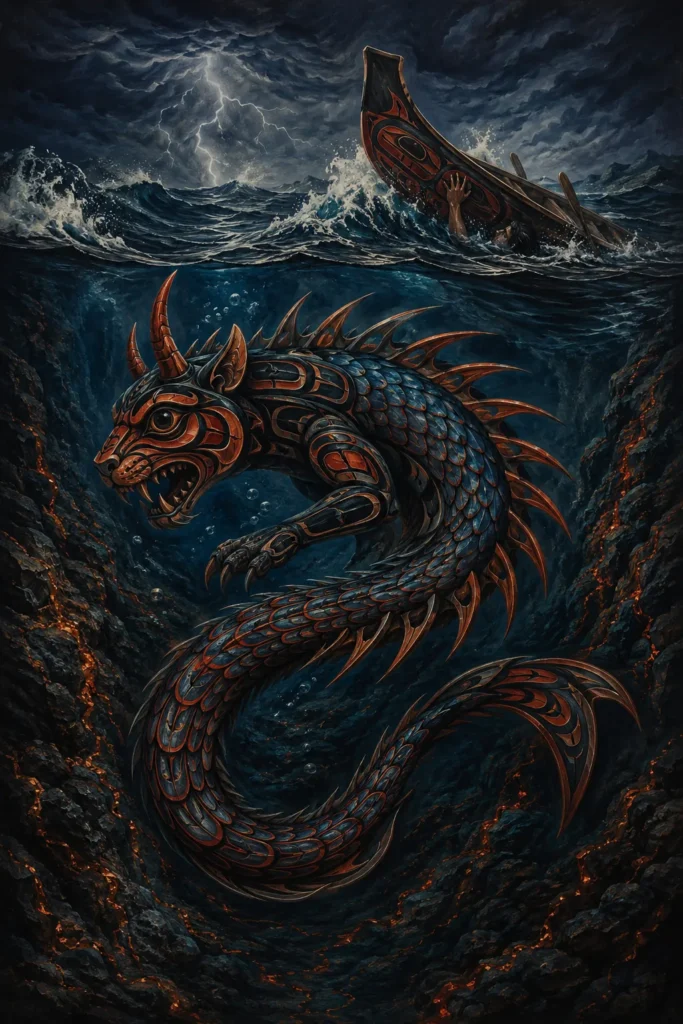
Mishiginebig, literally Great Serpent, is a horned giant water serpent of the Anishinaabe dwelling in the deepest lakes, an underwater manitou. Originally distinct from Mishipeshu, the two figures are often merged.
Type: horned giant water serpent
Origin: Anishinaabe tradition, Great Lakes region
Texts: Jesuit accounts, 17th century
Period: pre-colonial to present
Appearance: horned, copper-coloured, often with feline traits

Source Context
Period of the Texts
Oral tradition since pre-colonial times, first traces among Jesuits in the 17th century.
Area of Diffusion
Great Lakes region, attested among the Anishinaabeg, Odawa, Ojibwe, Potawatomi and Innu.
Sources
Well documented ethnographically, supported by standard works and Johann Georg Kohl’s records.
Name and variants
Anishinaabe: Mishiginebig, also Mishi-ginebig, means Great Serpent.
A form between serpent and panther
Appearance
Horned serpent with dorsal scales and a long tail, often merged with a wildcat body and copper-coloured scales.
Effect
She embodies the power of the underworld, giver of copper.
Profile: Mishiginebig
The key aspects of the horned serpent at a glance.
Underwater manitou of Anishinaabe cosmology, attested among several Algonquian peoples.
Canoeists and people, often children, at the deep spots of the Great Lakes.
Horned water serpent with upright dorsal scales and a copper-coloured shimmer.
Causes storms and whirlpools while also guarding the copper of Lake Superior.
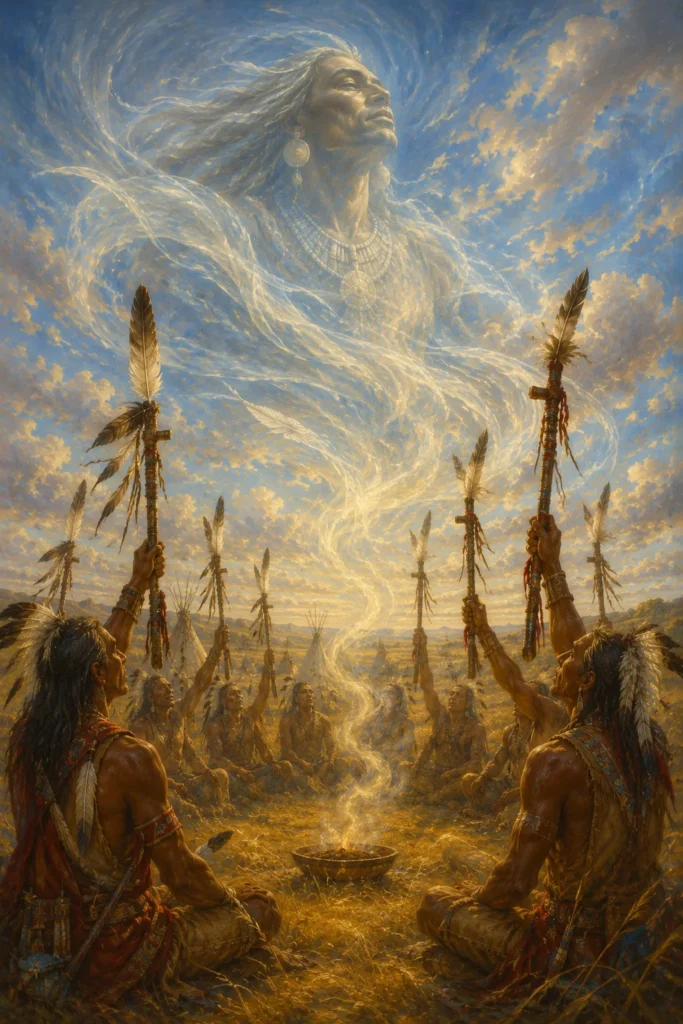
Appeasement through offerings of tobacco and copper placed in the water before crossing.
Originally distinct from the underwater panther Mishipeshu, though often merged with him.
Between underworld manitou and copper cult
Mishiginebig counts among the underwater manitous, standing in opposition to the Thunderbirds. Jesuits such as Claude Dablon attest to her in the 17th century. Johann Georg Kohl records a piece of copper as the hair of Mishibizhiw, evidence of the close link to Mishipeshu.
Rock art and Woodlands painting
Mishiginebig lives on in rock paintings at Lake Superior and in Norval Morrisseau’s Woodlands painting; as a manitou she is considered ambivalent, both dangerous and beneficial.
Tobacco offerings for a safe crossing
Appeasement through offerings is attested: tobacco, sometimes copper, scattered into the water. In the 1950s the Prairie Band of Potawatomi held a ceremony. Smoke cleansing, amulet and protective circle are regarded as modern equivalents.
Horned water serpents of North America
Her closest relative is Mishipeshu, the underwater panther; her adversary is the Thunderbird. Comparable figures are Uktena, the Bunyip and the Leviathan.
Frequently asked questions about Mishiginebig
Are Mishiginebig and Mishipeshu the same?
Originally distinct, they are often merged.
How does one ensure a safe crossing?
Through offerings of tobacco and copper; stealing copper was considered a deadly taboo.
Further links
Further reading:
Literature (selection)
More in the bibliography.
The Mishiginebig water serpent remains, for the Anishinaabe, the horned serpent of the Great Lakes: a power that sends storms across the water while also guarding the copper of the depths.