iWell Guard

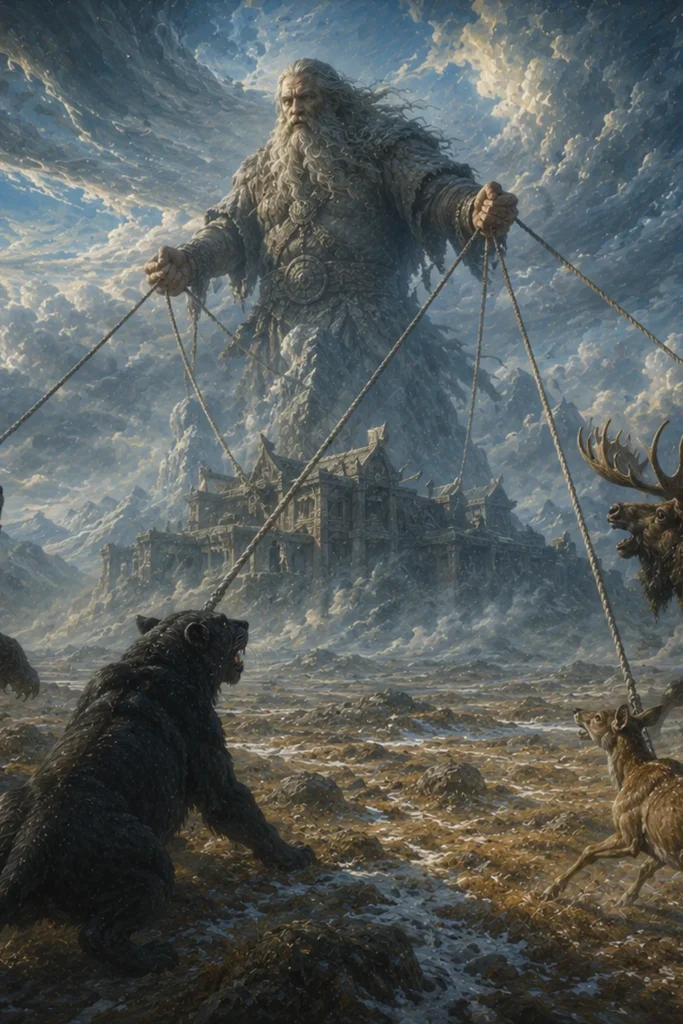
Ya-o-gah, the bear at the North Gate of the wind hall

Ya-o-gah is a spirit of Iroquois tradition.

The bear whose icy breath could destroy the world.

SpiritNorth America

Table of Contents

Ya-o-gah, the bear of the North Wind of the Seneca
Ya-o-gah

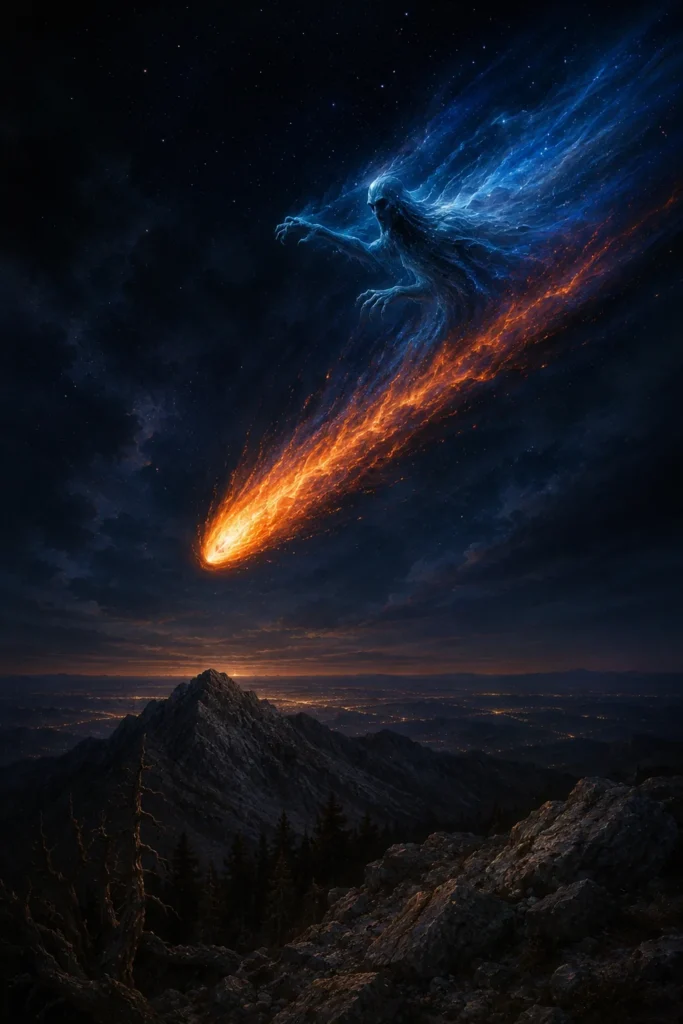
In Seneca tradition, Ya-o-gah is the bear who embodies the North Wind. He waits on a leash at the North Gate of the wind hall of the wind lord Gaoh; his terrifyingly cold breath could destroy the world, which is why Gaoh keeps him in check.

Ya-o-gah is not an independent central figure: he is one of the four animal winds controlled by Gaoh and is attested by Harriet Maxwell Converse in 1908, in the chapter on the wind lord.

At a glance: Ya-o-gah

Type: personification of the cold North Wind, one of the four animal winds
Origin: Seneca and Iroquois, north-eastern USA
Texts: Converse, Myths and Legends of the New York State Iroquois (1908)
Period: Seneca tradition, ethnographically documented 1908
Appearance: a mighty bear at the North Gate of the wind hall

Context of Tradition

Period of the Texts

Seneca tradition, ethnographically recorded by Harriet Maxwell Converse in 1908, there in the chapter on Gaoh.

Area of Diffusion

The territory of the Seneca and Iroquois in the north-eastern USA, where the icy North Wind is part of the yearly cycle.

Sources

Attested, but only as a secondary figure: the ethnography by Converse 1908 and overviews derived from it.

Name and variants

Seneca: Ya-o-gah, the name of the bear as North Wind. The sources give no literal etymology.

Form and effect

Appearance

Ya-o-gah is a mighty bear who waits on a leash at the North Gate of Gaoh’s hall. He embodies the icy winter wind from the north.

Effect

Ya-o-gah is the personification of the North Wind; he brings icy winter, and his terrifyingly cold breath could destroy the world. This is why Gaoh keeps him in check.

Profile: Ya-o-gah

The key aspects of the North Wind bear at a glance.

Cultural Context

One of the four animal winds of Seneca tradition, subordinate to the wind lord Gaoh; not an independent central figure.

Relates To

Winter and cold: when Gaoh loosens the leash, the icy North Wind sweeps across the land of the Seneca and Iroquois.

Depiction

A mighty bear who waits on a leash at the North Gate of the wind hall, his jaws full of icy breath.

Sphere of Influence

The icy winter wind from the north; his breath is said to be so cold that, unrestrained, it could destroy the world.

Practice

No distinct cult or protective forms have been handed down; this is stated honestly here. Ya-o-gah appears almost exclusively in connection with Gaoh.

Distinctions

Not to be confused with the West Panther Da-jo-ji; his counterpart is Ne-o-gah, the gentle South Wind fawn. Typologically comparable: Boreas and Waziya.

A supporting figure with world-destroying power

Ya-o-gah is the Seneca name of the bear as North Wind; the sources give no literal etymology. He is attested by Harriet Maxwell Converse in 1908, in the chapter on Gaoh: he is not an independent central figure, but one of the four animal winds controlled by Gaoh.

This is precisely where the difference between the two figures lies: Gaoh is the ordering wind lord, Ya-o-gah the restrained force on his leash. The bear waits at the North Gate of the wind hall, and only when Gaoh calls him does he bring icy winter over the land; unrestrained, his terrifyingly cold breath could destroy the world.

Interpretation and classification

Ya-o-gah appears almost exclusively in connection with Gaoh, in the specialist literature by Converse and in overviews derived from it.

From a religious-studies perspective, Ya-o-gah shows the personification of the destructive North Wind as a restrained predator. An important clarification: he is the North Wind bear and is not to be confused with the West Panther Da-jo-ji; he is subordinate to Gaoh, not an autonomous wind god.

Dealing with the North Wind bear

No distinct cult or protective forms for Ya-o-gah have been handed down; this is honestly noted here rather than inventing a rite. In Seneca narrative tradition, protection from the North Wind rests not with humans but with Gaoh himself: as long as the wind lord holds the leash, the bear’s icy breath remains restrained.

North winds of other cultures

Within its own tradition, Ya-o-gah is the counterpart to Ne-o-gah, the gentle South Wind fawn. As a personification of the North Wind, he is typologically comparable to the Greek Boreas and to Waziya, the North Wind giant of the Lakota, without any historical connection. Above them all stands Gaoh, the lord of all four animal winds.

Frequently asked questions about Ya-o-gah

Who is Ya-o-gah?

The bear who, among the Seneca, embodies the cold North Wind. He waits on a leash at the North Gate of Gaoh’s wind hall.

Why does Gaoh keep him on a leash?

Because his icy breath could destroy the world; Gaoh restrains him and uses his power in an ordered way.

Is Ya-o-gah the West Panther?

No. That is Da-jo-ji; Ya-o-gah is the North Wind bear.

Further links

Recommended internal links:

Literature (selection)

A selection of key sources and studies:
  • Converse, Harriet Maxwell: Myths and Legends of the New York State Iroquois. Albany 1908.
  • Johnson, Anna C.: The Iroquois; or, The Bright Side of Indian Character. New York 1855.

Further standard works in the bibliography.

As the bear of the winds, Ya-o-gah embodies North Wind and winter in pure form among the Seneca: a force of nature that could destroy the world and remains bearable only on Gaoh’s leash.

Classification & Protection

IIILEVEL
The Protection Compass assigns this being to influence level III, Burdensome influence.

Against its influence, cross-cultural tradition names these protective means:

Compare in the Protection Compass →

Recommended protective means

iWell Guard

The simplest protective means in this collection: 41 layers of fine gold 999, platinum, silver and silicon, manufactured in Ruhla, Thuringia. It requires no activation, is bound to no person, and is effective within a radius of around 50 meters, even without being worn.

All protective means at a glance →