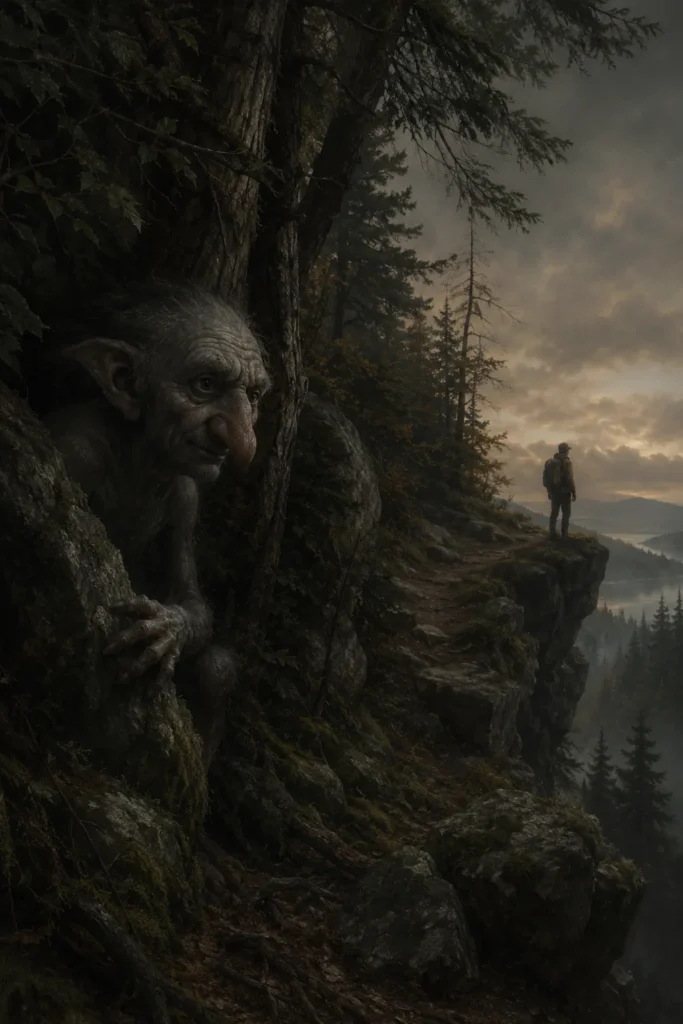
Pukwudgie, the grey shadow at the forest's edge
By Ralf Ittermann · last reviewed on
The Pukwudgie is a spirit of Algonquin tradition.
From harmless prankster to deadly lure of the wilderness. The entry traces how the Pukwudgie shifted from a grey shadow at the forest’s edge into a genuinely dangerous lure.
Pukwudgie is a small, grey, human-like forest being of the Algonquin. Its nature is split regionally: in Ojibwe tradition it is mischievous but benign, in Wampanoag tradition moody and dangerous, extending to child abduction and deadly luring.
The oral tradition was set down in writing from the 19th and 20th centuries onward and extends from the Great Lakes to southern New England. This page adheres to the documented tradition of the peoples involved; modern embellishments are identified as such.
Type: Small forest being of the Algonquin, regionally ranging from prankster to threat
Origin: Oral Algonquin tradition
Texts: Written records from the 19th and 20th centuries onward, anthologies
Period: oral tradition to the present
Appearance: usually knee-high, grey face, large nose and ears
Textual history
Period of the Texts
An oral Algonquin tradition that was set down in writing from the 19th and 20th centuries onward; modern cryptozoology has partly overlaid it.
Area of Diffusion
North-eastern USA, south-eastern Canada and the Great Lakes region; the most dangerous form belongs to the Wampanoag tradition of southern New England.
Sources
Well documented but overlaid: there is no substantial monographic scholarly literature; the strongest public secondary source is native-languages.org, supplemented by anthologies.
Name and variants
Algonquin languages: The name literally means roughly person of the wilderness or small person of the wilderness; the Wampanoag word probably derives from the Ojibwe prefix for wild.
Appearance and effect
Appearance
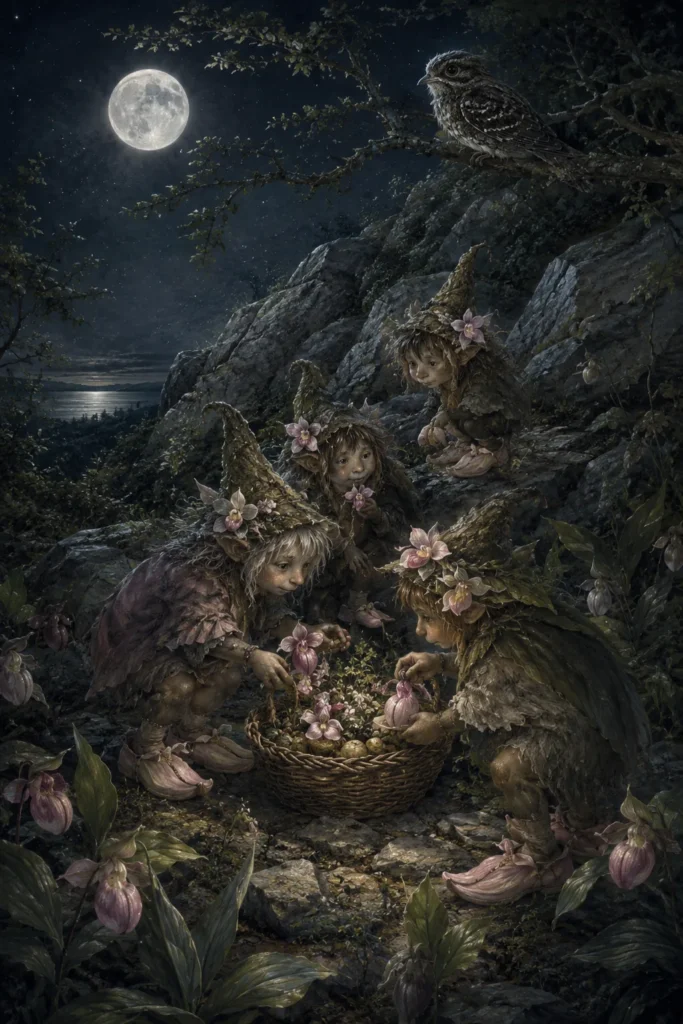
The Pukwudgie is a grey, human-like dwarf being with a large nose and ears, in some traditions associated with a sweetish smell and with flowers. Modern embellishments with spines and glowing red eyes are pop-cultural, not part of the oldest tradition.
Effect
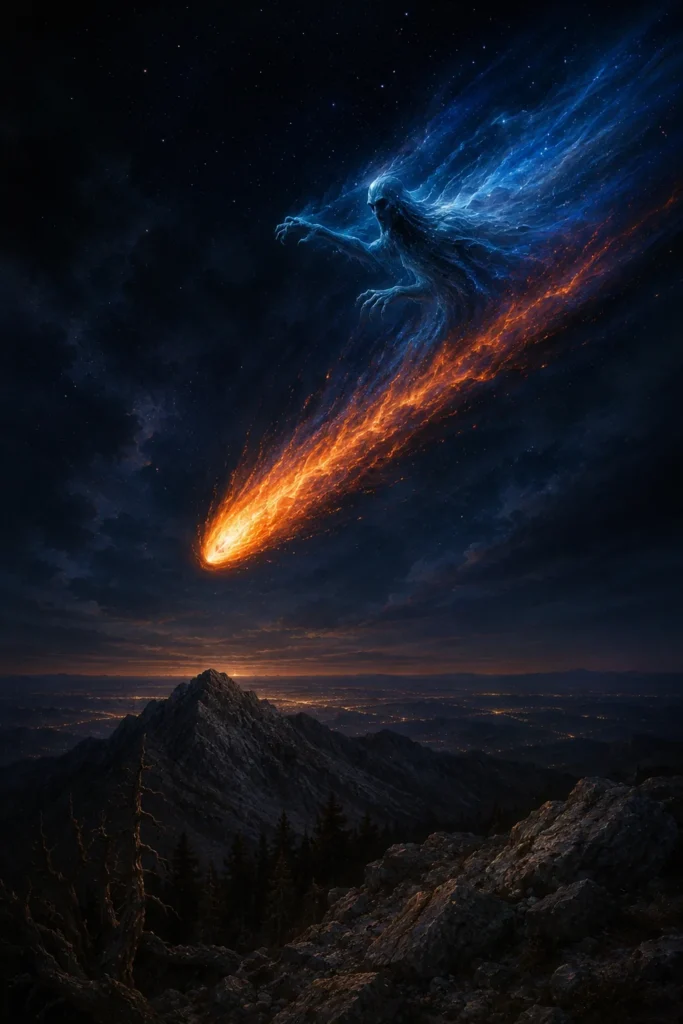
Depending on the people, it is credited with becoming invisible, confusing people, transforming into pumas, or causing harm through a mere stare. In the modern New England version, it shoots poison arrows, pushes people off cliff edges and lures hikers to their death. The deadly, luring role is rooted in Wampanoag tradition and sharpened in the modern legend.
Profile: Pukwudgie
The key aspects of the forest being at a glance.
Algonquin tradition with a well-documented regional split: benign and mischievous among the Ojibwe, dangerous only to the disrespectful among the Abenaki, moody and dangerous among the Wampanoag.
People who enter the forest, especially the disrespectful; in the Wampanoag Maushop cycle, the Pukwudgies are the adversaries of the culture hero and giant Maushop.
Small forest being, usually knee-high, with a grey face, large nose and ears; sometimes associated with a sweetish smell and flowers.
From harmless pranks through confusion and invisibility to poison arrows, pushes from cliff edges and deadly luring, depending on the region.
Avoid and do not provoke: the Pukwudgie is not invoked or asked for favour; there is no documented cult form with offerings.
The Makiawisug of the Mohegan are benevolent guardians and teachers with a gift cult; the Pukwudgie remains the unpredictable wilderness spirit without a cult.
One figure, three traditions: the regional split
The name literally means roughly person of the wilderness or small person of the wilderness; the Wampanoag word probably derives from the Ojibwe prefix for wild. Well documented is a regional split: in Ojibwe and Great Lakes tradition the Pukwudgie is mischievous but essentially benign, in Abenaki tradition dangerous but only towards the disrespectful, in the Wampanoag tradition of southern New England moody and dangerous.
In the Wampanoag Maushop cycle, the Pukwudgies are the adversaries of the culture hero and giant Maushop. This southern New England line is the root of today’s frightening figure; the traditions of the other peoples know a considerably milder being.
From Ilvermorny to the Bridgewater Triangle
In Harry Potter and the school of magic Ilvermorny, Pukwudgie is one of the four houses, described as a short, grey-faced, large-eared being; Rowling’s appropriation of indigenous tradition has been criticised by indigenous voices. In the Bridgewater Triangle in Massachusetts, modern legends and alleged sightings also circulate.
From a religious-studies perspective, the Pukwudgie is a classic case of belief in the little people, a forest and nature spirit that marks the boundary between inhabited space and wilderness. Its ambivalence between helper and harmer is typical of threshold spirits; the moral core, that respect is rewarded and disrespect punished, points to an ecological-ethical function. Two clarifications: spines and glowing red eyes are modern embellishment, not the oldest tradition. And the danger is regional, not universal.
Avoid rather than invoke: the traditional approach
What remains well documented is to avoid the Pukwudgie and not provoke it. It is not a being one invokes or asks for favour, but one to approach with respect and keep out of the way of; in Abenaki traditions, the harm mainly befalls the disrespectful. There is no documented cult form with offerings as with the Makiawisug.
Gnomes, fairies and other little people
The Pukwudgie is explicitly compared to the European gnomes and fairies. Other indigenous little people are the Mikumwess of the Micmac, the Yunwi Tsunsdi of the Cherokee and the Makiawisug of the Mohegan; in Mesoamerica the Chaneque correspond to it as ambivalent forest guardians. In the European tradition, dwarves, wichtels and kobolds, as well as the Irish Aos Sí, stand alongside it as typological equivalents of ambivalent nature spirits.
Frequently asked questions about the Pukwudgie
Is the Pukwudgie good or evil?
Ambivalent; in the Ojibwe tradition rather good natured and mischievous, in the Wampanoag tradition dangerous to deadly. The region determines this.
Where does the name come from?
From Algonquian languages, roughly meaning person of the wilderness, presumably from the Ojibwe word for wild.
Why does it appear in Harry Potter?
Rowling used it in 2016 as the name of an Ilvermorny house; this appropriation is contested.
Further links
Further reading:
- Makiawisug – the benevolent little people of the Mohegan
- Chaneque – ambivalent forest guardians of Mexico
- Aos Sí – the Irish fairy folk as a typological parallel
- Iron, amulet, salt – traditional protective means
- Protection Compass – protective means at a glance
Literature (selection)
Further standard works in the bibliography.
As an Algonquian forest being and small person of the wilderness, the Pukwudgie remains what its tradition has made of it: small, but magical, neither good nor evil, and depending on the region, either a trickster or a serious danger.