Kāmohoaliʻi, pilot of canoes and brother of Pele
By Ralf Ittermann · last reviewed on
Kāmohoaliʻi is god of the Hawaiian tradition.
Shark god who guides canoes and watches over families. The profile honors him as pilot of canoes, a shark god watching over seafaring families.
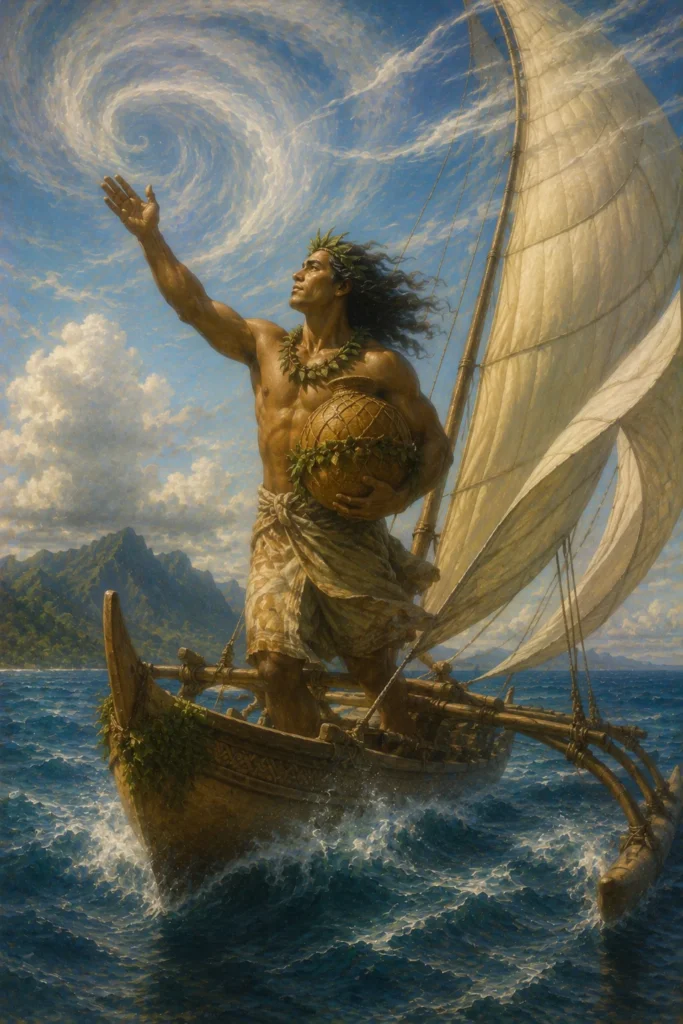
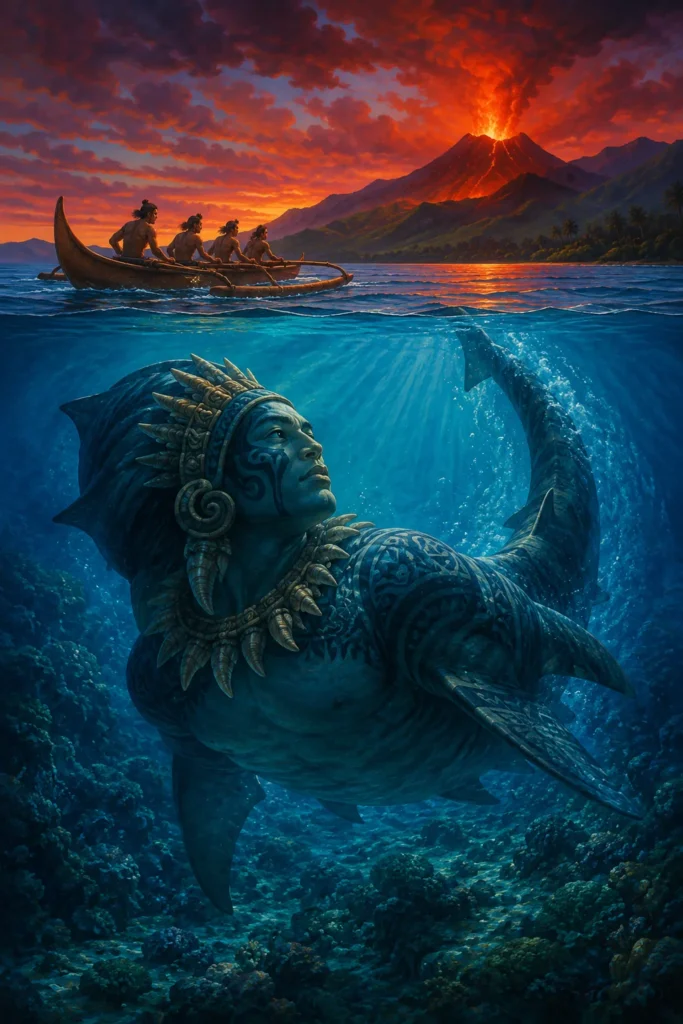
Kāmohoaliʻi, also spelled Kamohoalii, is a shark god, king of all shark gods and eldest brother of Pele. As an aumakua he protects his worshippers; as a navigator he guided the voyaging canoe from Kahiki to Hawaii and rescues sailors who have lost their way.
Type: Shark god, king of all shark gods
Origin: oral Hawaiian tradition
Texts: Beckwith, Pele cycle
Period: orally transmitted, alive to this day
Appearance: shark and human form, shape-shifting
Sources and tradition
Period of the Texts
Oral within Hawaiian tradition, documented ethnographically.
Area of Diffusion
Hawaii, especially around Maui and Kahoʻolawe.
Sources
Good: the Pele cycle, the records of Beckwith.
Name and variants
Hawaiian: Kāmohoaliʻi is regarded as the most important ancestral shark god of Hawaii and king of all shark gods, a rank above the many other shark deities.
Form and effect
Appearance
Kāmohoaliʻi appears as a shark or a human and can transform into any fish shape. He inhabits underwater caves around Maui and is regarded as an aumakua, a messenger between humans and gods.
Effect
He guides canoes and rescues lost seafarers. He is predominantly benevolent, a protector whose favour families preserve through veneration.
Profile: Kāmohoaliʻi
The key aspects of the shark god at a glance.
Ancestral shark god of the Pele tradition, king of all shark gods.
Canoes and seafarers, families with a shark as their aumakua.
Shark and human form, able to change into any fish shape.
Guide and protector, link between ancestors and the living.
Kava offerings by priests, a taboo against harming the family shark.
Dakuwaqa, Fijian shark god with a similar role.
The brother who led the family
As the eldest child of Haumea, Kāmohoaliʻi steered the canoe that brought the ʻohana from Kahiki to Hawaii. In the navigator legend, he shows lost ships the way with his tail after kahuna have fed him with ʻawa; a cliff on Kīlauea bears his name.
Living heritage and ancestor-cult interpretation
Kāmohoaliʻi is a firm part of the Pele narratives and the Hawaiian cultural renaissance. From a religious-studies perspective, he illustrates the aumakua and ancestor-god complex: genealogy, navigation and a protective function combine in the ʻawa offering.
Kava offerings instead of warding off
Well documented is the priests’ ʻawa offering. Families with a shark as their aumakua observe the taboo not to kill it: veneration, not warding off. Amulet, holy water and salt are regarded as coastal purification means.
Shark and sea gods compared
The closest counterpart is the Fijian shark god Dakuwaqa, likewise a shapeshifter honoured with kava offerings. As a sea god, he touches the circle around Ebisu, Ryūjin and Poseidon as well as other Hawaiian shark deities.
Frequently asked questions about Kāmohoaliʻi
Is Kāmohoaliʻi related to Pele?
Yes, her eldest brother, who once led the travel canoe from Kahiki to Hawaii.
What is an aumakua?
A family protective spirit, often a shark, ancestor and messenger between humans and gods.
Further links
Further reading:
Literature (selection)
Further standard works in the bibliography.
Those searching for the Hawaiian Kamohoalii shark god will mainly find the eldest brother of Pele: a guide who safely leads canoes and seafarers and whom his families venerate to this day as their aumakua.