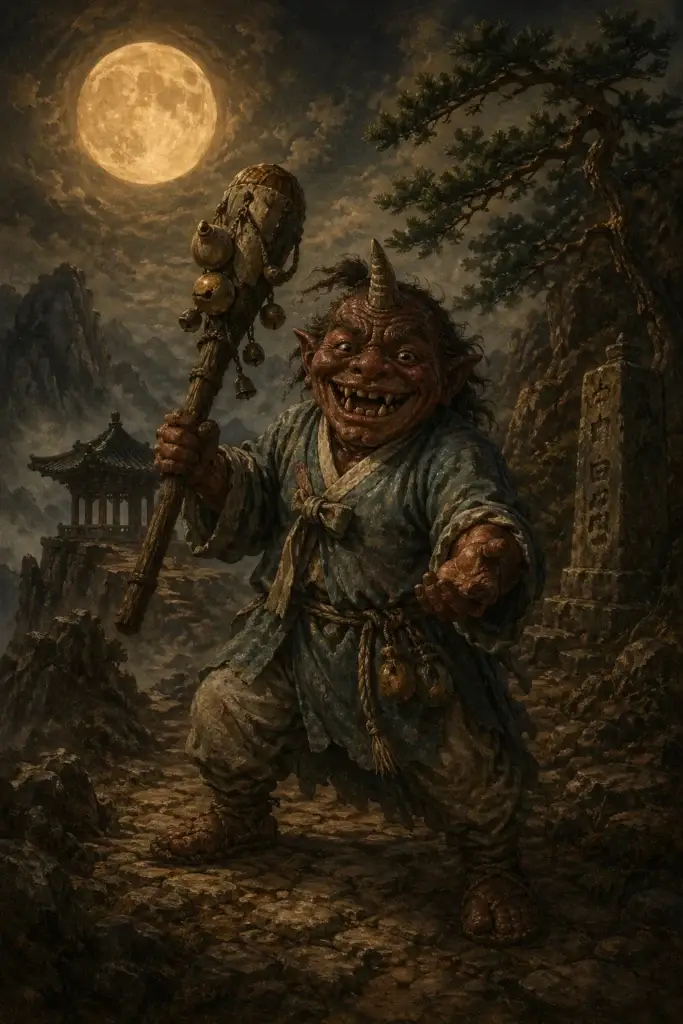
Mul Gwishin and the grip from the depths
By Ralf Ittermann · last reviewed on
Mul Gwishin is a spirit of Korean tradition.
It pulls bathers down as a substitute for its own death. The account centers on a grip from the depths that pulls bathers down as a substitute for its own death. Mul Gwishin is a recurring figure in Korean legends about restless water spirits.
Mul Gwishin is the water spirit of Korean tradition, the restless soul of a drowned person. Anyone who dies isolated and without jesa rites is left behind as a Gwisin and, out of loneliness, pulls bathers into the depths, imitating familiar voices as it does so.
Type: Drowned spirit among the Gwisin
Origin: Korean folk tradition
Texts: widely documented
Period: alive to the present day
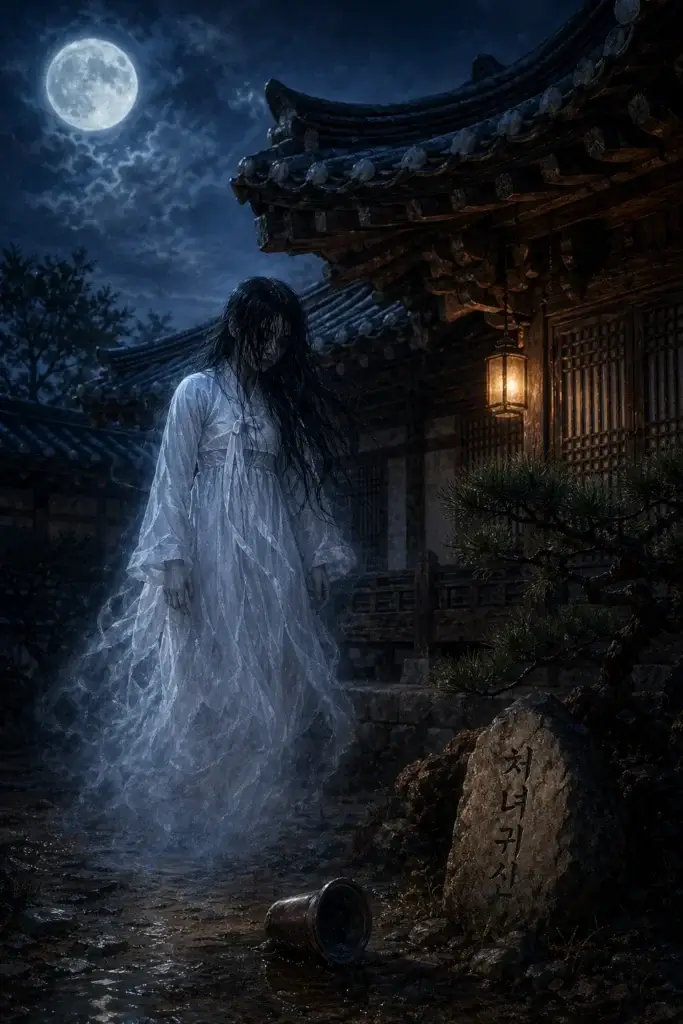
Appearance: wet white clothes, long arms

Context of Tradition
Period of the Texts
Present without interruption as a warning figure from older folk tradition to the present day.
Area of Diffusion
All of Korea, tied to the respective place of drowning, especially along the Han River.
Sources
Widely documented as a Gwisin type; no dedicated monograph exists.
Name and variants
Korean: mul water, gwishin spirit: literally water spirit. According to tradition, anyone who dies isolated and without jesa rites becomes one.
Appearance
Appearance
Wet white mourning clothes, long arms, wet hair: the lonely, unappeased dead.
Effect
Pulls the living into the depths and imitates voices to lure would-be rescuers as well.
Profile: Mul Gwishin
The key aspects of the water spirit at a glance.
Korean Gwisin type: unappeased dead of disrupted funeral rites.
Bathers who swim alone at night in waters considered dangerous.
Wet white clothes, long grasping arms, wet hair over the face, pale skin.
Seeks company in death; imitates voices to lure even rescuers into the depths.
Proper funeral rites, the jesa, and avoiding solitary night bathing.
Between disrupted rites and a restless soul
Funeral rituals, the jesa, secure the passage of the dead; anyone who dies isolated and whose body is never recovered remains behind as a restless Mul Gwishin.
The imitated voices gave rise to the phrase mul gwishin jakjeon, the water spirit tactic.
Horror film, webtoon and dare
A firm part of Korean horror and dare culture, a warning figure against solitary bathing in films and webtoons.
From a religious-studies perspective a classic Gwisin: an unappeased dead person of disrupted funeral rites.
Rites rather than banishing
Funeral rites, the jesa, appease the spirit; in practice, avoiding solitary night bathing applies. Holy water, salt and amulet are considered protective.
Drowned spirits in comparison
As a drowned spirit, related to the Slavic Rusalka and the Japanese Kappa; the Inuit sea mistress Sedna touches the same circle. Closer still is the Japanese Funayūrei.
Frequently asked questions about the Mul Gwishin
How does a Mul Gwishin come into being?
Through drowning without recovery of the body and without jesa rites.
How does one protect oneself?
Through rites for the dead and avoiding solitary night swimming.
Literature (selection)
More in the bibliography.
Known as a Mul Gwishin water spirit, it is regarded as Korea’s drowned spirit: a dead person who did not endure their dying alone, a warning to those who swim alone at night.