Sumpall and the duty of balance at the water
By Ralf Ittermann · last reviewed on
Sumpall is a spirit of Mapuche tradition.
Golden-haired water guardians, bound to giving and taking. The entry frames these golden-haired guardians as bound by a duty of balance, giving and taking in equal measure.
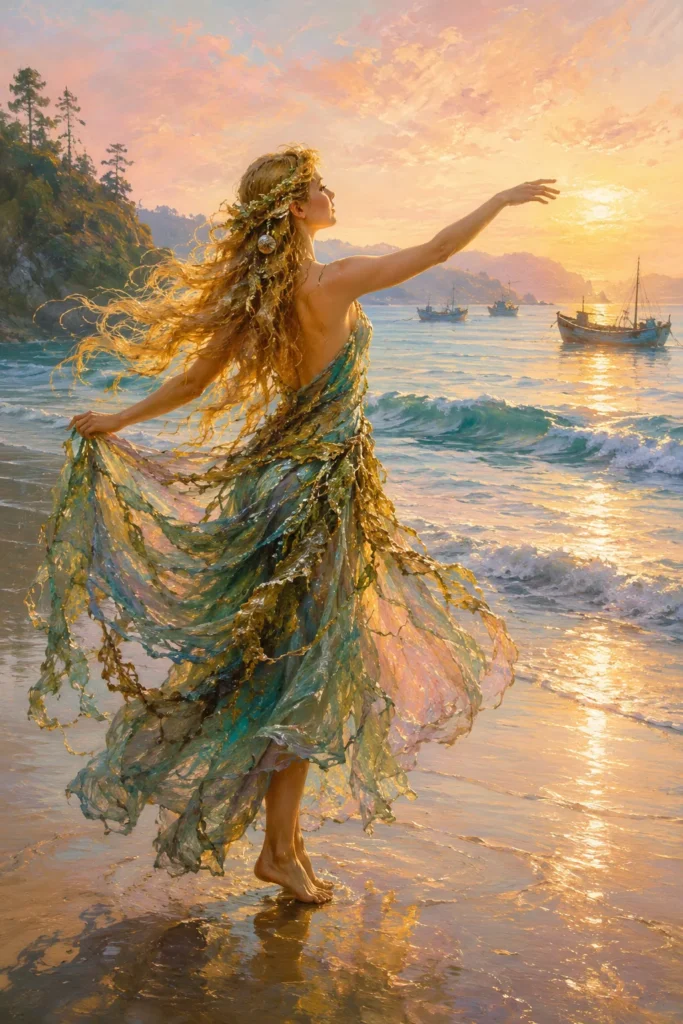
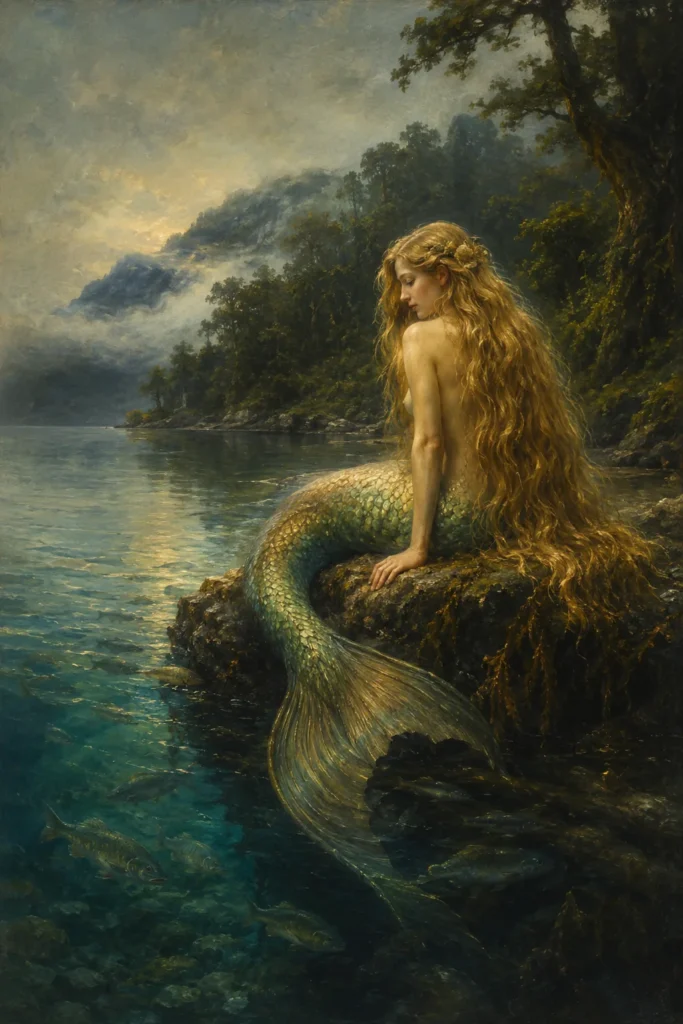
The Sumpall are the water people of the Mapuche tradition of southern Chile and Patagonia, half human, half fish, with long golden hair. They guard rivers and lakes but drag bathers into the depths. The myth traces them back to those drowned in a serpent battle.
Type: water person, half human half fish
Origin: Mapuche tradition of southern Chile
Texts: collections since Guevara 1911
Period: oral, alive to this day
Appearance: golden-haired fish body, dwells at Sumallhue
Context of Tradition
Period of the Texts
Ethnographically documented since the early 20th century, alive in oral tradition to this day.
Area of Diffusion
Southern Chile and neighbouring Patagonia: rivers, lakes, sea and springs.
Sources
Ethnographically well documented in collected works; a German-language body of specialist literature on the Sumpall is lacking.
Name and variants
Mapudungun: Their dwelling place is called Sumallhue; a reliable explanation of the name is missing from the sources.
Appearance and ambivalence
Appearance
Half human, half fish, mermaid-like, with long golden hair; wherever a Sumpall lives, water is never lacking.
Effect
Lures people into the water with sounds, yet also brings fertility and good fishing.
Profile: Sumpall
The key characteristics of the water people at a glance.
Mapuche tradition of southern Chile, linked to the snake myth of creation.
People at rivers and lakes, especially those bathing alone.
Half human, half fish, mermaid-like, long golden hair.
Draws people into the water, yet also brings fertility, good fishing and balance.
Respect for water; after an abduction, the gapitun payment restores balance to the family.
From the drowned to guardian of the waters
The Sumpall belong to Mapuche tradition, documented by Guevara and Lehmann-Nitsche in the early 20th century. The good land serpent Tren-Tren created them from those who drowned in her battle against the sea serpent Caicai-Vilu; mostly female, more rarely male or human-shaped.
Between ethnography and living narrative
The Sumpall are a firm part of Mapuche mythology and Patagonian folklore. In religious studies they are classed among the Ngen-ko, the guardian spirits of water, clearly distinct from the malicious Wekufe such as the Nguruvilu.
Respect for water as a form of protection
Well documented: anyone who harms bodies of water risks the vengeance of the Sumpall. The compensation payment gapitun is the cultural logic of order, more important than warding off with objects. Protective means: amulet, salt, protective circle.
Water people and their Mapuche relatives
The Sumpall belong to the mermaid type. What sets them apart from the flood-causing Caicai-Vilu and the malicious Nguruvilu is the rule of compensation.
Frequently asked questions about Sumpall
Are the Sumpall good or evil?
Ambivalent: dangerous for bathers, yet bringing fertility and preserving order.
What is gapitun?
The compensation payment to the family of an abducted girl, which restores the disturbed balance.
Further links
Internal links:
Literature (selection)
More in the bibliography.
Sumpall Mapuche: These golden-haired guardians of the water draw bathers into the depths, yet also bring fertility and good fishing. As water people of Chile, they follow the rule of reciprocity: every taking from the water demands compensation.