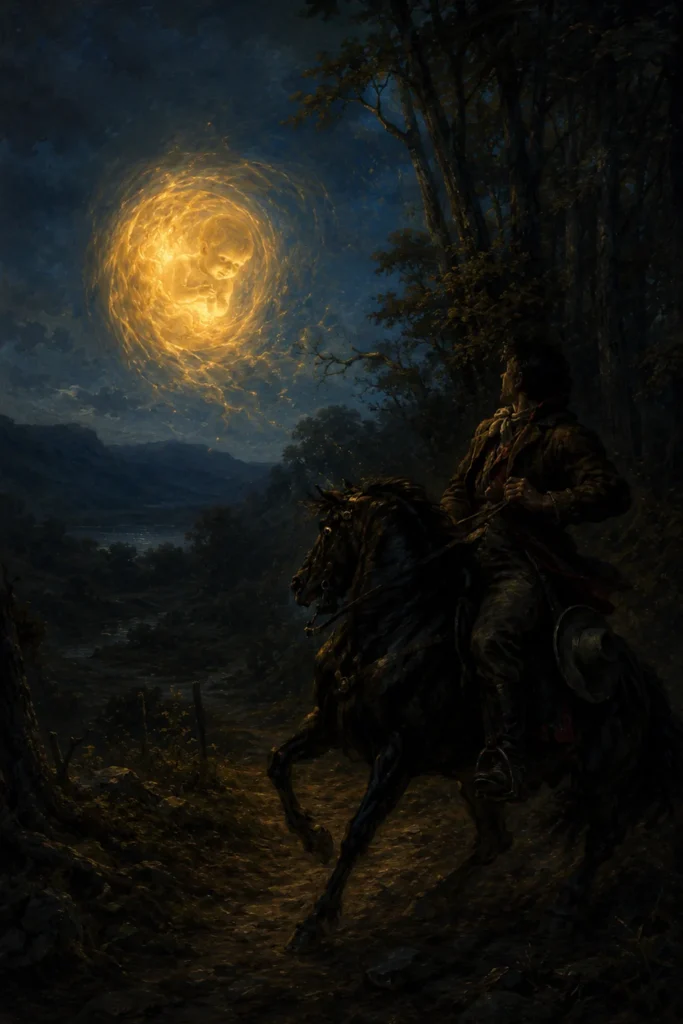
Cherufe is a demon of Mapuche tradition.
The man-eating lava demon in the volcanoes of Chile. The entry casts Cherufe as the Man-Eater said to dwell within the Lava Lake of the Chilean volcanoes.
Cherufe is the lava demon of the Mapuche in Chile: a malevolent, man-eating being that dwells in the lava lakes inside volcanoes. When angered or unappeased, he causes volcanic eruptions and earthquakes, and in some versions also the drying up of rivers.
Within Mapuche religion, Cherufe is the destructive counterpart to the benevolent Pillán. He becomes systematically documented in the ethnographic and linguistic literature of the late 19th and early 20th centuries.
Type: volcanic and lava demon, malevolent and man-eating
Origin: Mapuche religion of south-central Chile
Texts: Mapuche ethnography from the late 19th century, including Rodolfo Lenz
Period: Mapuche tradition, ethnographically documented from the late 19th century
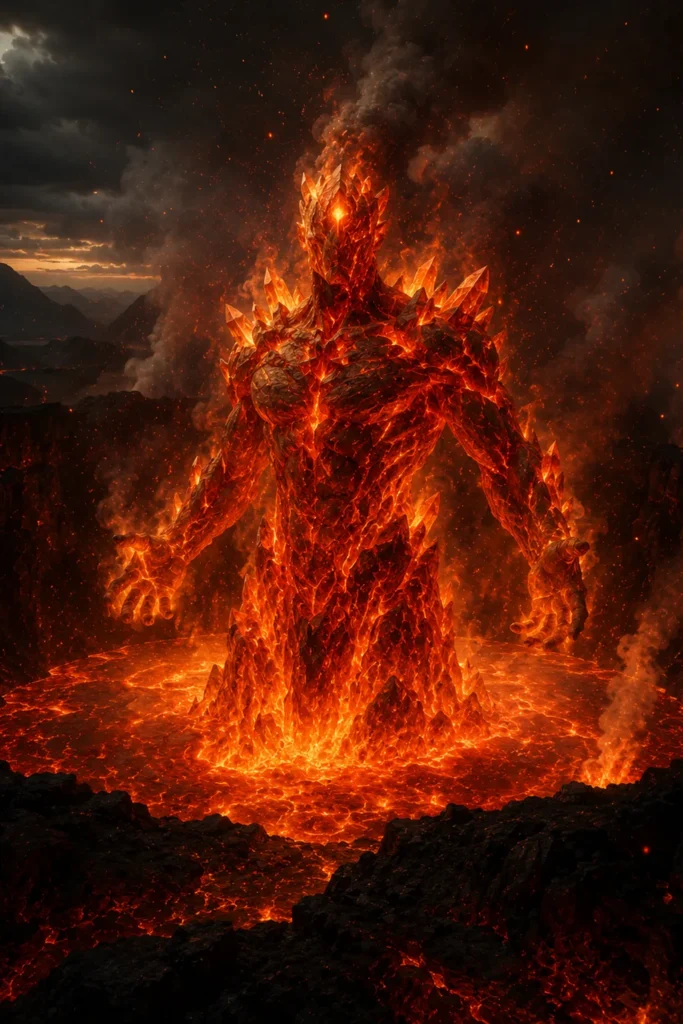
Appearance: human-shaped being of magma and glowing rock, also as a fireball
The tradition belongs to Mapuche religion; Cherufe becomes ethnographically traceable from the late 19th century, when linguists and ethnographers began recording the narratives.
South and central Chile, the volcano-rich heartland of the Mapuche. The lava lakes inside the volcanoes are considered the demon’s dwelling place.
Moderate: the early Mapuche ethnography of the late 19th and early 20th centuries, including the work of Rodolfo Lenz, forms the main basis.
Mapudungun: Cherufe. The derivation of the name, sometimes linked to a monster or being of the wilderness, is not clearly established.
Appearance
Cherufe is depicted as a human- or shape-formed being of magma, glowing rock and crystal, also as a fireball. He inhabits the lava lakes inside volcanoes and embodies the destructive power of volcanic fire.
Effect
When angered or unappeased, Cherufe causes volcanic eruptions and earthquakes, and in some versions also the drying up of rivers. He is regarded as malevolent and man-eating.
The key aspects of the lava demon at a glance.
Malevolent volcanic demon of Mapuche religion in south-central Chile, the destructive counterpart to the benevolent Pillán.
Those living near the volcanoes: they face eruptions and earthquakes when the demon is angered or unappeased.
Human-shaped being of magma, glowing rock and crystal; in some accounts he is also depicted as a fireball.
Volcanic eruptions and earthquakes, in some versions the drying up of rivers; also the motif of man-eating.
Appeasement through offerings thrown into the crater; the detail of virgins is considered a later, European-flavoured embellishment.
The name Cherufe comes from Mapudungun; its derivation, sometimes linked to a monster or being of the wilderness, is not clearly established. Cherufe belongs to the Mapuche religion of south-central Chile and becomes systematically documented in the ethnographic and linguistic literature of the late 19th and early 20th centuries, including the work of Rodolfo Lenz.
Within this tradition, the lava demon has a clear place: he is the malevolent, devouring side of volcanic fire, while Pillán, as an exalted ancestral and fire spirit, embodies the protective side of the same landscape. The two figures belong together, yet must not be conflated.
Cherufe is frequently reworked as a lava monster in fantasy fiction, bestiaries and video games, and is often strongly distorted from Mapuche tradition as a result.
In religious studies, Cherufe illustrates the interpretation of volcanism and earthquakes as an angry fire being. It is important to distinguish him from Pillán: Cherufe is the malevolent, man-eating lava demon, while Pillán is the tendentially benevolent ancestral and fire spirit; the two are often mistakenly conflated in popular usage.
The tradition tells of appeasing Cherufe’s wrath through offerings thrown into the crater. The popular detail that these were young women or virgins carries a European, dragon-mythological colouring and is poorly attested ethnographically. A distinction must be drawn here between the Mapuche core, the volcanic being and its appeasement, and later romanticising embellishment.
Cherufe is a classic volcanic and lava demon, comparable to the Hawaiian Pele, who is nonetheless an ambivalent goddess, as well as to European dragons in volcanic contexts and to fire and earthquake demons in general. Within Mapuche religion, he is the counterpart to the benevolent Pillán: there, positive cult veneration; here, the appeasement of a destructive power.
What is Cherufe?
A man-eating lava demon of the Mapuche who dwells in the lava lakes of volcanoes and causes volcanic eruptions and earthquakes.
Were virgins sacrificed to him?
This popular detail carries a European, dragon-mythological colouring and is poorly attested ethnographically. The core of the tradition is the appeasement of the volcanic being through offerings cast into the crater.
Is Cherufe the same as Pillán?
No. Cherufe is malevolent and destructive, while Pillán is the benevolent ancestral and fire spirit; the two are often mistakenly conflated in popular usage.
Further standard works in the bibliography.
As a Mapuche lava demon and volcano being of Chile, Cherufe embodies the interpretation of volcanic eruption and earthquake as the wrath of a fire being: not a recipient of favourable cult practice, but a power that must be appeased.
Against its influence, cross-cultural tradition names these protective means:
Compare in the Protection Compass →Recommended protective means
The simplest protective means in this collection: 41 layers of fine gold 999, platinum, silver and silicon, manufactured in Ruhla, Thuringia. It requires no activation, is bound to no person, and is effective within a radius of around 50 meters, even without being worn.
Related Beings

Fire spirits and deities worldwide: hearth goddesses like Gabija and Vesta, smith gods, will-o'-t...

Mercury is the Roman god of commerce, of messengers, and of travelers. A religious-studies overvi...

Mahr, the female night-pressure spirit of the Germanic tradition. A linguistically preserved arch...

Pazuzu, protective demon and wind spirit of the Mesopotamian tradition. The face that Babylon hun...

The Lares are Roman guardian spirits of the home, the family, and the crossroads. An academic rel...

Red skin, lightning drums and wild thunderstorms: a demonic force of nature in Shinto and Buddhis...