Surtr, the world-burner from Muspellsheim
By Ralf Ittermann · last reviewed on
Surtr is demon of Germanic tradition.
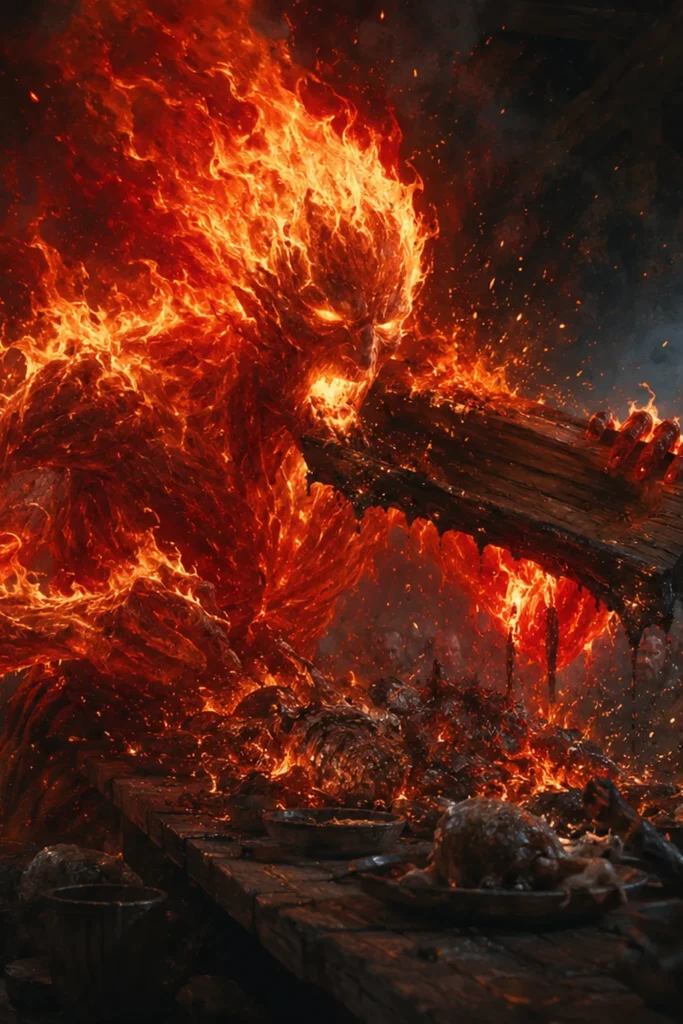
The fire giant whose sword burns brighter than the sun.
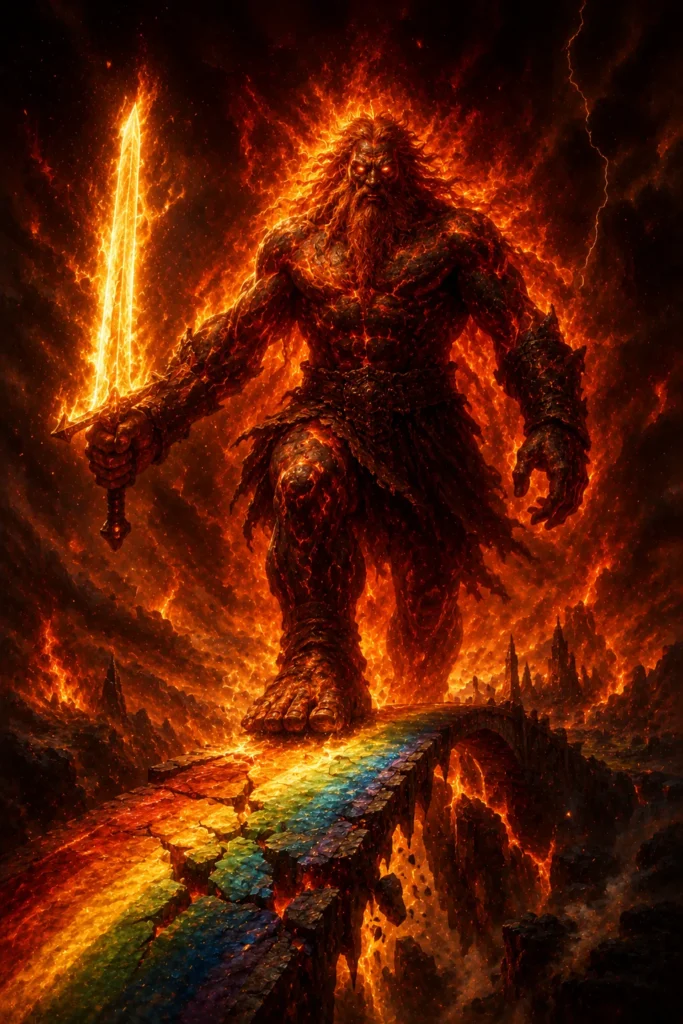
Surtr is the Norse fire giant from Muspellsheim, the realm of fire in the south, whose border he guards. At Ragnarök, the end of the world, he wields a sword that shines brighter than the sun, marches against the gods, and finally burns the entire world with fire.
Hardly any figure in Norse mythology carries such a clear-cut task: Surtr is the end. At the same time, his fire is not only destruction, for in the mythical cycle the cosmic conflagration both ends and renews the world.
Type: Fire giant, guardian of Muspell’s border and world-burner
Origin: Norse-Germanic region
Texts: Völuspá, Gylfaginning, and Vafþrúðnismál
Period: recorded in the High Middle Ages
Appearance: gigantic fire giant with a flaming sword
Historical Classification
Period of the Texts
The central sources are the Eddic poem Völuspá and Snorri’s Gylfaginning, both recorded in the High Middle Ages, along with a mention in the Vafþrúðnismál.
Area of Diffusion
The Norse-Germanic region; in Iceland the name lives on in a volcanic context, for instance in the cave Surtshellir and the island Surtsey, which formed in 1963.
Sources
Good: Völuspá and Gylfaginning carry the image of the fire giant, supplemented by the standard works of Simek and Lindow.
Name and variants
Old Norse: Surtr, ‘the black one’ or ‘the dark one’, probably referring to the sooty blackness of what has been burned. The world-burner’s name thus denotes not the flame itself, but what it leaves behind.
Description
Appearance
Surtr is a gigantic fire giant who wields a flaming sword that shines brighter than the sun. He embodies the cosmic conflagration that ends the world and, in the mythical cycle, renews it.
Effect
At Ragnarök, Surtr marches with the sons of Muspell against the gods. He crosses the rainbow bridge Bifröst, which breaks under the weight, and fights the god Freyr, who falls because he had given away his sword. In the end, Surtr hurls fire across the whole world and burns it.
Profile: Surtr
The key aspects of the fire giant at a glance.
An eschatological giant figure of Norse mythology: guardian of Muspell’s border and executor of the world’s end.
The whole world: at Ragnarök, his fire is directed not at individual people but at the entire order of gods and humans.
A gigantic fire giant with a flaming sword that shines brighter than the sun; the bridge Bifröst breaks under his march.
Guardian of Muspell’s border and world-burner: his fire ends the world and, in the mythical cycle, renews it at the same time.
Not attested: no sacrifices or forms of veneration specifically for Surtr. Place names such as Surtshellir show only the afterlife of the name.
From guardian of Muspell's border to world conflagration
In Old Norse, Surtr means ‘the black one’ or ‘the dark one’, probably referring to the sooty blackness of what has been burned. The central sources are the Eddic poem Völuspá and Snorri’s Gylfaginning, along with a mention in the Vafþrúðnismál. There, Surtr is the guardian at the border of Muspellsheim, the realm of fire in the south.
At Ragnarök he leaves this post: with the sons of Muspell he marches against the gods, the bridge Bifröst breaks under the weight, Freyr falls in battle because he had given away his sword, and in the end Surtr hurls fire across the whole world. His name lives on in the Icelandic volcanic context, in the cave Surtshellir and the island Surtsey, which rose from the sea in 1963.
Afterlife: from Wagner to Surtsey
Surtr has been received very broadly, from Wagner’s influence to fantasy, comics and video games, to metal music. The Icelandic island Surtsey made his name known worldwide in 1963.
From a religious-studies perspective, Surtr is the paradigmatic case of world-destroying fire in Norse eschatology. One clarification is important: the sources call him the guardian of Muspell’s border, not explicitly its king; the popular role as king is a later embellishment. And his fire is double-faced, for it both ends and renews the world at once.
Eschatology instead of cult
No cult is attested. There are no recorded sacrifices or forms of veneration specifically for Surtr; he is an eschatological giant figure, not a worshipped god. Place names such as Surtshellir show only the afterlife of the name, not a cult. Against a fire that burns the entire world, tradition consequently knew no protective ritual either; Surtr’s fire belongs to the order of myth, not to the practice of everyday life.
World-conflagration motifs in comparison
Surtr stands alongside the fire personification Logi and the Muspell sphere of the giantess Sinmara, whose connection to him is, however, uncertainly attested. Typologically, he corresponds to the apocalyptic world-conflagration motifs of other cultures, such as Iranian and Christian end-times fire concepts; these comparisons should be understood as motif parallels, not as dependencies.
Frequently asked questions about Surtr
Who is Surtr?
The Norse fire giant from Muspellsheim who burns the world at Ragnarök.
Was Surtr king of Muspelheim?
The sources call him the guardian of Muspell’s border; the role of king is a later embellishment.
Who does he fight against?
Against the god Freyr, who falls because he had previously given away his sword.
Further links
Literature (selection)
Further standard works in the bibliography.
As the Norse fire giant, Surtr is the end times made manifest: with the flaming sword of Ragnarök he ends the world of gods and humans, and it is precisely in this that his enduring fascination lies to this day.