Nachzehrer, the dead who chews shrouds
By Ralf Ittermann · last reviewed on
Nachzehrer is a demon of Germanic tradition.
He chews in the grave and drags his relatives with him into death.
The Nachzehrer is a consuming undead being of North German and Slavic-influenced tradition. In the grave, it gnaws at its shroud and its own body, thereby draining the life force of its relatives from a distance, causing them to fall ill and die. It generally does not leave the grave.
The belief is documented in North Germany, Silesia, Bavaria and among the Kashubians. According to folk belief, a trigger occurred if the deceased’s name was not removed from the burial clothing, or if their own possessions were placed in the grave with them.
Type: Consuming undead that gnaws at its shroud and body in its own grave
Origin: North German, Slavic-influenced revenant belief
Texts: early modern in Michael Ranft, lexical in the Handwörterbuch des deutschen Aberglaubens
Period: early modern to present
Appearance: undecayed corpse with open eyes, red mouth and gnawed shroud

Area of origin and sources
Period of the Texts
The term is only documented from the 19th century, but the underlying belief is several centuries older; in the early modern period, Michael Ranft addressed it in a dedicated treatise in 1725.
Area of Diffusion
North Germany, Silesia and Bavaria as well as among the Kashubians; the tradition shows clear Slavic influence on North German ground.
Sources
Good: central is Michael Ranft’s early modern treatise, along with its treatment in the Handwörterbuch des deutschen Aberglaubens and in Claude Lecouteux.
Name and variants
German: The name means the one who consumes after death; the alternative form Nachtzehrer corresponds to night-consumer. Both forms denote the same core image: a dead person who continues to consume after their own death.
Appearance
Appearance
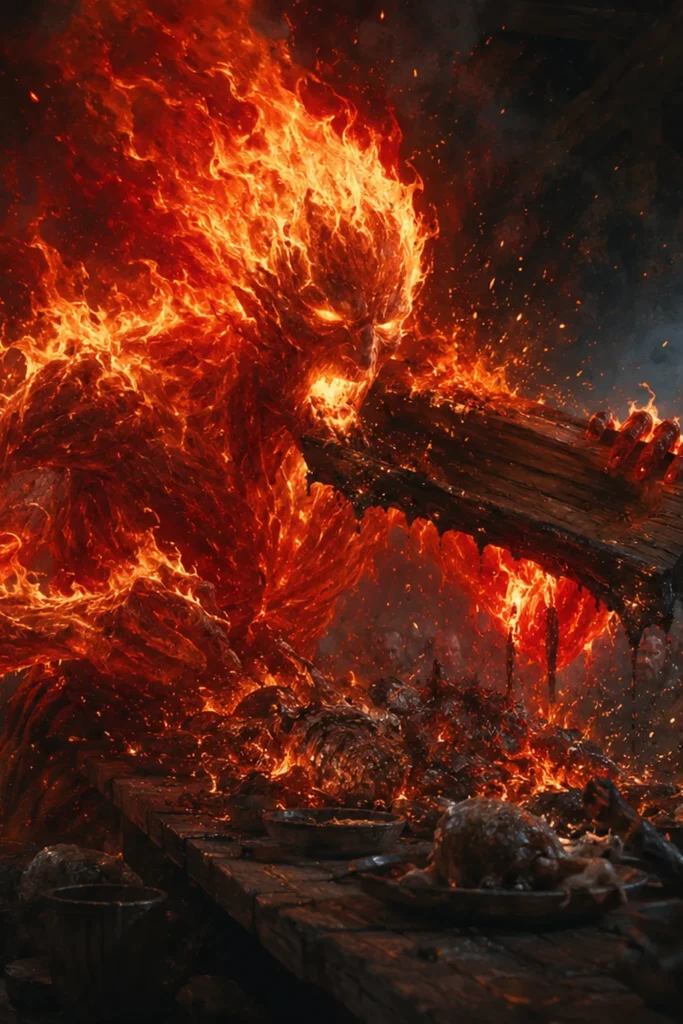
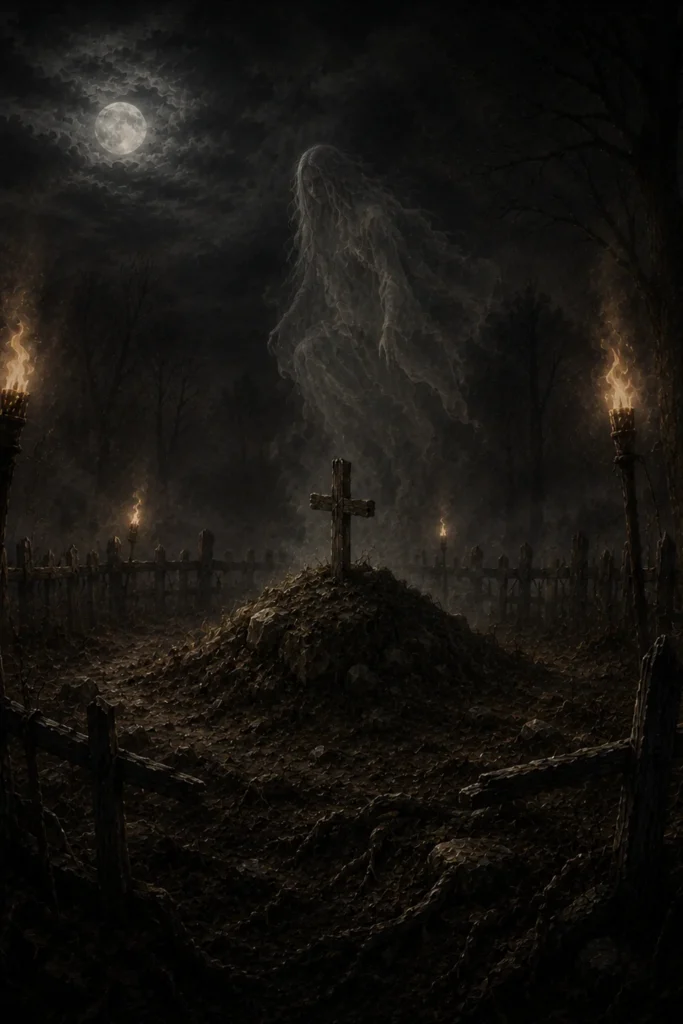
Upon exhumation, the Nachzehrer appears as a soft, undecayed corpse with open eyes or open mouth and red lips, sometimes holding the thumb of one hand in the other. The core image is the gnawing of the shroud and the corpse’s own body, which links the corpse, made to appear alive through decomposition gases, with the dying of the living.
Effect
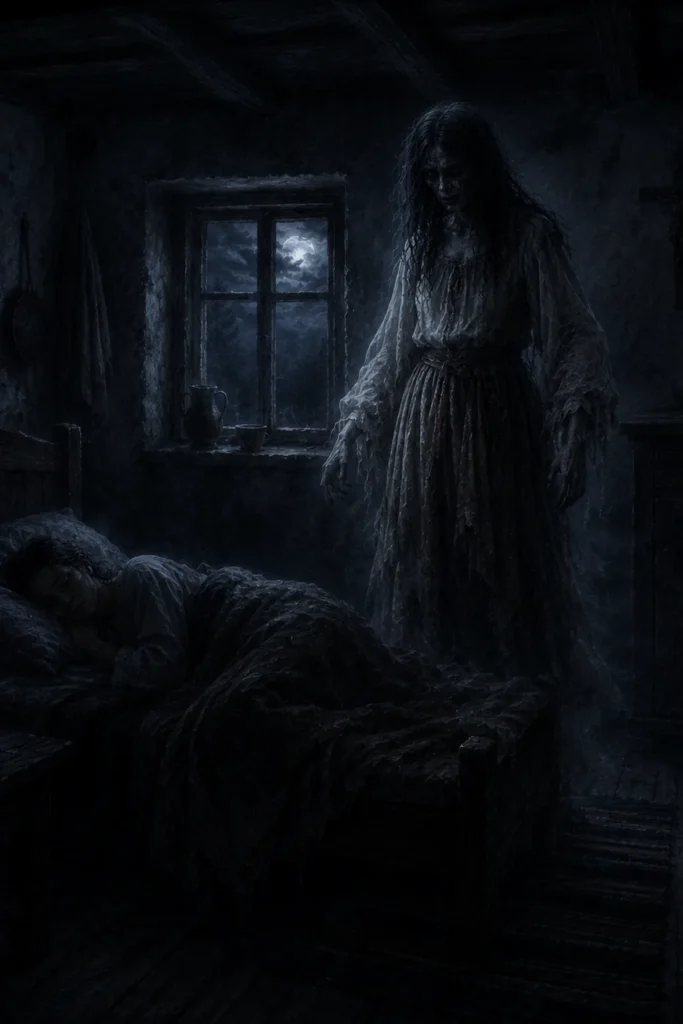
As long as the dead person chews and smacks its lips in the grave, its relatives fall ill and die of wasting, often in connection with an epidemic such as the plague, though an epidemic is not required. Unlike the classic vampire, the Nachzehrer generally does not leave its grave; its effect reaches out from a distance.
Profile: Nachzehrer
The key aspects of the consuming dead at a glance.
North German, Slavic-influenced belief in revenants, first examined scholarly in the early modern period.
Its own relatives and the village community, who fall ill with wasting through its effect at a distance.
Undecayed corpse in the grave with open eyes and a red mouth, gnawing at the shroud and its own limbs.
Pre-scientific explanation for the deaths of entire families, often in connection with epidemics such as the plague.
A coin, stone or earth in the mouth against chewing, the removal of the name from the burial clothing, and, if necessary, decapitation.
Related to the Doppelsauger, its childhood special form, and to the Wiedergänger as an umbrella term. As a bloodless consumer, it is close to the Strigoi and to the Nordic Gjenganger.
Ranft and the question of the dead chewing
The name Nachzehrer denotes the one who consumes after death; the alternative form Nachtzehrer, night-consumer, is equally common. The term itself, in its present sense, is only attested from the 19th century, but the underlying belief is considerably older and reaches back into the early modern period.
The central source is Michael Ranft’s treatise De masticatione mortuorum in tumulis of 1725, expanded in 1728, in which he investigates whether the dead actually chew in the grave, seeking natural explanations in a rationalist manner. In popular belief, Nachzehren was thought to be triggered if the name of the deceased was not removed from the burial clothing, or if their own possessions were placed in the grave with them.
The shroud eater in vampire research
The Nachzehrer is a firmly established part of vampire and undead reception and is treated by Claude Lecouteux as a type of shroud eater. In present-day folklore literature and popular culture, it appears as one of the grotesque figures among European undead.
From a religious-studies perspective, the Nachzehrer is an expression of the fear of the dead and belief in revenants, and a pre-scientific explanation of epidemics, in which the deaths of entire families are interpreted as the work of a consuming dead person. It is regarded as one of the central European precursors of the vampire.
Against chewing in the grave
Several protective means are firmly attested in sources: a coin, a stone, or a cloth or lump of earth was placed in the mouth of the dead to prevent further chewing, and the name was removed from the burial clothing. In cases of acute suspicion, the grave was reopened, the head severed, or the mouth filled with earth. All of these rites aim to stop the chewing and thus its effect at a distance on the living. In the house of the threatened family, protection of the threshold against the returning dead, along with iron and salt as long-known protective means against revenants, supplemented this protection.
Nachzehrer among the revenants
The Nachzehrer is closely related to the Doppelsauger, its childhood special form, and belongs to the circle of Wiedergänger. As a bloodless consumer, it is close to the Strigoi as an early precursor, and is related in the Nordic region to the Gjenganger.
Frequently asked questions about the Nachzehrer
Does the Nachzehrer leave its grave?
No, as a rule it acts from within the grave, unlike the classic, wandering vampire.
Does it drink blood?
No, it consumes life force; the chewing of the shroud and its own body is its core characteristic, not the taking of blood.
Why was a coin placed in its mouth?
As a form of occupational magic: the dead person was meant to gnaw at the coin or a stone instead of smacking its lips, so that its effect at a distance on relatives would end.
Further links
Further reading:
- Germanic – all beings of the Germanic tradition
- Doppelsauger – its childhood special form
- Wiedergänger, Gjenganger – related undead of the North
- Strigoi – Romanian bloodsucker as a later stage of development
- Threshold protection, Iron, Salt – traditional protective means
Literature (selection)
Further standard works in the bibliography.
As Nachtzehrer and shroud eater, the Nachzehrer remains one of the most striking figures of the fear of the dead: a dead person who gnaws in its own grave while drawing its family into death from a distance.