Sinmara, guardian of the weapon behind nine locks
By Ralf Ittermann · last reviewed on
Sinmara is a demoness of the Germanic tradition.
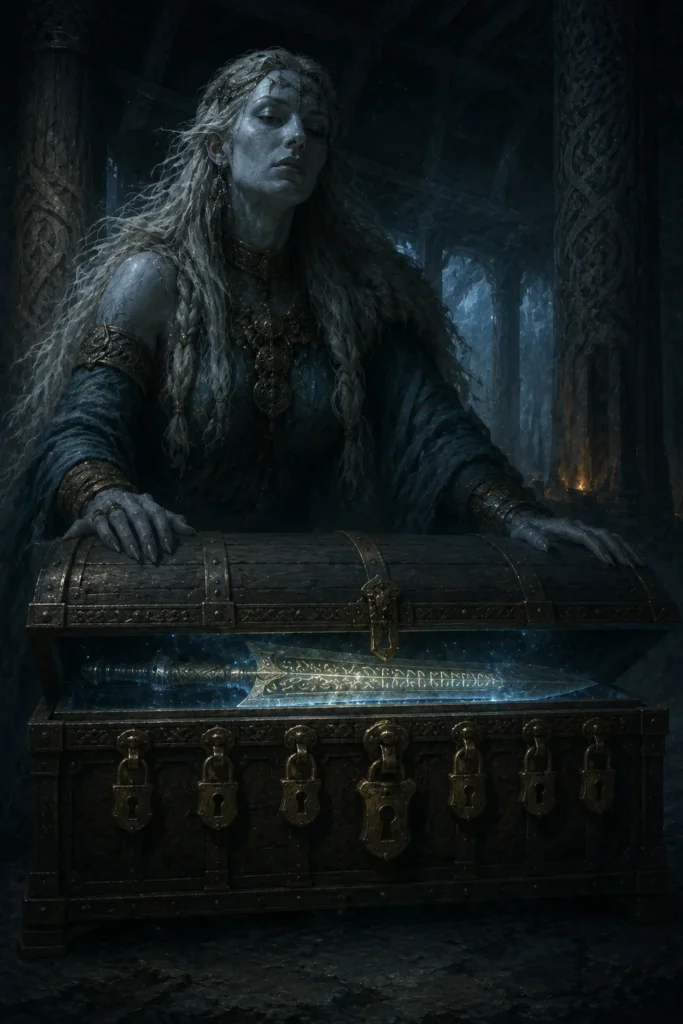
The giantess who guards Lævateinn behind nine locks. Sinmara occupies a distinctive place in Norse legend as the keeper of a formidable weapon.
Sinmara is a thinly attested Norse giantess named as the keeper of the weapon Lævateinn. She appears exclusively in the late Eddic poem Fjölsvinnsmál; every further statement about her is interpretation.
This also applies to the best-known of these interpretations, the connection to the fire giant Surtr: it rests on a textually emended stanza and is partly conjecture. Anyone describing Sinmara is therefore, above all, describing one thing: a single, late and fragmentary source.
Type: giantess (gýgr), keeper of the weapon Lævateinn
Origin: Nordic-Germanic region
Texts: Fjölsvinnsmál (Svipdagsmál), only late manuscripts
Period: late Eddic
Appearance: giantess, sometimes described as pale
Region of origin and sources
Period of the Texts
The Fjölsvinnsmál, the second part of the Svipdagsmál, survives only in late paper manuscripts and is therefore considered a late text.
Area of Diffusion
The Nordic-Germanic region; tradition names no place or landscape associated with Sinmara.
Sources
Very thin: a single poem, partly emended. Any further statement about Sinmara is interpretation, not textual evidence.
Name and variants
Old Norse: Sinmara, a single attestation whose meaning is uncertain. Suggested readings include ‘the pale devastator’ or a connection to mara, the night-mare. In the poem she is called gýgr, giantess.
Appearance and behaviour
Appearance
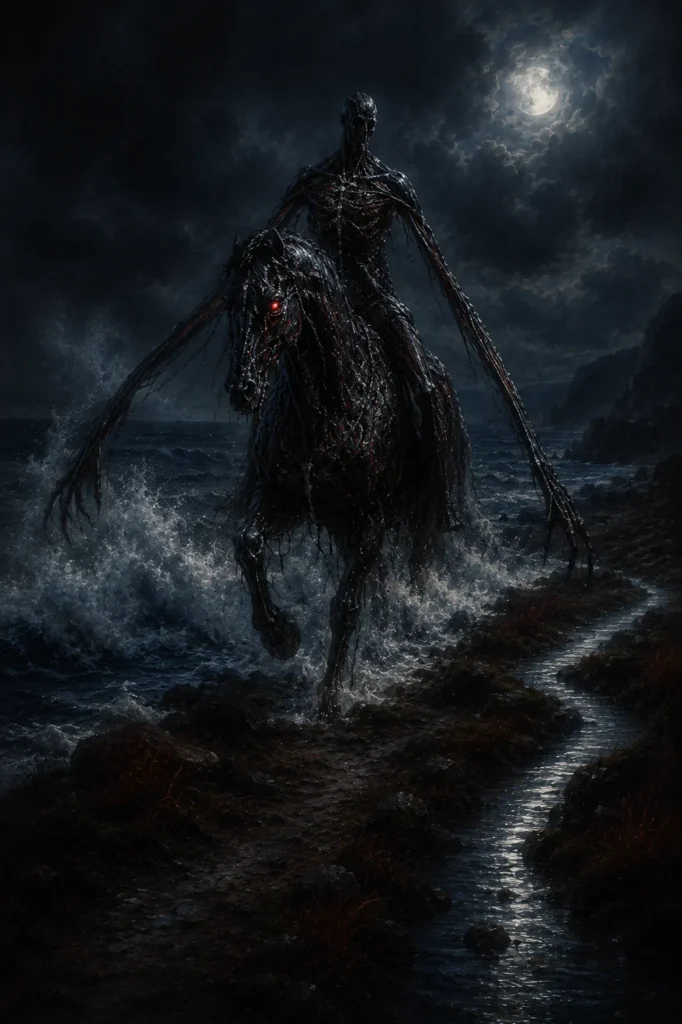
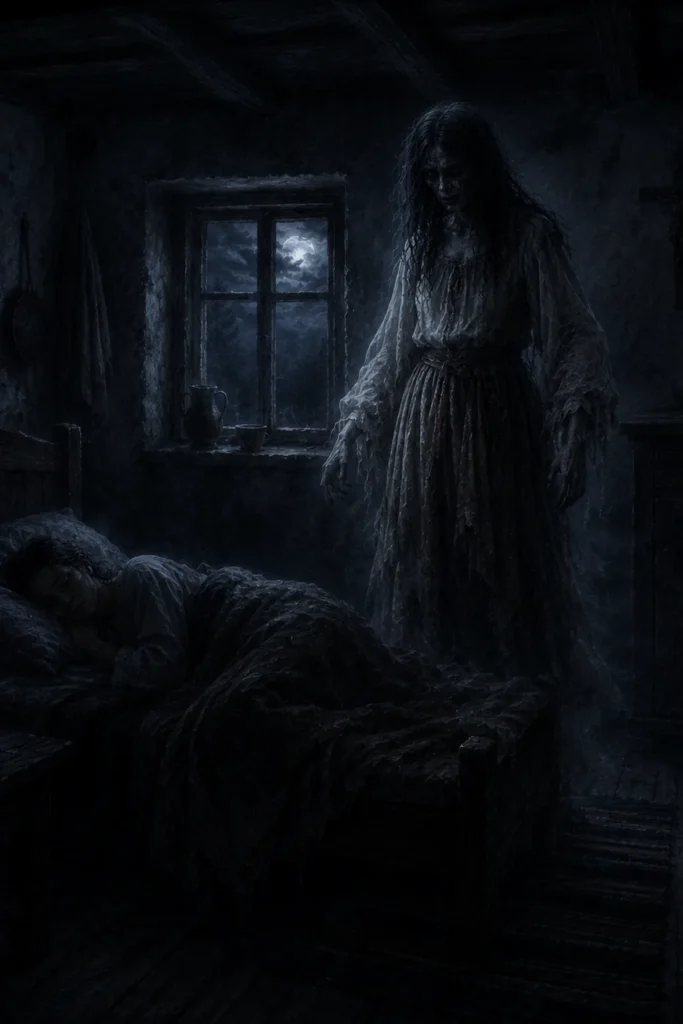
As a giantess, Sinmara is described in some translations as pale; a detailed description is lacking. Functionally, she is the guardian of a deadly weapon.
Effect
Sinmara keeps Lævateinn, a rune-wrought weapon held in a chest behind nine locks. In the riddle structure of the poem, the weapon is needed to slay the cockerel Víðópnir; to obtain it, Sinmara demands something in return. Any role beyond Ragnarök is speculative.
Profile: Sinmara
The key aspects of the weapon guardian at a glance.
Late Eddic riddle poetry: Sinmara is attested solely in the Fjölsvinnsmál, a late poem preserved only in paper manuscripts.
The weapon Lævateinn, rune-wrought and kept in a chest behind nine locks; whoever wants it must give something in return.
A gýgr, giantess, pale according to some translations; the verses give no more than that, and no more should be claimed.
A passive, place-bound guardian without active threat; her power lies in keeping, not attacking.
No cult is attested. Sinmara is a purely literary figure with no recorded veneration, offerings or protective practice.
Associatively the Muspell sphere of Surtr; some interpretations place her among death and underworld figures, though both remain uncertain.
A single poem: Sinmara in the Fjölsvinnsmál
The name Sinmara is a single attestation whose meaning is uncertain; suggested readings include ‘the pale devastator’ or a connection to mara, the night-mare. The giantess is attested solely in the Fjölsvinnsmál, the second part of the Svipdagsmál, which survives only in late paper manuscripts and is therefore considered a late text.
Even the most famous statement about Sinmara stands on shaky ground: the connection to Surtr rests on a textually emended stanza and is partly conjecture. What remains is her role within the poem itself: the guardian who keeps Lævateinn behind nine locks and demands something in return for its release.
Modern portrayal and source criticism
In modern popular culture, Sinmara is often romanticised as Surtr’s wife or as a fire giantess. This portrayal goes far beyond what the sources support.
In religious studies, Sinmara is one of the most thinly attested figures in Norse tradition, evidenced by a single late and partly emended poem. Statements such as fire giantess, Surtr’s wife or participant in Ragnarök are hypotheses, not established facts; even her association with fire depends solely on the uncertain link to Surtr.
No cult, no protective practice
No cult is attested. Sinmara is a purely literary figure with no recorded veneration, offerings or protective practice; any claims beyond this would be invented. This honesty is central to the source situation: a single poem carries the entire figure, and what the poem does not say, no one knows.
Guardians and giantesses compared
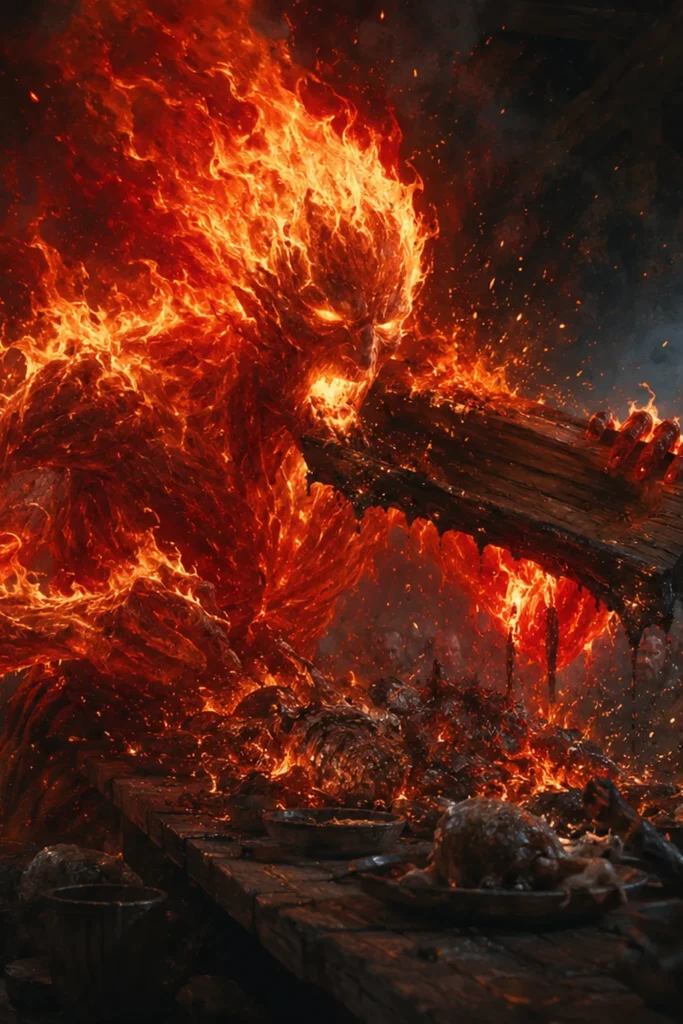
Sinmara embodies the motif of the giantess as weapon guardian and is associatively linked to the Muspell sphere of Surtr. Some interpretations place her among death and underworld figures, though this remains as uncertain as her association with fire. Within the Germanic fire context, she stands alongside the fire personification Logi, whose attestation is considerably stronger.
Frequently asked questions about Sinmara
Where is Sinmara attested?
Solely in the late Eddic poem Fjölsvinnsmál, which survives only in late manuscripts.
Is she a fire giantess?
This is an interpretation that depends solely on the uncertain connection to Surtr; it is not attested.
What is Lævateinn?
A rune-wrought weapon that Sinmara keeps in a chest behind nine locks and releases only in exchange for something in return.
Further links
Literature (selection)
Further standard works in the bibliography.
As a Norse giantess and keeper of the weapon Laevateinn, as the Old Norse name Lævateinn is often simplified in writing, Sinmara remains a figure from a single poem: tangible only in the moment someone tries to open her chest with the nine locks.