Naga Bicol: the serpent goddess Handyong could not subdue
By Ralf Ittermann · last reviewed on
Naga (Bicol) is a goddess of Philippine tradition.
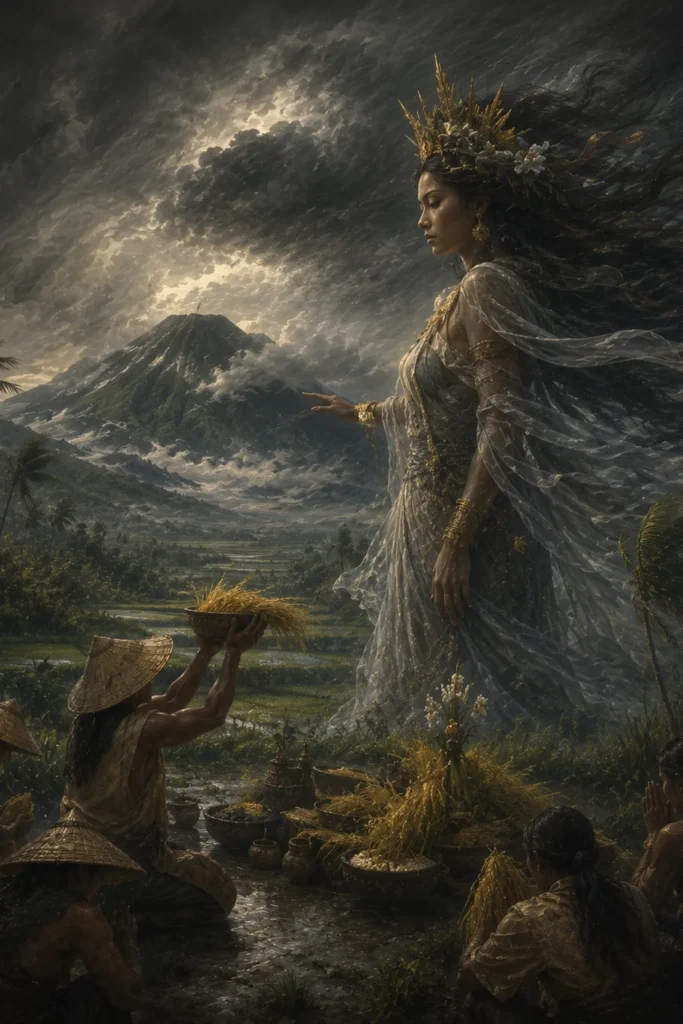
Naga Bicol protects springs and can send floods or drought. The legend recalls a serpent goddess even Handyong could not subdue, protector of springs and bringer of flood or drought.
Naga, Bicolano Irago, is a serpent and water deity of south-eastern Luzon and protector of springs. She brings rain, but when angered sends flood or drought. Central to her lore is the Ibalong epic featuring Oryol, a demigoddess whom the hero Handyong could not defeat.
Type: Serpent and water deity, protector of springs
Origin: oral Bicolano tradition
Texts: Ibalong epic
Period: pre-colonial to present
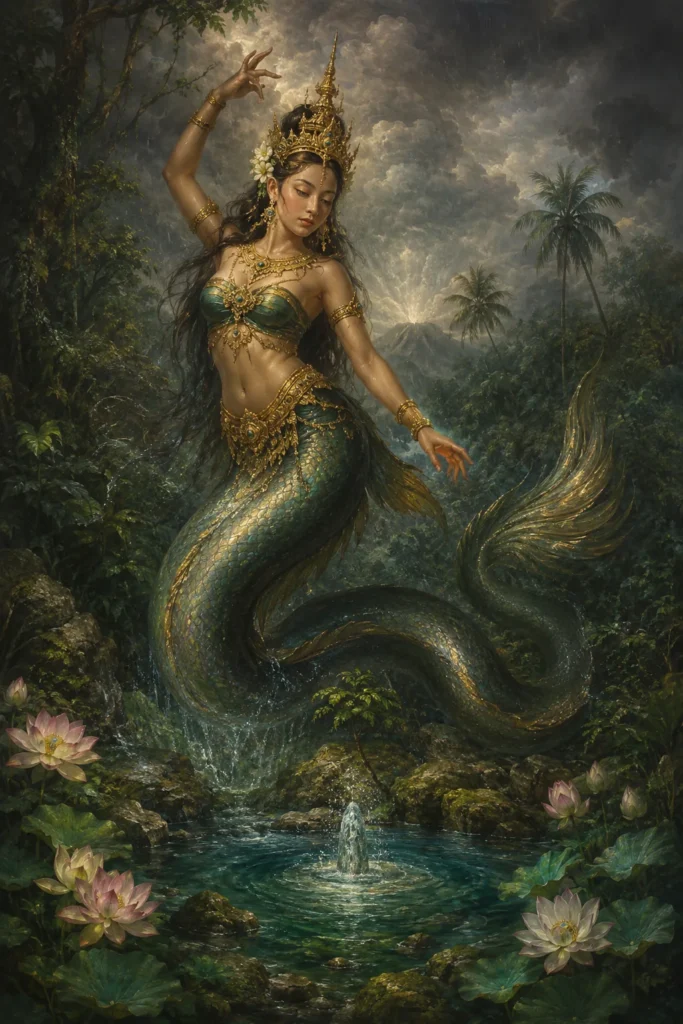
Appearance: mermaid-like, serpent tail
Textual history
Period of the Texts
Oral tradition, captured in literary form in the Ibalong fragment, from pre-colonial times to the present.
Area of Diffusion
Bicol region, south-eastern Luzon, with the city of Naga as its named centre.
Sources
Sparse: the Ibalong fragment and a few secondary sources such as Ramos form the basis.
Name and variants
Bicolano/Sanskrit: The name derives from Sanskrit naga (serpent, dragon deity), which reached the Bicol region in pre-colonial times; locally naga or irago, distinct from the Hindu-Buddhist Naga.
Appearance and symbolism
Appearance
Mermaid-like, with a woman’s upper body and an eel or serpent tail; other traditions depict her as a pure serpent being.
Effect
Connects water, earth and fertility, but also flood and drought.
Profile: Naga (Bicol)
The key aspects at a glance.
Bicolano tradition, attested in the Ibalong epic.
Springs, wells, rivers; rain and fertility, but also flood and drought.
Mermaid-like, with an eel or serpent tail, more rarely a pure serpent being.
Ambivalent: nourishes with rain, punishes disregard with flood or drought.
Reverence towards water sites; no warding rituals are recorded.
Related to the Sirena, distinct from Indian Nagas, with which it shares only the linguistic root.
From Sanskrit word to protector
Central to the tradition is the Ibalong epic: Oryol, a demigoddess with a bewitching voice, whom the hero Handyong cannot defeat; the two ally against the monsters of the region. The place name Naga remains disputed, derived variously from the serpent, the Narra tree, or Sanskrit.
Living heritage of the Bicol region
Naga and Oryol shape Bicolano identity, sustained by the city of Naga, the Ibalong Festival and modern retellings. From a religious-studies perspective, an ambivalent freshwater deity of both indigenous and imported origin.
Reverence rather than warding off
Defensive practices are barely documented; the Naga tends to be appeased rather than fought. Holy water ties in with the veneration of springs, an amulet accompanies watering places, and incense burning is regarded as an act of honour.
Serpent goddesses compared
Frequently asked questions about Naga (Bicol)
Is the Bicolano Naga the same as the Indian naga?
No, only the linguistic root is shared.
Is Oryol a Naga?
Yes, the Ibalong epic describes her as a demigoddess with a bewitching voice.
Further links
Further reading:
Literature (selection)
More in the bibliography.
Known as the Naga of the Philippines, referred to in scholarly texts also as the Bicol water deity: a guardian of springs whose wrath can bring both rain and flood.