iWell Guard

Amihan, cool monsoon and first bird

Amihan is a god of Philippine tradition.

The cool northeast monsoon, and in recent legend the first bird.

GodPhilippines

Table of Contents

Amihan, the northeast monsoon of the Philippines
Amihan

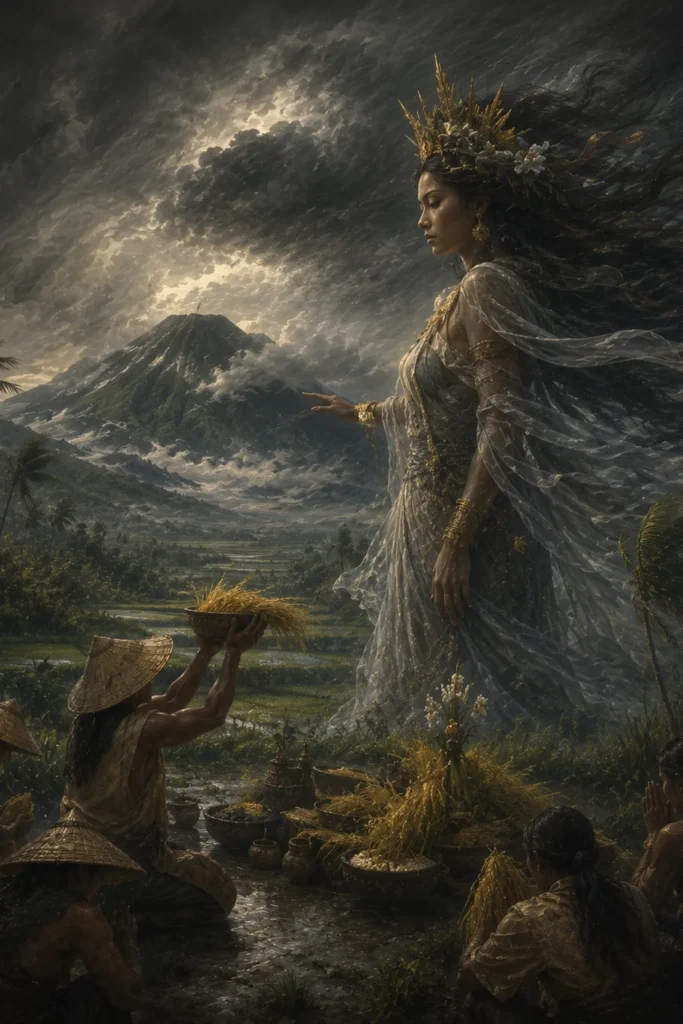
Amihan is the northeast monsoon of the Philippines, the cool trade wind of the dry season roughly from November to March, and at the same time, in a modern creation legend, the first bird that reconciles sea and sky.

Two strands need to be kept clearly apart here: the old Austronesian weather term, still used today as the technical term of the weather authority PAGASA, and the recent creation figure, which has only become popular in about the last fifteen years.

At a glance: Amihan

Type: Wind and weather term with modern personification as a creation bird
Origin: Austronesian wind and direction word, creation figure modern
Texts: Meteorological terminology (PAGASA), modern retellings of the Tagalog creation
Period: word old, creation role recent
Appearance: bird in the modern version, sometimes a beautiful woman

Origin and sources

Period of the Texts

The word is old Austronesian; the creation figure, by contrast, is modern and has only become popular in about the last fifteen years.

Area of Diffusion

The Philippines, above all the Tagalog and Visayan regions, where Amihan is an everyday word for a wind and season.

Sources

The word is well established, the creation role recent: the weather term is broadly attested, whereas the bird legend is a recent narrative.

Name and variants

Austronesian: amihan, an old wind and direction term for the northeast monsoon, the cool trade wind of the dry season. To this day, Amihan is the technical term used by the Philippine weather authority PAGASA for this season.

Appearance and behaviour

Appearance

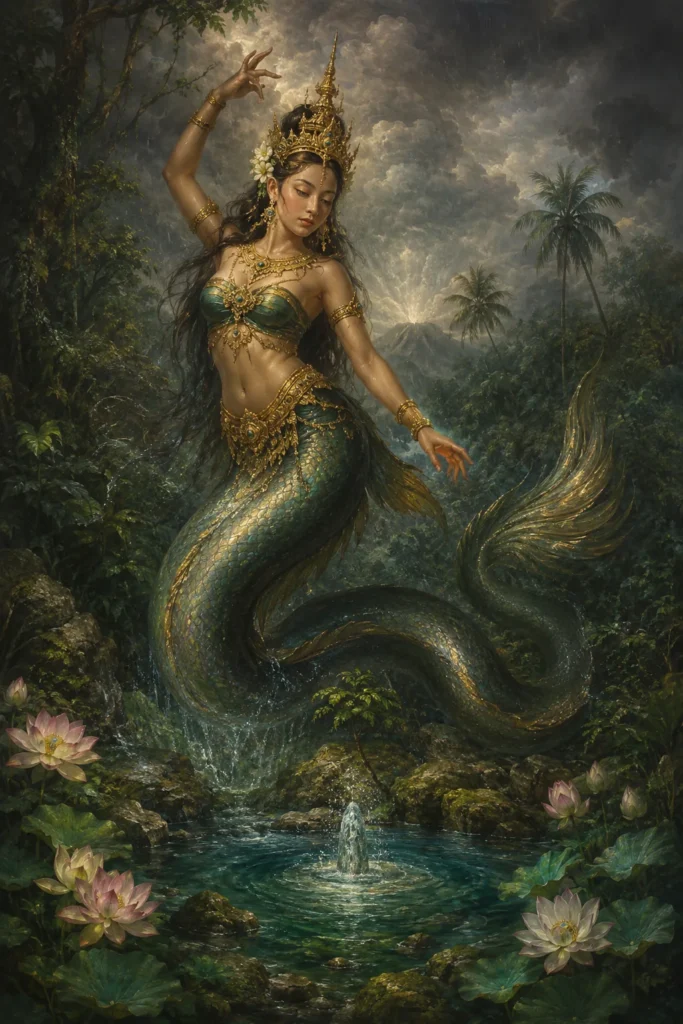
In the modern version, Amihan is a bird, sometimes also a beautiful, long-haired woman. An old iconography does not exist; all depictions are recent.

Effect

Amihan brings the cool dry season with gentle winds and good conditions for sailing and fishing. In the modern legend, Amihan is the bird that settles the dispute between sky and sea and helps set creation in motion.

Profile: Amihan

The key aspects of the monsoon wind at a glance.

Cultural Context

Old Austronesian weather word of the Philippines with a recent personification as the primordial bird of the modern creation narrative.

Relates To

The weather of the dry season: cool trade winds from roughly November to March, good conditions for sailors and fishermen.

Depiction

Modern depictions as a bird or as a beautiful, long-haired woman; an old, traditional iconography does not exist.

Function

In the recent legend, the mediator between sky and sea, who exposes land and pecks open the bamboo from which the first humans emerge.

Practice

A historical cult is not attested; the idea that Amihan protects fishermen is part of the modern narrative, not a documented rite.

Distinctions

Its counterpart is the southwest monsoon Habagat; Amihan should not be confused with the Visayan goddess Alunsina.

From weather word to creation bird

Amihan denotes the northeast monsoon or cool trade wind of the dry season, roughly from November to March: an Austronesian wind and direction term and, to this day, PAGASA’s technical term. This word is old and well established.

Recent, by contrast, is Amihan as first bird and creation figure, who mediates between the sky god Bathala and Aman Sinaya, exposes land and pecks open the bamboo from which Malakas and Maganda emerge. This role has only become popular in about the last fifteen years. The trinity of Bathala, Aman Sinaya and Amihan is regarded by scholars as a modern repackaging; in tradition, Aman Sinaya is rather male.

Reception and classification

Amihan appears on a 2012 postage stamp, in children’s books, in fantasy fiction and in weather journalism, as well as in the internet trinity with Bathala and Aman Sinaya.

From a religious-studies perspective, Amihan is a weather term with a friendly modern personification. Important clarifications: the Amihan bird trinity with Aman Sinaya is modern; Aman Sinaya is traditionally rather male; Amihan is not the Visayan goddess Alunsina, with whom he is often confused; and he does not appear in early colonial god lists.

Protection and customs around the monsoon wind

A historical Amihan cult is not attested; that should be stated honestly. That Amihan protects fishermen belongs to the modern narrative and is not a documented rite. Those who entrusted themselves to the sea during the dry season relied on the genuinely mild winds, not on an attested sacrificial cult.

The primordial bird in comparison

The bird as a creation helper is found worldwide; the bamboo origin of Malakas and Maganda is an older, widely attested Tagalog motif, only Amihan’s role in it is modern. His counterpart is the southwest monsoon Habagat, the hot rain wind. Amihan should be kept distinct from the Visayan wind god Lihangin: there, Visayan cosmogony; here, a Tagalog monsoon term. The Philippine spirit world covered on this website also includes the mountain lady Maria Makiling.

Frequently asked questions about Amihan

What does Amihan mean?

The northeast monsoon, the cool trade wind of the dry season; it is an Austronesian weather word.

Is the creation role old?

No. Amihan as primordial bird and the trinity with Aman Sinaya are a modern repackaging.

Is Amihan the same as Alunsina?

No. Alunsina is the Visayan goddess of the Panay creation; equating the two is a mistake.

Further links

Recommended internal links:

Literature (selection)

A selection of key sources and studies:
  • Demetrio, Francisco R.: Creation Myths among the Early Filipinos. In: Asian Folklore Studies 27. 1968.
  • Eugenio, Damiana L. (ed.): Philippine Folk Literature. The Myths. Quezon City 2001.
  • Jocano, F. Landa: Outline of Philippine Mythology. Manila 1969.

Further standard works in the bibliography.

As the Philippine northeast monsoon, Amihan is first and foremost an old weather word; as the primordial bird of creation, he belongs to the recent storytelling culture of the Philippines. It is precisely in this juxtaposition that the figure’s appeal lies.

Classification & Protection

ILEVEL
The Protection Compass assigns this being to influence level I, Minor influence.

Against its influence, cross-cultural tradition names these protective means:

Compare in the Protection Compass →

Recommended protective means

iWell Guard

The simplest protective means in this collection: 41 layers of fine gold 999, platinum, silver and silicon, manufactured in Ruhla, Thuringia. It requires no activation, is bound to no person, and is effective within a radius of around 50 meters, even without being worn.

All protective means at a glance →