Maria Makiling, guardian of the mountain of Laguna
By Ralf Ittermann · last reviewed on
Maria Makiling is a spirit of Philippine tradition.
The Diwata who protects Mount Makiling and its beings.
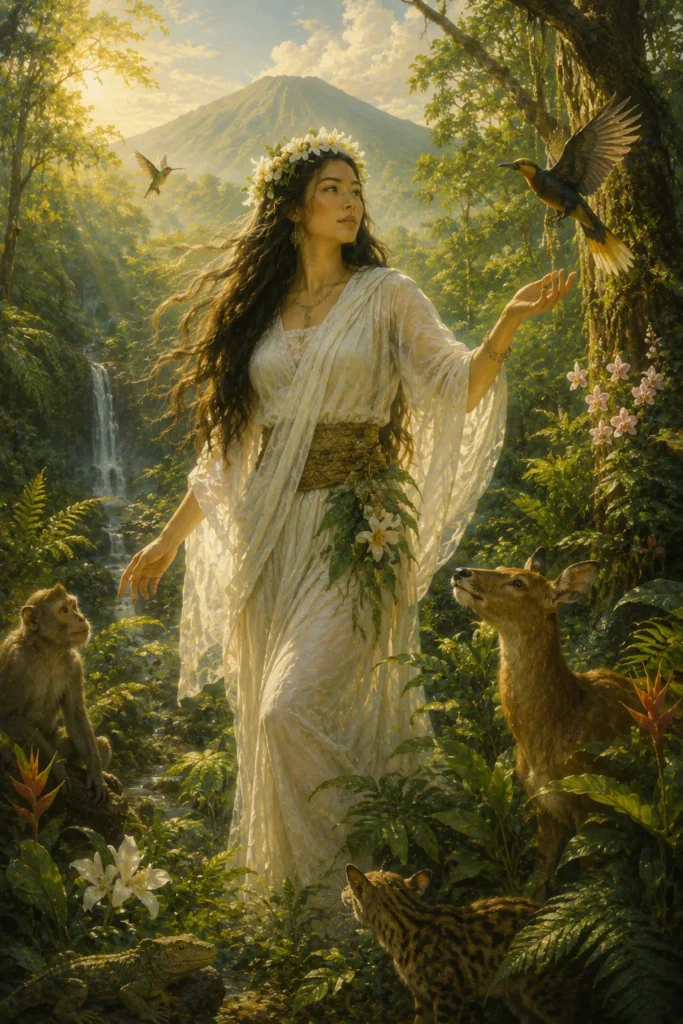
Maria Makiling, also Mariang Makiling, pre-colonially Dian Masalanta, is a Diwata, a mountain spirit of Mount Makiling in Laguna on the island of Luzon. As the beautiful protector of the mountain she helps the poor and the righteous and punishes hunters and destroyers who harm the mountain.
She is the best-known Diwata of Philippine mythology; the classic written version was composed by José Rizal in 1890. A central narrative strand tells that she withdraws from people because they disappoint her through greed or infidelity.
Type: Diwata, mountain spirit and protector of Mount Makiling
Origin: Tagalog folklore, pre-colonially as Dian Masalanta
Texts: oral tradition, classically recorded by Rizal in 1890
Period: pre-colonial times to the present
Appearance: beautiful young woman with long hair, often in white
Textual history
Period of the Texts
Tagalog folklore with pre-colonial roots; the classic written version is José Rizal’s Mariang Makiling from 1890.
Area of Diffusion
Mount Makiling in the province of Laguna on Luzon; the narrative tradition remains alive among residents and hikers to this day.
Sources
Well documented: Rizal’s literary version as well as the folkloristic collections by Eugenio and Ramos.
Name and variants
Tagalog: Mariang Makiling, the Spanish-Tagalog shortening of Maria ng Makiling, Maria of Makiling; the mountain Makiling, inclined, resembles the profile of a reclining woman. Pre-colonial names are Dayang Masalanta and Dian Masalanta, with dayang, princess or noble lady; the Christian Maria is a later, colonial syncretism.
Nature and effect
Appearance
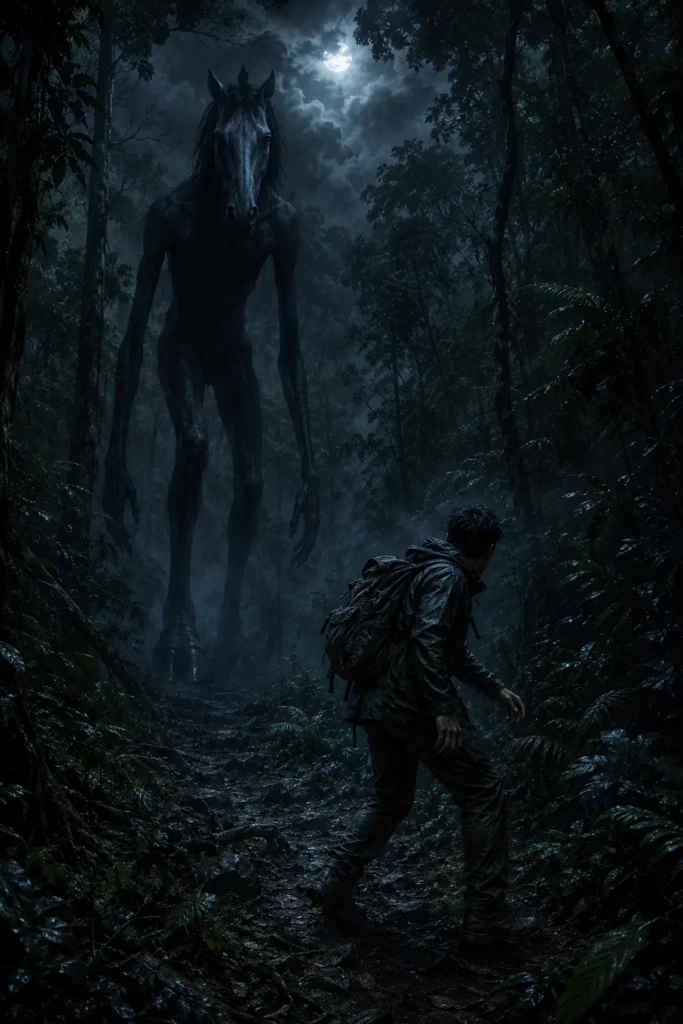
Maria Makiling is a very beautiful young woman or fairy with long hair, often in white, half nymph, half sylph. She appears to people in the forest and vanishes suddenly.
Effect
She is the protector of the mountain, its animals and plants; she helps poor and righteous people and gives ginger or gold that transforms, and punishes hunters and destroyers who harm the mountain. As the pre-colonial Dian Masalanta she was invoked to avert floods, storms and earthquakes.
Profile: Maria Makiling
The key aspects of the Diwata at a glance.
The best-known Diwata of Philippine mythology, pre-colonially venerated as the deity Dian Masalanta, later reshaped in Christian terms.
Mount Makiling with its animals and plants, as well as the poor and righteous people she helps.
A beautiful young woman or fairy with long hair, often in white; she appears in the forest and vanishes suddenly.
Protector of the mountain: she gives ginger or gold that transforms, and punishes hunters and destroyers who harm the mountain.
Invoked pre-colonially as a deity; today there is no organised cult, but a living tradition of respect among hikers and residents.
Maria Sinukuan at Mount Arayat and Maria Cacao on Cebu; more broadly other Lady-of-the-Forest figures.
From Dian Masalanta to Mariang Makiling
Mariang Makiling is the Spanish-Tagalog shortening of Maria ng Makiling, Maria of Makiling; the mountain Makiling, inclined, resembles the profile of a reclining woman. Pre-colonially the figure was called Dayang Masalanta or Dian Masalanta, with dayang, princess or noble lady; the Christian Maria is a later, colonial syncretism.
As a Diwata she is the best-known figure in Philippine mythology. The classic written version is José Rizal’s Mariang Makiling from 1890, which made the figure a national literary motif.
Afterlife in literature and popular culture
Rizal’s version made Maria Makiling a national literary motif; a central narrative strand is that she withdraws from people because they disappoint her through greed or infidelity. She has given her name to institutions, including the University of the Philippines Los Baños, which lies on Mount Makiling, and she is strongly present in modern popular culture, comics and film.
From a religious-studies perspective she is well documented, yet her Christian reshaping and the multitude of regional variants make one original version uncertain. Important clarifications: Maria is not an original name but a colonial Christianisation of Dayang Masalanta; she is a Diwata, a spirit, not a saint; and Rizal’s literary version is a reception, not the authentic oral original form.
Veneration and tradition of respect
Pre-colonially, Maria Makiling was venerated as a deity and invoked as Dian Masalanta to avert floods, storms and earthquakes. Today there is no organised cult, but there is a living narrative and respect tradition among hikers and residents of Mount Makiling. Historical offering and ritual forms for the Diwata are only generally, not in detail, attested.
Mountain women and forest ladies in comparison
Maria Makiling embodies the type of the mountain nymph, the guardian spirit of a single mountain. Within the Philippines she is joined by Maria Sinukuan at Mount Arayat and Maria Cacao on Cebu. More broadly she is comparable to other Lady-of-the-Forest figures; as a related mountain figure from another tradition, the Albanian Zana can be set alongside her.
Frequently asked questions about Maria Makiling
Who is Maria Makiling?
The Diwata and protector of Mount Makiling on Luzon, the best-known Diwata of Philippine mythology.
Was Maria her original name?
No. Pre-colonially she was called Dayang or Dian Masalanta; Maria is a colonial Christianisation.
Why does she withdraw?
Because people disappoint her through greed or infidelity, a central narrative strand in Rizal’s version.
Further links
Further reading:
- Zana – related mountain figure from Albanian tradition
- Amulet, Sage, Protective candle – traditional protective means
- Protection Compass – an overview of protective means
Literature (selection)
Further standard works in the bibliography.
As the Diwata of Mount Makiling, Maria Makiling is arguably the best-known mountain spirit of the Philippines: a protector whose withdrawal from human greed tells us more about people than about her.