Tikbalang, the misleader with the horse head
By Ralf Ittermann · last reviewed on
The Tikbalang is a spirit of Philippine tradition.
Horse head, overlong limbs and paths that lead in circles.
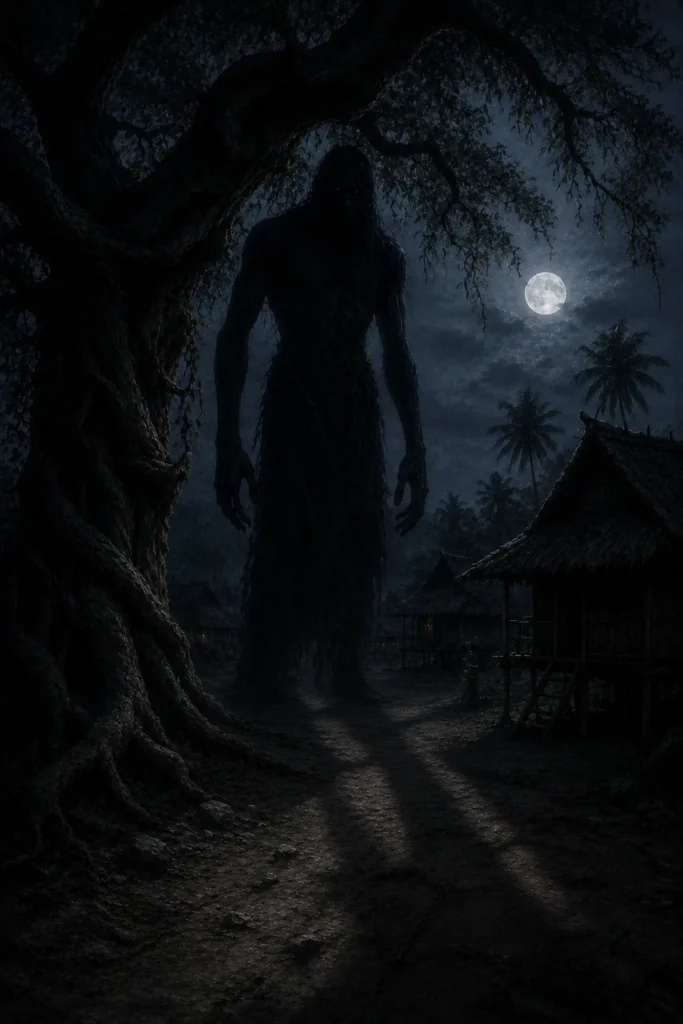
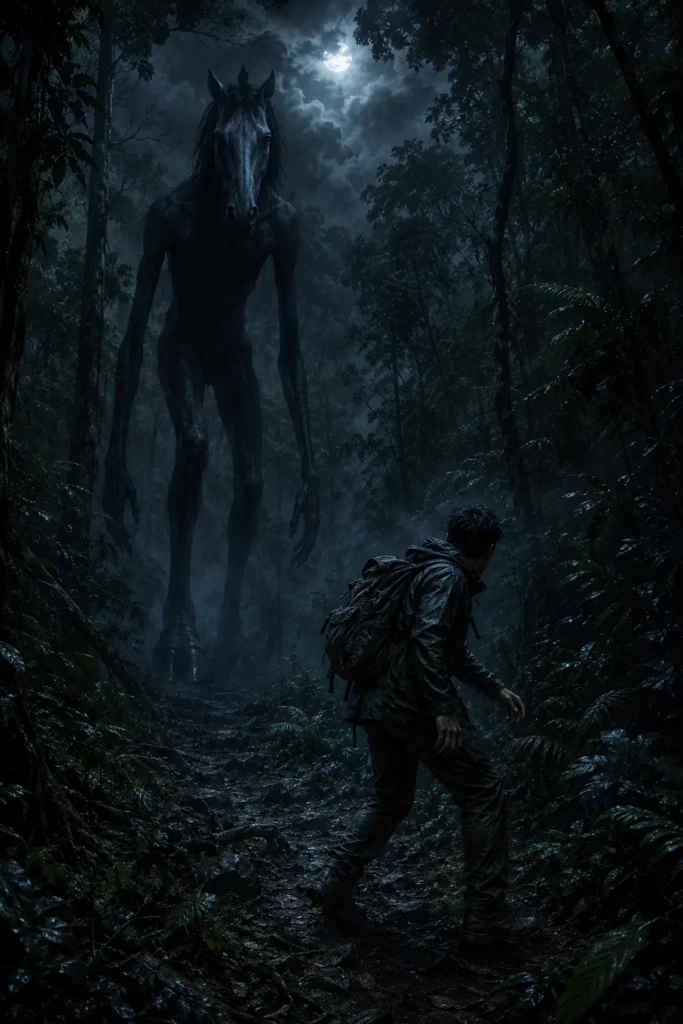
The Tikbalang is a tall being of the Philippines with a horse head, horse hooves and long limbs that dwells in forests and mountains. It leads travellers astray, so that they walk in circles for hours, and whistles or imitates familiar voices.
It is dangerous less through violence than through the disorientation it causes: the Tikbalang is not primarily murderous but confusing and testing, a guardian of mountain and forest paths.
Type: Mountain and forest spirit, spirit of disorientation and shapeshifter
Origin: Pre-Spanish animistic tradition of the Philippines
Texts: Oral tradition, documented by Ramos
Period: pre-Spanish to present
Appearance: tall, horse head, horse hooves, elongated limbs
Source context
Period of the Texts
The tradition is pre-Spanish animistic and oral; it is documented above all in the collections of Maximo D. Ramos.
Area of Diffusion
Found throughout the country, especially in the Tagalog regions, and there mainly in the mountains and dense forests.
Sources
Well documented: Ramos collected the oral tradition; added to this is the strong presence of the being in modern pop culture.
Name and variants
Tagalog: tikbalang. The name is rooted in indigenous animism, mixed with Hindu-Malay influences; the connection to the horse-headed Hindu motif, however, is an interpretation, not a confirmed derivation.
Appearance and behaviour
Appearance
The Tikbalang stands roughly two to nearly three metres tall, with a horse head, horse hooves and elongated limbs; its knees sometimes bend backwards, and it is a shapeshifter. The horse head and long limbs are a cipher for the foreign and threatening nature of the forest.
Effect
The Tikbalang is the classic misleader: travellers lose their bearings and walk in circles for hours while it whistles or mimics familiar voices. It is not primarily murderous but confusing and testing; leading people astray is its central motif.
Profile: Tikbalang
The key aspects of the misleader at a glance.
Threshold and disorientation demon of the animistic worldview of the Philippines, at home in mountains and dense forests.
Travellers and hikers in forest and mountains, whom it leads off the path until they lose their bearings.
Tall, with a horse head, hooves and elongated limbs, its knees sometimes bent backwards; also a shapeshifter.
Forest guardian and tester: it makes travellers walk in circles, deceives with whistles and voices, and tests a person’s respect and calm.
Wearing your shirt inside out, the formula tabi tabi po, staying calm and not thinking of home; in stories, a golden strand of its mane tames the being.
The Kapre confuses travellers from the tree in which it lives; the Tikbalang, by contrast, roams about and disguises the paths itself.
Mountain spirit, threshold guardian, shapeshifter
The name Tikbalang is Tagalog. It is rooted in indigenous animism, mixed with Hindu-Malay influences; the connection to the horse-headed Hindu motif is an interpretation, not a confirmed derivation. The Tikbalang is a mountain and forest spirit, a threshold and disorientation demon of the animistic worldview.
In this role it guards the transitions between inhabited land and wilderness: whoever enters mountain and forest enters its domain and must expect to be tested. The victim’s walking in circles is thus no mere prank, but the experience of losing one’s bearings in dense forest, cast into a single figure.
From the mountain forest into Philippine horror
The Tikbalang is very present in Philippine horror, in comics, film and television, and is one of the best-known figures of modern folklore pop culture.
From a religious studies perspective, the Tikbalang is a forest guardian and disorientation spirit of the trickster type with a testing and boundary function. Two clarifications belong here: the derivation of the horse form from the Hindu store of motifs is an interpretation, not a confirmed origin. And the Tikbalang is not primarily murderous; it becomes genuinely dangerous only indirectly, because losing one’s bearings in the mountain forest can itself become a danger.
The shirt inside out: protection against losing your way
Well attested in sources is the practice of wearing clothing inside out, that is, the shirt on the left side out, to break the spell, as well as the formula tabi tabi po, with which one politely asks for permission and passage. One should stay calm and not think of home. In some tales a Tikbalang can even be tamed and subdued: by grasping a golden strand of its mane.
Misleaders and horse beings compared
As a horse-shaped being, the Tikbalang recalls the Celtic Each-uisge or Kelpie, the water horse of Scottish tradition. Functionally closer to it are the misleaders and forest guardians of South America: Curupira in Brazil and Chullachaqui in the Peruvian Amazon fulfil the same function of the disorientation spirit as forest protector. Within the Philippines it is to be distinguished from the Kapre, the cigar-smoking giant who remains bound to its tree.
Frequently asked questions about the Tikbalang
How does one escape a Tikbalang?
Put your shirt on inside out, stay calm and ask for permission; the spell ends at daybreak.
Is the Tikbalang deadly?
More confusing and testing than murderous; the loss of bearings itself is what becomes dangerous.
Where does the horse form come from?
From indigenous animism, in part linked to Hindu-Malay interpretations, which remain uncertain.
Further links
Further reading:
- Kapre – the forest giant of the same tradition
- Curupira – the Brazilian misleader with backward-turned feet
- Chullachaqui – the disorientation spirit of the Peruvian Amazon
- Amulet, Salt, Holy Water – traditional protective means
- Protection Compass – protective means at a glance
Literature (selection)
Further standard works in the bibliography.
As a horse-headed being the Tikbalang is unmistakable, and as a misleader it is feared throughout the Philippines: it tests everyone who enters mountain and forest, and whoever stays calm and turns their shirt inside out finds the way back.