Kapre, the cigar smoker in the treetops
By Ralf Ittermann · last reviewed on
The Kapre is a spirit of Philippine tradition.
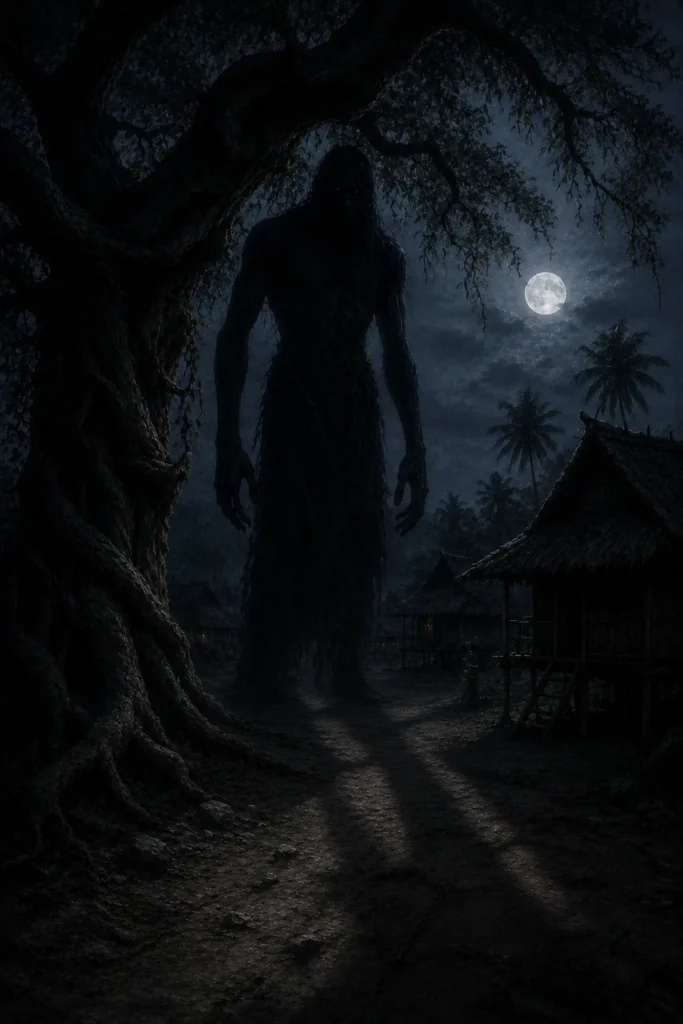
The hairy giant in the balete tree with the glowing cigar. The entry pictures the Kapre as a hairy cigar smoker perched among the treetops of the balete.
The Kapre is a giant, dark, hairy forest spirit of the Philippines that lives in large trees such as balete and mango and smokes a powerful cigar. It confuses travellers and plays tricks on them, but is mostly not murderous and can even fall in love with humans.
Its distinctive marker is the glow of the cigar, visible at night among the branches and often mistaken for fireflies. If its tree is cut down, the otherwise rather mischievous giant can become vengeful.
Type: Tree-dwelling forest giant and tree guardian
Origin: Philippine folk tradition, pre-Spanish and colonial
Texts: Oral tradition, documented by Ramos
Period: pre-Spanish to the present
Appearance: gigantic, dark-skinned, hairy, muscular, with a large cigar

Textual history
Period of the Texts
The tradition is pre-Spanish and colonial and was passed down orally; it is documented above all by Maximo D. Ramos.
Area of Diffusion
Found nationwide in the Philippines, with a particular concentration in Tagalog-speaking areas.
Sources
Well documented: the oral tradition is collected in Ramos, along with the wide presence of the figure in modern popular culture.
Name and variants
Spanish-Arabic: kapre derives via the Spanish cafre from the Arabic kafir, unbeliever; the Spanish applied the word to dark-skinned indigenous groups in the course of contact with the Moors. The figure itself is older: a tree spirit of the animist worldview.
Form and appearance
Appearance
The Kapre is gigantic, roughly two to nearly three metres tall, dark-skinned, hairy and muscular, with a strong body odour. It smokes a large cigar, the glowing end of which is visible at night and often mistaken for fireflies; darkness, hairiness, smoke and the treetop embody the uncanny impenetrability of the forest.
Effect
The Kapre sits on the branches of large trees such as balete, mango, acacia and bamboo and leads travellers astray, so that they walk in circles for hours. It is usually not murderous; it can fall in love with humans, but becomes vengeful if its tree is cut down.
Profile: Kapre
The key aspects of the forest giant at a glance.
Tree spirit of the animist Philippine worldview, guardian and inhabitant of old trees, with a colonial loanword name from Spanish.
Travellers passing through wooded areas; the Kapre confuses them with tricks until they walk in circles for hours.
Giant, dark, hairy and muscular in the branches of an old tree; recognisable by the glowing cigar and the strong odour.
Confusing and teasing rather than killing; along with this, falling in love with humans and vengefulness when its home tree is cut down.
Respect for old trees and the formula tabi tabi po when passing; trees suspected of harbouring a Kapre are left standing.
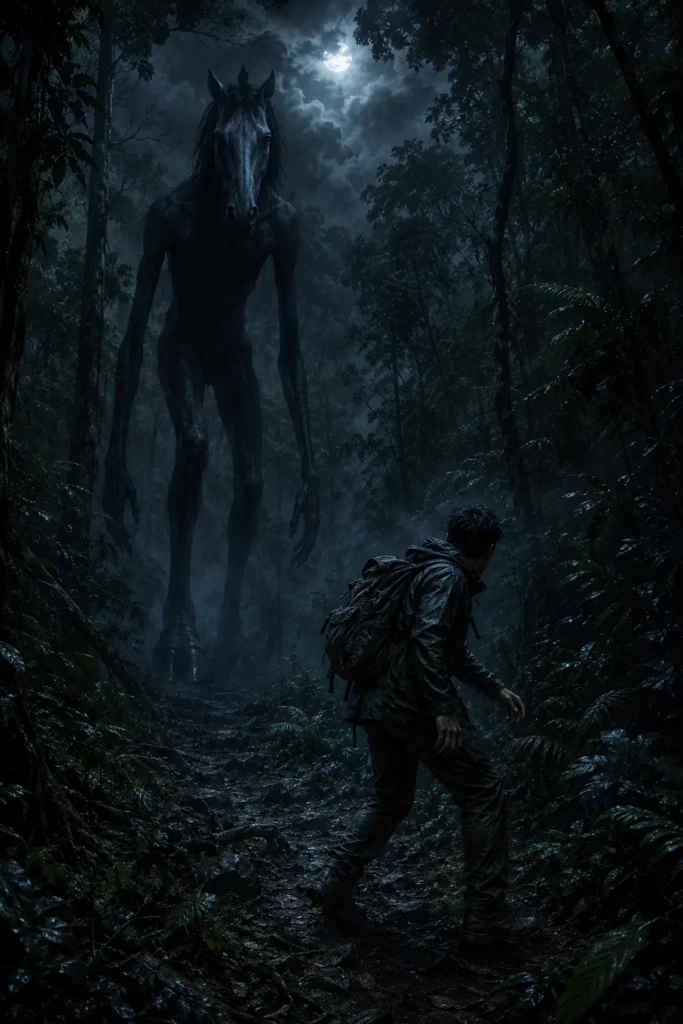
The Tikbalang likewise confuses travellers, but is a horse-headed misleader of paths; the Kapre remains the giant in the tree.
From colonial slur to guardian of old trees
The name Kapre comes from the Arabic kafir, unbeliever, which reached the Philippines via the Spanish cafre; the Spanish applied the term to dark-skinned indigenous groups in the course of their contact with the Moors. The name is thus a colonial legacy, though the figure behind it is not.
For the Kapre is a tree spirit of the animist worldview, a guardian and inhabitant of old trees. It sits in the crowns of balete, mango, acacia and bamboo, smokes its cigar and watches over its tree; those who respect it have little to fear, while those who fell its tree awaken its vengefulness.
Horror figure, guardian of the forest
The Kapre is prominent in Philippine horror and popular culture, in film, television and comics, often as a classic figure of dread from the forest.
From a religious-studies perspective, the Kapre is a tree-dwelling forest spirit of the wild man type with a threshold and guardian function at the old tree. Two clarifications belong here: the name is a colonial loanword with a derogatory history, while the figure itself belongs to the older animist worldview. And the Kapre is usually not deadly but confusing and mischievous; it becomes dangerous chiefly as the avenger of its felled tree.
Old trees left standing
Well attested are the respect for old trees and the formula tabi tabi po when passing, by which one politely asks for passage. Trees in which a Kapre is suspected are left standing; folklorically it is documented that this very belief contributes to the preservation of old-growth forest. Protection from the Kapre and the protection of the forest thus become one and the same.
Wild men and forest giants compared
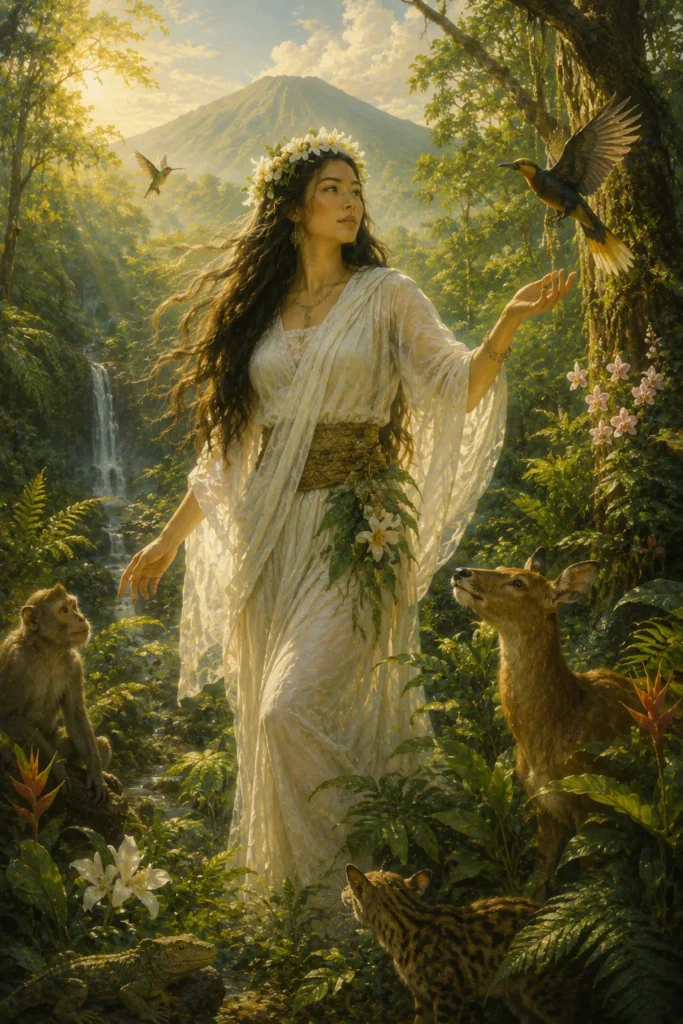
The Kapre corresponds to the giant forest spirit and the European motif of the Wild Man, the hairy inhabitant of the wilderness; the Basque Basajaun also belongs to this type. Within the Philippines it is to be distinguished from the Tikbalang, the horse-headed misleader, and stands alongside the Diwata, the luminous nature deities of the same forests.
Frequently asked questions about the Kapre
Is the Kapre dangerous?
Usually not deadly, rather mischievous and confusing. It becomes vengeful if its tree is cut down.
How can it be recognised?
By the glowing cigar at night, the strong odour and the gigantic dark figure in the tree.
Where does it live?
In large trees, above all balete, mango and acacia.
Further links
Further reading:
- Diwata – the nature deities of the same tradition
- Tikbalang – the horse-headed misleader of the Philippines
- Basajaun – the Basque forest giant as counterpart
- Amulet, Salt, Holy Water – traditional protective means
- Protection Compass – protective means at a glance
Literature (selection)
Further standard works in the bibliography.
As a cigar-smoking forest spirit, the Kapre is probably the most unmistakable figure of dread in its homeland; as the tree giant of countless storytelling evenings across the Philippines, it is at the same time a quiet guardian of nature: where it is suspected to dwell, the old tree remains standing.