Kan-Laon, the seat of the Ancient One on Negros
By Ralf Ittermann · last reviewed on
Kan-Laon is a god of the Philippine Visaya tradition.
The highest creator god, seated in the Kanlaon volcano on Negros.
Kan-Laon is the highest creator god of the Visaya, whose seat is the Kanlaon volcano on Negros. The attested core of the name is Laon, the ancient deity; the personal figure Kan-Laon is a modern back-formation from the volcano’s name.
The fire association arises only through the volcanic seat: an attested title of fire god does not exist. The deity is connected with creation, agriculture, and justice, and dwells in the upper heavens, accessible via the crater.
Type: Supreme creator god with volcanic seat
Origin: Visaya, especially Negros, Philippines
Texts: early colonial in Chirino 1604, also Alcina in the 17th century
Period: core attested early, elaboration modern
Appearance: barely described, dwelling in the upper heavens

Colonial sources and context
Period of the Texts
Attested in early colonial sources: Pedro Chirino names Laon in 1604 as a creator deity, and Alcina knows of Laon or Malaon in the 17th century; the personal form as Kan-Laon is modern.
Area of Diffusion
The Visaya, especially the island of Negros: there rises the volcano Kanlaon, the visible sign of the deity and namesake of the city of Canlaon.
Sources
The core is attested early, in Chirino 1604 and Alcina; the interpretation as Lord of Time and the personal form are modern elaborations distant from the sources.
Name and variants
Visaya: The name combines kan, place or possession of, with laon, ancient or old, thus roughly Seat of the Ancient One. The core god name is Laon; Kan-Laon as a personal god is a modern back-formation from the volcano’s name.
Form and signs
Appearance
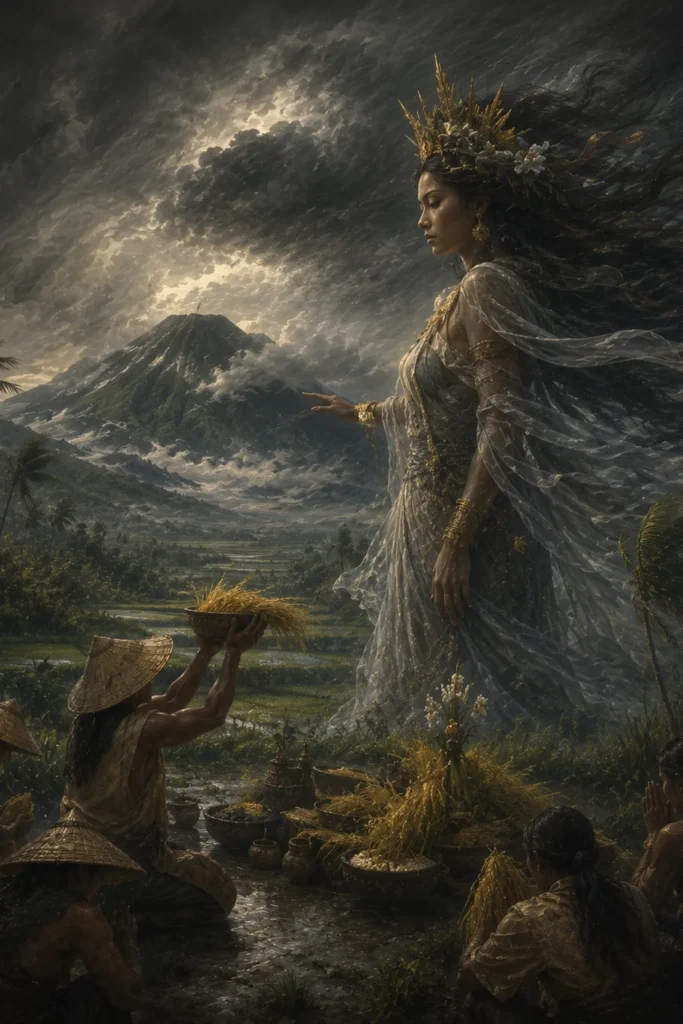
Kan-Laon is barely described; he dwells in the upper heavens, with access via the crater. Modern folk and pop-culture depictions as an old man are later embellishment. The volcano Kanlaon is his visible sign.
Effect
Kan-Laon, or Laon, is the supreme creator god, associated with creation, agriculture and justice. Volcanism is associated as a dwelling place; there is no attested title as a fire god.
Profile: Kan-Laon
The key aspects of the creator god at a glance.
Supreme creator god of the Visaya, attested in early colonial times as Laon; closely related to Bathala of the Tagalog and Gugurang of the Bicol.
Creation, agriculture and justice; the Visaya people turned to the deity especially at harvest time.
Barely described, dwelling in the upper heavens with access via the crater; the old man of pop culture is a late embellishment.
Supreme creator god seated in the volcano Kanlaon; the fire connection remains associative through the dwelling place.
Tradition holds that the babaylan, the priestesses, climbed the mountain at harvest time and made offerings; this is only partly firmly grounded in primary sources.
From Laon to Kan-Laon: a modern back-formation
The primary sources do not know Kan-Laon, but Laon: Pedro Chirino names Laon as a creator deity in his Relación de las Islas Filipinas of 1604, and Alcina, in the 17th century, knows of Laon or Malaon as a female supreme deity. The name Kan-Laon, Seat of the Ancient One, originally referred to the mountain.
From this volcano name, a personal god was back-formed in modern times; the interpretation as Lord of Time is likewise a modern elaboration distant from the sources. Anyone wishing to grasp the figure historically must therefore think from the mountain to the deity, not the other way round: what is attested is the ancient Laon, whose seat is the volcano on Negros.
Pop culture, neopaganism and scholarship
Kan-Laon is a regional marker of identity on Negros and the namesake of the volcano and the city of Canlaon. He is present in television, pop culture and neopaganism.
From a religious-studies perspective, Kan-Laon shows how an attested, early female deity Laon became a modern personal figure, Kan-Laon. Important clarifications: the primary sources say Laon, not Kan-Laon. The deity was early on female, as Laon or Malaon. And Laon is also likely a variant of Lalahon.
The babaylan and the mountain
Tradition holds that the babaylan, the priestesses, climbed the mountain at harvest time and made offerings; this is partly attested through general anito practice, while the specific mountain ceremony is more popular tradition than firmly grounded in primary sources. A distinct, established cult form should accordingly be classified with caution: the mountain was sacred, but the details of the cult remain unclear.
Laon, Lalahon and the neighbours
As supreme creator, Kan-Laon is closely related to Bathala of the Tagalog and Gugurang of the Bicol. The volcano as a seat of the gods resembles Etna or Fuji in other cultures. The attested deity Laon is also closely related to Lalahon, the harvest and volcano goddess of the same mountain: both belong to Kanlaon, but Kan-Laon is the modern personal god of the mountain, while Lalahon is the goddess directly attested in it in 1582.
Frequently asked questions about Kan-Laon
Who is Kan-Laon?
The supreme creator god of the Visaya, seated in the volcano Kanlaon; the attested core of the name is Laon.
Was the deity male?
In early colonial sources, Laon or Malaon is attested as female; the male Lord of Time is a modern development.
Is Kan-Laon a fire god?
The fire connection is associative through the volcanic seat; there is no attested title as a fire god.
Further links
Further reading:
- Lalahon – the directly attested goddess of the same volcano
- Gugurang – the supreme god of the Bicol as a counterpart
- Protective candle, Smudging, Amulet – recommended protective means
- Protection Compass – an overview of protective means
Literature (selection)
Further standard works in the bibliography.
Kan-Laon remains for the Visaya both a supreme god and a regional landmark: as the deity of the volcano Kanlaon, the modern name carries forward the early, ancient Laon, whose seat has been the mountain on Negros since the first sources.