iWell Guard

Obereg: Protective Amulets and Protective Signs of the Slavic World

Obereg is a Slavic word for a protective amulet. It does not refer to a single object, but to an entire group of means of protection, ranging from worn amulets to protective embroidered signs on clothing.

Oberegi are the protective amulets and protective signs of the Slavic world.

Protective SymbolSlavicProtective Sign
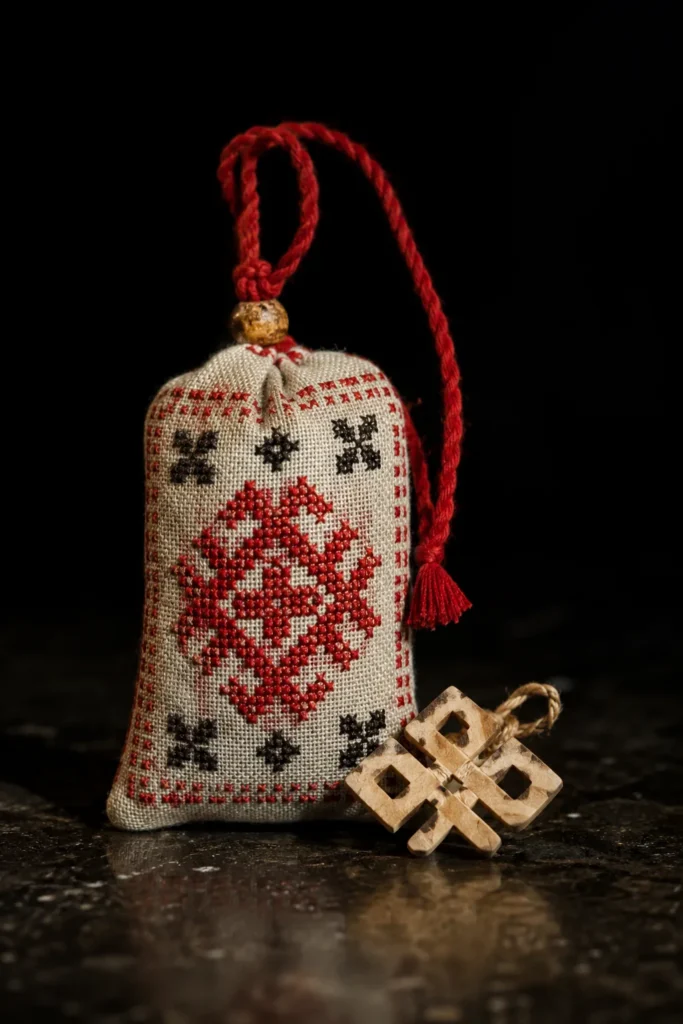
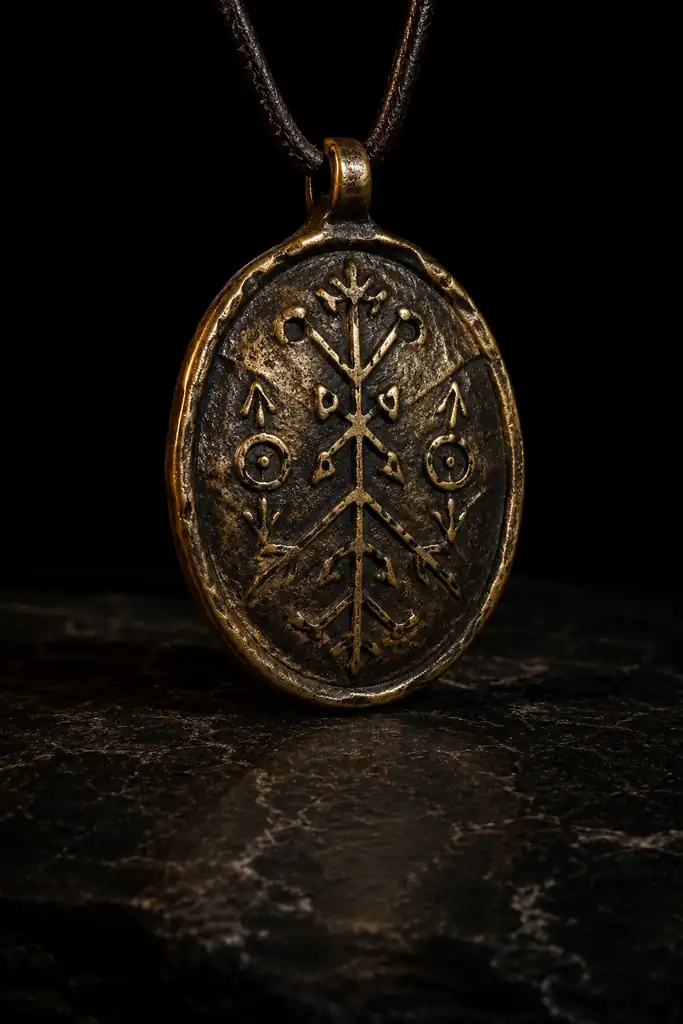
Obereg, protective symbol, museum-style illustration

Classification

Obereg is a word from the Slavic languages. It goes back to a verb meaning to preserve, to guard and to protect. An obereg is thus literally a guardian.

The word does not denote a single, fixed object. It is a collective term. Under obereg an entire group of means of protection is grouped together.

This group includes worn amulets, small objects, protective signs on the house and on tools, as well as the embroidered patterns applied to clothing. All of this can be called obereg.

What these various means share is their purpose. They all serve protection, the preservation of the person, the family, the house and daily work.

In religious studies and in folklore studies, the obereg is a good example of how protection is not bound to a single object but can take many forms.

This page presents the obereg as a collective term. It describes the various forms, the protective embroidery, the relationship between old tradition and modern interpretation, as well as its present-day reception.

Obereg as a Collective Term

The most important point for understanding is that obereg is a collective term. The word denotes a type of object, not a single specific object.

Whoever speaks of an obereg means some means of protection from Slavic folk culture. Which means is meant precisely emerges only from the context.

In this the obereg differs from a single amulet such as the cornicello or the hamsa. Each of these denotes a particular object with a fixed form.

The obereg, by contrast, is open. A worn pendant is an obereg, an embroidered pattern on a shirt is an obereg, a sign above the door is an obereg. All share the name because all protect.

This openness of the term is not a shortcoming but a distinctive feature. It shows that Slavic folk culture understood protection as a task that was fulfilled with many means at once.

The obereg is therefore best understood as an umbrella term. It groups the many protective objects and signs of Slavic folk culture together under one common word.

Forms of the Obereg

Many different forms are concealed beneath the collective term obereg. It is worth examining some of them more closely.

One form is the worn amulet. A small object, a pendant or a sign is worn on the body and accompanies its owner through daily life.

Another form is the house sign. Protective signs were placed above doors, on windows and on tools. They were meant to preserve the house and its inhabitants.

An important form is protective embroidery. Embroidered patterns on clothing, especially on collars, sleeves and hems, were understood as obereg. This form is treated more closely in the following section.

Certain dolls also belong to the oberegi. There were cloth dolls made without a face that served as protective objects for the house and for children.

The obereg thus encompasses a broad variety. From the worn pendant through the house sign and embroidery to the doll, the group of objects that can bear this name is wide-ranging.

Protective Embroidery

A particularly distinctive form of the obereg is protective embroidery. In Slavic folk culture, embroidery on clothing was regarded not only as decoration but also as protection.

The embroidered patterns were placed above all on the edges of the clothing, on collars, on cuffs and on hems. Precisely where the clothing encloses the body, the pattern was meant to preserve.

The idea behind this is vivid. The edges of the clothing are the places where something harmful could reach the body. A protective pattern at these edges was meant to prevent this.

The patterns consisted of geometric signs, of rhombuses, crosses, stars and of plant motifs. What meaning belonged to the individual signs, however, is not always clearly documented.

Protective embroidery shows how closely decoration and protection were connected in Slavic folk culture. The same pattern could at once adorn the clothing and preserve its wearer.

Embroidery is thus one of the most peculiar forms of the obereg. It makes protection a part of everyday clothing, worn visibly and accompanying life.

Old Tradition and Modern Interpretation

Caution is required when dealing with the obereg. One must carefully distinguish between what is attested as old and what is modern interpretation.

Only little is known with certainty about the pre-Christian beliefs of the Slavs. The ancient Slavs left no writings of their own about their faith. Much has to be inferred at second hand.

The folk culture of more recent centuries is well attested. From this period there are rich testimonies about protective embroideries, house signs and customs. This folk culture was already shaped by Christianity.

More difficult is the question of how far this more recent folk culture reaches back into pre-Christian times. Some signs may be old, yet seamless proof is often not possible.

Particular caution is needed in interpreting individual embroidered patterns. Today far-reaching pre-Christian meanings are frequently attributed to them. Such interpretations are often modern and not securely attested.

An honest account of the obereg therefore distinguishes two levels. The more recent folk culture is well documented. The derivation of individual signs from pre-Christian belief remains in many cases uncertain.

The Obereg in Folk Culture

In the Slavic folk culture of more recent centuries, the obereg had a firm place. The protective objects and signs accompanied people’s lives.

The obereg was bound to the turning points of life. At birth, at marriage and on other important occasions, protective objects were made, given and used.

The protection of children in particular was close to people’s hearts. Protective dolls, embroideries on children’s clothing and small amulets were meant to accompany the child through the vulnerable early period.

The obereg often lay in the hands of women. They made the protective embroideries and the dolls. Making an obereg was thus itself an act of care.

The house too stood under the protection of oberegi. Signs above the door, on the windows and at the hearth were meant to preserve the living space and the family.

The obereg was thus deeply embedded in folk culture. It was not a rare, special object but a familiar part of daily life that accompanied people from birth onward.

Obereg and Individual Slavic Signs

The obereg as a collective term stands in a relationship to the individual, named Slavic signs. These individual signs can be understood as particular oberegi.

The sun wheel, the kolovrat, is one such sign. It is presented on the page about the Kolovrat. As a protective sign it can be counted among the oberegi.

The thunder signs likewise belong here, the wheel-shaped or star-shaped patterns associated with the thunder god. They are treated on the page about the Thunder Sign.

The sign Hand of God is also placed in this context. With it, however, as presented on its own page, the present-day form is largely a modern reconstruction.

These individual signs are, as it were, particular, named oberegi. The collective term obereg groups them and the many nameless means of protection together under one common word.

For all these signs the same caution applies. It must always be examined how much of their present-day form is attested as old and how much is modern interpretation. The collective term obereg does not exempt one from this examination.

The Obereg in the Neo-Slavic Movement

In modern times the term obereg has gained a new meaning. It has become an important word in the neo-Slavic movement.

This movement arose in the twentieth century. It seeks to revive old Slavic ideas and to bring them into a present-day form.

In this movement the oberegi are very much in demand. Pieces of jewelry, pendants and embroideries with Slavic signs are made and worn as obereg.

It should be noted here that the movement has expanded the term and also reshaped it anew. Some signs sold today as obereg are modern designs that appeal to an uncertain old basis.

Here again the necessary caution applies. An object offered today as an ancient Slavic obereg may be modern in its form and interpretation.

The obereg is thus a term with two lives. It denotes the attested means of protection of the older folk culture, and it has become a sought-after word in the modern engagement with the Slavic world.

Present-Day Reception

The obereg is today a well-known word, especially in the Slavic-speaking countries and in circles that take an interest in Slavic folk culture.

As jewelry and as an object, the obereg is made in great numbers. Pendants, embroideries and dolls are offered and worn as Slavic means of protection.

In the neo-Slavic movement the obereg has a firm place. There it is a sign of the connection to the revived Slavic ideas.

Outside this movement, too, the word is widespread. The obereg has become a generally known term for Slavic objects of luck and protection.

For folklore studies and religious studies, the obereg remains a revealing object. It shows how a folk culture realized protection with many different means at once.

The obereg is thus a good example of an open collective term for protection. In it worn amulets, protective embroideries and house signs come together, and at the same time it demands the honest distinction between old tradition and modern interpretation.

Literature (Selection)

  • Aleksander Gieysztor: Mitologia Słowian (1982)
  • Andrzej Szyjewski: Religia Słowian (2003)
  • Kazimierz Moszyński: Kultura ludowa Słowian (1929)
  • Stanisław Urbańczyk: Dawni Słowianie. Wiara i kult (1991)
  • Linda J. Ivanits: Russian Folk Belief (1989)

Related key terms: obereg Slavic protective amulet collective term protective embroidery house sign folk culture neo-Slavic movement protective sign.

iWell Guard and Protective Traditions

iWell Guard stands in the cultural-historical line of portable protective objects, to which the obereg also belongs. A modern companion for people who live with protective symbols: made in Germany, 41 layers of solid gold, platinum and silver, with a 30-day right of return.

Personal experiences may vary. Not a medical device. No promise of healing.